

DreamLeague Season 29 Qualifiers Meta Report (April 2026): Match IDs, 7.41b Draft Trends, and MMR Climb Plan

DreamLeague Season 29 Qualifiers gave us the first real high-volume sample right after patch 7.41b, and the numbers are loud. In the latest match block, teams are still banning old patch monsters, but the actual game winners shifted toward fast skirmish mids, lane-dominant support duos, and utility offlaners that can fight before minute 15.
If you are grinding ranked right now, this is exactly the window where most players copy half the patch notes but miss the execution details. That is where free MMR is. In this report, we break down real match IDs, real scorelines, and real pick-ban patterns from recent DreamLeague qualifiers and turn them into pub-ready decisions for each role.
You will get three things: what pros are actually prioritizing, why some heroes look nerfed but still win when played correctly, and what to spam if your goal is to climb this week, not theorycraft forever. When you need a faster push, you can also stack this with Dota 2 MMR Boost, coaching sessions, or a clean calibration run from Team Smurf.
Table of Contents
What happened in the last 24 hours
The most searchable and actionable Dota topic right now is not another generic patch recap. It is the DreamLeague Season 29 Qualifiers day-one meta reaction. Why Because this is where teams test their 7.41b read in serious games, and the sample already includes stomps, throw-proof late games, and repeated hero priorities across multiple series.
Recent pro-match data shows a very clear pattern. Teams are still spending bans on high-friction heroes from the previous cycle, but the most reliable wins are coming from tempo cores with stable lane phases and supports that force rotations early. If your ranked games feel chaotic, this is exactly the kind of meta that rewards disciplined map flow over fancy last-pick greed.
We cross-referenced recent pro match records and draft details from OpenDota match endpoints, then mapped the takeaways to ranked execution. For tournament context and bracket references, Liquipedia remains the fastest source for ongoing event structure, while raw match-level outcomes come from OpenDota records.
Match sample and method
For this report, we reviewed recent DreamLeague Season 29 Qualifier pro matches and deep-dived a focused block of games where both team names and full draft/player data were available. This let us pull not just winners, but also picks, bans, KDA standouts, game length, and repeat patterns across drafts.
| Metric | Value | Why it matters |
|---|---|---|
| League tracked | DreamLeague Season 29 Qualifiers | First high-volume reaction window after 7.41b |
| Detailed match block | 20 fully parsed matches | Enough for early draft trends and repeat priorities |
| Time window | Last 24-48 hours | Timely for ranked adaptation this week |
| Data points | Picks, bans, scorelines, duration, KDA | Lets us separate fake OP from reliable win conditions |
| Patch context | 7.41b transition phase | Where pub players can exploit confusion |
One more practical note from high-MMR experience: early-cycle stats are usually inflated by specialist players. If a hero shows 70% plus in a tiny window, check whether wins are tied to one team archetype, one lane duo, or one signature player before you spam it in solo queue.
Key qualifier matches and IDs you should study
Below are five concrete matches that show current qualifier dynamics better than random highlights. Watch these with one question in mind: which team dictated first move timing after lanes That answer predicts winner more consistently than raw net worth at 10 minutes in this patch tempo.
| Match ID | Series | Result | Duration | Standout performance |
|---|---|---|---|---|
| 8763639623 | Infamous Gaming vs EARTH GAMING | 22-34 (EARTH win) | 35.2 min | ArzenT Weaver 17/2/11 |
| 8763609151 | BTS Army vs EARTH GAMING | 15-50 (EARTH win) | 24.8 min | ArzenT Weaver 27/3/14 |
| 8763592761 | Infamous Gaming vs Los Waskas | 36-10 (Infamous win) | 20.5 min | Pangolier 18/0/7 snowball midgame |
| 8763625571 | Barrancobar vs Chandogs | 32-31 (Barrancobar win) | 49.8 min | Pangolier 13/4/12 in extended fights |
| 8763589817 | Acatsuki vs The Bros | 43-41 (Acatsuki win) | 63.2 min | Luna 18/6/18 late-game closure |
Two fast reads from these IDs:
- Weaver carry punish games are real: if your bracket still drafts greedy static supports, Weaver punishes bad save timing and poor sentry discipline.
- Pangolier remains a map-control monster: even when not hard carrying damage, he decides how and where skirmishes happen.
What to watch in each replay
Do not watch teamfights first. Watch three moments instead. First, support pathing between minute 4 and 8. Second, first smoke that converts into tower pressure. Third, Roshan setup vision. If you copy those three windows, your ranked impact jumps faster than copying one item build screenshot.
In match ID 8763609151, EARTH GAMING turn lane lead into immediate choke control instead of AFK farming. That single pacing decision creates the 50-kill avalanche. In lower Immortal and Divine pubs, teams often hesitate in that exact timing and throw their strongest map spike.
Draft trends after 7.41b: what the bans and picks say
From the 20-match draft block, three things are obvious. First, teams still fear old pressure heroes in bans. Second, flexible tempo mids are climbing in priority. Third, supports that can both save and re-initiate are outvaluing one-dimensional lane bots.
| Top ban | Ban count | Interpretation |
|---|---|---|
| Batrider | 16 | Teams still hate lasso tempo and lane abuse |
| Puck | 15 | Mid mobility and coil control remain high value |
| Alchemist | 15 | Respect ban despite reduced reliability |
| Doom | 13 | Single-target shutdown still draft-warping |
| Shadow Demon | 13 | Save plus setup keeps him meta-relevant |
| Beastmaster | 12 | Vision pressure still dangerous even after nerfs |
| High presence heroes | Pick + ban | Observed win signal |
|---|---|---|
| Alchemist | 20 | Heavy respect, but only 40 percent in picked games in sample |
| Pangolier | 18 | High contest and stable impact in scrappy midgames |
| Phoenix | 17 | Excellent fight reset tool with frontline pairings |
| Beastmaster | 17 | Still respected, but no longer auto-win pacing |
| Puck | 16 | Mostly banned, still viewed as game-shaping |
| Rubick | 14 | Huge practical value with 12 picks in sample |
This is the key Immortal-level interpretation: respect does not equal power. Heroes like Alchemist and Beastmaster are still getting auto-banned from habit, while teams that adapt faster are stealing cleaner comfort picks and accelerating the game through support-mid synergy.
If your captain mindset is stuck on old patch fear, you are donating draft edge. Ban what destroys your lane plan, not what Reddit complained about yesterday.
Hero winners and losers from the qualifier sample
Here is the practical scoreboard from the parsed sample. We only list heroes with enough games to avoid pure noise. This is not a “most broken hero” list. It is a “most repeatable ranked value” list.
| Hero | Picks in sample | Win rate | MMR translation |
|---|---|---|---|
| Rubick | 12 | 75.0% | High utility in every phase, strong into spell-heavy cores |
| Phoenix | 7 | 71.4% | Punishes overcommit lineups and extends fight windows |
| Luna | 6 | 83.3% | Fast objective conversion when team drafts stun cover |
| Jakiro | 5 | 80.0% | Reliable tower pressure and lane security in pubs |
| Monkey King | 5 | 80.0% | Skirmish control and vision abuse around tree zones |
| Pangolier | 11 | 45.5% | Still contested due tempo control, execution dependent |
| Alchemist | 5 | 40.0% | Drafted often, less free than previous cycle |
| Beastmaster | 5 | 40.0% | Needs cleaner vision conversion to justify first-phase value |
Rubick and Phoenix are the biggest practical takeaways for support players. Rubick gives you fight relevance from minute 10 to minute 50, and Phoenix gives your team a second life in bad engages. Both heroes punish sloppy target selection, which is exactly what happens in most ranked teamfights.
Luna being this successful is not because she is secretly broken in every game. It is because coordinated drafts gave her what Luna always needs: lane cover, aura stacking timing, and map control around first and second Roshan windows. In pubs, if your lineup cannot protect triangle and choke exits, Luna value drops hard.
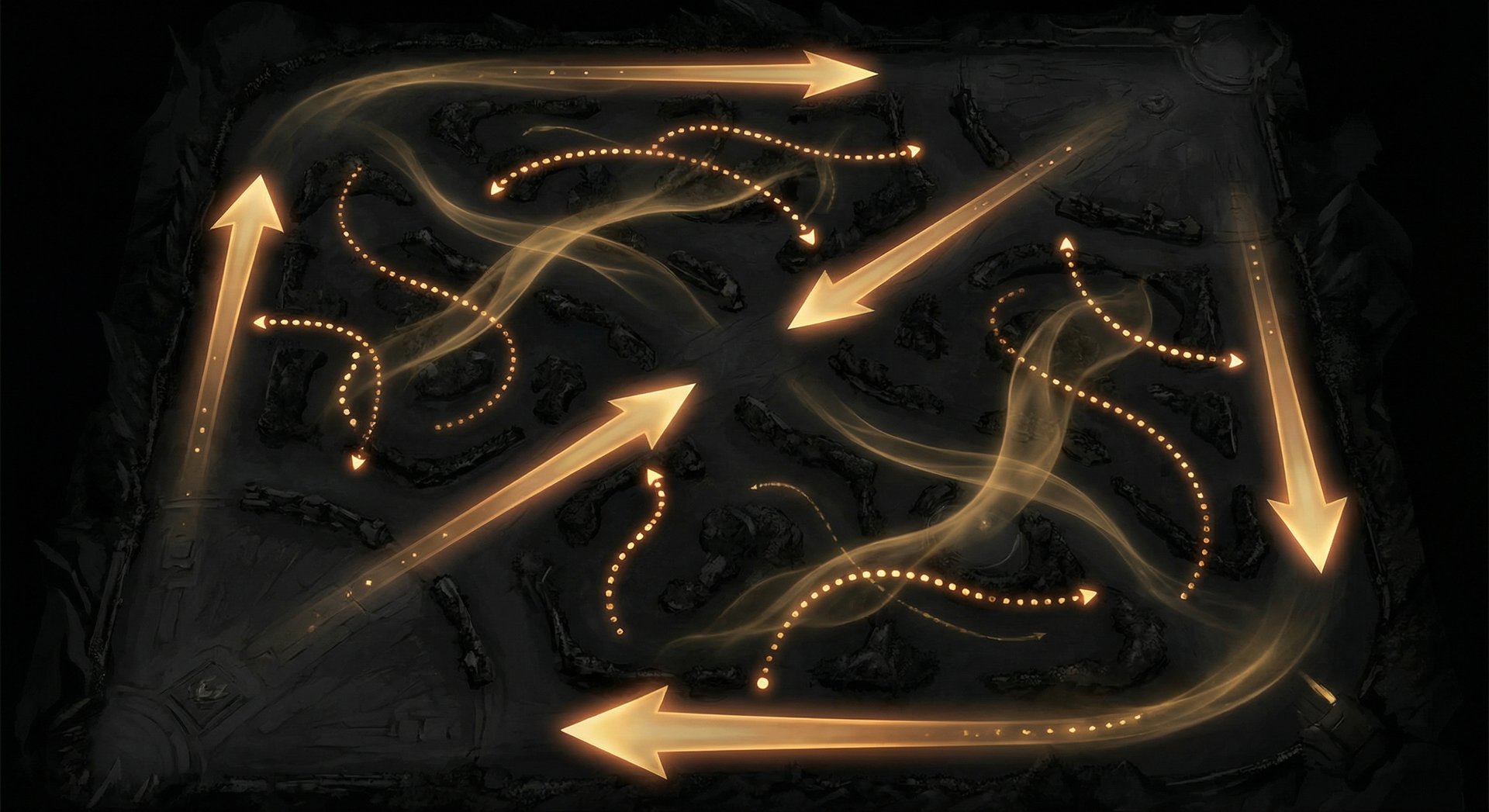
Role-by-role adaptation for ranked players
Position 1 carry
Your job this week is not max GPM. Your job is to be available one timing earlier than enemy carry. The fastest way to throw current games is farming one extra wave while your team loses first objective control. The qualifier sample rewards carries who join the first two map fights when item spikes line up.
- Prioritize lane outcomes that protect your first farming triangle cycle.
- If your supports draft strong save, greed one item. If not, fight earlier.
- Against Phoenix or Rubick, keep BKB timing realistic, not theoretical.
Position 2 mid
Tempo mids are back to being game directors. Pangolier remains high priority because he creates movement force. Even at sub-50 sample win rate, his strategic value is drafting pressure plus map control. In pubs, your win condition as mid is simple: win first smoke and enable side lane tower hit before enemy carry stabilizes.
- Push wave first, then move with support duo. Never move on empty wave.
- Track enemy save cooldowns before hard committing ult resources.
- If your carry is scaling, your death budget is lower than usual.
Position 3 offlane
Offlane greed is being punished in this qualifier block. Pure aura stacking without lane threat gives enemy carry too much freedom. Offlaners who can start fights or force rotations are creating better win rates than passive farmers. Beastmaster still draws bans, but in picked games he is no longer auto-convert value.
- Draft for first map move, not for six-slot fantasy.
- Block enemy stack timings with vision and body pressure.
- When ahead, convert catapult waves into deep ward reset.
Positions 4 and 5 support
This patch window is support heaven if you play with purpose. Rubick, Jakiro, and Phoenix all show the same principle: lane impact plus teamfight utility beats single-purpose stun bots. Your first ten minutes decide whether your cores get to play Dota or defend map scraps.
- Secure first power rune and deny enemy bottle refill path.
- Stack with intention. Do not stack camps your lineup cannot clear.
- Carry extra sentry for Weaver and invis mids, not just defensive dewarding.
Most common mistakes we are seeing in ranked right now
After reviewing qualifier games and comparing with coaching VODs, these are the exact errors that keep appearing in 4k to 7k pubs:
What wins games
- Drafting lane pairs with shared timing
- Fighting around vision, not around ego
- Using first lead to remove enemy safe farm zones
- Saving buyback for Roshan or high-ground windows
What loses games
- Copying pro builds without map context
- Greedy bans based on old patch fear
- Taking low-ground fights into Phoenix egg
- Ignoring support item timings and sentry economy
One repeated mistake deserves special attention: players overreact to a hero nerf line and assume the hero is dead. In practice, many nerfed heroes are still good when drafted with the right partners. What changed is that they are no longer blind first-pick safe.
Red flag for this week
If your team drafts three heroes that need 20 plus minutes before fighting, you are probably griefing yourself in current qualifier-style tempo. Expect early map collapse and tilted voice comms by minute 18.
Green flag for this week
If your draft has one stable lane core, one mobile tempo core, and two supports with save or reset tools, your win probability spikes in uncoordinated pubs. You get easier objective calls and fewer all-in throws.
Your 7-day MMR plan based on qualifier trends
Do this exactly for one week. No hero pool panic. No random experiments in ranked.
- Pick one role and lock a three-hero pool. Example support pool: Rubick, Jakiro, Phoenix. Example core pool: Pangolier, Luna, Monkey King.
- Review one match ID before queue. Focus on first two rotations and first objective setup, not full game.
- Track one metric only: team net worth at 20 minutes in your wins vs losses. This keeps your decisions objective.
- Queue in blocks of three games. If you lose two with obvious tilt signs, stop and VOD one lane replay.
- Use party queue for execution heroes. Solo queue for stable utility picks if your region is volatile.
- At day 7, keep only profitable heroes. If a hero feels good but loses, cut it.
If you do not have time to run this process manually, Team Smurf can compress the grind. Use MMR Boost for direct rank progress, coaching for repeatable decision upgrades, or low priority removal if your account is stuck in penalty queue.

Final read: what matters most this week
The biggest edge right now is not discovering a hidden hero. It is playing faster and cleaner than players still adjusting to 7.41b. DreamLeague qualifier data confirms that games are being decided by rotation discipline, objective conversion, and support utility execution more than by flashy late-game theory.
If you are serious about climbing this month, keep your pool tight, learn from concrete match IDs, and stop drafting for comfort alone. Draft for timing. Fight for map shape. Respect vision. That is how high-MMR players farm consistency while everyone else chases highlights.
FAQ
Want faster MMR gains than trial-and-error ranked spam
Get a personalized climb path from Team Smurf. We use real patch trends, role-specific execution, and high-MMR review standards to move your account efficiently and safely.



