DreamLeague Season 28 Playoffs: Team Liquid Dominates with Perfect 7-0 Record

Team Liquid just went 7-0 in DreamLeague Season 28 Group Stage 2, and if you are not paying attention to this roster right now, you are sleeping on what might be the most dominant Dota 2 team in the world. They did not drop a single series. Not one. In a group featuring some of the best teams on the planet, Liquid made it look effortless — and they snapped Aurora Gaming’s legendary 31-series win streak in the process.
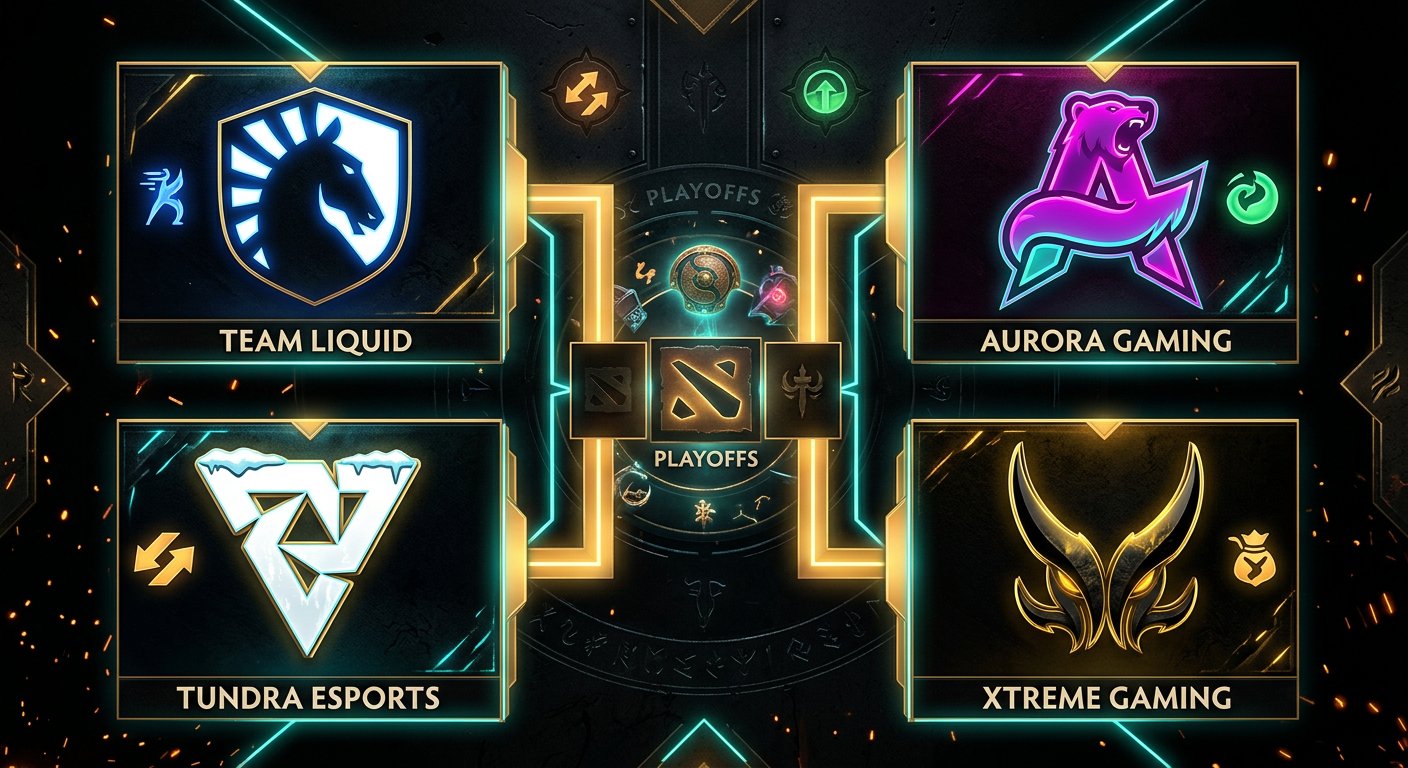
DreamLeague Season 28 is a US$1 million online tournament running from February 16 to March 1, 2026, on EU West servers. Organized as part of the ESL Pro Tour, the event started with 16 of the world’s strongest squads. After two grueling group stages, only four teams remain standing: Team Liquid, Tundra Esports, Aurora Gaming, and Xtreme Gaming. The Playoffs are here, and the stakes could not be higher. Let’s break down everything you need to know about the final four and what to expect from the bracket stage.
DreamLeague Season 28 Format & Structure
Before we dive into the teams, let’s quickly recap how DreamLeague Season 28 is structured, because the format directly impacts how these Playoff matches will unfold.
The tournament kicked off with 16 teams divided into two groups for Group Stage 1. Each team played a full round-robin, with best-of-two series determining standings. The top four from each group advanced to Group Stage 2, while the bottom four from each group were eliminated. That first cut was brutal — teams like OG and Natus Vincere were sent packing early, proving that legacy alone does not guarantee results in modern Dota.
Group Stage 2 combined all eight surviving teams into a single group for another round-robin, this time with best-of-two series across seven rounds. The top two finishers earned Upper Bracket slots in the Playoffs, while third and fourth place were sent to the Lower Bracket. Fifth through eighth place? Eliminated entirely.
The Playoffs themselves follow a double-elimination bracket format. All matches are best-of-three, except for the Grand Final, which is a best-of-five. This means the Upper Bracket teams — Liquid and Tundra — have a significant advantage. They can afford to lose once and drop to the Lower Bracket, while Aurora and Xtreme Gaming are already on the edge. One loss in the Lower Bracket and you are going home.
For a full breakdown of the bracket and schedule, check the Liquipedia DreamLeague Season 28 page.
Team Liquid: The 7-0 Juggernaut
There is no other way to say it — Team Liquid are playing the best Dota 2 on the planet right now. A perfect 7-0 record in Group Stage 2 is not something that just happens at this level of competition. Every team in that group was there because they survived the first stage. Every team had something to prove. And Liquid beat all of them.
What makes this run even more impressive is context. In Group Stage 1, Liquid finished third with a 10-4 record. Solid, but not spectacular. There were questions about whether they could sustain top-level performance after their BLAST Slam VI victory just two weeks prior. Tournament fatigue is real at this level, and plenty of teams have stumbled after a big win.
Instead, Liquid did the opposite. They leveled up. The jump from Group Stage 1 to Group Stage 2 was like watching a team shift into a gear that nobody else in the tournament could match. Their drafting was sharper, their execution was cleaner, and their mid-game decision-making was borderline surgical.
Breaking Aurora’s 31-Series Win Streak
Perhaps the most headline-worthy moment of Group Stage 2 was Liquid ending Aurora Gaming’s 31-series win streak. That streak spanned multiple tournaments and had made Aurora look almost invincible. Plenty of teams had tried to stop them. All of them failed — until Liquid stepped up.
The way Liquid dismantled Aurora was not lucky or fluky. They clearly had done their homework. They understood Aurora’s tendencies, their timing windows, and their comfort picks. Liquid forced Aurora into uncomfortable positions from the draft and then punished every mistake in-game. It was a masterclass in preparation meeting execution.
If you are an aspiring competitive player or even just someone trying to climb ranked, there is a lesson here: studying your opponents matters just as much as raw mechanical skill. Liquid did not beat Aurora by simply being “better” — they beat them by being more prepared.
Liquid’s Key Players to Watch
Every player on this Liquid roster is performing at an elite level, but their coordination as a unit is what truly sets them apart. Their support duo has been enabling aggressive laning phases that give their cores a significant advantage by the 10-minute mark. Their offlaner has been consistently creating space and finding key initiations that swing teamfights. And their mid and carry players have shown the kind of versatility that makes them nearly impossible to draft against.
Going into the Playoffs Upper Bracket, Liquid are the clear favorites. But Dota has a way of humbling even the most dominant teams. The double-elimination format means one bad series does not end their run, but momentum is a fragile thing. If someone can crack the code on Liquid’s current form, the Playoffs could get very interesting very fast.
Tundra Esports: The Consistent Contenders
Finishing Group Stage 2 with a 5-2 record, Tundra Esports once again prove why they are one of the most reliable teams in professional Dota 2. Consistency is their brand. While other teams swing wildly between dominant and disappointing, Tundra just keep showing up and delivering results.
That said, this DreamLeague run comes at an interesting time for the organization. Their two most recent tournament results were underwhelming by their standards — a 5th-6th finish at the previous DreamLeague and a 7th-10th placement at BLAST Slam VI, where they lost a title they had held since February of last year. Those back-to-back stumbles raised legitimate questions about whether Tundra were starting to decline.
This Group Stage 2 performance suggests otherwise. A 5-2 record in a field this competitive is nothing to scoff at, and securing the second Upper Bracket slot means Tundra have given themselves the best possible position heading into the bracket stage.
Can Tundra Challenge Liquid?
The Upper Bracket Final will likely be Tundra versus Liquid, and it is the match everyone wants to see. Tundra’s style has always been methodical and calculated — they win through superior macro play, efficient farming patterns, and disciplined teamfighting. Against Liquid’s current aggressive form, we could see a fascinating clash of styles.
Tundra’s biggest challenge will be matching Liquid’s pace. When Liquid are firing on all cylinders, they do not give you time to farm your way to a comfortable late game. They force fights on their terms, take objectives before you are ready to contest, and snowball advantages with ruthless efficiency. If Tundra want to beat Liquid, they will need to either match that aggression or find ways to slow the game down and drag Liquid into the kind of drawn-out macro battles where Tundra traditionally excel.
Aurora Gaming: Streak Broken, Confidence Shaken?
Aurora Gaming came into DreamLeague Season 28 as one of the most talked-about teams in the scene, and for good reason. A 31-series win streak is the kind of stat that makes everyone sit up and pay attention. They were rolling through tournaments with a substitute player — Artem “Lorenof” Melnick standing in — and still looked unstoppable.
Then Liquid happened.
Losing the streak was one thing, but what followed was arguably more concerning. After falling to Liquid, Aurora dropped consecutive series to MOUZ and Xtreme Gaming as well. Going from 31 wins in a row to three losses in a group stage is a dramatic fall, and it raises real questions about Aurora’s mental resilience and whether opponents have finally figured out their playbook.
The Lower Bracket Challenge
Starting in the Lower Bracket is tough for any team, but it is especially dangerous for a team that might be dealing with momentum issues. Aurora need to beat Xtreme Gaming in the Lower Bracket Semifinal just to survive, and even if they win that, they will likely face the loser of the Upper Bracket Final — probably Tundra — in the next round.
The question for Aurora is simple: was the late group stage collapse a temporary blip caused by the pressure of carrying a massive win streak, or is it a sign that teams have adapted to their strategies? If it is the former, the Lower Bracket could be the perfect place for Aurora to reset and find their form. If it is the latter, their tournament might end sooner than anyone expected.
One thing is certain — never count out a team that went on a 31-series tear. That kind of dominance does not come from luck. Aurora have the talent and the coordination to beat anyone in this tournament. They just need to prove they can bounce back under pressure.
Xtreme Gaming: The Dark Horse Nobody Expected
If there is a wildcard in this Playoff field, it is Xtreme Gaming. The Chinese squad finished Group Stage 2 with a 4-3 record — identical to Aurora’s — and secured the fourth and final Playoff spot. For a team that has been dealing with roster changes and inconsistent results throughout the season, making the top four at a $1M event is a significant achievement.
Xtreme Gaming’s pedigree is undeniable. They were The International 2025 runners-up, which means they have experience performing on the biggest stages in Dota 2. But TI form does not always translate to online tournament success, and the team has looked shaky at times this season while adjusting to their new lineup.
Why Xtreme Could Surprise Everyone
The thing about Xtreme Gaming is that their ceiling is incredibly high. When this roster clicks, they play a brand of Dota that is fast, aggressive, and extremely difficult to deal with. Chinese Dota has always had a reputation for disciplined teamfighting and efficient map play, and Xtreme embody those qualities at their best.
Their late Group Stage 2 surge — including a win over Aurora — suggests they might be peaking at the right time. In a double-elimination Playoff bracket, timing is everything. If Xtreme can maintain their current form and ride the confidence boost of beating one of the tournament favorites, they could easily make a deep run.
Starting in the Lower Bracket means there is zero margin for error, but that kind of pressure can also be liberating. When you have nothing to lose, you play free. And a team with TI Grand Final experience is not going to be intimidated by anyone in this bracket.

The Eliminated: Big Names Go Home
Before we look ahead, it is worth acknowledging the teams that fell short. The 5th through 8th place finishers in Group Stage 2 — Team Falcons, PARIVISION, BetBoom Team, and MOUZ — all had legitimate aspirations coming into this tournament.
Team Falcons were particularly unlucky, having to compete without their star player ATF in the closing matches due to health reasons. SaberLight stepped in as a substitute, but roster disruptions at this level are nearly impossible to overcome. Falcons fans will be left wondering what could have been if the full squad had been available.
MOUZ, despite being eliminated, actually took a series off Aurora during the group stage — one of the few teams to do so during Aurora’s incredible run. BetBoom Team and PARIVISION both showed flashes of brilliance but ultimately could not sustain the consistency needed to survive in a field this stacked.
And let’s not forget the eight teams eliminated in Group Stage 1, including OG and Natus Vincere. The old guard continues to struggle against the current wave of elite teams, and DreamLeague Season 28 has only reinforced the idea that this era of Dota 2 belongs to a new generation of competitors.
Playoff Bracket Preview & Predictions
Here is how the Playoff bracket shapes up:
Upper Bracket Final: Team Liquid vs. Tundra Esports
Lower Bracket Semifinal: Aurora Gaming vs. Xtreme Gaming
The Upper Bracket Final winner goes directly to the Grand Final. The loser drops to the Lower Bracket Final. The Lower Bracket Semifinal winner faces the Upper Bracket loser, and the winner of that match advances to the Grand Final.
Upper Bracket: Liquid vs. Tundra
This is the marquee matchup of the Playoffs. Liquid’s 7-0 momentum versus Tundra’s methodical, experience-driven approach. On paper, Liquid are the favorites, but Tundra have a knack for raising their level in bracket play. Their TI-winning DNA means they know how to perform when the stakes are highest.
My prediction: Liquid take this 2-1 in a closely contested series. Tundra will make it difficult, but Liquid’s current form is just too strong to bet against. Tundra drop to the Lower Bracket but remain very much alive in the tournament.
Lower Bracket: Aurora vs. Xtreme
This is a fascinating do-or-die match. Aurora have the higher ceiling but are dealing with momentum issues after their late group stage collapse. Xtreme are riding high after their surge into the top four and have nothing to lose.
My prediction: Aurora win this 2-1. Despite their recent struggles, their talent level is undeniable, and the elimination pressure will force them to refocus. But do not be surprised if Xtreme make this extremely uncomfortable for Aurora. This series could easily go either way.
Grand Final Prediction
I expect a Liquid vs. Aurora Grand Final, with Liquid taking the title 3-1. Aurora’s Lower Bracket run will galvanize them, but Liquid’s form throughout this tournament has been a cut above everyone else. A perfect group stage record, a BLAST Slam VI title two weeks ago, and the mental edge of having already beaten Aurora during groups — it all adds up to a Team Liquid championship.
Of course, this is Dota 2. Anything can happen. That is why we watch.
What This Tournament Means for the Dota 2 Season
DreamLeague Season 28 is more than just a standalone event. As part of the ESL Pro Tour, results here feed into the broader competitive ecosystem. Strong performances earn teams circuit points that contribute to qualification for future majors and ultimately The International.
For Team Liquid, a tournament victory here would cement their status as the team to beat heading into the next phase of the competitive season. Back-to-back titles — BLAST Slam VI and DreamLeague — would be a statement that no other team in the world can currently match.
For teams like Aurora and Xtreme Gaming, a deep Playoff run is about more than prize money. It is about proving that they belong at the very top of competitive Dota 2. The calibration of where each team stands in the global hierarchy is constantly shifting, and DreamLeague results will play a significant role in shaping the narrative heading into the next big event.
Lessons from the Pros: What Ranked Players Can Learn
Watching top-tier Dota 2 is not just entertainment — it is an education. Here are some key takeaways from DreamLeague Season 28 that you can apply to your own ranked games:
1. Adaptability Wins Tournaments (and MMR)
Liquid’s ability to shift gears between Group Stage 1 and Group Stage 2 is a masterclass in adaptation. They identified what was not working, adjusted their approach, and came back stronger. In ranked, this means being willing to change your strategy mid-game if your original plan is not working. Stuck in a losing lane? Rotate. Draft not scaling well? Force early fights. Adaptability is the single most important skill separating good players from great ones.
2. Momentum is Real (and Fragile)
Aurora’s collapse after losing their win streak shows how quickly momentum can shift. In your ranked games, recognize when you are on tilt or when the enemy team has seized momentum. Sometimes the best play is to slow down, farm safely, and wait for the other team to make a mistake rather than forcing fights when the tempo is against you.
3. Preparation Beats Raw Talent
Liquid did not beat Aurora by accident. They studied their tendencies and exploited weaknesses. Even in pub games, spending five minutes looking at your opponents’ Dotabuff profiles during the loading screen can give you valuable information about their hero pools, comfort picks, and tendencies. Knowledge is an advantage that costs nothing but time.
4. Team Composition Matters More Than Individual Skill
Every team in the DreamLeague top four wins because of how well their players complement each other, not because they have five individually superior players. In ranked, this means thinking about your draft holistically. Do you have initiation? Do you have save? Can you fight early or do you need to stall? Thinking about team composition even in solo queue will win you more games than picking whatever hero you feel like playing.
5. The Mental Game is Half the Battle
Aurora’s mental collapse after losing their streak is a cautionary tale. In ranked, losing two or three games in a row can feel devastating, but how you respond to those losses defines your climb. Take breaks when you need them. Do not queue angry. And remember that even the best teams in the world lose — what matters is how you respond.
Where to Watch the DreamLeague Season 28 Playoffs
The Playoffs are being broadcast live on the DreamLeague Twitch channel and on the official Dota 2 website. You can also watch in-client through the Dota 2 game client, which gives you the ability to control the camera and follow specific players — an excellent learning tool if you want to study how pros move, farm, and position in teamfights.
All matches are played on EU West servers, so expect games to be scheduled around European-friendly times. Check the tournament page for exact match times as the bracket schedule may shift depending on series lengths.
Frequently Asked Questions
The Playoffs are the final stage of DreamLeague Season 28, which runs from February 16 to March 1, 2026. The Playoff bracket matches are being played on the final days of the tournament. Check the official DreamLeague schedule or Liquipedia for exact match times.
DreamLeague Season 28 features a total prize pool of US$1,000,000 (one million dollars). The exact distribution between placements has not been fully detailed, but the lion’s share goes to the top finishers in the Playoff bracket, with the Grand Final winner taking home the largest cut.
The four teams that qualified for the Playoffs are Team Liquid (1st, 7-0), Tundra Esports (2nd, 5-2), Aurora Gaming (3rd, 4-3), and Xtreme Gaming (4th, 4-3). Liquid and Tundra start in the Upper Bracket, while Aurora and Xtreme begin in the Lower Bracket.
Team Liquid won all seven of their series in Group Stage 2, defeating every opponent including Aurora Gaming (ending their 31-series win streak), Tundra Esports, Xtreme Gaming, Team Falcons, PARIVISION, BetBoom Team, and MOUZ. Their dominant performance earned them the top seed and Upper Bracket advantage for the Playoffs.
Aurora Gaming’s impressive 31-series win streak, accumulated across several recent tournaments with stand-in player Lorenof, was ended by Team Liquid during DreamLeague Season 28 Group Stage 2. After losing to Liquid, Aurora also dropped series to MOUZ and Xtreme Gaming, finishing the group stage with a 4-3 record.
Eight teams were eliminated in Group Stage 1, including notable names like OG and Natus Vincere. In Group Stage 2, four more teams were eliminated: Team Falcons (5th), PARIVISION (6th), BetBoom Team (7th), and MOUZ (8th). Only the top four from Group Stage 2 advanced to the Playoffs.
DreamLeague Season 28 is an online tournament played on EU West servers. Despite being online, the $1M prize pool and the quality of participating teams make it one of the most competitive events of the season. All matches are broadcast live with professional commentary.
Ready to Climb? TeamSmurf Has Your Back
Watching the pros dominate at DreamLeague is inspiring, but climbing MMR takes more than just watching. Whether you want a boost to reach a higher bracket, personalized coaching to sharpen your skills, or a fresh calibration to reset your ranked journey, TeamSmurf has the services to get you where you want to be. Our boosters and coaches are 7K+ MMR players who understand the game at the deepest level — the same level you see on display at tournaments like DreamLeague Season 28.