


Divine Rapier in Dota 2: Drop Rules, Stats, When It Wins and When It Throws

The Divine Rapier is the most powerful item in Dota 2. It is also the most dangerous. A single death while carrying one can end a match that was already in your favour. This guide covers everything you need to know: the exact stats in patch 7.41f, how the drop mechanic works, the “reborn” state after recovery, and the specific conditions where buying a Rapier is the right call versus a guaranteed throw.
If you are grinding ranked and want to understand when a Rapier decision actually wins games, this is the complete breakdown. We also look at the best heroes to run it on and how to counter a hero who just picked one up.
Divine Rapier Stats and Components (Patch 7.41f)
Divine Rapier is a weapon item that provides the highest raw damage bonus of any single item in Dota 2. It was significantly reworked in patch 7.35d, introducing a toggleable ability called Transmute that lets the carrier choose between two distinct damage modes depending on whether they are a physical or magical damage dealer.
| Stat | Value | Notes |
|---|---|---|
| Total Cost | 6,200 gold | No separate recipe item required |
| Components | Sacred Relic + Demon Edge | Combine directly at the shop |
| Base Damage Bonus | +100 | Always active regardless of toggle mode |
| Transmute Mode 1 | +250 additional attack damage | +350 total damage in physical mode |
| Transmute Mode 2 | +25% Spell Amplification | +100 damage + spell amp in magical mode |
| Can Be Destroyed? | No | Indestructible under all circumstances |
| Can Be Backpacked? | No | Must stay in a main inventory slot |
| Can Couriers Pick Up? | No | Heroes only — a dropped Rapier must be walked to |
| Spell Amp Stacking | Does not stack | Two Rapiers in spell amp mode = same 25% total |
The Transmute toggle is accessible from the moment the item enters your inventory. You can switch modes freely during the game without cooldown, which gives different hero types distinct use cases for the same item. A melee carry running Physical Mode gets +350 damage on every attack. An intelligence hero like Zeus running Spell Amp Mode gets a 25% multiplier applied to all spell damage output, turning already-devastating nukes into game-ending bursts.
Component Breakdown and Build Path
Sacred Relic costs 3,800 gold and Demon Edge costs 2,200 gold, totalling 6,000 gold in raw components. The remaining 200 gold is the combine fee at the shop, bringing the total to 6,200 gold. There is no separate recipe item to purchase — you combine the two components directly at any shop.
If you are building toward a Rapier, Sacred Relic is typically purchased first because it grants +60 damage on its own, keeping you efficient during the late game while you farm toward the combine. The Sacred Relic stage is the commitment point — once you have it, the Rapier is the only logical destination for that investment. For a full breakdown of high-value item decisions by role and game state, see our Dota 2 items guide.
How the Divine Rapier Drop Mechanic Works
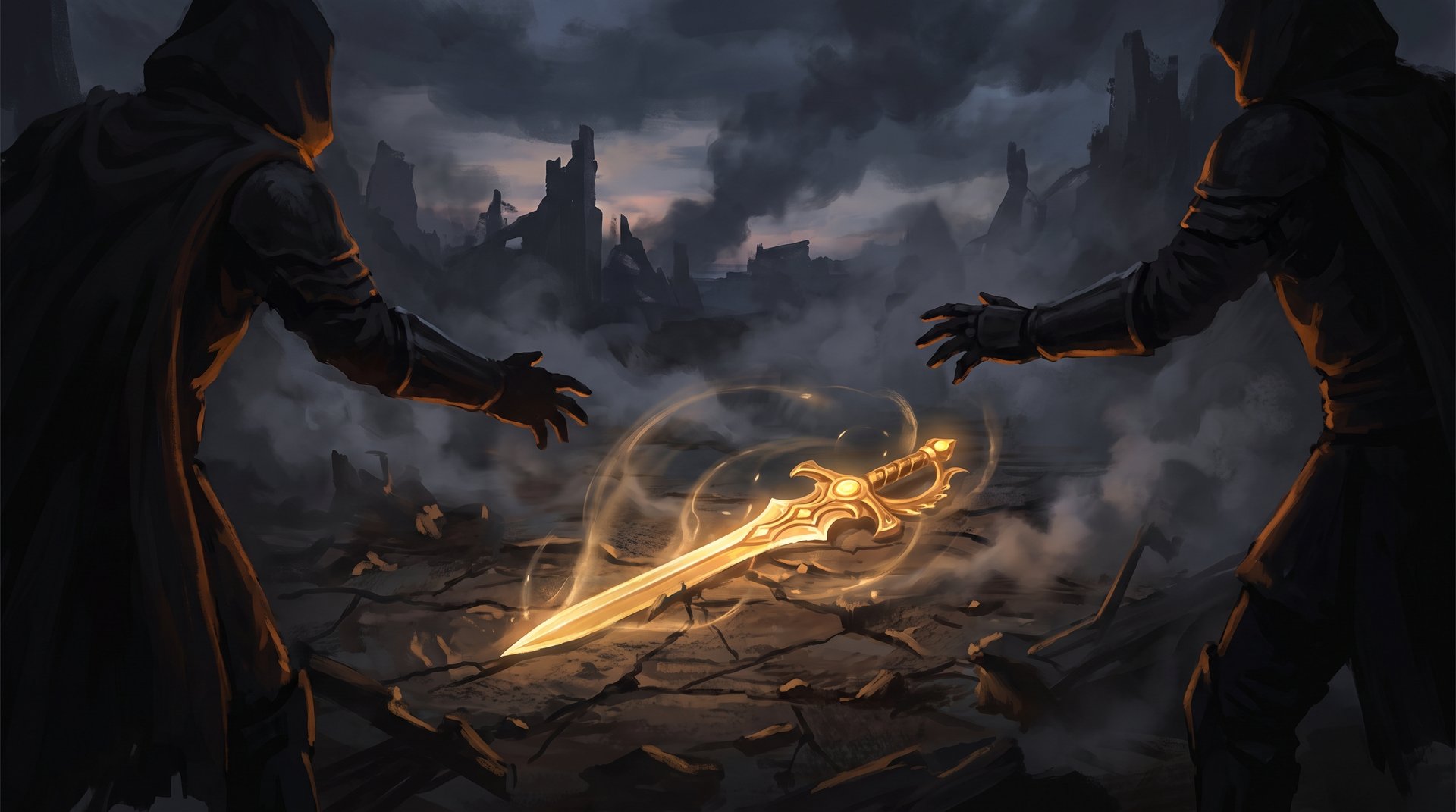
The drop mechanic is what makes Divine Rapier the highest-stakes item in Dota 2. When the hero carrying a Divine Rapier dies, the item is automatically dropped at the location of death. This happens every single time, without exception — there is no ability, talent, or other item that prevents it in patch 7.41f.
What Happens After the Drop
Once the Rapier is on the ground, any hero within pickup range can collect it. The behaviour differs depending on who picks it up:
- Enemy hero picks it up: The enemy can use the Rapier immediately. Its full damage bonus applies to that hero. The enemy cannot sell, destroy, or manually drop the item — they can only lose it if they die. A stolen Rapier gives the enemy the damage advantage and turns the carrier into the highest-priority target on the map for your team.
- Allied hero picks it up (not the original owner): The item enters a locked state. The carrying ally gains no stats from it. It stays in their inventory as a dead slot until the original owner picks it up themselves. The ally effectively becomes a mobile item storage point — useless for fighting, useful only for making the recovery easier.
- Original owner picks it up: Full functionality is restored immediately. This is the ideal recovery scenario and is the entire goal of a buy-back play following a Rapier death.
Courier Restriction
A dropped Divine Rapier cannot be picked up by a courier. This is a hard game mechanic with no workaround. If the Rapier is on the ground, a hero must walk to it. This matters because enemies can contest the drop location, and if no allied hero can physically reach it first, the enemy secures it freely. Plan your buy-back path to the Rapier location before you click buy-back, not after.
The Death Chain and Item Transfer
Once an enemy picks up your Rapier and your team kills them, the Rapier drops again at their death location and is freely pickable by anyone, including you. This creates a potential chain of Rapier transfers across a single fight. Every time the Rapier changes hands via an enemy death, it resets to a neutral pickup state. In chaotic team fights near the ancient, this can result in multiple transfer attempts within seconds.
The indestructible property matters here: the Rapier cannot be destroyed by any game mechanic. No enemy ability, no environmental hazard, no game event can remove it from the game permanently. It will always be on the ground, in someone’s inventory, or waiting on the ground for pickup.
The “Reborn” State — What Happens When You Recover Your Rapier
When the original owner recovers their dropped Rapier after a death, the item re-enters their inventory and becomes fully functional. In the Dota 2 community, this recovery moment is commonly called going “Reborn” — the point where a Rapier carrier comes back online after being killed once and successfully recovering their item.
The Reborn concept describes the recovery scenario, not a special mechanical state. A recovered Rapier behaves identically to a freshly purchased one. It still drops on the next death. There is no patch mechanic that grants a recovered Rapier extra protection or special properties after it has been picked up once.
The Buy-Back Equation
If you die with a Rapier, the standard play is to buy back immediately and race to your item before enemies can reach it. This typically consumes all of your available buy-back gold. The critical downside: after spending buy-back to recover the Rapier, you have no buy-back for the remainder of that life. If you die again before the game ends, the Rapier drops a second time and you cannot immediately buy back to chase it again.
This creates the double-death vulnerability that defines Rapier game states. One recovery death followed by one more death — both within the same buy-back window — almost always hands the enemy enough damage to end the game. This is the core reason the Rapier is so high-variance: one recovery is manageable, but two deaths in rapid succession is almost always fatal to the game state.
Wraith King Exception
Wraith King is the special case for Reborn scenarios. His Reincarnation passive allows him to revive at the death location immediately after dying. When a Wraith King carrying a Divine Rapier dies, the Rapier drops — but Wraith King reincarnates immediately and can pick it up himself before any enemy can reach it, as long as enemies are not standing directly on the drop point. This makes Wraith King the safest Rapier carrier in the game because the recovery window is measured in frames rather than seconds.
When to Buy Divine Rapier — The Right Conditions
Most lost games involving a Divine Rapier are not because the item is weak. They happen because the item was purchased at the wrong time under the wrong conditions. There are specific, identifiable scenarios where a Rapier purchase is the correct decision.
You Are the Dominant Carry and Need to Close
If you are 15,000 gold ahead of the next richest hero, have farmed efficiently for 35+ minutes, and the enemy team cannot burst you down in a 1v2 fight, a Rapier is a legitimate close-out tool. In this scenario the item adds the damage needed to solo-win team fights and push high ground in a single wave, ending the match before the net worth gap can close through natural game progression.
Pushing MMR from Ancient toward Immortal involves understanding exactly when to apply this kind of win-closing item pressure versus when to play safe. Our Dota 2 MMR guide has a full breakdown of the decision-making framework at different rank brackets.
The “Nothing to Lose” Scenario
If your team has lost every tier-3 tower and is defending the ancient, and you have 6,200 gold with no realistic path to winning through normal item progression, a Rapier is the legitimate last-resort option. The reasoning is straightforward: the game is lost without taking the risk, so the downside of losing the Rapier (losing the game faster) is equivalent to the downside of not buying it. This is the scenario where lower-MMR players who correctly go Rapier are vindicated — and also where the same logic is incorrectly applied when the game is not actually lost yet.
Chronosphere and Hard Lock-Down Setups
Faceless Void is the archetypal Rapier hero precisely because Chronosphere immobilises enemies for a fixed duration while the Rapier carrier free-hits them. Inside Chronosphere, the carrier cannot be killed by the frozen enemies. A single Divine Rapier inside a five-second Chronosphere can kill the entire enemy team if they are grouped together. This removes the death-risk window of the Rapier for the duration of the ultimate, which is the most reliable window in the game.
Heroes that pair naturally with Faceless Void, or who create their own equivalent lock-down window, get proportionally more value from a Rapier because they reduce the scenario window during which an enemy can actually fight back and kill them.
Buyback Available with a Single-Fight Close
If you have 5,000+ gold for buy-back alongside 6,200 for the Rapier, and the game requires only one fight to end it, the Rapier plus buy-back combination is a viable plan. Buy the Rapier, win the fight, and end the game. If you die before the fight happens, buy back immediately to recover the Rapier and continue. This requires the final fight to be genuinely imminent — within the next few minutes — not five waves of creep farming away.
When NOT to Buy Divine Rapier — The Throw Scenarios
This section matters more than the previous one. The vast majority of Rapier-related game losses share recognisable warning signs that can be identified before the purchase is made. Recognising them is the difference between a calculated risk and a throw.
You Have Zero or Low Buyback
If buying the Rapier costs you all of your buy-back gold, and the game is not in a position to be ended in the very next fight, do not buy it. A Rapier with no buy-back means one death results in losing the item permanently with no immediate recovery option. Any competent enemy team will actively force a fight the moment they detect your buy-back is down — and they will be correct to do so. Wait until you can afford both the Rapier and buy-back simultaneously.
The Game Is Close — Not Won and Not Lost
A 45-minute game at roughly equal net worth on both sides is not the time for a Rapier. In a close game, both teams have the tools to kill you quickly. The Rapier increases your damage significantly, but it also increases the probability of dying, and in a close game that probability is too high when the item loss hands the enemy the damage advantage needed to close. In genuinely close games, items that provide durability — Black King Bar, Heart of Tarrasque, Satanic — maintain your ability to fight without the catastrophic downside.
Understanding which items fit which game state is one of the biggest performance gaps between ancient-bracket and immortal-bracket play. If you want coaching on this specific skill, our Dota 2 coaching services pair you with high-MMR players who can review your decision-making directly.
The Enemy Has Hard Lockdown You Cannot Counter
Heroes with reliable burst lockdown — Doom (Doom ability), Bane (Fiend’s Grip), Enigma (Black Hole), Shadow Demon (Disruption) — can remove you from a fight in seconds regardless of your damage output. If the enemy team has these heroes and knows you have a Rapier, they will draft their entire fight plan around landing those abilities on you first. Hard lockdown makes execution reliable, not risky, for the enemy.
No Reliable Team Presence to Create Space
Rapier works best when your team can create the conditions — peeling enemies off you, providing vision of the fight, landing initiating abilities — that let you deal your damage safely. If your team is fragmented, farming separately without coordination, or consistently dying in poor positions before fights start, the Rapier increases your individual damage output but does not solve the coordination deficit that is actually causing the losses.
Best Heroes for Divine Rapier in Patch 7.41f
| Hero | Why Rapier Works | Typical Timing | Risk Level |
|---|---|---|---|
| Wraith King | Reincarnation lets him recover the dropped Rapier immediately at death location | 45-50 min | Low-Medium |
| Faceless Void | Chronosphere eliminates the enemy response window entirely for its duration | 40-45 min | Low inside Chrono |
| Medusa | High HP pool and Stone Gaze passive make her extremely hard to burst; can run multiple Rapiers | 50-60 min | Medium |
| Anti-Mage | Mana Burn and Mana Void scale with the damage bonus; Blink makes him hard to catch | 40-45 min | Medium |
| Phantom Assassin | Coup de Grace crits multiply Rapier damage — one-shots most heroes in a single hit | 35-40 min | High |
| Zeus | Uses Spell Amp toggle mode; Thundergod’s Wrath applies 25% amp to global damage | 40-45 min | Medium |
| Arc Warden | Tempest Double uses a copy of the Rapier safely from range; death of the Double does not drop the real item | 40-50 min | Low for Double |
| Luna | Eclipse beam count scales with attack damage; Lunar Blessing provides additional team-wide buff | 40-45 min | Medium-High |
Why Wraith King Is the Safest Rapier Hero
Wraith King with Divine Rapier is the closest thing Dota 2 has to a controlled Rapier purchase. Reincarnation is effectively a free second life that triggers at the death location. When Wraith King dies, the Rapier drops and Wraith King reincarnates immediately — if no enemy is standing directly on the drop location, he picks it up before any enemy can reach it. The recovery window is measured in animation frames rather than the several seconds a buy-back play would require. Pair this with Bone Guard skeletons for persistent fight presence and Reincarnation’s charge management for optimal timing.
Arc Warden and the Tempest Double Mechanic
Arc Warden’s Tempest Double creates a temporary illusion that replicates all of Arc Warden’s items, including Divine Rapier. The Double fights independently at range, dealing full Rapier damage. When the Double dies, the copy of the Rapier simply vanishes — it is an illusion item, not the real one. The real Divine Rapier remains with Arc Warden untouched. This gives Arc Warden effectively two Rapier-wielding heroes with only one real item at risk, making him one of the highest damage-per-gold heroes in the game in ultra-late scenarios.
How to Counter a Divine Rapier Carrier
Countering Divine Rapier is not about preventing the purchase before it happens. It is about managing the fight conditions around the carrier and exploiting the one-directional vulnerability of the item: the carrier can be killed, and if they are, the game state swings completely.
Focus the Carrier First in Every Fight
The most direct counter is coordinated focus fire. Divine Rapier provides zero defensive stats. The carrier has identical HP and armour to before the purchase. If your team can agree on focus-fire targeting and land initiation on the carrier before they can deal significant damage, you deny the item’s impact and potentially steal it. Heroes with reliable burst combinations — Lina, Lion, Skywrath Mage, Invoker with Cold Snap into Chaos Meteor — can kill a Rapier carrier before they get off significant hits if the initiation is clean.
Force the Carrier to Split from Their Team
A Rapier carrier fighting without team support is extremely vulnerable because the value of the item depends entirely on creating damage windows — windows that require team-made space. Heroes with strong split-push threats (Nature’s Prophet, Terrorblade, Arc Warden) can force the carrier to either respond to split-push alone or let map objectives fall. If the carrier splits from the main group to respond, your team has a numbers advantage in the main engagement.
Steal the Rapier If They Die Mid-Fight
If the Rapier carrier dies during a fight, your entire team should immediately contest the drop location. A stolen Rapier is a complete momentum swing — the enemy team loses their damage spike and your team gains it simultaneously. This can end games that were previously in the Rapier team’s favour. Designate in advance which hero on your team is fastest to the drop location, and plan fight positioning to give that hero a path to the item. Note that couriers cannot pick it up — a hero must reach it on foot.
Hard Lockdown Disables Item Interaction
Doom’s Doom ability prevents item use for its full duration. While Doom does not remove the passive +100 damage bonus, disabling the Transmute toggle significantly reduces the carrier’s output — and combining Doom with burst damage lets you kill them inside the lockdown window. Bane’s Fiend’s Grip, Enigma’s Black Hole, and reliable hex chains from heroes like Rubick (after stealing a good ultimate) create similar no-response windows for burst execution.
Understanding enemy draft and how to itemise around ability-dependant carries is the kind of strategic layer that separates players in the Ancient bracket from those pushing toward Divine and Immortal. If you want an expert review of your counter-drafting and in-game decision reads, check out whether Dota 2 coaching is the right option for your rank goals.
Divine Rapier vs. Other Late-Game Damage Items
| Item | Damage Bonus | Cost | Drops on Death | Best Use Case |
|---|---|---|---|---|
| Divine Rapier (Physical) | +350 attack damage | 6,200g | Yes, always | Maximum raw damage; win-now or last-resort scenarios |
| Divine Rapier (Spell Amp) | +100 damage + 25% spell amp | 6,200g | Yes, always | Intelligence carries with reliable nuke damage |
| Daedalus | +88 damage + 30% crit (250%) | 5,150g | No | Consistent late-game DPS with no drop risk |
| Bloodthorn | +60 damage + silence + crit on target | 7,000g | No | Single-target lockdown plus burst |
| Monkey King Bar | +40 damage + True Strike | 4,975g | No | Counter to high-evasion heroes |
| Satanic | +40 damage + lifesteal + active hp restore | 5,550g | No | Sustain-focused carry in even or losing games |
Daedalus is the most common alternative to Divine Rapier for physical carries who want maximum damage without the risk profile. It costs 1,050 gold less, provides consistent DPS through 30% crit chance at 250% multiplier, and does not drop on death. If the game state does not meet the specific Rapier buy conditions described above, Daedalus is almost always the stronger purchase from a pure expected-value standpoint.
The one scenario where Rapier is strictly better than Daedalus is the ultra-late-game when you need the flat +350 damage to one-shot targets regardless of whether the crit procs. Rapier damage is guaranteed on every hit; Daedalus damage is probabilistic across crits. For the final fight that decides a 60-minute game where reliability matters more than average DPS, Rapier edges out Daedalus.
For the complete breakdown of which items to build at each stage of the game and how to prioritise efficiently on your way to higher ranks, our MMR climbing guide covers the full decision framework. You can also browse the complete Dota 2 items reference for stats on every major item in the current patch.
Divine Rapier FAQ
Climb With Divine Rapier Timing — Not Against It
Understanding item timing is one of the biggest decision-making gaps between Divine and Immortal. The difference is not mechanics — it is knowing exactly when the game state justifies a risk item versus when it is a throw. Our high-MMR coaches review your replays and give you concrete frameworks for item timing based on your specific hero pool and rank bracket.



