


Best Heroes to Learn Last-Hitting On (2026): Easy Animations, Big Base Damage

Last-hitting is the single most impactful mechanical skill in Dota 2. In the first 10 minutes of every game, the carry who out-farms their lane opponent by 20-30 creeps builds a meaningful item advantage. But most players struggle not because they lack concentration — they struggle because they picked a hero with a confusing attack animation or low base damage.
This guide covers the best heroes to learn last-hitting on in 2026. Every pick below has either a slow, readable attack animation, high base damage that gives you a wide timing window, or both. Whether you want to practice as a carry or learn the fundamentals on a support role, these heroes give you the best feedback loop for building this core skill.
In This Guide
What Makes Last-Hitting Easy
Last-hitting comes down to three variables: your hero’s attack point, their base damage, and how readable the attack animation is to the player.
Attack Point
The attack point is the time in seconds between when you click “attack” and when the projectile leaves (or the melee hit lands). A short attack point of 0.17s like Sniper’s means your click and the damage almost happen simultaneously — you click when the creep is about to die and the shot lands almost instantly. A long attack point of 0.5-0.7s like Dragon Knight’s means there is a noticeable delay: you click slightly earlier than the creep looks killable, and the animation plays out before damage registers.
Counterintuitively, longer attack points are often better for learning. The bigger gap between click and hit lets you see the whole animation play out, understand the timing, and self-correct. Short attack points require faster reflexes; longer ones reward deliberate practice.
Base Damage
Base damage is the raw auto-attack damage before items, abilities, or leveling. A hero with 70 base damage can last-hit a melee creep (which has 550-630 HP) in fewer hits than a hero with 46. High base damage heroes have a wider “safe window” — the creep can drop to a slightly higher percentage of HP before your next attack and you will still secure the last-hit. This forgives small timing errors.
For comparison, a full melee creep wave’s last-hittable window (below 70 HP, one-shotable by your auto) arrives sooner for a 70-base-damage hero than a 46-base-damage hero, even if both heroes have the same items. The margin of error is simply larger.
Animation Clarity
Some heroes have clean, distinct attack animations that are easy to read: a sharp sword swing, a clean arrow release, an obvious wind-up and follow-through. Others have busy, overlapping effects or very fast motions that blur with other on-screen activity. For a player deliberately practicing last-hitting, a clear animation creates better mental mapping between “I clicked, animation started, hit lands” — which is exactly the feedback loop you want to internalize.
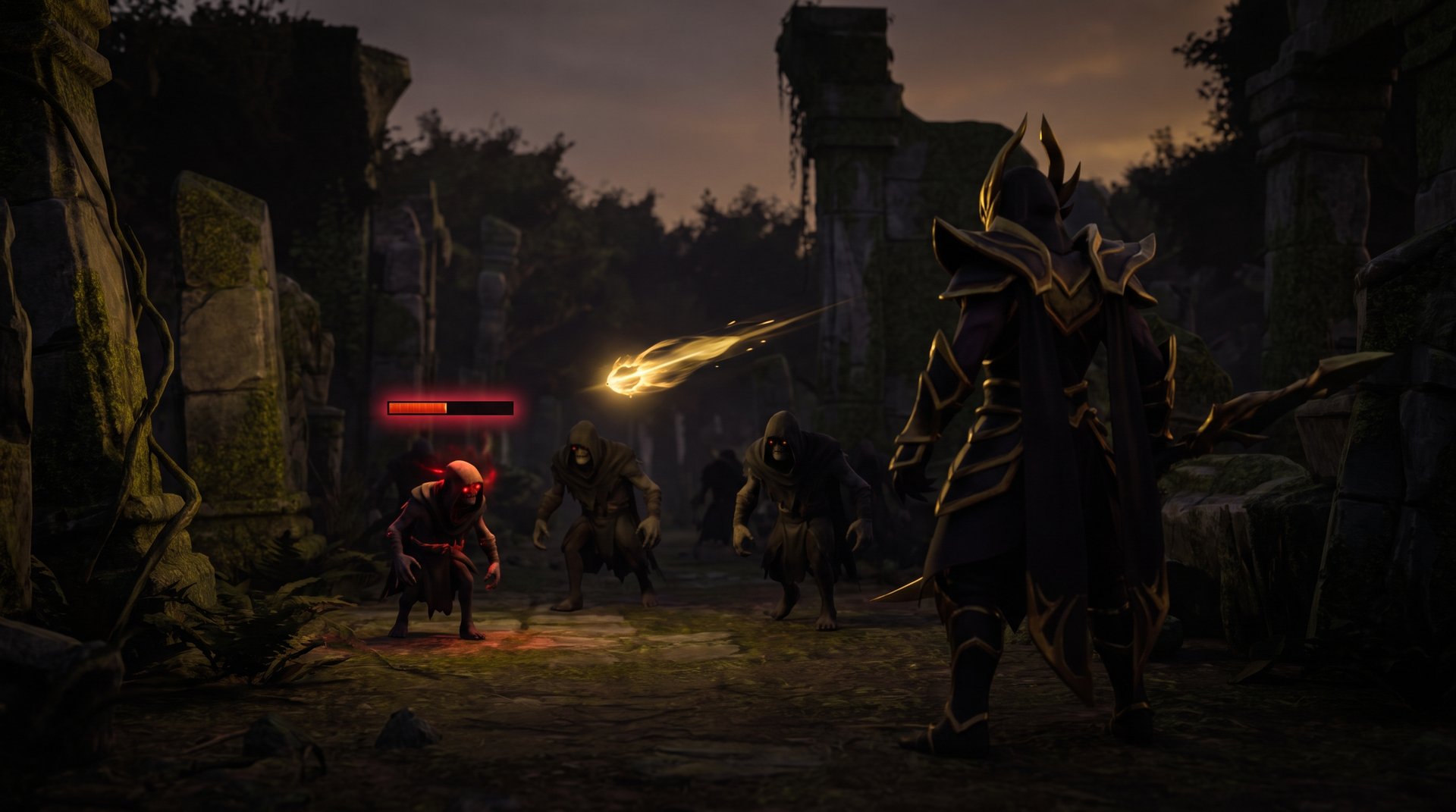
Best Carries for Last-Hitting Practice
If you are learning last-hitting as a carry — the role that relies most heavily on farming efficiency — these heroes are the best starting point. None of them require mechanical tricks like orb-walking to farm well. For animation-cancel techniques that further boost your CS once you have the basics, see our orb-walking and animation canceling guide.
1. Dragon Knight — The Gold Standard for Beginners
Dragon Knight has one of the most forgiving attack animations in the game. His attack point is 0.5 seconds — a slow, deliberate sword swing that gives you a wide visual window to read the timing and make your click. His base damage of 49-53 is not exceptional, but the animation is so readable that even new players can build solid last-hit habits on him fast.
The lack of mobility and escape makes Dragon Knight a pure laning test: there are no tricks, no blinks, no dashes to rely on. You either last-hit well or you do not. This makes him perfect for deliberate practice.
- Base damage: 49-53
- Attack point: 0.5s
- Why it works: Slow, readable melee swing with distinct sound cue
- Tip: Watch the sword tip — when it starts its downward arc, the hit is imminent. Use this visual anchor to train your timing.
2. Wraith King — High Damage, Zero Complexity
Wraith King is the easiest carry in the game for raw last-hitting numbers. His base damage of 62-72 means that many creeps will die from a single auto-attack even in the early game. His attack point is 0.5 seconds, similar to Dragon Knight, with a heavy swing that is impossible to miss visually.
Because his base damage is so high, he functions as a “training wheels” hero: even if your timing is slightly off, the raw damage covers the error. Once you start understanding when to click and when to hold off, you can move to heroes with lower damage margins to sharpen the precision. See our full beginner hero list for a broader picture of which heroes help you learn each skill.
- Base damage: 62-72
- Attack point: 0.5s
- Why it works: High base damage gives the widest timing safety net of any melee carry
- Tip: Practice denying your own creeps too — WK’s high damage makes deny windows appear early, and practicing denies alongside last-hits trains your situational awareness.
3. Juggernaut — Fast and Clean
Juggernaut’s attack point is 0.33 seconds — faster than Dragon Knight or Wraith King, but the animation is so clean and distinct (a quick katana slash with a sharp sound) that it becomes easy to internalize fast. His base damage of 54-60 is solid for a melee carry, and his high attack speed even at level 1 means you will have more opportunities per wave to practice timing.
The main challenge with Juggernaut is that his animation is short enough that you need to click slightly earlier than it “feels” right. But this is a useful skill to learn: understanding that your click must anticipate the hit rather than react to the death is the key insight that separates good farmers from average ones.
- Base damage: 54-60
- Attack point: 0.33s
- Why it works: Crisp, distinct katana slash with clear audio feedback
- Tip: Use the sound cue (the whip of the sword) as your primary timing feedback, not the visual. Audio-based timing is faster and more reliable once trained.
4. Sniper — Best Ranged Option for Beginners
Sniper has the fastest attack point of any beginner-friendly hero at 0.17 seconds, but his ranged nature compensates for this. Because he shoots from long range, you have more time to observe the creep’s HP before committing to an attack. His base damage of 50-53 is acceptable for a ranged carry, and the rifle shot is visually clean — no confusion about when the projectile leaves.
The real advantage of learning on Sniper is that ranged last-hitting requires you to account for projectile travel time. The shot takes a small fraction of a second to reach the target. This trains you to predict creep HP on arrival rather than at the moment of clicking, a skill that applies to every ranged hero in the game.
- Base damage: 50-53
- Attack point: 0.17s
- Why it works: Clean shot animation, ranged positioning advantage, fast release
- Tip: Position at maximum range and practice not moving while last-hitting. Unnecessary repositioning is the biggest source of missed last-hits on ranged heroes.
5. Ursa — Maximum Damage Margin
Ursa has the highest base damage of any standard carry at 64-74, which means he can last-hit from a significantly higher HP percentage than other heroes. His attack point of 0.3 seconds is fast but the animation (a bear paw swipe) is visually heavy and distinct. The combination of massive base damage and readable animation makes him ideal for players who are still building confidence in their timing.
One thing to be aware of: Ursa’s Fury Swipes passive ability stacks damage on the same target. This does not affect last-hitting directly (you still need to time the killing blow) but it does change how his damage interacts with creeps you have attacked multiple times. For pure last-hit practice, avoid stacking Fury Swipes on the same creep before the last-hit window.
- Base damage: 64-74
- Attack point: 0.3s
- Why it works: Highest base damage in class, easy to last-hit with even on slight timing errors
- Tip: Use Ursa to practice “deny mode” — his damage is high enough that you can reliably deny your own creeps, which is a last-hit skill that most players neglect.
6. Phantom Assassin — Crisp Animation, Lethal Timing
Phantom Assassin has a 0.3 second attack point with one of the cleanest, crispest melee animations in Dota 2. The thin blade swing is visually precise and easy to read. Her base damage of 52-62 is strong for a carry, and her critical strike ability (Coup de Grace) means some last-hits will come from unexpected critical hits — a good lesson in understanding how damage variation affects timing.
PA is a slightly more advanced pick than DK or WK because her lower HP total means she cannot stand in front of a creep wave taking free hits while learning. This forces you to think about positioning and animation canceling simultaneously, which makes her excellent for players who have the basics down and want to add complexity. Our easiest heroes for every role guide gives more context on where PA sits in overall difficulty.
- Base damage: 52-62
- Attack point: 0.3s
- Why it works: Precise blade animation, strong base damage, teaches crit-timing awareness
- Tip: Practice last-hitting without using Phantom Strike or Blur — isolate pure auto-attack timing first before adding ability layers.
| Hero | Role | Base Damage | Attack Point | Best For |
|---|---|---|---|---|
| Wraith King | Carry | 62-72 | 0.5s | Max damage safety net |
| Dragon Knight | Carry/Mid | 49-53 | 0.5s | Slow, readable melee timing |
| Ursa | Carry | 64-74 | 0.3s | Highest base damage margin |
| Juggernaut | Carry | 54-60 | 0.33s | Fast clean audio timing |
| Phantom Assassin | Carry | 52-62 | 0.3s | Precision blade animation |
| Sniper | Carry | 50-53 | 0.17s | Ranged projectile timing |
| Lich | Support | 56-64 | 0.56s | High-damage support practice |
| Tidehunter | Support | 62-64 | 0.46s | Tank support, heavy swing |
| Crystal Maiden | Support | 46-52 | 0.7s | Slowest, most readable animation |
| Viper | Flex | 53-57 | 0.3s | Clean ranged projectile |
| Drow Ranger | Carry | 46-56 | 0.3s | Classic ranged carry timing |
Best Supports for Last-Hitting Practice
Supports do not need to last-hit as often as carries — in fact, a support should almost never contest last-hits from their own carry. But supports absolutely need to last-hit efficiently in two scenarios: when laning solo, and when they need to earn enough gold for core support items. These heroes are the best options for learning last-hitting fundamentals from a support role.
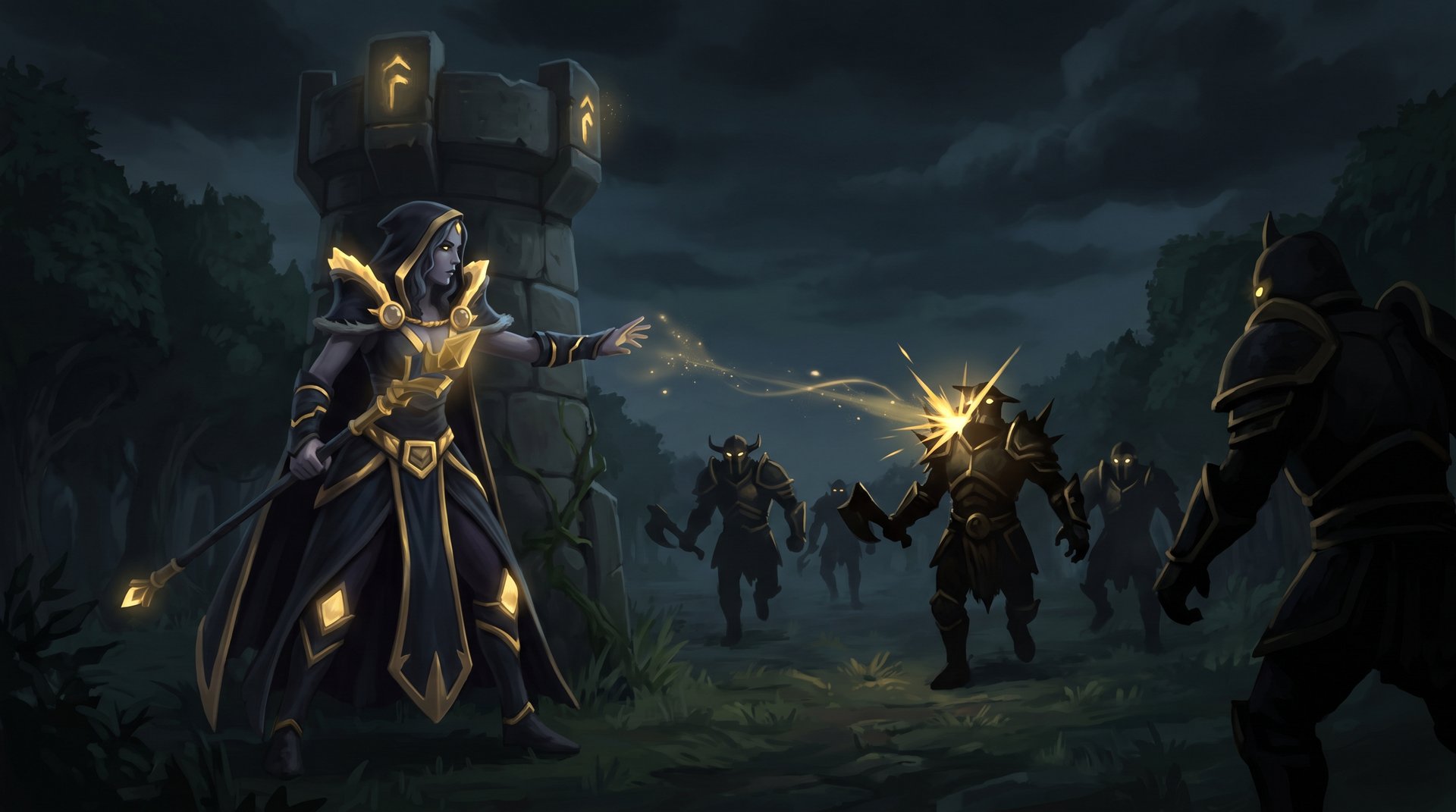
7. Lich — Surprisingly Hard-Hitting Support
Lich has base damage of 56-64, which is higher than many carries at the same level. His attack point of 0.56 seconds is on the slower side, making the animation slow enough to read clearly. For a support player who wants to practice last-hitting mechanics without switching to a carry hero, Lich offers the best combination of high damage (minimizing the precision required) and readable animation.
His ranged auto-attack also means there is less risk of taking unnecessary hits from the opposing team while practicing in lane. Lich players who learn last-hitting well can reliably hit boots and supporting items in the first 6-8 minutes.
- Base damage: 56-64
- Attack point: 0.56s
- Why it works: High damage for a support, slow readable ice bolt animation
- Tip: Avoid using Frost Blast on a creep you are trying to last-hit — it will push the creep’s HP down and then deny you the last-hit. Separate spell use from auto-attack practice.
8. Tidehunter — Tank That Teaches Melee Timing
Tidehunter has base damage of 62-64 and an attack point of 0.46 seconds. For a support, this damage is exceptional — he can comfortably last-hit as if he were a carry. His animation is a slow, heavy club swing with a distinct downward arc. The size of the character model and the weight of the animation make it one of the easiest melee auto-attacks to time in the game.
Tidehunter is also durable enough to stand in front of a creep wave without worrying too much about enemy harassment, which allows you to focus on the last-hitting mechanics without managing your own HP simultaneously. A good entry point for players who want to learn melee timing but find carries too squishy to practice comfortably.
- Base damage: 62-64
- Attack point: 0.46s
- Why it works: Durable enough to face-tank practice, heavy readable club animation
- Tip: Use Gush only to counter enemy initiations — do not use it on creeps during last-hit practice, as the slow will mess with your timing reads.
9. Crystal Maiden — Slowest, Most Readable Animation
Crystal Maiden has the slowest attack point of any hero commonly played — approximately 0.7 seconds. This makes her technically the “easiest” hero to anticipate because the animation is so slow you can see every frame of it. Her base damage of 46-52 is lower, which means you need more precision, but the animation wind-up is so obvious that you have a large window to choose whether to commit or back off a given auto-attack.
CM is not recommended as a primary last-hitting teacher because her low base damage means you need to be more accurate, not less. But for a support player who wants to specifically train reading and anticipating slow animations — a skill that transfers to understanding enemy attack animations when you are contesting last-hits — she is genuinely useful.
- Base damage: 46-52
- Attack point: 0.7s
- Why it works: Extremely slow, obvious animation teaches you to read every frame of the wind-up
- Tip: CM’s low damage means you must be precise — use her to test whether you have truly internalized timing, not to build initial confidence.
10. Viper — Flexible Role, Clean Projectile
Viper is played as a support in some brackets and as a carry in others, making him a versatile pick for last-hit practice. His attack point is 0.3 seconds with a very clean venom projectile that is easy to track visually. Base damage of 53-57 is solid, and his passive Corrosive Skin does not complicate last-hitting mechanics the way some other passives do.
Viper’s ranged attack means you can practice projectile-travel timing (the gap between the projectile leaving and arriving at the target) while also learning how to stay out of melee range. For players who want to practice both last-hitting mechanics and ranged positioning simultaneously, Viper is one of the best choices on this list.
- Base damage: 53-57
- Attack point: 0.3s
- Why it works: Clean ranged projectile, versatile role, no ability interference
- Tip: Poison Attack slows targets. Do not activate it on creeps during last-hit practice — the slow creates different timing feedback than your standard auto-attack and muddies the learning.
How to Practice Last-Hitting in Dota 2
Knowing the right heroes is only half the equation. The way you practice determines how fast the skill transfers to real games. Here is the structured approach that TeamSmurf coaches use with clients who are working on farming fundamentals.
Step 1: Custom Lobby, No Abilities
Start in a custom lobby with no enemies and no creep aggro. Pick one of the heroes from this list, go to lane, and spend 10 minutes hitting creeps with auto-attacks only. No abilities. No items. Count your last-hits at the 10-minute mark. A reasonable baseline is 70-80 last-hits in 10 minutes under ideal conditions. If you are below 60, focus purely on timing — do not add complexity until you hit that threshold.
Step 2: Add the Enemy
Once you hit 70+ last-hits in a solo lobby, add a bot enemy to lane. Now you have to manage lane equilibrium (where the creep wave meets) while last-hitting. Your CS will drop — expect 50-60 in the first few sessions. The goal is to recover to 70+ while managing both tasks simultaneously. This is where most players plateau, and it is where the heroes on this list provide the most value — their forgiving animations let you focus on wave management without losing the last-hit timing you built in Step 1.
Step 3: Deny Training
Denying your own creeps is last-hitting at a harder timing window (the creep must be below 50% HP, and you are right-clicking a friendly unit which the game does not auto-do). Add deny practice to your sessions once your CS is consistently above 70 in a live lane. Dragon Knight and Wraith King from this list are the best heroes to learn denying on, because their high damage makes deny windows appear early and their animations are slow enough to react to.
Step 4: Real Games With Tracking
Move to real games and track your 10-minute and 20-minute CS numbers. Use Dotabuff to compare against the average for your bracket. If you are consistently 20+ CS below average at 10 minutes for your role and rank, you have a last-hitting deficit. If you are within 10-15 of average, focus on other aspects of your MMR improvement.
For context on what a healthy farming rate looks like: a Herald carry averaging 40 CS at 10 minutes is actually performing well for that bracket, where most players are in the 25-35 range. An Archon carry should target 55+. The standard professional benchmark is 80-90 CS in 10 minutes under real game conditions, including team fights and rotations.
Last-Hitting Under Pressure
The real challenge is not last-hitting in a calm lane — it is last-hitting when the enemy supports are harassing you, when your supports are pulling, when the enemy carry is denying aggressively, or when a fight breaks out in your lane. These situations stress-test your auto-pilot: can your timing hold up when you are making other decisions simultaneously?
The heroes on this list — particularly Dragon Knight, Wraith King, and Lich — help here because their animations are so readable that you can execute the last-hit timing on partial attention. Once you have 200+ games on any of these heroes with deliberate CS focus, the timing starts to operate as background processing.
If you are stuck on a CS plateau and want expert coaching tailored to your specific laning habits, TeamSmurf coaching sessions include dedicated last-hitting analysis where coaches review your replays and identify your specific timing errors, wave management habits, and lane positioning issues.
Stop Losing CS to Timing Errors
Dedicated last-hitting practice takes weeks to translate into consistent game performance. TeamSmurf coaches can identify exactly where your farming breaks down — animation timing, wave management, positioning, or decision-making under pressure — and fix it in a few sessions rather than months of guessing.



