

After the Boost: How to Maintain Your New Rank

Getting boosted changes a number. Staying at that number requires something different — a shift in how you approach every game, every hero pick, and every decision on the map. The bracket above your natural MMR has tighter margins, faster rotations, and players who punish mistakes you could get away with before.
This guide breaks down the gameplay principles behind rank retention. No anecdotes, no invented client stories — just the mechanical and strategic adjustments that hold MMR at any bracket. Whether you boosted to climb out of Herald or landed in Ancient for the first time, the framework is the same.
If you are curious about the service side first, our MMR boosting guide covers how the process works from order to delivery. This article picks up where that ends: what happens after you log back in.
In This Guide
What Your New Rank Actually Means
MMR is not a measure of raw mechanical skill in isolation. It is a measure of consistent, correct decision-making compounded over dozens of games. Players at higher brackets do not necessarily have faster hands — they make fewer expensive mistakes per game. A Divine player does not click faster than an Archon player. They die to fewer uninformed engagements, they read the map before they commit to a fight, and they know when the correct play is to farm instead of force an objective.
Understanding this matters for retention because it reframes what you need to work on. If you think higher MMR means you need lightning-fast last-hitting, you will grind the wrong skill. If you understand that it means fewer costly errors per game, you know exactly where to put your energy.
The core game loop does not change across brackets. Last hits, towers, Roshan, ancient — these objectives are the same from Herald to Immortal. What changes is execution density: how often the players around you make the correct play, how quickly punishments arrive after a mistake, and how much the margin for error per decision shrinks. Every 1,000 MMR you climb, that margin tightens.
This framing also means that the skills you need to retain your boosted rank are largely learnable in a reasonable time frame. You are not trying to rewire your nervous system for faster reflexes. You are building new decision habits on top of the game knowledge you already have. That is a much faster process than developing mechanical skill from scratch.
The first games at your new bracket will feel unfamiliar. Enemy rotations arrive earlier. Opponents punish overextensions you got away with before. Supports play more aggressively. This is the new normal, not an anomaly. The sooner you accept that these games are showing you the bracket standard, the sooner you start adapting instead of attributing results to bad luck.
The Skill Gap Reality: What Your New Bracket Expects
Before you can adjust your play, you need an honest read on what the new bracket actually demands. Here is a bracket-by-bracket breakdown of what each tier raises the bar on relative to the one below it:
| Rank Tier | Key Skill Increase vs. Previous Bracket | Most Common Retention Failure |
|---|---|---|
| Guardian (1-2k) | Basic laning discipline — staying alive, not dying to roams | Overextending in lane without map awareness |
| Crusader (2-3k) | Item timing awareness — treads before luxury | Buying wrong items in wrong order |
| Archon (3-4k) | Objective trading — knowing when to take towers vs fight | Forcing fights when farm would win faster |
| Legend (4-5k) | Vision game — planting and contesting wards proactively | Playing blind after the laning phase |
| Ancient (5-6k) | Tempo control — understanding which team has the power window | Fighting into the enemy peak timing |
| Divine (6-7k) | Draft exploitation — picking heroes that win the matchup | Running comfort picks into hard counters |
| Immortal (7k+) | Micro-optimization — lane equilibrium, creep cutting, isolation | Playing at the correct pace but skipping small advantages |
Your new bracket has one or two of these columns where the gap is most visible. That is your priority. You do not need to be perfect at every layer — you need to stop being a liability at the one that gets you killed most often.
The fastest way to identify your specific gap is to watch replays from your first three games at the new rank. We cover the exact method in the replay review section below. What you are looking for is not every mistake but the category of mistake that repeats. If you die on the same side of the map in the same phase of the game across three games, that is the gap that matters most right now.
Hero Pool — Your Most Controllable Variable
Of all the variables in rank retention, hero pool is the one you have the most direct control over. You cannot control teammate quality, draft decisions, or server conditions. You can control which heroes you queue on and how well you know them.
The conventional wisdom is to pick a pool of three to five heroes and stick to them. That is correct, but the reasoning behind it matters more than the number. When you know a hero deeply, you spend zero mental bandwidth on mechanics — your hands run the farming pattern while your brain reads the map. That freed bandwidth is exactly what higher brackets demand more of. A player on their third Juggernaut game and a player on their 400th Juggernaut game are playing two different games. The experienced one is playing Dota 2; the other is playing Juggernaut.
How to Build the Right Pool
Not every hero pool works equally for retention. Some heroes are mechanically forgiving and let you focus on game sense. Others require such precise timing windows that mistakes compound. Choose heroes where your mastery advantage outweighs the bracket skill gap.
- Farming cores with clear timing windows: Heroes like Wraith King, Dragon Knight, or Ursa have straightforward power spikes. You know when you are supposed to fight. The decision tree is limited enough that you can focus on macro play.
- Utility supports with flexible timing: Crystal Maiden, Witch Doctor, or Lion are dominant at almost every bracket because their skill expression is in positioning and spell timing — both of which improve fastest with deliberate practice.
- High-floor heroes over high-ceiling heroes: Heroes with a high skill ceiling (Meepo, Invoker, Earth Spirit) require mechanical mastery before their macro potential unlocks. A three-game Meepo is a liability. A 30-game Dragon Knight can carry.
If you want a structured review of which heroes fit your playstyle at your new bracket, a Dota 2 coaching session gives you an Immortal-rank read on exactly that. But you can start with the framework above and narrow over 10-15 games based on results.
How to Study Your New Bracket
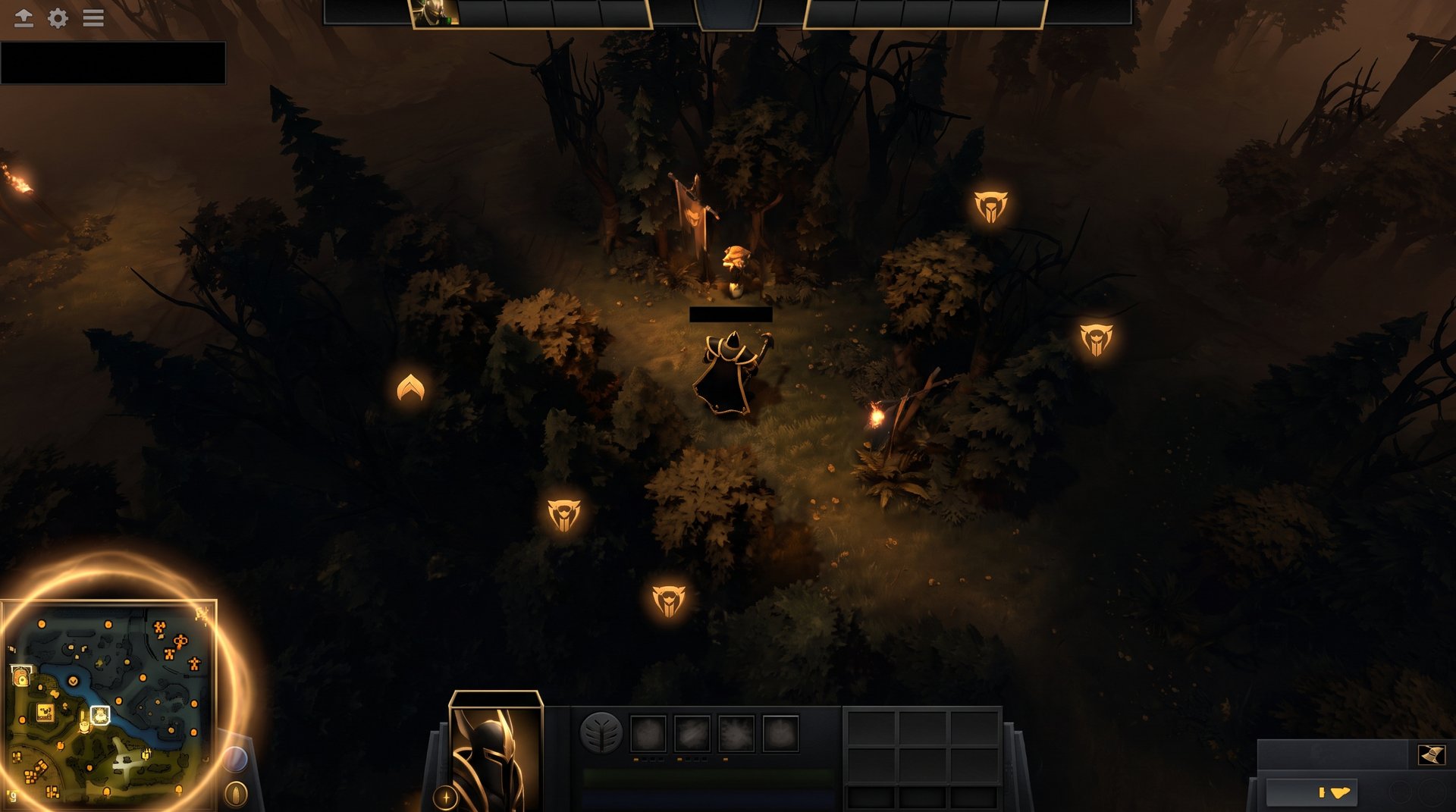
Replay review is the most underused tool in rank retention. Most players queue, lose, feel frustrated, and queue again. They repeat the same mistakes at speed. Replay review breaks that loop because it separates the event (the game) from the emotion (the tilt) and lets you see what actually happened.
The method matters. Watching a replay passively — fast-forwarding through it while half-paying attention — teaches you almost nothing. Here is a structured review process that produces usable insights in under 20 minutes per game:
The Three-Question Framework
- When was the game decided? Find the moment where one team’s net worth went permanently ahead. It is almost always a single fight, objective, or pick-off. Everything before that moment is the setup; everything after is the consequence.
- Where were you when it happened? Were you farming the wrong camp? Did you follow a bad initiation? Were you 15 seconds away from getting to the fight? Identify your position at the moment of decision.
- What was the correct play? Not what should your teammates have done — what should you have done? The variable you control is the only one worth reviewing.
Run this three-question loop on your own deaths from each game. Not every death — prioritize deaths that happened outside your base, after the 10-minute mark. Early laning deaths are important but usually come from a smaller set of patterns (overextending, misjudging enemy power, getting caught by a support gank). Mid-game deaths are more diagnostic of higher-bracket adjustment issues.
Reading Enemy Patterns
Your new bracket has higher-quality opponents. Use that as data. Watch how the enemy offlaner positions in lane. Watch when the enemy mid player leaves for a gank. Watch which jungle camps the enemy pos4 stacks. These are patterns you can predict in future games because they are bracket norms, not individual player tendencies.
The goal of replay review is not to catalog every mistake. It is to identify one or two recurring patterns per session and fix them before the next queue. One fixed pattern per week compounds quickly. After a month of structured review, you will have addressed the four or five core gaps that were causing drift, and your bracket feel will shift from “uncomfortable” to “this is my level.”
Map Awareness at Higher MMR
Map awareness is not about looking at the minimap more often. It is about looking at the right time and taking the right action from what you see. Players at higher brackets look at the minimap at specific moments — before a fight, before crossing the river, before rotating — and they have pre-planned responses to what they see. This is different from passively checking the minimap between clicks.
The Trigger-Based Minimap Check
Build a mental trigger: every time you are about to cross a ward line (river, Roshan pit, enemy jungle entrance), you pause one second to check the minimap. Not a full scan — a one-second check for: are all five enemy heroes accounted for? This single habit prevents most of the uninformed deaths that push your MMR downward in the first weeks at a new bracket.
The trigger list worth building:
- Before walking past the river — check minimap
- Before entering Roshan pit — check minimap
- Before entering enemy jungle — check minimap
- Before buying back — check minimap for whether it matters
- Before using a major cooldown — check if anyone else is about to engage
Vision Game Expectations
At brackets above Legend, the vision game becomes a dominant variable. Players actively deward key spots before objectives. Smoke ganks are set up with vision denial, not just execution. If you are playing support and you are not placing at least one sentry per major objective attempt, you are below the bracket expectation on vision.
- Supports: Carry at least one sentry in your inventory after minute 10. Place it before fights near objectives, not after you die.
- Cores: Know which jungle corridors have ward spots. If you are farming high ground jungle with no vision, assume you are being watched.
- All roles: Call missing when an enemy disappears from the lane. This is a minimum bracket standard at Ancient and above.
The Consistency Principle
Peak performance is noise. Consistent performance is signal. This distinction is more important than any individual game result and it is the core reason MMR slides for players adjusting to a new bracket.
A single great game — a 20-kill carry performance, a 20-assist support game — does not tell you whether you belong at your new MMR. Ten games where you consistently hit your item timings, make correct rotation calls, and avoid feeding your opponent does. MMR is designed to find your consistent level, not your ceiling.
Session Discipline
How many games you play in a single session matters more than most players acknowledge. Mental freshness degrades with each game. Reaction time drops. Patience shrinks. Tilt risk increases. In a state of mental fatigue, you are playing at a bracket below your actual current skill level. The MMR result reflects fatigue, not ability.
Practical guidelines for session discipline at a new bracket:
- Set a two-game stop rule after a loss. After losing two games in a row, take a minimum 30-minute break. Do not queue to “get it back.”
- Never queue when you are angry about the previous game. The carry from that anger into the next game is measurable and always negative.
- Play your best games first in a session, not last. If you have two hours, do not warm up for 90 minutes and play your real games at the end.
- Set a session length limit before you start. Unlimited queuing is the most reliable way to turn a winning day into a losing one.

Decision-Making Frameworks That Scale
Some decision principles apply at every bracket and become more important — not less — as you climb. These are not advanced tactics. They are foundational frameworks that higher-bracket players execute more consistently than lower-bracket players.
The Objective Priority Ladder
Kills are a byproduct of winning teamfights. Towers are the product of winning teamfights. Do not confuse the order. A fight that kills three enemy heroes but grants no objective net worth is worth less than a fight that kills one hero and takes a tier-2 tower. The objective always outweighs the kill count.
At your new bracket, games feel faster because objectives are taken more consistently after each fight. If you are used to a bracket where fights happen without objectives following, this is a key adjustment. After every won engagement, immediately identify the nearest objective and move toward it. Do not wait for your team to suggest it.
Resource Efficiency Thinking
Higher-bracket players think in terms of gold per action and experience per minute at a level lower brackets do not. This shows up most clearly in farming patterns. A 10% improvement in farming efficiency — not in last-hit mechanics, but in routing decisions and camp selection — can translate to 1,000-1,500 gold per game, which is the difference between a timing item and a deficit.
Resource efficiency checkpoints to audit in replays:
- Were you ever standing still, waiting? That is wasted action economy.
- Did you take the camp that respawned while you were nearby, or did you skip it?
- Did you use your buyback window to immediately get back to farming, or did you wait at base?
- Did you buy a Salve and use it while farming, or did you recall to heal?
- Did you stack camps while waiting for runes? A single stack is 150-300 gold someone will collect later.
Proactive vs. Reactive Play
At brackets below your new one, reactive play (responding to what happens) gets you further. At higher brackets, proactive play (making things happen on your terms) is required to hold MMR. The reason is that your opponents are also capable of proactive play. If you only react, you are always a step behind.
One concrete proactive habit to build: in the 10-15 minute window, always have an answer to the question “where am I rotating next?” Before a camp respawns, before a rune spawns, before your lane goes to base — make a plan. The habit of planning ahead by 60-90 seconds is what separates players who hold their new bracket from those who drift back.
Role Specialization — Going Deep Instead of Wide
The highest-leverage specialization decision you make in Dota 2 is which role you play. Not which hero — which role. Every role has a fundamentally different mental model for what winning looks like, and trying to switch roles at a new bracket amplifies your adjustment difficulty significantly.
Playing to Your Natural Game Sense
Players naturally fall into one of a few game-sense categories. Some people read fights instinctively — they see the angle, they know where to be. These players thrive in initiation roles (pos3 offlane, pos4 roaming support). Some players think in resources — they always know what their net worth should be, what items they need, and what the gold gap looks like. These players thrive in carry and farming-core roles. Some players communicate well and play for the team’s decision — they belong in pos5 hard support.
Identifying your natural category and specializing in the corresponding role gives you a structural advantage at every bracket you climb to. You are not fighting your game sense; you are amplifying it.
If you are unsure which category you belong to, a structured coaching session with a role-specialist coach will identify this within one game review. The investment pays for itself in faster MMR retention. You can book through our coaching service or explore standalone rank solutions via our comparison of Dota 2 boosting services.
The Specialist Edge at Higher Brackets
At Guardian and Crusader, playing multiple roles is viable because the skill bar for each is low enough that you can be “good enough” at all of them. By Ancient and above, the bar for each role is high enough that “good enough” is no longer sufficient. A specialist who knows every matchup on their role will outperform a generalist who plays all five roles at 60% effectiveness every single game.
This applies to hero pool within a role as well. Three heroes at one role is almost always better than ten heroes across all roles. The mastery compounds. The decision trees overlap. You learn the role, not just the hero.
When a Boost Is a Springboard, Not Just a Number
A rank boost moves you to a new bracket. What you do in that bracket determines whether it stays a permanent upgrade or a temporary one. The players who retain their boosted rank longest are the ones who treat the boost as an environment change, not a skill certification. The new bracket exposes you to better gameplay, faster decisions, and cleaner fundamentals. That exposure is itself a training tool.
Every game you play at your new rank is a data point. The patterns you observe in your opponents — how they rotate, how they draft, how they react to objectives — are patterns you can study and absorb. You are not just playing games; you are learning what higher-level Dota 2 looks like from the inside.
This is why players who actively study their new bracket tend to not only hold their boosted MMR but surpass it. The exposure to a higher standard of play, combined with structured reflection through replay review, accelerates improvement faster than grinding at a comfortable bracket where opponents do not pressure your weak points.
If you want to make sure your service was handled by a specialist in your game and your region, our review of the best Dota 2 boosting services gives you the full comparison. If you want to understand the safety framework and what protections exist, our Dota 2 boosting safety guide covers the complete picture.
Ready to Hold — or Climb Further?
If you want to accelerate the process, our Immortal-rank coaches specialize in exactly this: identifying the one or two adjustments that hold your new bracket and turning them into habits. A single coaching session is often enough to identify and fix the specific pattern that is causing drift.
For those who want to move up again, our boosting service handles the bracket change while you work on the skills to hold it.
Book a Coaching Session View MMR Boost Options



