Dota 2 Patch 7.40c Meta: Treant Protector Dominates with 170 Bans, Razor Rising

Treant Protector has been banned 170 times at DreamLeague Season 28. Let that sink in. Out of roughly 183 games played across group stages and playoffs, this hero has been deemed too dangerous to let through in nearly every single draft. With only 13 appearances and a 61.5% win rate (8-5), Rooftrellen is not just the most contested hero in the tournament — he is arguably the most feared support in all of competitive Dota 2 right now.
Patch 7.40c has reshaped the competitive landscape in ways that few predicted. While the patch notes themselves focused on nerfing Clinkz and carry Abaddon while adding Largo to Captain’s Mode, the ripple effects have created a metagame defined by tanky aura offlaners, flexible core picks, and supports who can single-handedly dictate the pace of a game. In this comprehensive meta breakdown, we will dissect why Treant Protector commands so much respect, how Razor has emerged as a surprise flex pick, and which heroes you should be spamming in your ranked games to climb MMR before the inevitable 7.40d shakeup.
Treant Protector: 170 Bans and the Most Feared Hero in Professional Dota 2
The numbers do not lie. Treant Protector’s 170 bans at DreamLeague Season 28 represent a ban rate that dwarfs every other hero in the tournament. To put this in perspective, Jakiro — the second most contested support — has roughly 75 bans. Treant has more than double that figure. Teams are not just worried about facing him; they are terrified of it.
So what makes this hero so oppressive in 7.40c It comes down to five key factors that combine into a support package that no other hero can match.
Living Armor: The Global Safety Net
Living Armor remains one of the most impactful non-ultimate abilities in the game. Blocking up to 420 damage (560 with talent) from all sources while healing 204 HP with the talent, this spell effectively gives every ally on the map a second health bar during the laning phase. In a meta where shared tangoes have been nerfed and the Flagbearer Creep no longer heals heroes, sustain is at a premium. Treant provides it globally, for free, on a short cooldown.
But Living Armor is not just a laning tool. During sieges, casting it on towers regenerates a significant portion of their health. Enemy teams that commit to pushing a lane and fail to finish off the tower quickly will watch their progress evaporate. This forces opponents to either commit harder to sieges (risking overextension) or give up map pressure entirely. Neither option is appealing.
Overgrowth: BKB-Piercing Teamfight Control
Overgrowth is the kind of ultimate that wins tournaments. An area-of-effect root that pierces spell immunity, deals up to 475 damage, and locks targets down for five seconds. In an era where BKB timing is everything, having a support who can ignore it entirely and still lock down three or four heroes is absurdly valuable.
The counterplay exists — dispels like Lotus Orb, Abaddon’s Aphotic Shield, or Oracle’s Fortune’s End can remove it. But if the enemy team mistimes their saves by even half a second, Overgrowth has already done its job. Combined with a Blink Dagger initiation, Treant can set up teamfights that end games on the spot.
Eye in the Forest: The Best Shard in Dota
Aghanim’s Shard gives Treant the Eye in the Forest ability, which is essentially unlimited free wards. Three charges on purchase with a new charge every 55 seconds, and each ward lasts five minutes. At any given time, a Treant player will have 3-4 supplementary vision sources scattered across the map. In professional Dota, where information wins games, this is an insane amount of value from a 1,400-gold investment.
Pro teams at DreamLeague have been using Eyes in the Forest to track enemy farming patterns, set up smoke ganks with near-perfect information, and maintain vision control in areas where placing conventional wards would be too risky. It removes one of the main resource drains on support players — buying and placing observer wards in contested areas — and replaces it with a safe, long-lasting alternative.
Laning Presence That Bullies Most Matchups
Starting with 670 HP, 3.4 strength gain, and 3.5 base armor, Treant is one of the tankiest supports in the game from minute zero. Nature’s Grasp provides zone control against ranged heroes, while Leech Seed turns most melee trades decisively in Treant’s favor. In a patch where the laning phase matters more than ever due to reduced sustain options, having a support who can outright win most 2v2 lanes is a massive drafting advantage.
Flexible Itemization
Beyond the mandatory Shard, Treant’s item build adapts to whatever the game requires. Need save Glimmer Cape and Force Staff. Want to amplify healing Guardian Greaves and Holy Locket. Looking for more teamfight initiation Blink Dagger into Overgrowth. Solar Crest for physical damage matchups. There are very few wrong choices, which means Treant scales well into the late game regardless of how the draft plays out.
Razor: The Flex Pick Nobody Expected
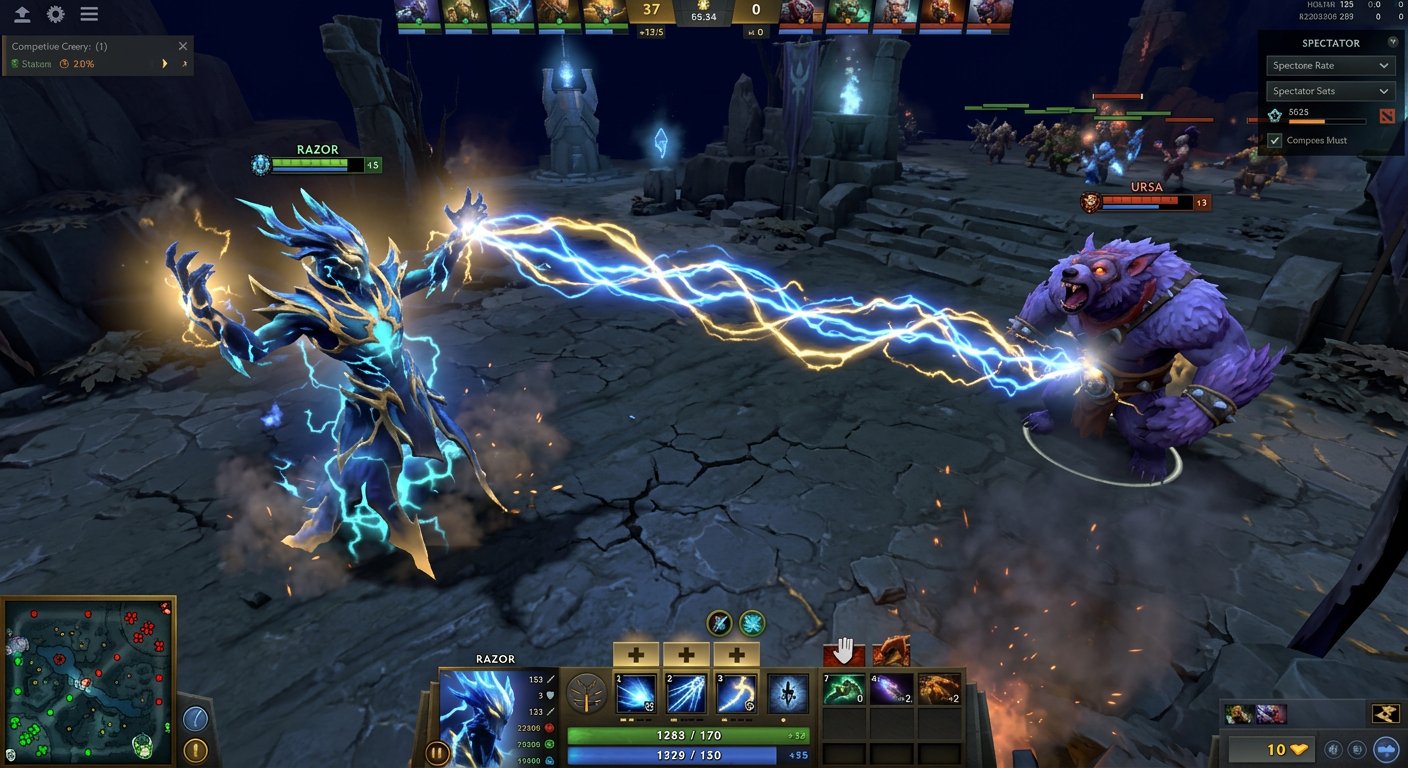
If Treant Protector is the undisputed king of the ban phase, Razor is the dark horse story of DreamLeague Season 28. With 19 wins out of 51 picks, his 37% win rate does not look impressive on paper. But that statistic misses the point entirely. Razor is being picked in the first phase of drafts as a flex hero who can slot into mid or offlane, and that draft flexibility alone is worth the occasional loss.
The resurgence of aura-based offlaners is the driving force behind Razor’s return. Patch 7.40c made Guardian Greaves significantly cheaper, and the standard Razor build of Greaves into Pipe of Insight or Crimson Guard turns him into a walking aura platform that buffs his team while draining the enemy carry’s damage through Static Link.
Why Razor Works as a Flex Pick
The beauty of a first-phase Razor is that the enemy team cannot reliably identify where he is going. If you pick Razor early, your opponents have to consider both mid and offlane Razor in their subsequent draft decisions. This means they either need to pick heroes that are good against Razor in both positions (severely limiting their options) or accept that they might get counter-drafted in one of those lanes.
Mid Razor plays a more tempo-oriented game, building items like Kaya and Yasha or Witch Blade to abuse his damage advantage in the mid game. Offlane Razor goes full aura tank, making his team nearly unkillable in five-on-five engagements. The hero is fundamentally different depending on which lane he goes to, and that is exactly what makes him so dangerous in the draft phase.
Razor’s Weaknesses in the Current Meta
Let us be honest about why Razor’s win rate is struggling. The hero has real problems against several popular picks. Windranger can burst him before Static Link steals meaningful damage. Clinkz’s Burning Army creates multiple damage sources that Link cannot deal with. Huskar similarly overwhelms Razor with magic damage and sustain that ignores the physical damage drain.
Teams that pick Razor without accounting for these matchups are getting punished. But teams that draft him intelligently — banning or picking around these counters — are finding tremendous success. The hero is not a blind first-pick; he is a strategic first-pick that requires the rest of your draft to support him.
The Complete DreamLeague Season 28 Meta Tier List
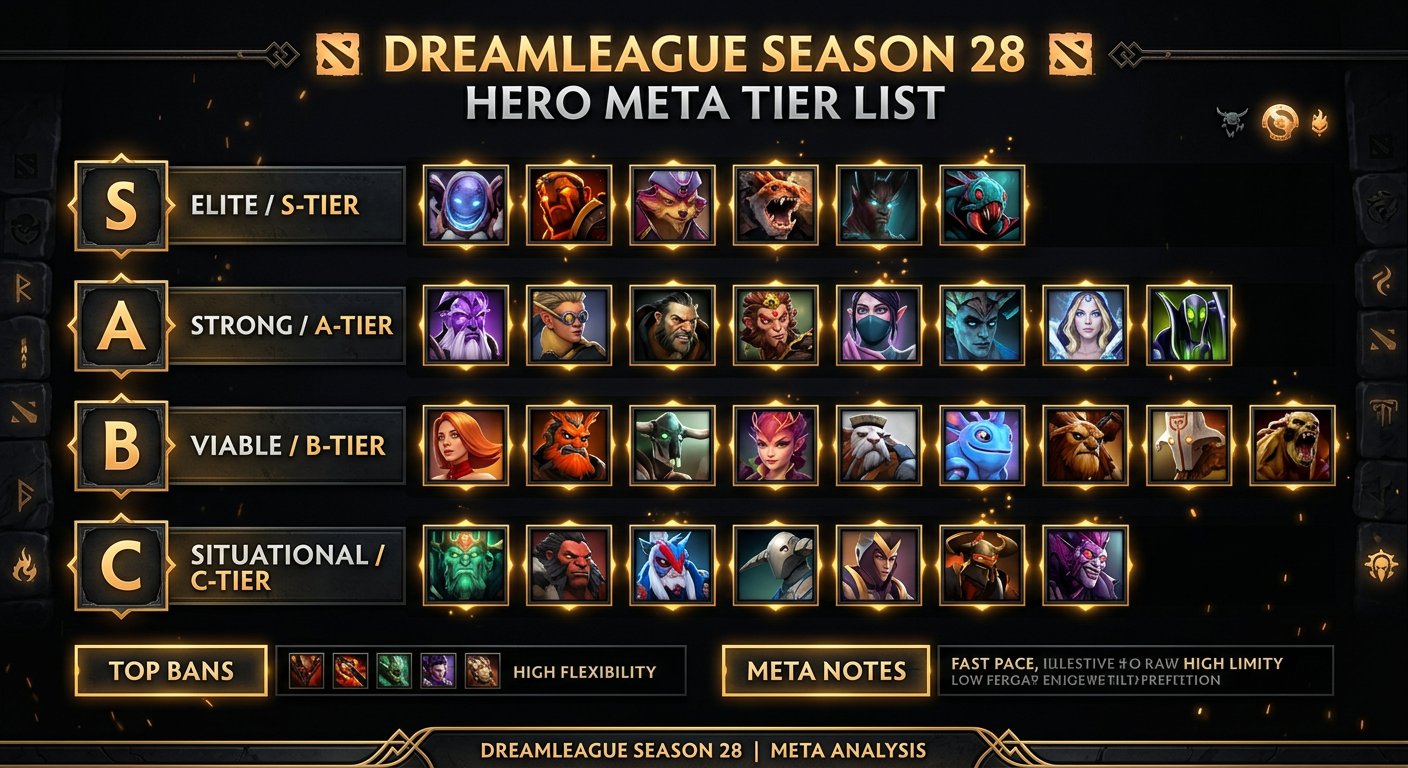
Based on pick rates, ban rates, and win rates from DreamLeague Season 28, here is how the competitive meta shakes out in Patch 7.40c. If you are looking to climb MMR, pay close attention to the S and A tier heroes — these are the characters that consistently perform at the highest level of play and translate well to pub games.
S-Tier: Must Pick or Ban
Treant Protector (Support) — 170 bans, 13 picks, 61.5% win rate. The most contested hero in the tournament by a massive margin. If you can play this hero, you should be playing this hero.
Shadow Fiend (Carry/Mid) — 31 wins out of 48 picks, 64.6% win rate. The best carry in the game right now. Kaya and Yasha build into mixed damage makes him a threat at every stage. Can flex between carry and mid, making him extremely hard to draft against.
Warlock (Support) — 38 wins out of 69 picks, 55.1% win rate. Shadow Word buffs in 7.40c made his laning phase absurdly strong. Fatal Bonds plus Chaotic Offering regularly tops damage charts in teamfights. The most reliable support pick behind Treant.
Jakiro (Support) — 35 wins out of 76 picks, 46.1% win rate. Nearly equal bans (75) to picks (76). Ice Path, Dual Breath wave clear, and Macropyre make him the complete support package. Win rate is deceptive — he is still a top-tier pick.
A-Tier: Strong Meta Picks
Tiny (Mid/Support) — 27 wins out of 50 picks, 54% win rate. Flexes between mid and position 4 seamlessly. Toss plus Requiem of Souls with Shadow Fiend is a devastating combo. Tundra Esports went 9-1 with Tiny in their lineup.
Largo (Offlane) — 32 wins out of 53 picks, 60.4% win rate. The newest hero addition to Captain’s Mode and already dominating. Offlane Largo rushes Aghanim’s Scepter to play two songs with Amphibian Rhapsody simultaneously. Nearly impossible to kill when fully itemized.
Kez (Carry) — 22 wins out of 50 picks, 44% win rate. Overloaded kit that enables 1v5 carry potential. Low win rate reflects extreme difficulty — only specialists like Jikroy and miCKe consistently make it work. Momentum-dependent; one or two deaths can end the game.
Razor (Mid/Offlane) — 19 wins out of 51 picks. Flex pick value is enormous despite the middling win rate. Guardian Greaves rush into aura items creates an unkillable frontline. Needs draft support to avoid bad matchups against Windranger, Clinkz, and Huskar.
B-Tier: Situationally Strong
Morphling (Carry) — S-tier in pubs according to most tier lists, Morphling remains a dominant safelane pick. Flexible between physical and magic builds (Ethereal Blade plus Phylactery). Strong stat scaling and survivability through Attribute Shift.
Drow Ranger (Carry) — Another pub powerhouse that sees competitive play. Marksmanship provides massive damage scaling, and the ranged backline carry archetype fits perfectly into a meta defined by tanky frontliners.
Ursa (Carry) — Counter-pick to the tanky offlane meta. Centaur and Tidehunter no longer get free lanes against Ursa. Easy Roshan clears and strong mid-game presence make him a reliable draft option when the matchup is right.
Templar Assassin (Carry) — Despite multiple nerfs across 7.39 and 7.40 sub-patches, TA remains a top carry. Snowball potential is enormous if she wins her lane. Struggles against poke-heavy lineups with Skywrath or Windranger.
Beastmaster (Carry) — Specialist pocket pick that showed up at DreamLeague 28. Beast Mode facet into Aghanim’s Scepter for farming and teamfight scaling. Manta Style as a core item for stats, movement speed, and dispel. Primal Roar pierces spell immunity, giving him guaranteed kill potential.
C-Tier: Falling Out of Favor
Clinkz (Carry) — Was the top carry in early 7.40 but got hit hard by 7.40c nerfs. Burning Army no longer decimates buildings as quickly. Still viable for single-target DPS but no longer the default first pick.
Huskar (Mid) — Nerfed in recent sub-patches. Still strong in the right draft but no longer the blind mid pick he was a month ago.
Patch 7.40c Key Changes That Shaped This Meta
Understanding why the meta looks the way it does requires looking at the actual patch changes. Here are the most impactful adjustments in 7.40c:
Clinkz Nerfs: Burning Army’s building damage was significantly reduced. This was the primary reason Clinkz dominated early 7.40 — he could solo push lanes and take objectives faster than any other carry. The nerf slowed him down considerably and opened the door for other carries to compete.
Carry Abaddon Nerfs: Abaddon’s viability as a safelane carry took a hit, pushing him further toward his traditional support role. This indirectly buffed other carries who no longer had to compete with Abaddon’s insane sustain and Borrowed Time survivability in the safelane.
Largo Added to Captain’s Mode: The newest hero immediately found a home in the offlane and has become one of the most impactful picks at DreamLeague. His addition has added a new dimension to drafting, as teams now have to account for another must-ban hero in an already congested ban phase.
Guardian Greaves Cost Reduction: This is the change that brought aura offlaners back into the meta. Cheaper Greaves means heroes like Razor, Slardar, and Tidehunter can hit their power spike earlier, giving their team a window of near-invulnerability in the mid game.
Shared Tangoes Nerf and Flagbearer Changes: The laning phase is now harsher for carries who rely on support sustain. This has elevated supports with built-in healing (Treant, Warlock) and pushed the meta toward self-sufficient carry heroes like Morphling and Drow Ranger.
Phylactery Rework: Building from Perseverance now, Phylactery has become the go-to sustain and tempo item for multiple carries. Spectre, Phantom Lancer, and even some mid heroes rush it for the resource regeneration and burst damage proc. Despite nerfs in sub-patches, it remains meta-defining.
How to Abuse the 7.40c Meta in Ranked
Watching professional Dota is useful, but translating pro meta picks into pub wins requires some adjustments. Here is how to exploit the current patch in your ranked games.
For Support Players: Spam Treant and Warlock
Treant Protector is just as broken in pubs as he is in pro games. Living Armor does not require team coordination to get value — you just cast it on whoever is taking damage. The Shard timing at 15 minutes gives you Eyes in the Forest, which provides vision that your team probably was not going to buy anyway. And Overgrowth wins teamfights regardless of MMR bracket.
Warlock is even easier. Shadow Word the enemy offlaner in lane. Fatal Bonds the enemy team in fights. Drop Chaotic Offering on the largest cluster of heroes. You will top the damage chart and your team will love you for it. If you want to climb as a support right now, these two heroes are your best options by far.
For Carry Players: Shadow Fiend and Morphling
Shadow Fiend’s Kaya and Yasha build is incredibly efficient in pubs because it accelerates your farm speed while giving you massive teamfight damage. The shortened Requiem cast animation means you can survive ganks that would have killed you in previous patches. First-pick him confidently.
Morphling offers more flexibility if you want to adapt your build to the game state. Physical damage Morphling with standard stat items is reliable, while the Ethereal Blade plus Phylactery build gives you one-shot potential on squishy targets. The hero rewards good mechanics, so if you are confident in your Attribute Shift usage, Morphling is one of the best carries in the game.
For Offlane Players: Largo and Razor
Largo is the easy recommendation. Rush Aghanim’s Scepter from the offlane, play two songs with Amphibian Rhapsody, and become an unkillable aura monster. The hero is straightforward to play and has a 60.4% win rate at the highest level of competition. There is no reason to overthink this one.
Razor is the more nuanced option. If you enjoy playing the aura tank style with Guardian Greaves, Pipe, and Crimson Guard, Razor gives you the added bonus of Static Link to completely neuter the enemy carry in fights. Just be aware of his bad matchups and avoid picking him into Windranger or Clinkz.
If you are looking to take your game to the next level but struggling to execute these heroes effectively, consider professional coaching to refine your mechanics and game sense. Sometimes having a higher-MMR player review your replays is the fastest way to identify and fix mistakes.
What to Expect from Patch 7.40d
Given the current state of the meta, here are some predictions for what Valve might adjust in the next sub-patch:
Treant Protector nerfs are almost guaranteed. A 170-ban hero is not something Valve tends to leave alone. Expect adjustments to Living Armor’s damage block, Overgrowth’s duration, or the Shard’s charge rate. The hero will likely still be viable but should come down from “must ban every game” status.
Shadow Fiend will probably get touched. A 64.6% win rate as the most-picked carry is hard to ignore. The Kaya and Yasha build path might get nerfed indirectly through item cost changes, or Requiem’s cast animation might get slightly increased again.
Largo could see small nerfs. A 60% win rate on a newly added hero suggests he might be slightly overtuned. Expect minor number adjustments to Amphibian Rhapsody or his base stats rather than any fundamental rework.
Razor might actually get buffs. Despite being a popular pick, his win rate is underwhelming. Valve might increase Static Link’s drain rate or reduce its channel-break distance to make the ability more reliable against mobile heroes.
For now, the meta is set. DreamLeague Season 28 has two days of playoff action remaining, and the teams that have mastered these heroes will be the ones lifting the trophy. Whether you are watching the tournament or grinding ranked, understanding the 7.40c meta gives you a significant edge.
And if you are just getting back into Dota 2 after a break, the MMR calibration service can help you place at the rank you deserve so you are not stuck grinding through brackets that do not reflect your actual skill level.
Pro Player Highlights: Who Is Defining the Meta
Tundra Esports have been the standout team when it comes to meta mastery. Their 9-1 record with Tiny in the lineup shows how well they understand the hero’s flexibility as both a mid and position 4 pick. The Tiny plus Shadow Fiend combo (Toss into Requiem) has been particularly devastating in their hands.
Marcus “Ace” Christensen has been one of the best Largo players at the event, demonstrating that the hero’s offlane potential is enormous when piloted correctly. His Aghanim’s Scepter timings have been consistently ahead of schedule, allowing his team to hit power spikes before opponents can respond.
Musthofa “Jikroy” Pamungkas from REKONIX is arguably the only player at the tournament who makes Kez look consistently broken. While most teams are picking the hero based on raw power and losing games, Jikroy’s mechanical execution and game sense make Kez look like the 1v5 monster his kit promises.
Matthew “Whitemon” Filemon continues to be one of the most versatile support players in the world. His Jakiro play has been a highlight of DreamLeague, and it is telling that teams would rather ban the hero entirely than face Whitemon on it.
The Bigger Picture: Where 7.40c Sits in Dota 2 History
Every Dota 2 patch creates its own story, and 7.40c will be remembered for the rise of aura-based team compositions and the dominance of supports in the ban phase. It is rare to see a support hero command 170 bans at a major tournament — the last time we saw anything comparable was the TI-era Earth Spirit dominance, and that hero was fundamentally broken in ways that required a rework.
Treant Protector is not broken in the same way. His kit is well-designed and has clear counterplay. The issue is that in the current meta, with reduced sustain options and cheaper aura items, his strengths are amplified to the point where not banning him is a draft liability. This is exactly the kind of organic meta development that makes competitive Dota 2 fascinating to watch and analyze.
For the latest hero statistics and detailed match data, check out Treant Protector’s Dotabuff page to track his performance across all skill brackets.
Frequently Asked Questions
Treant Protector has been banned 170 times at DreamLeague Season 28 because his kit provides too much value in the current meta. Living Armor counters the reduced sustain economy, Overgrowth pierces BKB, and Eye in the Forest (Shard) gives free vision across the map. Teams find it easier to ban him than to draft around his strengths.
Razor is a solid pick in pubs if you understand his role. As an offlaner, build Guardian Greaves into Pipe or Crimson Guard and play the aura tank role. Avoid picking him into Windranger, Clinkz, or Huskar, as they can burst him before Static Link gets full value. In the right matchup, Razor is oppressive.
For carries, Shadow Fiend and Morphling are top tier. For offlaners, Largo and Razor offer the best combination of impact and reliability. For supports, Treant Protector and Warlock are the clear winners. These heroes have proven themselves at the highest level of competition and translate well to pub games across all brackets.
The biggest changes in 7.40c include significant nerfs to Clinkz (Burning Army building damage reduced) and carry Abaddon, the addition of Largo to Captain’s Mode, cheaper Guardian Greaves, shared tango nerfs, and Flagbearer Creep no longer healing heroes. These changes shifted the meta toward aura-based team compositions and self-sufficient heroes.
Shadow Fiend is the best carry in competitive Dota 2 with a 64.6% win rate at DreamLeague Season 28. His Kaya and Yasha build provides fast farming, mixed damage output, and the shortened Requiem cast animation makes him harder to punish. In pubs, Morphling, Drow Ranger, and Spectre are also excellent choices depending on your skill level and playstyle.
Valve has not announced an official date for 7.40d, but based on historical patching patterns, a sub-patch typically arrives 3-5 weeks after a major tournament concludes. With DreamLeague Season 28 ending in early March, expect 7.40d sometime in late March or early April 2026. Until then, the current meta will remain stable.
Largo has a 60.4% win rate at DreamLeague Season 28 as an offlaner, which suggests he is slightly overtuned. The Aghanim’s Scepter power spike that allows double Amphibian Rhapsody songs is extremely strong. However, he is still a new hero and teams are learning to play around him. Expect minor nerfs in 7.40d but he should remain a viable offlane pick.
Ready to Climb TeamSmurf Has Your Back
The 7.40c meta rewards players who understand hero matchups and team compositions. Whether you want to jump straight to your desired rank or learn from a high-MMR coach who can teach you these meta picks, TeamSmurf has the services to get you there. Stop grinding — start winning.