

The International 2026: Everything You Need to Know About Dota’s Biggest Tournament

The International is the Super Bowl of Dota 2 — the most prestigious, highest-stakes esports tournament on the planet. Every year, the world’s best Dota 2 teams gather to compete for millions of dollars and the coveted Aegis of Champions. The International 2026 (TI16) promises to be the biggest and most exciting iteration yet, with a revamped format, historic teams returning, and a prize pool that continues to dwarf every other esports competition.
Whether you’re a hardcore Dota 2 fan tracking every qualifier or a casual player who tunes in for the Grand Finals, this guide covers everything you need to know about TI 2026 — from the tournament format and qualified teams to the venue, prize pool history, how to watch, and how TI impacts ranked play and the meta for every player. And if watching the pros inspires you to climb, our Dota 2 MMR Boost service can help you reach the rank you’ve been aiming for.
Table of Contents
- What is The International
- A Brief History of The International
- TI 2026: Dates, Location & Venue
- Tournament Format Explained
- Qualified Teams & Favorites
- Prize Pool History & TI 2026 Projections
- How to Watch The International 2026
- How TI Impacts the Meta & Ranked Play
- Tips for Attending TI In Person
- FAQ
What is The International
The International (commonly shortened to “TI”) is Valve’s annual Dota 2 world championship. First held in 2011 at Gamescom in Cologne, Germany, The International has grown from a $1.6 million tournament into the single largest prize pool event in esports history. TI is where legends are made — players like Puppey, Kuroky, N0tail, ana, and Collapse have cemented their legacies through incredible TI performances.
What makes TI unique compared to other esports tournaments is its crowd-funded prize pool model. Since TI3 in 2013, a percentage of sales from the annual Dota 2 Battle Pass has been added to the base prize pool provided by Valve. This model has consistently pushed TI’s prize pool into tens of millions of dollars, peaking at over $40 million for TI10 in 2021. The community literally puts its money where its passion is, making TI a celebration of the entire Dota 2 ecosystem.
TI is also the culmination of the Dota Pro Circuit (DPC), Valve’s year-long competitive system that determines which teams qualify for The International through regional leagues, Major tournaments, and qualifier events. Only the top teams in the world earn their spot at TI, making every series high-stakes and intensely competitive.
A Brief History of The International
Understanding TI’s history adds context to why TI 2026 is so significant. Here’s a quick rundown of every International since inception:
| Year | TI # | Location | Winner | Prize Pool |
|---|---|---|---|---|
| 2011 | TI1 | Cologne, Germany | Natus Vincere | $1,600,000 |
| 2012 | TI2 | Seattle, USA | Invictus Gaming | $1,600,000 |
| 2013 | TI3 | Seattle, USA | Alliance | $2,874,380 |
| 2014 | TI4 | Seattle, USA | Newbee | $10,931,103 |
| 2015 | TI5 | Seattle, USA | Evil Geniuses | $18,429,613 |
| 2016 | TI6 | Seattle, USA | Wings Gaming | $20,770,460 |
| 2017 | TI7 | Seattle, USA | Team Liquid | $24,787,916 |
| 2018 | TI8 | Vancouver, Canada | OG | $25,532,177 |
| 2019 | TI9 | Shanghai, China | OG | $34,330,068 |
| 2021 | TI10 | Bucharest, Romania | Team Spirit | $40,018,195 |
| 2022 | TI11 | Singapore | Tundra Esports | $18,930,775 |
| 2023 | TI12 | Seattle, USA | Team Spirit | $3,402,468 |
| 2024 | TI13 | Copenhagen, Denmark | Team Liquid | $2,633,530 |
| 2025 | TI14/15 | Various | TBD | TBD |
| 2026 | TI16 | TBA | TBD | TBD (projected $5M+) |
Several storylines stand out across TI history. OG’s back-to-back championships at TI8 and TI9 remain the most remarkable achievement in Dota 2 history — no other team has won TI twice, let alone consecutively. Team Spirit’s Cinderella story at TI10, where they entered as relative unknowns and defeated the favored PSG.LGD in a thrilling Grand Finals, inspired an entire generation of CIS players. The “Million Dollar Dream Coil” from TI3, where Alliance’s s4 used Puck’s Dream Coil to secure the championship in one of the closest Grand Finals ever, remains one of esports’ most iconic moments.
The prize pool trajectory tells its own story. TI’s prize pool exploded from TI3 to TI10 thanks to the Battle Pass funding model, reaching the astronomical $40 million mark at TI10. However, starting with TI11 and especially TI12-TI13, Valve restructured how Battle Pass revenue was allocated, resulting in significantly lower prize pools. TI 2026 is expected to continue the “new normal” of lower but still substantial prize pools, with Valve supplementing through direct funding and year-round DPC prize money distribution.
TI 2026: Dates, Location & Venue
Here’s what we know about The International 2026 so far:
Dates
The International 2026 is expected to take place in late September to mid-October 2026, following the traditional TI scheduling window. Valve typically announces exact dates 3-6 months before the event. The Group Stage usually spans 3-4 days, followed by the Main Event over 5-6 days, culminating in the Grand Finals on the final weekend.
Location & Venue
As of early 2026, Valve has not officially announced the host city and venue for TI16. Based on Valve’s recent pattern of rotating TI across global locations, strong candidates include:
- Tokyo, Japan — Japan has a growing Dota 2 scene and world-class esports venues. The Saitama Super Arena or Makuhari Messe would be ideal.
- Berlin, Germany — Europe’s esports capital with excellent infrastructure. The Mercedes-Benz Arena has hosted major esports events.
- São Paulo, Brazil — South America’s Dota 2 scene has been surging, and hosting TI there would be a historic first for the region.
- Seattle, USA — TI’s spiritual home. The Climate Pledge Arena (formerly KeyArena) has been renovated and could be a nostalgic choice.
We’ll update this section as soon as Valve makes the official announcement. In the meantime, if you want to prepare for TI season by reaching your peak rank, check out our MMR Calibration service — many players recalibrate before TI season to start fresh.
Tournament Format Explained
The International’s format has evolved over the years. Based on recent TI formats and the current DPC structure, here’s what TI 2026’s format is expected to look like:
Qualification
Teams qualify for TI through two primary pathways:
- DPC Points (Direct Invites): The top 12 teams in the global DPC standings receive direct invitations to TI. DPC points are earned through Regional Leagues (two seasons per year) and Major tournaments. Teams accumulate points across the entire competitive year, rewarding consistency.
- Regional Qualifiers: Each of the six Dota 2 competitive regions (North America, South America, Western Europe, Eastern Europe/CIS, China, and Southeast Asia) holds a qualifier tournament. Typically, 1-2 teams from each region qualify through this route, adding 6-12 more teams to the tournament.
The total number of teams at TI has varied between 16 and 20 in recent years. TI 2026 is expected to feature 18-20 teams.
Group Stage
The Group Stage divides qualified teams into two groups of 8-10 teams. Teams play a round-robin format with best-of-two (Bo2) series. Based on their Group Stage results, teams are seeded into the Main Event bracket:
- Top 4 teams from each group advance to the Upper Bracket of the Main Event.
- Bottom 4 teams from each group are placed in the Lower Bracket of the Main Event.
- Bottom 1-2 teams from each group are eliminated from the tournament entirely.
The Group Stage is critical because Upper Bracket seeding means you have a second chance if you lose — Lower Bracket teams face elimination in every series.
Main Event
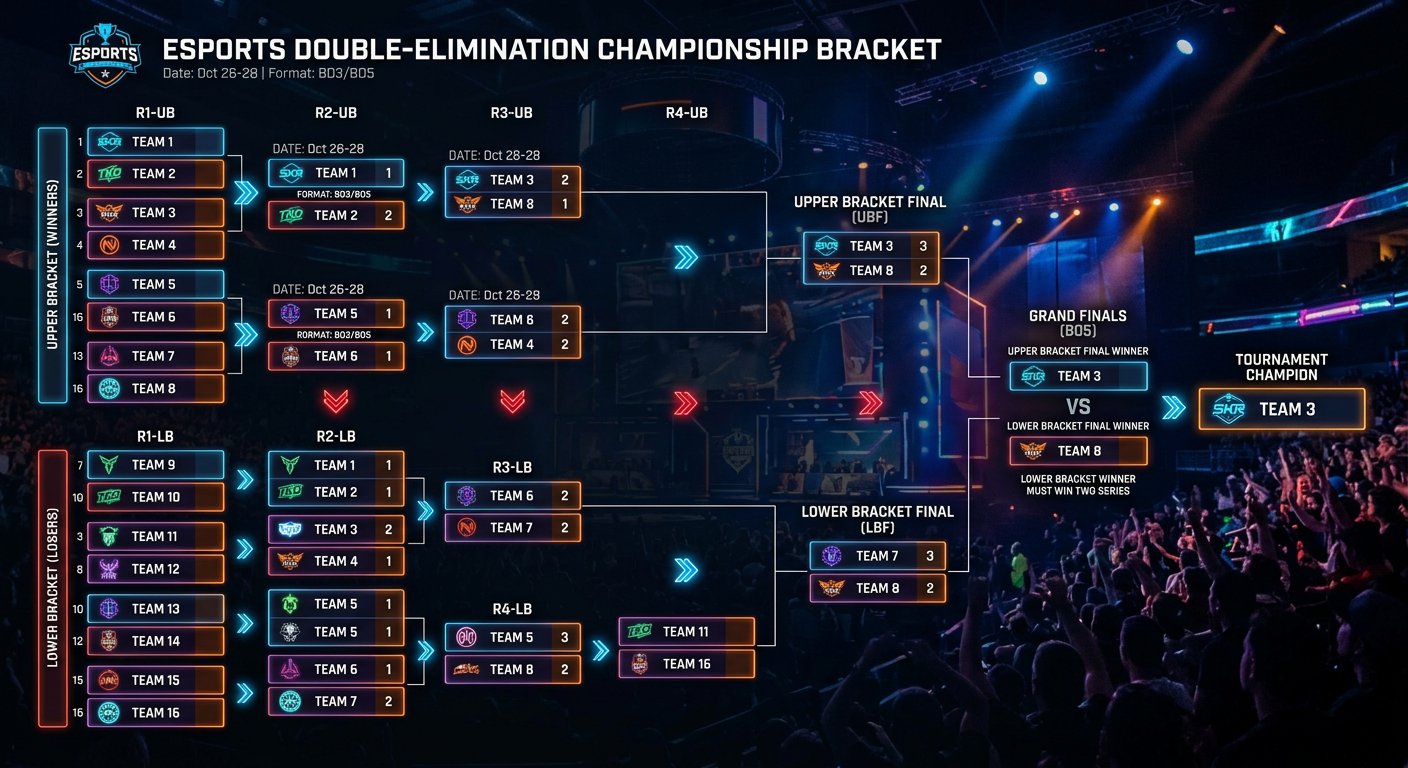
The Main Event uses a double-elimination bracket:
- Upper Bracket: All series are best-of-three (Bo3). The winner advances in the Upper Bracket; the loser drops to the Lower Bracket.
- Lower Bracket: All series are best-of-three (earlier rounds) or best-of-three/best-of-one depending on the round. Losing in the Lower Bracket means elimination.
- Grand Finals: A best-of-five (Bo5) series between the Upper Bracket winner and the Lower Bracket winner. This is where TI legends are born.
The double-elimination format is widely praised because it ensures that the best teams are rewarded for consistency (Upper Bracket advantage) while still allowing for incredible Lower Bracket runs — like Team Spirit’s legendary Lower Bracket run at TI10, where they won six consecutive elimination series to claim the Aegis.
Why the Format Matters for Viewers
If you’re watching TI for the first time, the double-elimination format creates incredible storylines. Every Lower Bracket game is an elimination match, which means maximum intensity and drama. The Upper Bracket games have strategic implications (teams sometimes reveal less of their strategies to save pocket picks for later). And the Grand Finals are almost always epic — the culmination of two weeks of competition distilled into a single Bo5 series.
Qualified Teams & Favorites
While the full roster of TI 2026 participants won’t be confirmed until regional qualifiers conclude, we can identify the likely contenders based on the current DPC season and recent Major results. Here are the teams to watch:
Tier 1 Favorites
Team Spirit — The two-time TI champions (TI10, and strong contenders since) remain the team to beat. Their combination of raw mechanical skill, innovative drafting, and clutch performance under pressure makes them perennial favorites. Captain Mira’s leadership and TORONTOTOKYO’s mid-lane dominance give Spirit a terrifyingly high ceiling.
Team Liquid — The TI13 champions have shown remarkable consistency through the 2025-2026 DPC season. Their methodical playstyle, built around controlled aggression and flawless teamfight execution, is perfectly suited to the current meta. With experienced players who’ve been through TI pressure before, Liquid is a top-3 favorite.
Gaimin Gladiators — GG have been the most dominant force in Western European Dota, winning multiple DPC seasons and Majors. Their aggressive, high-tempo style mirrors the current meta perfectly. If any team is going to dethrone the Eastern European/CIS dominance at TI, it’s Gaimin Gladiators.
Dark Horse Contenders
Tundra Esports — The TI11 champions have rebuilt their roster but remain a cerebral, strategically elite team. Their drafting and macro play give them an edge in longer series where they can out-prepare opponents.
BetBoom Team — The CIS powerhouse has been consistently strong in the DPC and has shown the ability to compete with the very best. Their aggressive playstyle and young, hungry roster make them a legitimate dark horse for the Aegis.
Xtreme Gaming — China’s strongest team heading into TI 2026. Chinese Dota has been in a rebuilding phase after several disappointing TI results, but XG has shown flashes of brilliance that recall the region’s glory days.
Regional Qualifier Wild Cards
Some of the most exciting TI stories come from teams that barely qualify through regional qualifiers and then go on deep Main Event runs. Keep an eye on:
- Southeast Asian teams — SEA Dota is known for its unpredictable, hyper-aggressive style that can upset any team on a good day.
- South American teams — SA Dota has been steadily improving, and their teams bring a unique playstyle that can catch opponents off-guard.
- North American hopefuls — While NA Dota has struggled in recent years, a breakout team could emerge from qualifiers.
Prize Pool History & TI 2026 Projections
TI’s prize pool is one of its most talked-about features. Here’s how it’s evolved and what we expect for TI 2026:
The Golden Era (TI4-TI10)
From TI4 to TI10, the prize pool grew exponentially thanks to the Battle Pass model:
- TI4 (2014): $10.9M — First time breaking $10M, sending shockwaves through esports
- TI5 (2015): $18.4M — Nearly doubled, establishing TI as the richest esports event
- TI6 (2016): $20.8M — First time crossing $20M
- TI7 (2017): $24.8M — Consistent growth as player base expanded
- TI8 (2018): $25.5M — Slight slowdown but still record-breaking
- TI9 (2019): $34.3M — Massive jump driven by Chinese market Battle Pass purchases
- TI10 (2021): $40.0M — The all-time peak, boosted by two years of pent-up Battle Pass demand (TI was delayed from 2020 due to COVID)
The New Normal (TI11 Onwards)
Starting with TI11, Valve restructured the Battle Pass revenue allocation. Less of each Battle Pass purchase goes directly to the TI prize pool, with Valve instead distributing prize money more evenly across the entire DPC season (Majors, Regional Leagues). This means:
- TI11 (2022): $18.9M — Still massive but a significant drop from TI10
- TI12 (2023): $3.4M — Dramatic reduction as Valve moved to a new model
- TI13 (2024): $2.6M — Continued lower prize pool
TI 2026 Projections
For TI 2026, we expect the prize pool to fall in the $3-6 million range for the event itself, with Valve supplementing through a year-round DPC prize distribution system that pays teams throughout the competitive season. While the headline number is lower than the golden era, the total money distributed to professional Dota 2 players across the entire year may actually be higher than before — it’s just spread out rather than concentrated in one tournament.
It’s worth noting that even a $3-5M prize pool makes TI one of the richest esports tournaments in the world. For context, the League of Legends World Championship typically has a prize pool of $2-3M, and the CS2 Major Championship sits around $1.25M. TI remains at or near the top of esports prize money.
How to Watch The International 2026
TI is one of the most accessible esports events to watch, with multiple platforms and languages available:
Official Streams
- Twitch: The primary English broadcast is typically on twitch.tv/dota2ti, with secondary streams for simultaneous games during the Group Stage.
- YouTube: Valve also streams TI on the official Dota 2 YouTube channel, often with better video quality and DVR functionality.
- In-Client: You can watch TI games directly inside the Dota 2 client with free camera control, player perspective, and access to all stats. This is the best viewing experience for experienced players who want to analyze gameplay.
Language Streams
TI features official broadcasts in multiple languages including English, Russian, Chinese (Mandarin), Portuguese, Spanish, and more. Community casters also provide coverage in additional languages. Check the Dota 2 blog and social media channels for the full list of authorized broadcasting partners.
Viewing Tips for New Watchers
If you’re new to watching competitive Dota 2, here are some tips to enhance your experience:
- Start with the Main Event, not the Group Stage. The Group Stage features too many simultaneous games and can be overwhelming. The Main Event has a single series at a time with full production and analysis.
- Watch with the panel. The analyst desk (featuring former pro players and experienced casters) provides context, draft analysis, and post-game breakdowns that make the viewing experience much richer.
- Follow the narrative. TI is as much about stories as it is about gameplay. Pay attention to team rivalries, player history, and the bracket implications of each series.
- Don’t worry about understanding everything. Dota 2 is complex, and even experienced players don’t catch every nuance. Focus on the big moments — team fights, Roshan takes, base races — and you’ll have an incredible time.
- Check Reddit and social media between games. The Dota 2 community is incredibly active during TI, and following discussions adds a layer of engagement.
DotaTV and Battle Pass Viewing
Valve typically releases the Battle Pass shortly before or during TI, which often includes in-client viewing perks like exclusive cosmetic drops for watching games, fantasy leagues where you pick player rosters and earn points, and in-game predictions for match outcomes. If you’re interested in maximizing your Battle Pass experience while watching TI, check out our Battle Pass 2026 Guide for leveling tips and strategies.
How TI Impacts the Meta & Ranked Play
TI doesn’t just affect professional Dota — it has a massive ripple effect on pub and ranked play. Here’s how:
The “TI Patch” Effect
Valve typically releases a significant balance patch 2-4 weeks before TI to shake up the meta and prevent the tournament from becoming stale. This “TI patch” often introduces sweeping changes that force teams to adapt on the fly, rewarding the most versatile and creative squads. For ranked players, this means the meta you’ve been practicing might shift right before TI — stay adaptable and be ready to learn new heroes and strategies. Our Meta Guide stays updated with every patch change.
Pro Strategies Trickle Down to Pubs
Whatever strategies dominate at TI will inevitably be copied in ranked games within days. When OG popularized the IO carry at TI9, IO carry picks skyrocketed in pubs worldwide. When Team Spirit showed the power of Marci at TI10, every pub had a Marci player. Pay attention to which heroes and strategies are winning at TI — they’ll be coming to your ranked games soon.
This can be an advantage if you’re proactive. Watch TI, identify the winning strategies, and practice them before your ranked opponents do. Being one of the first players in your bracket to master a TI-popularized strategy can give you a significant win rate edge.
Post-TI Ranked Surge
TI always brings a surge of players back to Dota 2. Former players return to try the game again, casual players get inspired to grind ranked, and the overall player base spikes. This means:
- Queue times improve for several weeks after TI.
- Game quality can be inconsistent as returning players adjust to the current meta.
- It’s a great time to climb if you’ve been keeping up with the meta, because many of your opponents will be rusty or unfamiliar with recent changes.
If you want to capitalize on the post-TI ranked surge, make sure your account is in good standing. If you’ve accumulated low priority games from disconnects or reports, our Low Priority Removal service can get you back to ranked quickly.
Fantasy and Predictions
Many ranked players engage with TI through the Fantasy League system in the Battle Pass. Selecting the right player cards (based on expected fantasy points from kills, assists, GPM, etc.) adds an extra layer of engagement. Understanding which players are likely to put up big numbers requires knowledge of the meta and team playstyles — skills that directly translate to being a better ranked player yourself.
Tips for Attending TI In Person
If you’re considering attending TI 2026 in person, here’s what you need to know:
Tickets
TI tickets typically go on sale 2-4 months before the event and sell out quickly, especially for the Grand Finals weekend. There are usually two ticket tiers:
- General Admission: Access to the venue, main stage viewing area, and Secret Shop (Valve’s official merchandise store).
- Premium/VIP: Better seating, exclusive lounge access, meet-and-greet opportunities with players and talent, and priority Secret Shop access.
What to Expect
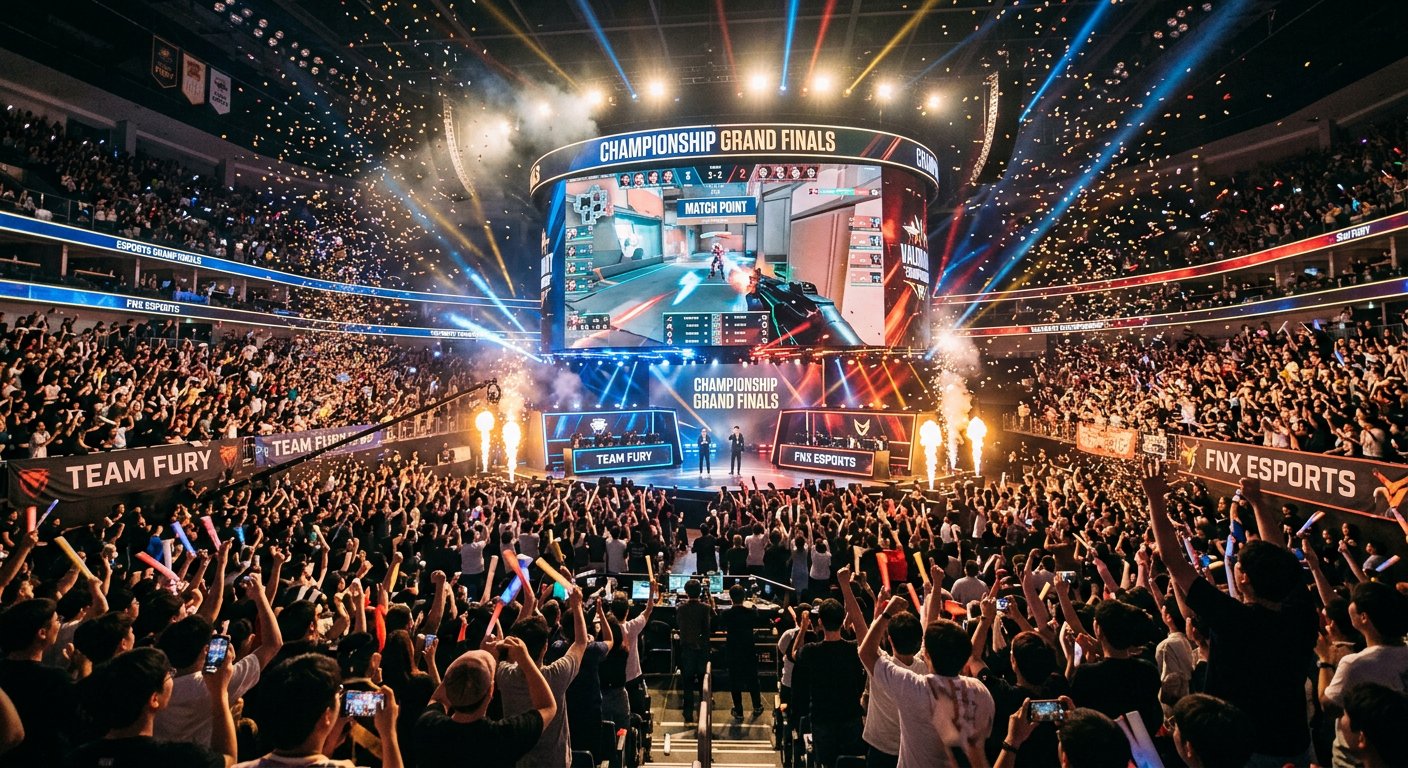
Attending TI in person is an unforgettable experience. The energy in the arena during a Grand Finals teamfight is unlike anything else in esports — thousands of fans screaming, the bass of the sound system hitting your chest, and the knowledge that you’re witnessing history. Between games, you can:
- Visit the Secret Shop for exclusive TI merchandise (limited editions sell out fast — go early).
- Meet other Dota 2 fans from around the world. TI’s community is incredibly welcoming.
- Watch player interviews and analysis desk segments on the main screen.
- Participate in side events and activities hosted by sponsors and community organizations.
Practical Tips
- Book accommodation early. Hotels near TI venues fill up fast and prices spike. Book as soon as the location is announced.
- Bring a portable charger. You’ll be on your phone checking stats, browsing Reddit, and taking photos all day.
- Wear comfortable shoes. You’ll be standing/walking for 8-12 hours per day.
- Budget for merchandise. The Secret Shop has incredible exclusive items, and you’ll want to bring home souvenirs.
- Bring noise-canceling headphones or earplugs. The venue gets extremely loud during hype moments.
Frequently Asked Questions
The International’s Impact on the Dota 2 Community
Beyond the competition itself, TI serves as a unifying event for the global Dota 2 community. It’s a time when millions of players, fans, content creators, and casual observers come together to celebrate the game they love. TI generates content — highlights, memes, copypastas, and memorable moments — that the community references for years afterward. “Lakad Matataaag!” from TI8, the “Ceeeeeb!” call from the same tournament, and the “This is GG” moment from TI10 are all cultural touchstones within the Dota 2 community.
For individual players, TI is often the spark that reignites their passion for Dota 2. Many players who had drifted away from the game return during TI, inspired by the incredible plays and dramatic storylines. If TI 2026 inspires you to come back to ranked Dota, remember that the game may have changed significantly since you last played. Our Beginner’s Guide covers everything you need to know about the current state of the game, and our MMR Boost service can help you get back to a rank that matches your returning skill level.
Content Creator Coverage and Community Events
TI isn’t just the official broadcast. Dozens of content creators, podcasters, and community figures produce TI-related content:
- Watch parties: Many popular Dota 2 streamers host watch parties on Twitch, adding their own commentary and analysis to the official broadcast.
- Podcasts: Shows like “We Say Things,” “Position 6,” and others produce daily TI episodes with analysis, predictions, and interviews.
- YouTube content: Highlight channels like NoobFromUA and DotaCinema produce rapid-turnaround highlight videos of every major series.
- Community meetups: In cities around the world, Dota 2 fans organize TI viewing parties at bars, gaming cafes, and community spaces. Check Reddit’s r/DotA2 and regional Dota 2 communities for events near you.
Engaging with the broader TI content ecosystem enhances your viewing experience and connects you with the community. Some of the best Dota 2 friendships and team formations have started at TI watch parties.
Betting and Fantasy: A Word of Caution
TI attracts significant betting interest from both dedicated esports bettors and casual fans. While we won’t cover betting strategies (and we strongly advise caution with any form of gambling), we do want to highlight the in-game Fantasy League as a legitimate, fun way to engage with TI:
- The Fantasy League is included in the Battle Pass at no additional cost beyond the Battle Pass itself.
- You create daily rosters by selecting player cards, earning points based on their in-game performance.
- High-performing Fantasy teams earn Battle Pass levels as rewards.
- It’s a skill-based system that rewards game knowledge — understanding which players are likely to have high-kill, high-GPM performances helps you build better rosters.
For tips on maximizing your Battle Pass levels through Fantasy, check our Battle Pass 2026 Guide.
Ready to Improve Your Dota 2 Experience
Team Smurf offers professional Dota 2 services — Immortal-rank boosters, maximum safety, competitive pricing, and 24/7 support.



