

What Happened to Dota 2 Facets? The Feature Removed in 7.41

If you have been away from Dota 2 for a while and noticed the hero facet selection is missing, you are not imagining things. Dota 2 facets were removed in Patch 7.41, released on March 25, 2026. The feature that Valve introduced in May 2024 as the biggest change to hero identity in years lasted less than two years before being axed entirely.
This page explains what facets were, how they worked during their run from Patch 7.36 to Patch 7.40, why Valve removed them, and what the game looks like now without them. If you searched “Dota 2 facets” looking for a pick guide, the short answer is: you no longer need one. If you want the full story — and what it tells us about where Dota is heading — keep reading.
In This Article
What Were Dota 2 Facets?
Dota 2 facets were a hero customization system introduced in Patch 7.36 in May 2024. Valve described them as “a hero customization choice that provides the ability to better align the playstyle of a hero with a specific match or player preference.” In practice, every hero in the game received two distinct facets — unique passive traits or ability modifications that fundamentally altered how that hero played.
The system was designed to solve a long-standing complaint about Dota 2: that most heroes felt rigidly one-dimensional. A hero like Dragon Knight was always a tanky brawler. A hero like Crystal Maiden was always a slow, fragile support. Facets were Valve’s attempt to give each hero two distinct identities that players could switch between based on the matchup, the draft, or personal preference.
Unlike talent trees, which gave stat choices at fixed levels throughout the game, facets were a single decision made once — before the game began. You picked your facet during the draft phase and that choice locked in for the entire match. The idea was to add meaningful strategic depth at the hero selection screen, not just at Level 10 or Level 20.
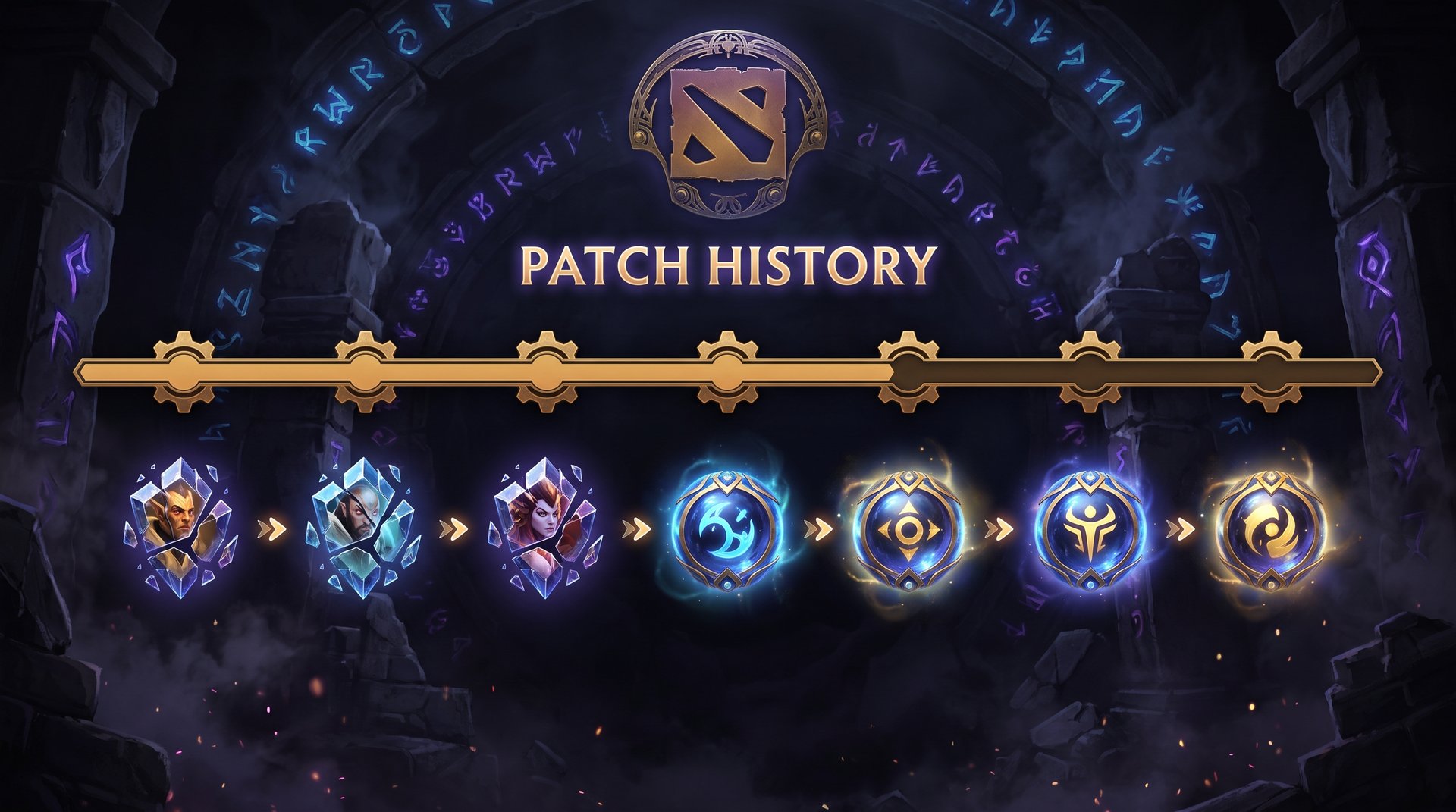
The system launched alongside Innate Abilities — a second new mechanic from the same patch. Innate Abilities were passive bonuses built into a hero from Level 1, tied to the hero’s core identity. Crystal Maiden always generating mana aura. Pudge always gaining strength from kills. Unlike facets, innate abilities were not a choice — you always had your innate, and it simply grew stronger as the game progressed.
These two systems — innates and facets — were announced together and released together in one of the largest single patches in Dota 2 history. Most of the community discussion at the time focused on facets, since they introduced genuine pick-phase decisions that professional teams and pub players alike had to think about every game.
How Facets Worked During the Draft
Facets were selected during Strategy Time — the window in the pick phase after a player chose their hero but before the draft finished. If a player failed to select a facet before the timer expired, Dota 2 would assign one at random.
The selection screen showed both facet options for your hero with a brief description of what each one did. There was no tryout mode during the draft — you had to know in advance which facet matched your planned build, your role in the team composition, and the specific enemy lineup you were facing.
This created a meaningful layer of pre-game theory crafting. High-MMR players quickly developed standard “default” facets for each hero — the one you picked in 80% of situations — alongside situational picks for specific matchups. A carry might have a farming-oriented facet as a default and switch to an aggression-oriented facet when the enemy draft had no reliable farm-safe carries.
At the professional level, facet choices became scoutable. Analysts tracked which facets teams favored on specific heroes, and draft analysts incorporated facet tendencies into opponent breakdowns. A team that consistently ran a specific facet on a hero could be punished by opponents who understood what that choice committed the hero toward.
For pub players in the Archon and Legend brackets, most facet choices followed community consensus tier lists rather than in-depth theory. Sites like Dotabuff tracked facet win rates by hero, making it easy to see which option was statistically performing better in your bracket. This was both a help and a limitation — it standardized the meta quickly and reduced the experimental chaos that Valve presumably wanted the system to generate.
The Three Types of Facet Modifications
Across the full roster of heroes, facets fell into three broad categories based on how they modified the hero.
Ability Modifications
The most dramatic facets fundamentally changed how one or more of a hero’s abilities worked. Rather than a simple stat buff, the ability itself would gain a different behavior, a different targeting system, or a completely different secondary effect. These facets had the highest variance in impact — a player who understood the modified version deeply could extract enormous value, but a player who did not would underperform their “safe” facet choice.
Passive Stat and Scaling Bonuses
Many facets granted passive bonuses that scaled with the game — extra stat growth per level, improved regeneration under specific conditions, or multipliers that interacted with core items the hero typically built. These were generally easier to evaluate since their impact was linear, but they could create major item-build divergence depending on which facet you chose.
Playstyle Pivots
Some heroes received facets that effectively created two separate roles within the same hero. A hero that was traditionally a right-click carry might have one facet that doubled down on physical damage and another that pushed toward a spellcaster or initiator identity. These were the most exciting facets from a design perspective but also the most polarizing — one facet often ended up as the dominant pick while the other saw almost no play.
Notable Facets by Role
Over roughly two years of competition and pub play, certain facets became the defining examples of the system. The table below summarizes the broad categories of impact that made facets memorable at each role.
| Role | Typical Facet Impact | Example Modification Type | Draft Consideration |
|---|---|---|---|
| Safe Lane Carry | Farm efficiency vs. teamfight dominance | Attack speed/damage scaling vs. ability upgrade | Pick farming facet into turtle drafts; aggression facet into deathball |
| Mid | Burst damage vs. utility | Ability damage amplification vs. cooldown/mana reduction | Burst facet into squishy enemy lineup; utility facet for sustained fights |
| Offlane | Tankiness vs. initiation power | Survivability bonus vs. ability range/effect change | Tank facet into poke-heavy opponents; initiation facet for teamfight drafts |
| Pos 4 Support | Vision and map control vs. teamfight contribution | Detection/movement bonus vs. ability enhancement | Map control facet in lane-dominant metas; teamfight facet in objective-focused drafts |
| Pos 5 Hard Support | Laning efficiency vs. late scaling | Early sustain bonuses vs. cooldown reductions | Lane sustain facet vs. aggressive carries; scaling facet into long-game drafts |
The most consistently discussed facets in professional play were those that created draft-reading requirements — where you could look at the enemy lineup and confidently say the opponent would run facet A or facet B on a given hero. This kind of information asymmetry was valuable at the highest levels but added cognitive load for pub players who simply wanted to know which option was better overall.
From a macro perspective, the facet system compressed meaningful hero pool size. Because the “wrong” facet against specific matchups could result in an essentially off-meta pick, heroes with strong facets on both options became priority picks — heroes where you could not be exploited regardless of your choice. Heroes with one dominant facet and one underwhelming option tended to fall in and out of meta based on whether the dominant facet suited the current patch direction.
If you want a sense of how the patch evolved, take a look at the MMR boosting guide — it covers how meta shifts affect climbing windows and gives context on how facets interacted with the boosting process during the 7.36-7.40 era.
Why Valve Removed Facets in 7.41
Valve did not publish a lengthy post-mortem explaining their decision. The Patch 7.41 notes announced the removal matter-of-factly: facets were gone, and the patch introduced reworked innate abilities alongside nine new items and significant hero changes. The community had to read between the lines.
Several factors likely contributed to the decision, based on how the system evolved and what the community observed.
Lopsided Facet Win Rates
On most heroes, one facet quickly became dominant. Within weeks of Patch 7.36, community tier lists were already narrowing facet picks to defaults on the majority of the roster. By Patch 7.38 and 7.39, certain heroes had facet win-rate differentials that made the “choice” effectively illusory. Valve’s own data would have shown that for many heroes, the facet system was generating the appearance of choice without real strategic variation.
Increasing Complexity Without Proportional Depth
Dota 2 is already the most complex competitive game on the market. Facets added another layer of pre-game decision-making on top of hero picks, item builds, lane assignments, and talent choices. For players at lower MMR brackets, this was a genuine barrier — the wrong facet in the wrong game felt like a punishing mistake rather than a learning experience. The complexity cost was real, and for casual players in the Guardian and Crusader brackets, facets were often ignored or misused.
Design Tension With Innate Abilities
The more interesting observation is that innate abilities — the other major system from Patch 7.36 — survived the cut. Innates were not removed; they were reworked. This suggests Valve viewed the two systems very differently. Innates fit the Dota philosophy of “every hero has a unique identity baked in.” Facets fit more of a MOBA flavor closer to League of Legends’ “runes” — customization at the pick screen rather than inherent hero design. Valve may have decided that facets drifted the game too far from its design principles.
The “Great Reset” Framing
Multiple outlets called Patch 7.41 the “Great Reset” of Dota 2. Alongside facet removal, the patch reworked numerous hero innates, restructured terrain around Tormentor spawns and the Lotus Pool, changed how Health Restoration and Lifesteal stacked, and introduced nine entirely new items. This was not a typical balance patch — it was a deliberate statement that Valve wanted to reset the game’s direction. Facets were collateral in that reset, likely sacrificed to give the new systems space to breathe without being overshadowed by the old ones.
What Replaced Facets?
Facets were not replaced with a direct equivalent. Valve chose to deepen the existing innate abilities system rather than introduce another pick-screen customization mechanic.
The change to innates was fundamental. Before 7.41, many innate abilities scaled based on the levels of a hero’s regular skills — which meant the innate’s power was tied to ability upgrade order. This created hidden complexity that was hard to track mid-game and made some innates feel inconsistent. The rework changed innates to scale either with fixed values or directly with the hero’s overall level, making them more predictable and readable.
The practical effect is that heroes in the current patch (7.41f) have stronger, more consistent innate identities than they did before. The innate is no longer a footnote — it is a meaningful part of the hero’s power budget from minute one. You can read the full breakdown of how innate abilities work in the current patch in our Innate Abilities guide.
Beyond innates, Patch 7.41 added nine new items that expanded build diversity. Items like Hydra’s Breath (Specialist’s Array + Dragon Lance + Orb of Venom + recipe, 5900g) introduced new attack power profiles for ranged carries. Items that countered the new innate mechanics — particularly Blademail variants — gained usage even on heroes that had rarely built them before. The item economy shifted enough that some traditional carry build paths changed completely.
For supports, the terrain changes around Tormentor spawns and the Lotus Pool altered timing windows and rotation routes in ways that took several patches to fully settle. If you were coaching or climbing as a support during this transition, the map felt different before the meta caught up with the actual changes.
How Innate Abilities Work in 7.41f
With the current patch being 7.41f, it is worth understanding what innate abilities look like now compared to the system players knew during the facets era.
Fixed Bonuses
Many innates in the current patch provide flat bonuses that do not scale at all. A hero with a fixed innate might simply always have bonus attack range, always start with extra base damage, or always generate a passive effect that does not change regardless of game length. These innates are easy to evaluate and build around — you simply know they are part of the hero’s base kit and do not need to account for them in your skill build.
Level-Scaling Innates
The more interesting innates in 7.41f scale with hero level rather than ability level. This means they grow proportionally with the game rather than spiking at specific ability level-ups. Level-scaling innates tend to make heroes that fall behind in levels feel worse and heroes that accelerate in levels — either through kills or efficient farming — feel better. Junglers and heroes with strong XP efficiency saw their innates improve relative to lane-dependent heroes.
Notable Examples in 7.41f
Several heroes received significant innate reworks alongside the facet removal. Crystal Maiden gained Glacial Guard — a passive that converts a portion of her mana spend into a physical barrier, effectively giving her a scaling defensive option that rewards active spell use. Enigma gained Event Horizon, which applies a movement speed penalty to enemies in a 700-unit radius that are moving away from Enigma, making him harder to escape from even outside of his ultimate. Tidehunter gained Leviathan’s Catch, which lets him accumulate permanent stat stacks by consuming fish that spawn from kills or deaths under his debuffs.
These are not minor tweaks. These are identity-level changes that make the heroes play differently than they did before. Returning players will need to re-learn how these heroes interact with the game, especially in the early-game laning phase where the new innates have the most visible moment-to-moment impact.
Meta Impact: Dota Without Facets
The meta in 7.41f is meaningfully different from the facet era. A few patterns have emerged consistently since the patch dropped.
Hero Identity Is Cleaner
Without facets, each hero has one clear identity at the pick screen. Drafting information is cleaner — when you see a hero picked, you know approximately how they are going to play. This has tightened up draft reading at all MMR levels. High-MMR players report fewer situations where an opponent’s hero pick sends conflicting signals about their intended role or item build direction.
Counter-Picking Has Shifted
During the facets era, some heroes were hard to counter because their two facets covered different weaknesses. If a carry had a farming facet and a fighting facet, your counter-pick that punished the fighting version might not apply if they went farming-oriented. Without facets, counter-picks are more reliable — you know the hero you are countering has one mode, and your counter-pick’s effectiveness is not contingent on the opponent’s pick-phase choices.
Item Diversity Has Increased
The nine new items from Patch 7.41 have made item builds less predictable. Combined with the innate reworks, some heroes that had heavily standardized item builds now have multiple viable first-item directions. This has extended the lifespan of 7.41 as a meta more than a typical large patch would — there is still genuine discovery happening in high-MMR pubs and pro play even several sub-patches into 7.41.
If you want to know which heroes are performing best in the current patch, the 7.41f hero tier list covers the current standings with winrate context. The best Dota 2 boosting services guide is also worth reviewing if you are evaluating options for climbing the current meta.
What This Means for Your MMR
The removal of facets has had a net positive effect on the ranked climb for most players. Here is the practical breakdown.
Less Pick-Phase Cognitive Load
One of the most consistent pieces of feedback from the community after 7.41 dropped was that the pre-game felt simpler in a good way. Without needing to evaluate two facet options on top of hero selection, item build, lane assignment, and matchup analysis, players could focus more mental energy on the actual game. For players who struggled with decision fatigue, removing one major pre-game variable improved in-game performance.
New Power Curves to Learn
The downside of the 7.41 changes is that every hero’s power curve shifted. Innate ability reworks changed when heroes are strong relative to the game clock. Heroes that previously relied on their innate scaling with ability levels may have gotten stronger or weaker in specific timing windows. Learning the new power curves on your hero pool is probably the biggest learning investment the patch demands.
The Transition Window
Patches with this much change typically create a knowledge gap between players who study the new system quickly and players who are still playing on old assumptions. The first month or two of 7.41 represented a significant MMR capture window for players who adapted fast. That window has mostly closed by 7.41f, but there are still pockets of undervalued heroes whose innate reworks have not been fully discovered by the player base.
Understanding the current mechanics is the first step. Getting the games to show that understanding matters is the second. If your mechanics are there but the rank is not reflecting it, the Dota 2 MMR boost from TeamSmurf puts an Immortal player in your account to close the gap, with solo VPN-matching to keep your region consistent. And if you want to check whether your service provider is trustworthy before you commit, the is Dota 2 boosting safe guide covers exactly what to evaluate.
Frequently Asked Questions
Your Mechanics Are There. Your Rank Should Show It.
Understanding patch mechanics is the foundation. Getting the games to reflect your skill level is where TeamSmurf comes in. Our Immortal boosters play on your account with solo queue, VPN region matching, and the hero pool that suits your playstyle — pure performance, no account sharing risks.
View Boost Options Get Dota 2 Coaching


