One-Hero Spam vs Hero Pool: What the Data Says About Climbing

The question splits Dota 2 communities right down the middle: should you lock onto one hero and master every pixel of its kit, or build a versatile pool that lets you adapt to any draft? It sounds like a preference debate, but community tracking platforms like Dotabuff and OpenDota have accumulated enough data that actual patterns are now visible — and those patterns challenge several deeply held assumptions.
This article breaks down what the community data shows, which strategy works better at each MMR bracket, and how to choose the right approach for your specific climb. Whether you are stuck in Archon or grinding toward Ancient, the answer may surprise you.
Table of Contents
What Hero Spamming Actually Means
Hero spamming — or one-tricking — means committing to a single hero deeply enough that you have played it hundreds of times across all matchup types, all draft contexts, and all states of the meta. It is not the same as casually playing one hero most of the time. True one-tricking means you:
- Know every counter-item and how to play around it
- Have every item timing memorized across your typical skill bracket
- Understand which lane matchups you can bully versus which to survive
- Know how your hero scales through each phase and what fights to take at minute 10, 20, and 40
- Have played through patch changes and adapted your builds accordingly
At this depth, your hero feels like an extension of your decision-making. You are not reading your kit — you are reading the game through your kit. This is the foundational argument for spamming: your mental bandwidth, which is severely limited in Dota 2, gets entirely allocated to macro and positioning instead of basic mechanics.
But there is a dark side to this depth. A hero that gets banned, or one that falls out of meta viability, leaves you exposed. And in matchmaking above 4,000 MMR, opponents increasingly recognize spam patterns and pick specifically to shut you down.
What a Hero Pool Is (and Is Not)
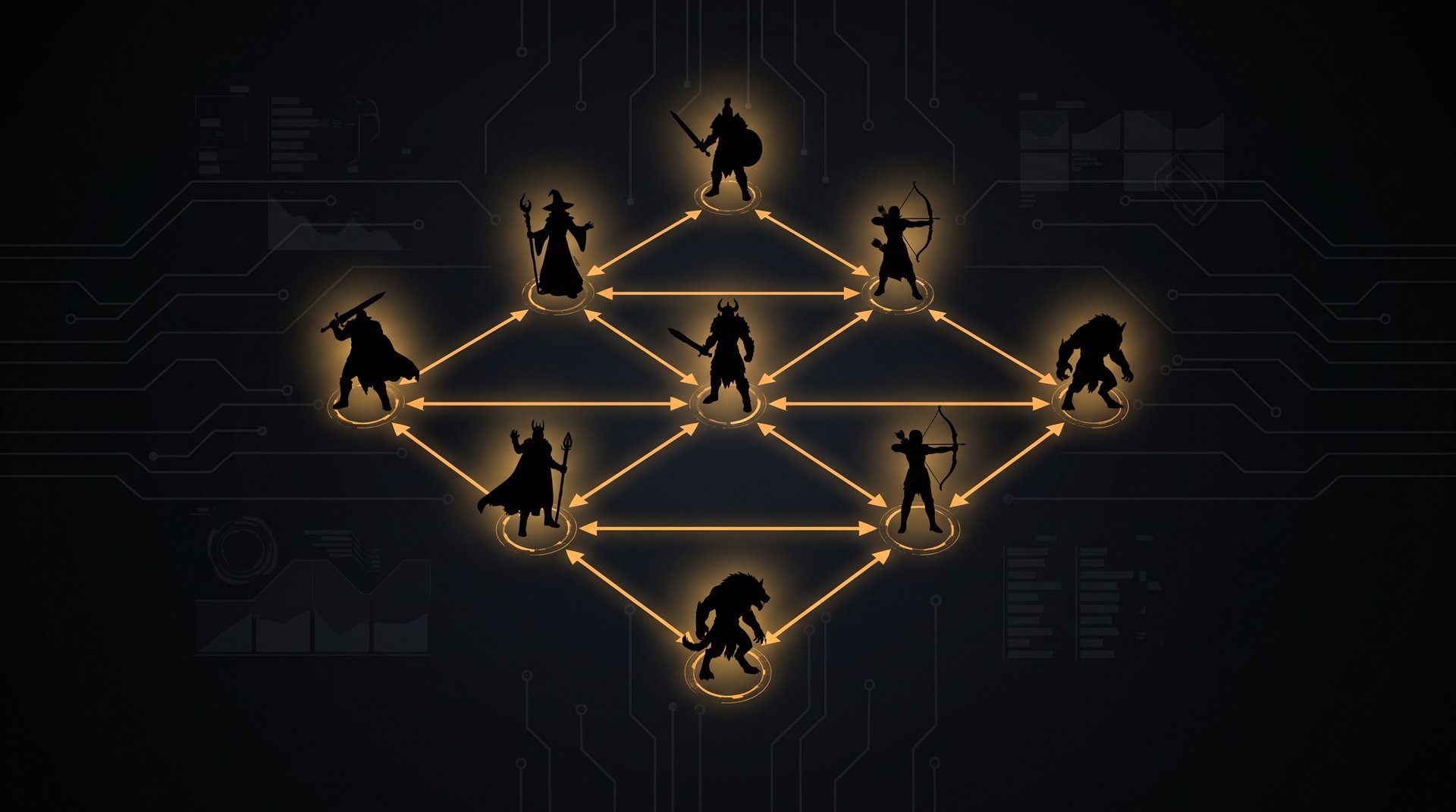
A hero pool is not twenty heroes you sometimes play. That is not a pool — that is a collection of heroes you are mediocre on. A real hero pool for climbing purposes is three to five heroes that:
- Cover at least two positions so you can function in different drafts
- Are not all shut down by the same counter-picks
- Include at least one hero you can pick first without giving away information
- Span at least two different win condition types (teamfight vs split push, for example)
The goal of a pool is not breadth for its own sake. It is resilience. If your main gets banned or hard-countered, your second pick should be genuinely good — not a hero you half-know. A pool built this way gives you optionality without spreading your mastery so thin that it becomes meaningless.
The critical mistake most players make is building a pool that looks flexible on paper but is actually just a list of heroes they kind of like. When the draft goes sideways, they pick their third-favorite hero and play it at 60 percent of their actual skill level. Against heroes they do not understand, that gap is fatal.

What Community Data Shows
Platforms like Dotabuff and OpenDota track hero win rates, pick rates, and player-level statistics across millions of ranked games. Community analysts and content creators have surfaced several consistent patterns by examining this data — patterns that have been debated at length in Dotabuff discussion threads, Reddit communities, and Discord servers.
A frequently cited community finding is the relationship between games played on a hero and win rate improvement. Players who commit to a single hero and cross the 50-game threshold typically see measurable win rate gains compared to players who spread games across five or more heroes at similar totals. This pattern appears consistently in OpenDota user analysis threads and has been replicated in various community studies.
| Games on Hero | Avg Community-Reported Win Rate Trend | Sample Size Reliability | Main Finding |
|---|---|---|---|
| 0-10 games | Below personal average | Low — high variance | Learning phase, losses spike |
| 11-30 games | Near personal average | Medium | Mechanics stabilizing |
| 31-75 games | Slightly above personal average | Better | Pattern recognition improving |
| 76-200 games | Noticeably above personal average | Good | Deep matchup knowledge active |
| 200+ games | Peak personal performance on hero | Strong | Full one-trick efficiency |
Source: Community analysis of Dotabuff hero specialist data, aggregated from multiple forum discussions and Reddit threads on r/DotA2 (2025-2026). Individual results vary significantly by hero and bracket.
Dotabuff’s hero leaderboard section shows another useful signal: many of the players who appear in the top win rate brackets for specific heroes have hero game counts in the hundreds or thousands. This is consistent across most hero categories, with a handful of exceptions for heroes so strong in a given patch that casual spikes appear across the board.
OpenDota’s player API, which community developers have used to build analysis tools, reveals a related pattern: players who concentrate more than 40 percent of their ranked games on a single hero tend to maintain higher average win rates over rolling 30-day periods compared to players who spread games roughly equally across five or more heroes. This has been reported in multiple community-built dashboards and analysis posts.
The Case for One-Hero Specialization
The core argument for hero spamming is cognitive load reduction. Dota 2 at any rank above Herald demands that you process an enormous amount of information simultaneously: enemy positioning, cooldown tracking, rune timers, item timings, map vision, your own resource state, and the overall game state including gold graphs and objectives. A player on a hero they have played 400 times does not consciously process basic mechanics — their hands handle that while their brain handles the game.
This frees up decision-making capacity that a generalist simply does not have. When you are still thinking about your skill build or which item to buy next, you are not reading the minimap. When you are fully on autopilot with your hero mechanics, you play the actual game.
Hero spamming also makes you significantly harder to surprise. When you have played a hero 300 times, you have seen every counter-item combination thrown at you. You know that the enemy Axe just bought Blade Mail and you need to delay your Blink Dagger. You know that their Skywrath just picked up Glimmer Cape and you need to adjust your positioning in fights. These reads happen instantly because you have processed them before, many times, and your brain has already built the pattern.
The community data pattern here is consistent: in the 1,000 to 3,500 MMR range, which represents the largest player population per Dotabuff’s rank distribution data, hero spamming tends to outperform hero pooling when the player genuinely commits. The reasons are clear at this level — opponents are less likely to draft specifically to counter you, bans are less coordinated, and individual skill expression on a mastered hero has outsized impact.
Consider the Pudge phenomenon on Dotabuff. Pudge has historically been the most-played hero in ranked matchmaking by total game count, yet his overall win rate hovers below 50 percent. But when you filter for players with 300+ Pudge games, the win rate picture shifts considerably — dedicated Pudge spammers routinely post win rates in the 52-58 percent range because they have internalized every hook angle, every pull timing, and every teamfight positioning scenario. The hero is not strong enough to carry weak players, but deep mastery unlocks consistent performance.
The same pattern appears in the Dotabuff community discussions for Juggernaut, Wraith King, Phantom Assassin, and Dragon Knight — all heroes where community-tracked spammers consistently outperform casual players by significant margins.
The Case for a Hero Pool
The argument against pure one-tricking is equally compelling, and it becomes stronger the higher you climb. Above 4,500 MMR, the draft phase stops being a formality and becomes a primary battleground. Teams at this level understand meta dynamics well enough to identify your patterns and respond to them systematically.
If you are known in your server as a Juggernaut spammer — and your match history on Dotabuff tells that story clearly — opponents who check it before the game will ban or first-pick a hard counter to you. This is already happening at Legend and Ancient brackets where players increasingly use preparation tools. At Divine and above, it is near-universal.
Even in solo queue where coordination is loose, a draft that includes both a Phantom Lancer to split your Omnislash and a Skywrath Mage to punish your blink-in will meaningfully reduce your one-trick’s effectiveness. You do not need five coordinated enemies — you just need one player who recognized your pattern and drafted accordingly.
The second problem is patch dependency. The Dota 2 meta shifts with every numbered patch, and heroes fall in and out of viability. A one-trick whose hero gets hit in a major patch faces a stark choice: keep playing a suboptimal pick into unfavorable matchups, or rapidly switch to an unfamiliar hero at a moment when you most need consistency.
A pool insulates you against both of these risks. When your main is banned, your second pick should be nearly as good. When the meta shifts, you have other tools. This flexibility becomes the primary climbing advantage at higher MMR brackets.
How the Math Changes by Bracket
The data and community consensus are not equally favorable to either approach at all MMR levels. The optimal strategy shifts meaningfully across brackets, and understanding where you sit is critical for choosing the right approach.
| Bracket | MMR Range | Recommended Approach | Why |
|---|---|---|---|
| Herald / Guardian | 0 — 2,300 | Spam 1 hero aggressively | Bans are random; individual skill wins games; counters rarely coordinated |
| Crusader | 2,300 — 3,000 | Spam + 1 backup | Some players check Dotabuff; your spam pick will get banned occasionally |
| Archon | 3,000 — 3,700 | Primary + 2 heroes same role | Bans more intentional; meta awareness rising; matchup knowledge matters more |
| Legend | 3,700 — 4,600 | Pool of 3-4 heroes, 2 roles | Counter-drafting increasingly common; your weaknesses will be exploited |
| Ancient | 4,600 — 5,400 | Flexible pool with deep knowledge | Preparation is standard; one-tricks are targeted; adaptability is meta |
| Divine / Immortal | 5,400+ | Broad pool + deep hero knowledge | Full coordination in draft; one-trick is a liability without exceptional skill |
Source: Community-synthesized strategy guidance based on Dotabuff bracket distribution and multiple Reddit and Discord community discussions on climbing strategy (2025-2026).
The key insight from this breakdown is that the optimal crossover point — where a pool begins to outperform pure spamming — tends to fall around the Archon-to-Legend boundary. This aligns with what the community reports: in Archon, individual outplays still decide many games, but in Legend, draft quality starts to matter as much as execution.
This does not mean you need a massive pool to climb past Archon. The community evidence suggests that a primary hero plus two solid backups in the same role is sufficient to reach Ancient. The key is that the backups need to be genuinely good, not theoretical — you should have at least 30 to 50 games on each backup before counting them as real options.
If you are looking to accelerate the climb to any of these milestones, a professional Dota 2 boosting service can efficiently bridge rank gaps while you develop your hero pool in parallel. Our complete MMR boosting guide covers how to structure this kind of combined approach.
Best Hero Spam Picks by Role
Not every hero rewards spamming equally. The best spam picks share common traits: they have deep mechanical depth that rewards repetition, they cover their own weaknesses through skill use rather than team cooperation, and they have broad game impact even when slightly behind. Based on community tracking from Dotabuff and extensive discussion in Dota 2 communities, here are the standout spam candidates by role.
Core Position 1 (Safe Lane Carry)
Juggernaut has been one of the most consistently community-recommended spam picks at all sub-5k brackets for years. His kit provides built-in survivability (Blade Fury), teamfight impact (Omnislash), and reliable lane presence. Dotabuff community data shows dedicated Juggernaut players achieving win rates significantly above the hero’s overall bracket average. The learning curve is approachable but the depth is real — mastering Omnislash targeting, Healing Ward positioning, and Blade Fury cancels takes hundreds of games.
Wraith King rewards a more strategic style of spam. His kit is simple, which means the ceiling on mechanics is low, but his draft flexibility — he can lane safely, farm efficiently, and survive teamfights — makes him consistent across meta shifts. Community tracking shows WK spammers maintaining above-average win rates across multiple patches, which is unusual stability for a carry.
Phantom Assassin is the classic pub stomp spam pick for a reason. Her ceiling in the right games is exceptionally high, and her item timing windows are deep enough to reward mastery. Dotabuff discussions regularly feature PA spammers with win rates in the 55-60 percent range in Herald through Archon, where her burst damage potential is least likely to be itemized against.
Core Position 3 (Offlane)
Axe remains one of the most community-recommended spam picks for the offlane at mid-range brackets. His lane presence is difficult to deal with at lower skill levels, his Blink-Call combo is reliable even with slight mechanical sloppiness, and his snowball potential is high enough that a slightly tilted game can be turned around with a good fight. Community analysis from Dotabuff consistently shows Axe specialists posting strong numbers in the Crusader-through-Ancient range.
Dragon Knight offers a more patient style of offlane spam. His strong physical armor, reliable stun, and punishing late-game presence mean he does not need to win the lane to win the game. Community tracking suggests DK spammers tend to perform best in longer game formats, and his kit changes relatively little between patches, making him meta-stable.
Support Position 4/5
Lion is perhaps the most community-recommended spam pick for the support role at all brackets below 5k. His hex-into-finger burst combo is devastatingly effective in uncoordinated pubs, his mana drain punishes greedy carries, and Aghanim’s Scepter turns him into a teamfight difference-maker. Dotabuff leaderboard data for Lion consistently shows player-specialists with above-average win rates across brackets.
Witch Doctor rewards spam with a different kind of impact. His lane dominance through Maledict is underrated, and players who master his Voodoo Restoration micro in complex fights separate themselves significantly from casual WD players. Community spam advocate threads on Reddit frequently feature Witch Doctor as the safest high-impact spam choice for players new to support specialization.
For any of these heroes, the community data pattern is the same: the win rate improvement from specialization kicks in around the 50 to 75 game mark, accelerates through 150 games, and plateaus somewhere between 200 and 400 games depending on the hero’s mechanical complexity. If you are below 50 games on your spam pick, you are still in the learning curve phase — do not judge results yet.
The Hybrid Approach That Most Climbers Actually Use
The framing of “spam one hero” versus “build a pool” is somewhat artificial. When you look at what actually works across a broad population of Dota 2 climbers tracked on Dotabuff, the most common pattern is a hybrid: a primary hero that takes up 30 to 50 percent of ranked game volume, a secondary hero in the same or adjacent role at 15 to 25 percent, and occasional flex picks making up the rest.
This hybrid concentrates mastery where it matters — on the hero you play best — while providing enough flexibility to handle bans and meta fluctuations. The key rules for making this hybrid work are straightforward:
- Your primary hero should have at least 3x the games of your secondary. If you have 200 games on your main and 60 on your backup, that is a genuine relationship. If it is 50 and 40, you have two under-developed heroes.
- Your secondary should be in the same role. Switching roles mid-draft is a skill most players do not have. Pick your backup in the same position so your laning patterns and game sense transfer.
- Your secondary should not lose to the same things as your primary. Two physical carry spammers both dying to the same Phantom Lancer is not a pool — it is redundancy. Pick a secondary that answers different threats.
- Know your secondary to at least 75 percent of your primary level. If a ban forces you onto your secondary, you should not feel meaningfully weaker. If you do, it is not really in your pool yet.
This hybrid approach is especially effective in the Archon-to-Ancient bracket where most Dota 2 players are trying to climb. It keeps the cognitive focus benefits of specialization while providing just enough cover to survive coordinated banning strategies.
The TeamSmurf Perspective
Our boosters have run tens of thousands of ranked games across all brackets, and the internal consensus is clear: at the target brackets most clients are climbing toward (Archon through Ancient), the hybrid approach wins. Hero spamming gets you from the bottom to the middle of a bracket faster, while pool flexibility is what punches you through the ceiling into the next bracket.
When we run duo boost orders or coaching sessions, one of the most common things we see is players who have 400 games on a carry but no viable second pick when that carry gets banned. The solution is always the same — identify one backup hero in the same role and put 50 focused games into it over the next month. That is almost always enough to break through whatever plateau the player is stuck at.
If your climb has stalled and you are not sure whether the issue is hero selection or something deeper in your game, our Dota 2 coaching service can diagnose exactly where your games are being lost. And if you want to gain MMR while you develop your pool, our Dota 2 MMR boost service uses only players with deep hero specialization in your target bracket. Curious whether boosting is right for you? Our guide on whether Dota 2 boosting is safe covers everything you need to know before ordering.
Ready to Climb Faster?
Whether you are refining your hero pool or want to gain MMR while you practice, TeamSmurf’s Dota 2 specialists are standing by. Every booster is a verified high-MMR player with deep hero specialization in your target bracket.