Duo Queue Boosting Etiquette: How to Not Int Your Booster

Duo queue boosting is a collaboration, not a transaction. Clients who approach duo boosting with good etiquette — proper communication, appropriate hero selection, disciplined decision-making — see noticeably faster MMR gains. Clients who ignore communication protocols create avoidable friction that slows progress and can compromise game quality.
This guide covers every dimension of duo queue etiquette from the perspective of Immortal-rank boosters who have run thousands of duo orders. It covers: the communication habits that accelerate results, in-game behaviors that help rather than hinder, things that seem harmless but actually complicate the booster job, and the hard limits that should never be crossed.
If you are starting a Dota 2 duo boost order, reading this before your first game will improve your experience and your results significantly.
Table of Contents
- Pre-Game Communication Protocol
- Hero Selection Etiquette
- In-Game Behavior That Helps Your Booster
- What Not to Do in Duo Boost Games
- Positioning, Farming Space, and Tempo
- Communication During the Game
- Handling Bad Games and Difficult Teammates
- After-Game Feedback and Adjustment
- Frequently Asked Questions
Pre-Game Communication Protocol
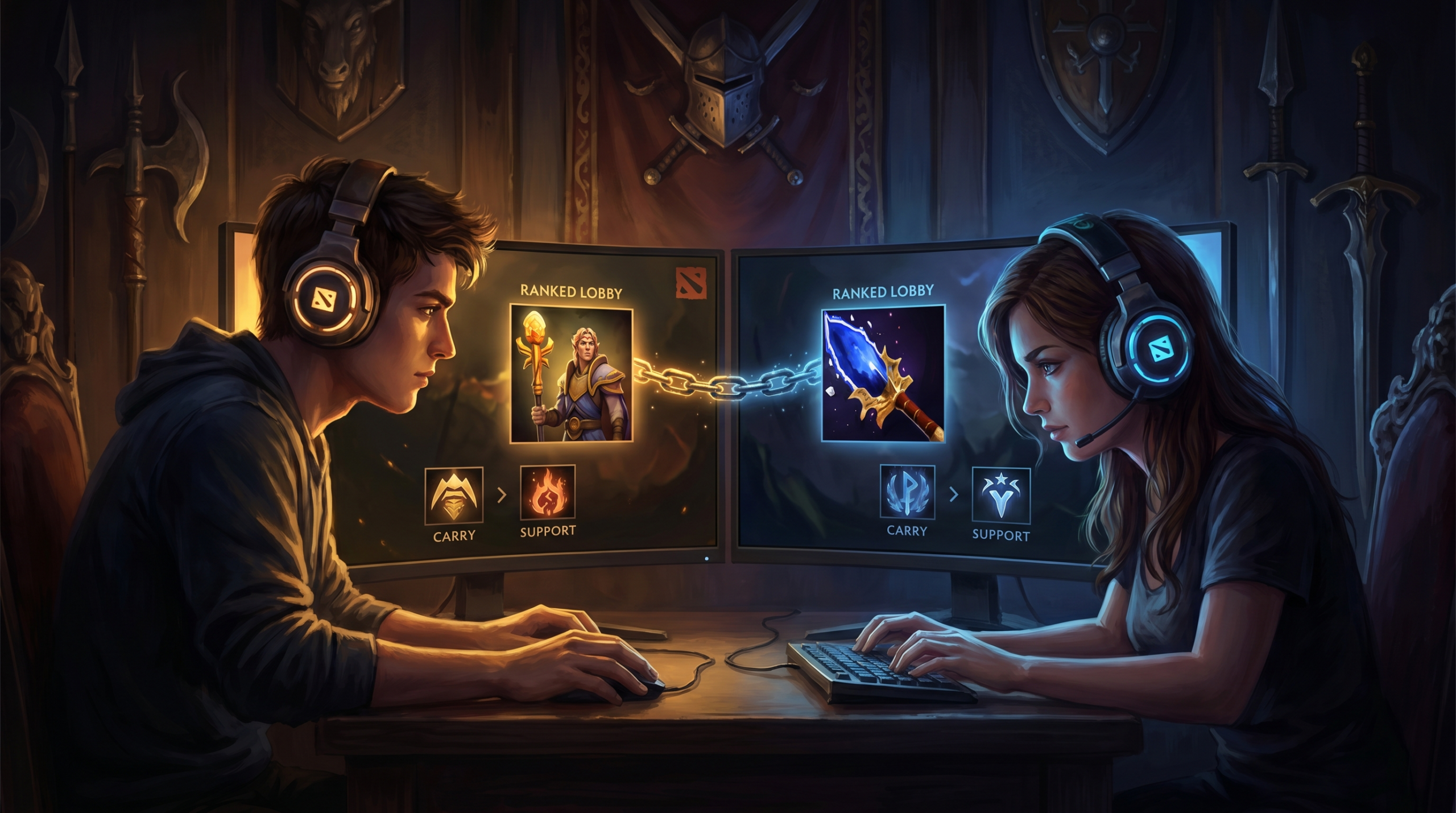
The quality of your duo boost experience is largely determined before the first game loads. Pre-game communication establishes shared expectations about role, hero pool, communication style, and division of decision-making during matches. Boosters who receive clear pre-game information can adapt their gameplay to complement the client optimally. Boosters who receive no information must make assumptions that may not align with what the client wants.
What to Share Before the First Game
Start with your comfort roles. Be honest about positions you play well and positions that create friction for you. If you are a carry player who struggles to last-hit while also warding, tell the booster upfront — they will adjust the lane assignment accordingly. Misrepresenting your skill level in specific roles wastes games.
Share your hero pool. The booster will generally take the game-winning role, but a shortlist of your comfort heroes allows them to select complementary picks from their pool. A client who plays Io effectively pairs well with a booster on Terrorblade or Void Spirit. A client who plays Disruptor pairs well with a booster running a physical damage carry. Synergy matters even at the bracket level where duo boosts operate.
Specify communication preferences. Some clients want real-time call-outs in voice or chat during the game. Others want pre-game guidance and then play somewhat independently. Neither preference is wrong, but the booster needs to know which mode you prefer to avoid over-communicating or under-communicating during critical moments.
Scheduling and Response Time
Duo boosting requires both parties to be online simultaneously. Communicate your available windows clearly and with enough lead time. Last-minute requests can result in the booster playing from suboptimal conditions — tired, distracted, or mid-session on another order.
Commit to minimum game blocks. Starting a session that lasts only one game is inefficient. The momentum and adjustment that happens over a 3-5 game block produces better win rates than isolated games separated by hours. Commit to blocks when you schedule sessions.
Account Setup Checklist
Before the first session, verify your account is in the correct state. Ensure your behavior score is above 8,000 — anything below puts you in a harsher matchmaking pool and can affect guarantee eligibility at most services. If you are using a calibration service alongside the duo boost, complete calibration first so your starting rank accurately reflects your current hidden MMR.
Hero Selection Etiquette
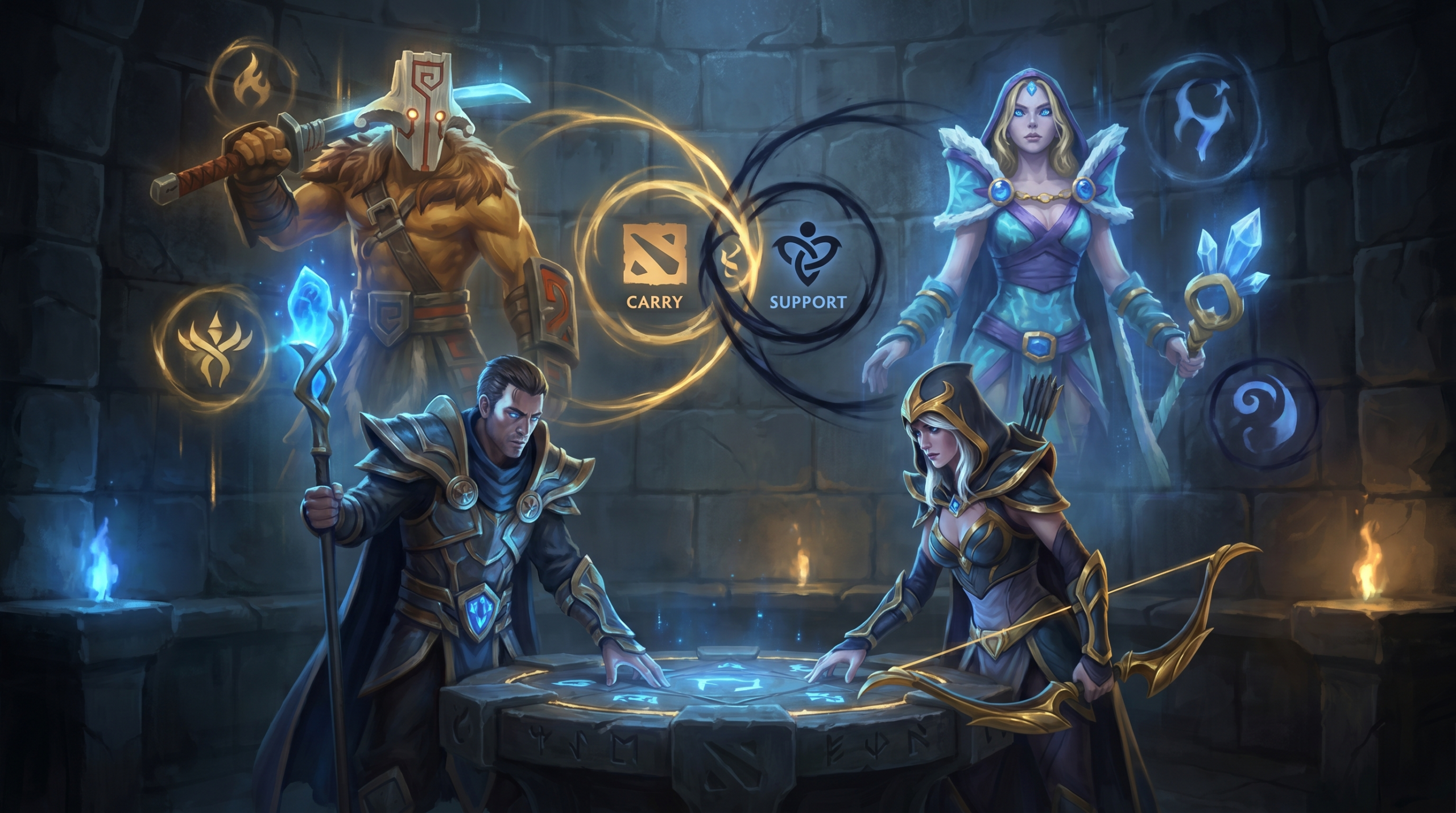
Hero selection in duo queue involves both parties making picks that serve the shared goal of winning the game. Several etiquette principles apply specifically to the client side of the draft.
Do Not Contest the Booster First Pick
The booster will often first-pick or secure specific heroes they are most effective on. These are not arbitrary choices — they reflect the hero strength in the current meta and the booster peak performance. Do not attempt to take heroes from the booster pool without asking. If you want to play a hero that overlaps with their pool, ask before the session rather than during the draft.
Common first-pick heroes for Immortal boosters in the 7.41c meta include Primal Beast, Puck, Shadow Fiend, and Lina for mid; Wraith King, Phantom Lancer, and Terrorblade for carry. If your comfort pool overlaps with any of these, discuss it in the pre-session chat rather than creating draft conflict.
Stick to Your Stated Hero Pool
First-timing a hero in a ranked duo boost game is poor etiquette and damages both parties. The booster game plan is calibrated to the capabilities you communicated upfront. A client who said “I play Storm Spirit” and then picks Invoker disrupts the booster lane coordination, objective timing, and communication shortcuts. If you want to try a new hero, ask whether the session is a good time — some boosters are comfortable running adaptive games, others are not.
Counter-Pick Cooperation
When the enemy draft presents a counter-pick opportunity, the booster may signal a hero suggestion for your pick. Treat this as professional advice, not a command. If you cannot execute the suggested hero, say so immediately — “I cannot play that hero reliably” is the correct response. The booster can adjust their plan. Picking the suggested hero and then playing it poorly is worse than declining the suggestion upfront.
Hero pool compatibility with Dota 2 coaching is a valuable pre-investment — if your coach has identified your pool as too narrow, expanding it before a duo boost session means more drafting flexibility and better cover for counter-pick situations.
Banning Coordination
Use your ban on heroes that directly counter the booster planned pick. If the booster is playing Phantom Assassin, banning Axe or Slardar prevents the most common hard counters from entering the game. Ask the booster which heroes they want banned during the pre-game chat, and prioritize those over personal discomforts unless both lists overlap.
In-Game Behavior That Helps Your Booster
During the game, your behavior directly affects the conditions the booster operates in. Positive behaviors reduce variance in game outcomes. Negative behaviors — even unintentional ones — can turn winnable games into frustrating losses.
Follow Timing Calls
Boosters working at Immortal level have internalized exact timing windows for every major objective. When they say “smoke at 8:30 for Roshan,” they have calculated that the enemy supports are likely farming the offlane, the enemy carry is at a vulnerable farm point, and a Roshan attempt converts into 12+ minutes of advantage. Arriving one minute late makes the play suboptimal or impossible.
Build a habit of tracking the game clock and anticipating calls rather than reacting to them. When you see the game reach a timing your booster has flagged, be pre-positioned rather than requiring 30 seconds to rotate. The difference between a well-executed 8:30 smoke and a forced delay is often a missed Aegis and a 4-minute tempo loss.
Respect Farm Priority Decisions
Your booster will optimize their farm path to accelerate toward game-winning item timing. This sometimes means they take resources that feel natural for your position — a bounty rune in their path, a neutral camp near your lane, or a jungle stack they want to chain-farm. Do not contest these decisions in-game. Trust that the booster knows which items they need by which timing.
When the booster explicitly tells you to take specific resources, do exactly that. If they say “take both mid bounties, I am going to pull” — execute immediately. These micro-instructions are deliberate optimizations for the session win rate.
Avoid Unnecessary Deaths
Deaths by the client outside of the booster planned aggression create ripple effects that are difficult to compensate for. A death on your carry at the 12-minute mark gives the enemy carry 300 gold, delays your item timing by 90 seconds, and sends a recovery signal to the enemy team that changes their strategic approach.
What Not to Do in Duo Boost Games
The following behaviors consistently create problems in duo boost engagements. Most are not obvious errors — they feel reasonable in the moment but undermine the booster ability to execute their strategy.
Do Not Use All-Chat
All-chat during a duo boost game is unnecessary at best and counterproductive at worst. It draws attention to the unusual party composition, can provoke tilted responses from opponents that change their behavior, and occasionally reveals information about game strategy. The booster is trying to run games efficiently and professionally. All-chat is a distraction from that objective.
Do Not Make Objective Calls Without Booster Confirmation
Initiating a Roshan, tower dive, or team fight before the booster signals readiness is one of the most common causes of lost games in duo boost engagements. Premature objective attempts that fail cost more than just the fight — they set the tempo backward by 3-5 minutes and can swing games that were otherwise under control.
If you believe an objective opportunity is present but the booster has not called it, use the ping system or say “Rosh?” in party chat. Do not start the attempt unilaterally. Nine times out of ten, the booster has already assessed the opportunity and is waiting for a specific condition to be met first.
Do Not Communicate Frustration to the Booster
Communicating frustration to the booster mid-game creates noise in the channel they need to execute cleanly. Boosters are aware of team performance without being told. Save post-game analysis for after the game is finished. During the game, stay focused on executing the next instruction regardless of what teammates are doing.
Do Not Abandon Games
Abandoning a game during a duo boost order — whether due to frustration, a perceived loss, or an external interruption — violates the order agreement and voids most service guarantees. It also generates an abandon mark on your account that affects behavior score and potentially matchmaking assignments for subsequent games. If an emergency requires you to leave, communicate immediately to the booster and to the service support channel.
Do Not Give Strategic Directions
Instructions like “push now,” “go Rosh,” or “go mid” directed at the booster are counterproductive. The booster has a game plan operating on a timeline and conditions that may not be visible to you. Interrupting that plan with commands based on incomplete information wastes cognitive bandwidth at exactly the moments the booster needs to focus. If you have a relevant observation, frame it as information rather than instruction: “Rosh timer is at 30 seconds” rather than “go Rosh.”
Positioning, Farming Space, and Tempo
The most consequential in-game contribution a duo boost client makes is their spatial positioning. Players who understand how to create space and occupy correct map positions allow the booster to operate with amplified effectiveness. Players who position poorly negate advantages that the booster has worked to create.
Creating Lanes Rather Than Contesting Them
In the early game, your primary spatial job is to maintain lane presence without trading unfavorably and to create the conditions the booster needs to farm their items. This means pulling creeps when the lane is pushed, stacking camps the booster can farm later, and rotating toward objectives when the booster signals rather than farming a side lane independently.
If the booster is on a Medusa mid and needs 20 minutes of undisturbed farm to reach a Manta Style plus Eye of Skadi timing, your job is to create 20 minutes of undisturbed farm for them — zoning enemies from vision of mid, taking objectives that keep enemy heroes occupied, and rotating to defend mid when necessary.
Converting Booster-Created Opportunities
Many duo boost clients play the safe lane carry while the booster plays a support or mid. In this configuration, the client contribution to the win rate is determined significantly by how well they convert the advantages the support creates. A booster on Grimstroke or Earthshaker can set up kills consistently — but only if the carry follows through on the setup immediately, hits the stunned target, and does not delay for a perfect animation cancel at the cost of the window closing.
Practice converting booster-created opportunities at full speed. The hesitation gap — the moment between seeing a setup and executing on it — is the most common mechanical failure point in duo boost games at the 2,000-5,000 MMR range.
When the Booster Needs Space
In games where the booster is playing a farming carry or a mid hero that requires space, your role reverses: you become the space creator. This means playing aggressive support, pulling attention from the enemy team, maintaining vision, and disrupting the enemy carry farm. Players who default to passive behavior when they are supposed to be creating space waste the booster farm windows entirely.
| Situation | Correct Response | Incorrect Response |
|---|---|---|
| Booster misses a kill setup | Stay focused, continue next planned action | Comment on the miss in chat |
| Teammate feeding | Mute, report, continue playing optimally | Flame in team chat, give up objectives |
| You die unexpectedly | Say “dead” in party chat, wait for respawn | Force immediate re-engagement from weak position |
| Game feels lost | Continue booster strategy until GG is called | Make desperate solo plays, abandon objectives |
| Enemy has objective opportunity | Signal as information, let booster decide | Unilaterally change game plan mid-match |
| Booster calls smoke walk | Drop current action, move to smoke position | Finish creep wave, arrive late |
Communication During the Game
Real-time communication during duo boost games should be functional, not social. The goal is to transmit tactical information that the booster cannot observe or predict from their own perspective. Social commentary, observations about opponents, and emotional processing belong outside game time.
High-Value Communication
Enemy cooldown tracking is the highest-value communication you can provide. If you saw the enemy Clockwerk use Hookshot 15 seconds ago, report “Clock ult down.” This is information the booster may not have from their angle and that has direct impact on engagement decisions. Enemy item completion — if you saw the enemy Phantom Assassin complete Desolator, say so. Enemy position — “safelane carry is missing with TP scrolls used, top tower” costs two seconds and prevents a potential death.
What Not to Communicate
Observations the booster can already see, emotional reactions to enemy plays, criticism of teammate behavior, questions about the game plan that were addressed pre-game, and requests to deviate from the current strategy — all of these add noise without adding value. The communication discipline that separates effective duo boost clients from ineffective ones is distinguishing between information the booster needs and information that merely feels important.
Ping Protocol
Pings are the fastest communication channel in Dota 2. Use the alert ping to signal “I am in trouble here” and the danger ping to warn about incoming ganks. The rotate ping works for “I need help at this position.” Reserve the command ping for situations where you have the booster attention and the instruction is clear.
Do not spam pings out of frustration. Three rapid pings on a teammate position is a communication of frustration, not information, and it devalues all subsequent pings in the game.
Handling Bad Games and Difficult Teammates
Every duo boost session will encounter bad games. The 3-0 team fight where your carry misses the stun, the Roshan attempt that fails because a teammate scouted it — these are variance events in a probabilistic system, not evidence that the booster is underperforming. How you handle bad games determines whether the session ends at plus 4 MMR or minus 2 MMR.
Do Not Tilt Into Sequential Bad Decisions
Tilt cascades are the most common cause of multi-game losing streaks in duo boost sessions. A bad game triggers frustration, frustration leads to aggressive plays outside the booster strategy, aggressive plays feed the enemy team, and three games that should have been wins become losses. The booster cannot compensate for a client who has mentally left the game plan.
If you feel yourself tilting after a bad game, take a 10-minute break. Tell the booster you need a reset. The brief pause is worth far more than a 25-minute game played from a compromised mental state.
Handling Difficult Teammates
Toxic or underperforming teammates are a reality at every MMR bracket. The professional response is no response — report problematic behavior through the Dota 2 report system after the game and mute players who are communicating negatively during the game.
Do not respond to flame from teammates in team chat. Mute, report, move forward. Every moment spent in a flame war is a moment of strategic attention withdrawn from the game. The booster win rate is highest when both parties remain focused and emotionally neutral.
Recognizing When to Pause the Session
A session producing net negative results after 5 or more games is a signal to stop and diagnose rather than continue. If the session is producing consistent losses, the cause is typically one of three things: the client is tilted, the meta has shifted requiring hero pool adjustment, or the matchmaking system is compensating for the performance gap in the party. In all three cases, continuing without addressing the underlying cause will extend the problem.
After-Game Feedback and Adjustment
Post-game review is one of the most underutilized elements of the duo boost experience. Clients who debrief briefly after each game — even just two or three minutes — provide the booster with information that accelerates improvement in subsequent games of the session.
What to Review After Each Game
Focus post-game feedback on pattern identification rather than specific plays. “I think I was too passive in the first 10 minutes” is better than “I should have followed you at minute 14.” The booster can give pattern-level guidance that improves your play across multiple future games. Ask specifically about positioning — most clients at the 2,000-4,000 MMR range lose value through positioning errors more than mechanical errors.
Adjusting Hero Selection Between Games
If the first two games have not produced clean results with a specific hero combination, the post-game break is the correct time to adjust. Ask the booster directly: “Would a different hero from my pool complement what you are playing better?” The flexibility to adjust between games is one of the duo format advantages over solo boosting — use it actively.
Tracking Progress Across Sessions
For multi-session duo boost orders, maintain a brief log of what worked in each session and what adjustments were made. This is especially valuable when sessions are separated by days — the context from the previous session helps both parties return to optimal calibration faster.
The combination of post-game feedback and Dota 2 coaching sessions creates a compound improvement effect — coaching addresses the structural weaknesses the booster identifies, and subsequent duo sessions reveal whether those structural improvements have translated into in-game execution.
Ready to Skip the Grind?
Team Smurf’s Immortal boosters handle your MMR.
Get Your Boost Now Talk to Our Team