Support Rotation Routes That Win Low-MMR Games Consistently

Support play at low MMR is not just weaker individual skill — it is a completely different pattern of decisions. High-MMR supports rotate with a specific intention, execute a specific route, and return to their role after the rotation completes. Low-MMR supports rotate randomly, arrive late, or fail to return to their lane responsibilities, creating a chain of lost value that accumulates into a lost game even when individual players are performing reasonably on their own heroes.
The good news is that support rotation in low-MMR games is remarkably consistent in its patterns. The same rotation opportunities appear in nearly every game at Crusader through Legend bracket. Learning a specific set of rotation routes — when to use them, how to set them up, and how to read the signal that triggers each one — is one of the highest-return improvements a support player can make to their MMR.
This guide documents the three core rotation patterns that win low-MMR games consistently, with specific timing windows, hero examples, and the communication that turns each rotation into a reliable team play rather than a dice roll.
Table of Contents
Why Low-MMR Support Play Differs
The statistical signature of support play at Crusader through Legend bracket is dramatically different from Ancient and Divine support behaviour in three specific ways that affect every rotation decision.
Opponents Do Not Punish Bad Rotations
At high MMR, a poorly timed support rotation — leaving a lane at the wrong moment — is immediately punished by the enemy team coordinating a counter-push or a pick-off in the now-exposed lane. At low MMR, this punishment is inconsistent. Opponents at Crusader-Legend brackets often do not recognise or capitalise on exposed lanes quickly enough to make the support pay for a rotation. This means low-MMR supports can take more aggressive rotation risks than high-MMR players would recommend, because the punishment for a failed rotation is lower and the upside of a successful gank is proportionally large.
Enemy Positioning Is Predictable
Low-MMR players are highly position-predictable. Carry players in low MMR stand in the same spots during laning — usually slightly too far forward, exposed to ganks. Mid players spend extended periods at the river. Supports babysit instead of stacking, leaving the same entry points unguarded. This predictability allows a rotating support to have very high confidence in where the enemy will be and plan kill routes accordingly. At Immortal level, predictions about enemy positioning are difficult because players change position based on reading the minimap. At Legend, they are often standing where they always stand.
Kills Have Outsized Value
At low MMR, a kill on the opponent carry in the laning phase has disproportionate psychological value beyond the gold and experience — it often tilts the player enough that they make follow-up mistakes that compound the original lead. A carry who dies twice before minute 10 in a Legend game often continues to play aggressively out of frustration, creating additional kill opportunities that would not emerge at higher MMR. Rotation-based kills in low MMR generate more value than the initial gold and XP numbers suggest.

The Three Core Rotation Patterns
There are three rotation patterns that cover the vast majority of high-value support opportunities in low-MMR games. These are not every possible rotation — they are the three with the most reliable positive expected value based on how low-MMR players actually play.
Pattern 1: The Early Mid Gank (Minutes 3-7)
The support rotates from the safe lane to the mid lane during the laning phase to attempt a kill on the opposing mid hero. This is the highest-frequency rotation opportunity in low-MMR games because mid players at these brackets almost universally stand too far forward, rarely ward the river, and rarely anticipate support ganks. The rotation is most effective when: your carry has recovered from the initial creep wave and can survive 45 seconds alone, the opposing mid has used their escape ability recently (Ball Lightning, Blink, Void Spirit dive), and you have an initiation ability that can lock the mid hero for 2+ seconds.
Pattern 2: The Safe Lane Dive (Minutes 6-12)
The mid hero or another support rotates to the safe lane to dive the enemy carry under their tower in coordination with your safe lane carry. This pattern emerges when: your carry won or traded even in the early laning phase, the enemy carry is wounded (below 50% HP), and the tower is not at full HP. Low-MMR carries notoriously fail to position behind towers when wounded — they stand in front of the tower or even slightly in front of it, making them trivially diable for a coordinated tower dive.
Pattern 3: The Smoke Rotation (Minutes 10-20)
The support buys Smoke of Deceit and leads a coordinated smoke gank on a target lane or the opposing jungle. This pattern is most valuable in the transition phase (minutes 10-20) when the laning phase is ending and players are beginning to farm independently across the map. Smoke ganks in low MMR have extremely high success rates because: players do not ward their farming spots, players farm camps closest to their base rather than near the enemy, and smoke’s detection radius is larger than most players at this bracket are aware of.
| Pattern | Timing Window | Required Setup | Primary Target | Success Rate (Low MMR) |
|---|---|---|---|---|
| Early Mid Gank | Minutes 3-7 | Carry lane stable, initiation ability up | Opposing mid hero | 65-75% |
| Safe Lane Dive | Minutes 6-12 | Enemy carry under 50% HP | Enemy safe lane carry | 55-70% |
| Smoke Rotation | Minutes 10-20 | Smoke purchased, 3+ team members | Farming hero in exposed position | 60-80% |
Timing Your Rotations Correctly
The difference between a successful rotation and a failed one is almost always timing rather than execution. The rotation route itself is straightforward — the difficult part is recognising the exact moment when the rotation setup is complete and executing it before the opportunity closes.
The Three-Condition Rotation Trigger
Before executing any rotation, verify three conditions simultaneously. First, your safe lane is stable (your carry can survive alone for the time required). Second, the target has a predictable position that your rotation route will intercept within 20-30 seconds of leaving your current position. Third, your stun or initiation ability is not on cooldown and you have enough mana to execute the full combination. Missing any of the three conditions means the rotation is premature. A rotation that fails because you left your carry alone at the wrong moment or arrived to find the target has already backed costs you more than staying and doing nothing.
Communication as a Timing Tool
The single-best timing tool available for support rotations is a simple chat message or ability ping before you rotate. “Going mid — need you to be aggressive when I arrive” tells the mid hero to watch for the rotation rather than playing safe and backing. “Smoke in 10 seconds — get ready” tells your team to stop walking toward lanes and group for the rotation. In low-MMR games, teams almost never communicate rotations in advance and therefore coordinate them poorly. The support who communicates 10 seconds before rotating has dramatically higher success rates than the one who rotates silently.
Early Kill Rotation Routes
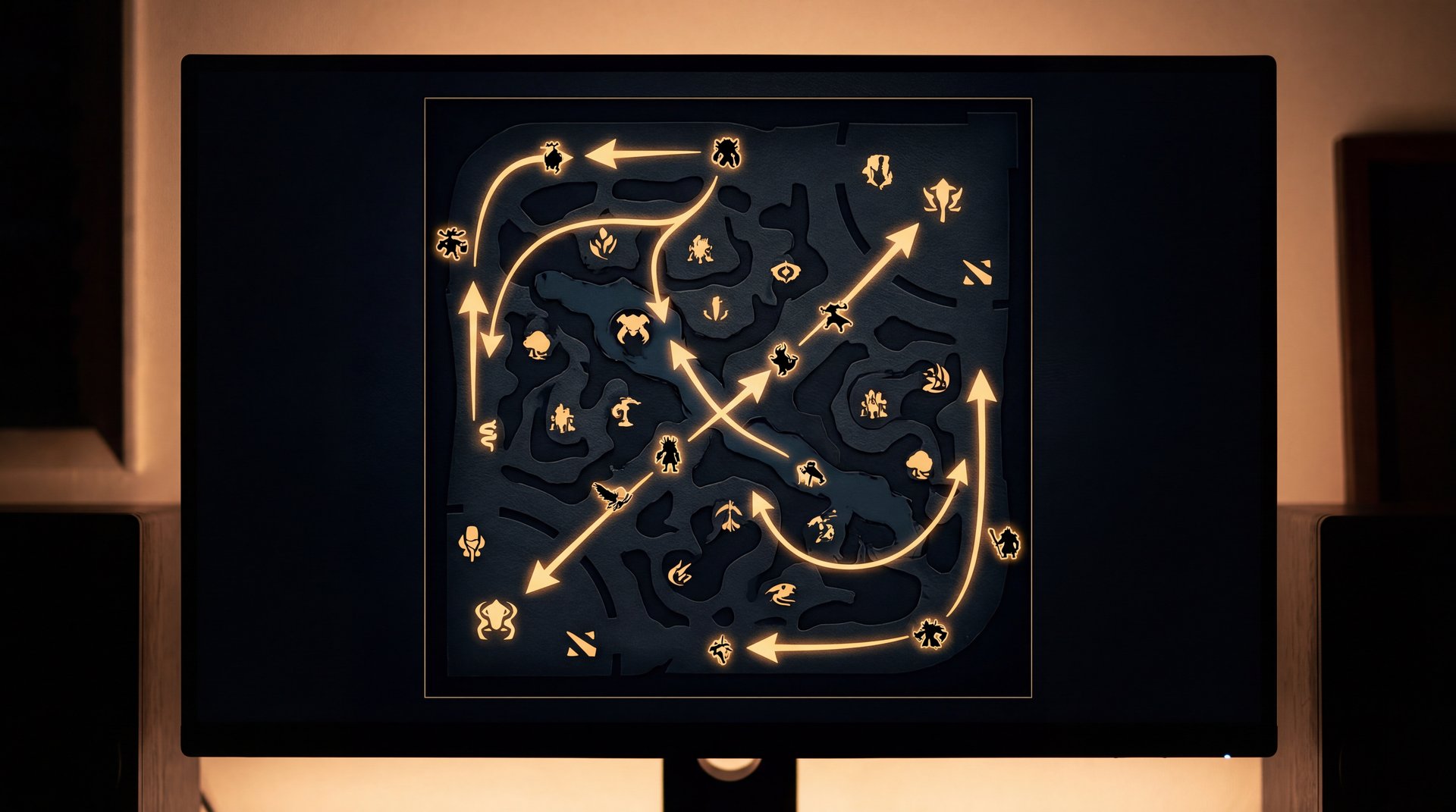
The early kill rotation to mid lane has two common approach routes depending on which side your safe lane is on. Understanding both and choosing the correct one for your map position is part of executing the rotation efficiently.
Radiant-Side Mid Gank Route
From the Radiant safe lane (bottom), rotation to mid follows the river rather than cutting through the jungle directly. The river path is faster and provides a better initiation angle on the Dire mid hero who tends to stand near the Dire-side river. The approach from river places you behind the mid hero relative to their tower, cutting off their escape route. On heroes with tree-line movement (Pudge Hook angles, Bane Nightmare approach), the Radiant-side tree line north of the mid lane provides an approach from an unexpected angle.
Dire-Side Mid Gank Route
From the Dire safe lane (top), the mid gank route cuts through the Dire jungle small camps at the 3:45 mark, arriving at the mid lane from behind the Radiant mid hero. This route is longer than the Radiant equivalent (approximately 10-15 seconds more travel time) which means it requires an earlier departure from your lane. A Dire support leaving the safe lane at 3:30 arrives at mid by approximately 3:55-4:00 if taking the direct jungle cut, which aligns with the natural laning phase lull between the second and third creep waves.
Support Heroes Best Suited for Early Rotations
Not every support hero is equally effective at early mid rotation. The best rotation supports have one or more of: long-range initiation (Skywrath Mage Arcane Bolt, Witch Doctor Paralyzing Cask), a movement speed boost that closes distance quickly (Bloodseeker Thirst passive, Magnus Empower team coordination), or a lockdown that triggers even if the target tries to escape (Bane Nightmare, Lion Hex). Heroes that rely purely on auto-attack harassment or short-range stuns (Ogre Magi early levels, Undying pre-level 4) are better suited to lane presence than mobile gank rotations.
Tower Pressure Rotation Routes
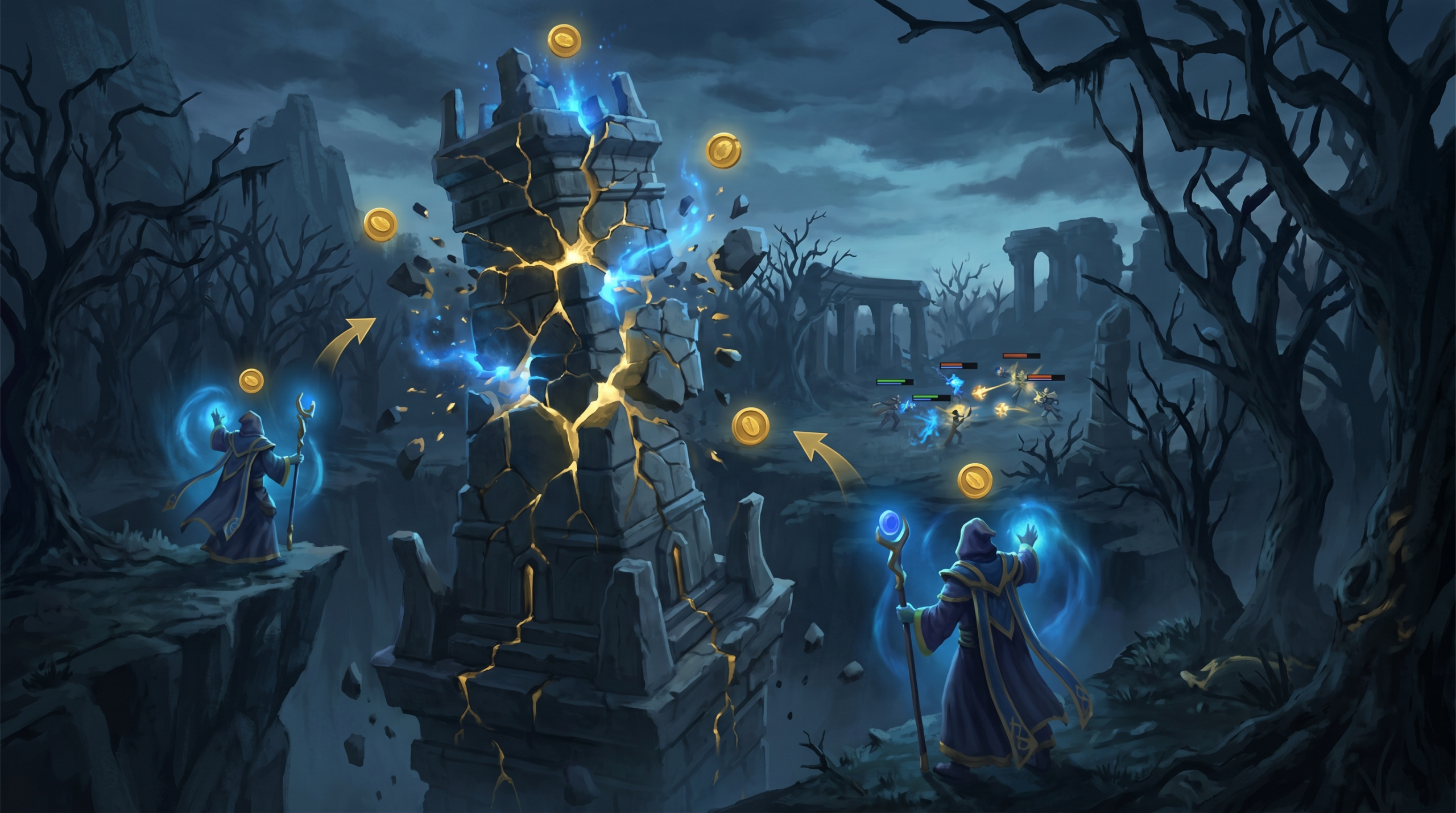
Tower pressure rotations are designed not necessarily to kill a specific hero but to create pressure on an objective that forces the opponent to respond, opening opportunities on other parts of the map. This is a more complex rotation pattern than pure kill-oriented ganks, but it has the highest game-changing potential in low-MMR games where objective play is poorly coordinated.
The Post-Kill Tower Push
The most common tower pressure rotation in low-MMR games occurs naturally after a successful kill in a side lane. Your carry kills the enemy carry, the enemy support backs or is dead, and there is a 40-60 second window where the lane is open. Instead of farming the empty lane casually, a rotation of one or two additional heroes (mid or the rotating support from the jungle) to the lane for a fast tower push is often the highest-value use of that window. In low-MMR games, teams almost never respond to tower pressure fast enough to prevent a T1 tower trade when the lane is open after a kill.
The Coordinated Outer Tower Push
Coordinating a 3-man push on an outer tower in the transition phase (minutes 10-15) is one of the highest-percentage game-winning moves available in low MMR. The approach is simple: smoke of deceit to hide the grouping, approach the tower with three heroes plus a creep wave, and commit to the tower while one hero watches for rotations. Low-MMR opponents almost never TP to defend the tower fast enough when the attack comes from smoke.
High-Ground Defence Rotation Routes
Defensive rotations are the least glamorous support duty but often the most game-saving. When the enemy team is pushing high ground, the support’s rotation choices determine whether your team defends successfully or the game ends.
The Pre-High-Ground Ward Setup
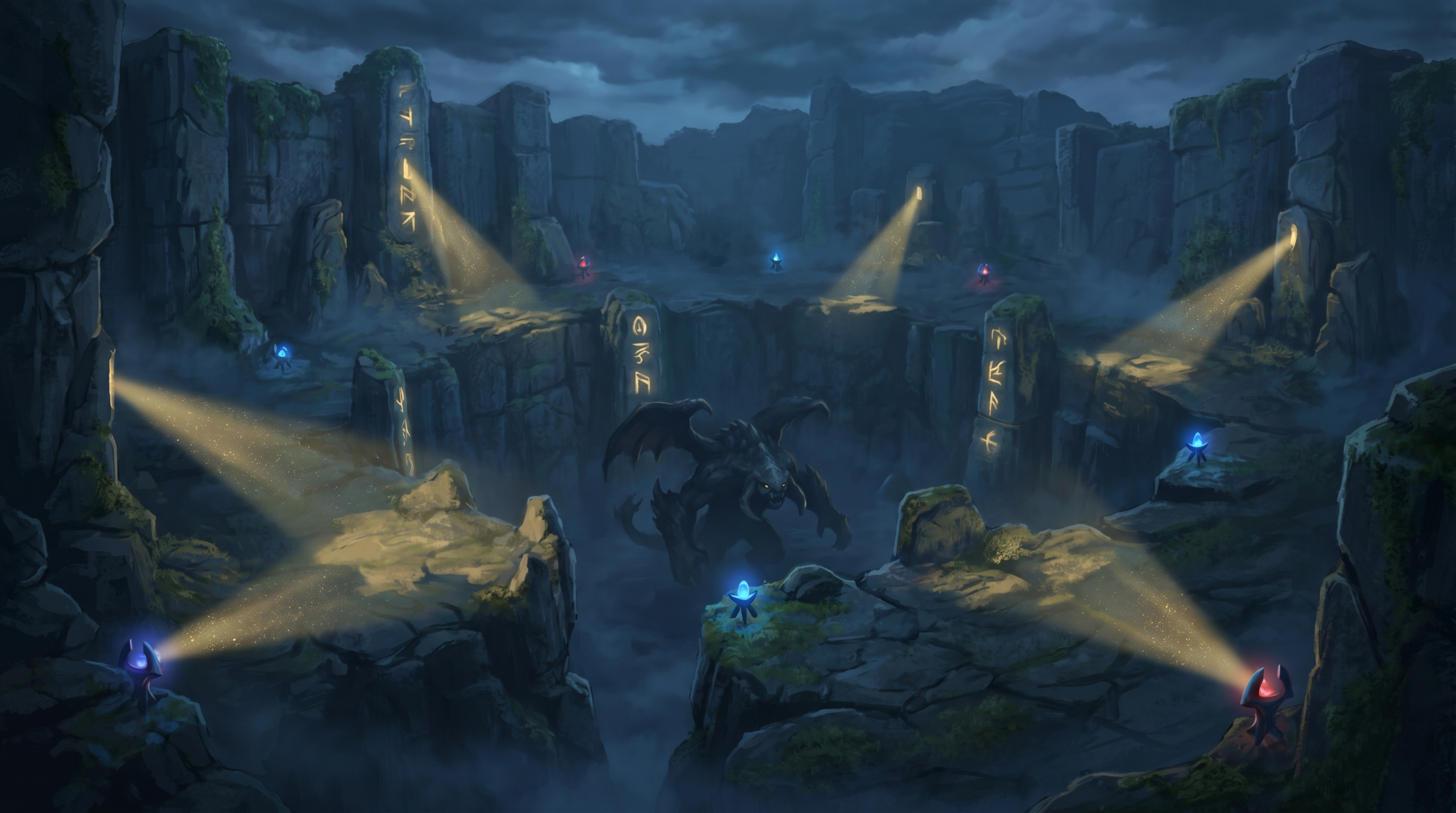
The most important defensive rotation is not during the high-ground defence itself — it is the ward placement 2-3 minutes before the attack. Observer wards at the Roshan pit, at the jungle entry points adjacent to your base, and at the key creep wave approach angles give your team the information they need to prepare their defensive positions before the push arrives. In low-MMR games, teams rarely ward defensively and are consistently surprised by push timings that were visible on the minimap for a minute before the wave arrived. Placing defensive wards at minutes 18-22 in a game that looks likely to push high ground by minute 25 is a high-leverage support action that most low-MMR supports skip.
The Buyback Communication Rotation
When a high-ground defence fails and a core hero needs to buyback, the support’s job is to stay alive and present at the high-ground entry long enough for the core to buyback and TP in. Supports who die in the initial lost teamfight leave the high-ground defence without their initiation abilities during the crucial buyback window. Playing survival-focused during the initial wave contact — using abilities defensively rather than aggressively — preserves your ability to function during the buyback window.
Building a Rotation Habit
The challenge with rotation improvement is that it requires breaking deeply ingrained habits. Most supports at low MMR are used to playing reactively — moving when they feel they should rather than when specific conditions are met. Replacing reactive habit with systematic rotation habits requires conscious effort across many games before it becomes natural.
The Minimap Check Habit
The foundational habit for improved support rotation is the minimap check cycle: look at the minimap every 15-20 seconds without exception. The minimap contains all the information you need to identify rotation opportunities: enemy support position, wave state in each lane, enemy hero positions, and whether your carry is safe. Players who look at the minimap consistently see rotation opportunities that reactive players miss entirely.
Train this habit mechanically rather than trying to remember to do it. Some players use a metronome or visual reminder for the first 50-100 games of deliberate practice. Others tie minimap checks to specific in-game events (every time a rune spawns, check the minimap). Whatever trigger works for you, make minimap checking a reflex rather than a conscious decision.
The One-Rotation-Per-Game Goal
If you are new to deliberate rotation play, set a goal of one successful rotation per game rather than trying to run the full rotation framework immediately. One successful rotation — properly timed, correctly communicated, executed to a kill or forced base — is sufficient to meaningfully change the outcome of a game and will build the pattern recognition and mechanical habit that makes the next rotation easier. Trying to run three rotations in a game where you have never rotated deliberately is likely to produce failures that discourage you rather than wins that build the habit.
Ready to Skip the Grind?
Team Smurf’s Immortal boosters handle your MMR so you can focus on the fun parts of Dota 2. Our boosters execute perfect support rotations that win games decisively — from coordinated smoke ganks to objective-forcing tower pushes.
Get Your Boost Now Talk to Our Team