

PGL Wallachia Season 8 Playoffs Day 1 Results: Match IDs, Draft Meta, and Immortal-Level Ranked Lessons

PGL Wallachia Season 8 Playoffs Day 1 gave us exactly what high-MMR players care about: clean 2-0 closes from elite teams, one three-game knife fight, and a very clear signal about what wins on patch 7.41b when the pressure is real.
If you only looked at the final scores, you missed the point. BetBoom did not just beat Team Spirit 2-0, they held Spirit to 9 total kills across two games. Liquid did not just beat Falcons, they won one normal tempo game and one 63-minute chaos game, then still controlled map flow when it mattered. Aurora did not just remove HEROIC, they won both games while forcing awkward pacing. PARIVISION did not just survive SA Rejects, they lost game 1 then adapted draft priority and closed game 2 and game 3 with cleaner objective timing.
This breakdown is built around real match data and direct match IDs so you can review every game yourself. We will cover series-level patterns, hero priority, ban logic, objective tempo, and what to copy immediately in your own ranked games. If you are trying to climb fast before DreamLeague Season 29 starts, this is the exact kind of read you need.
Table of Contents
PGL Wallachia Season 8 Playoffs Day 1: Scoreboard and Match IDs
All four opening upper-bracket series were played on April 23, 2026. Three series ended in 2-0 fashion. Only one went to a game 3. If you are reviewing VODs, start with the match IDs below.
| Series | Result | Game Match IDs | Longest Game |
|---|---|---|---|
| PARIVISION vs SouthAmericaRejects | 2-1 | 8782527726, 8782581053, 8782625329 | Game 1: 45.9 min |
| Aurora Gaming vs HEROIC | 2-0 | 8782678248, 8782750796 | Game 2: 59.3 min |
| Team Liquid vs Team Falcons | 2-0 | 8782870472, 8783006717 | Game 1: 63.4 min |
| BetBoom Team vs Team Spirit | 2-0 | 8783105237, 8783198427 | Game 2: 38.0 min |
Big picture: PGL Wallachia is still proving that patch 7.41b punishes sloppy map movement more than greedy draft ideas. Teams with cleaner vision setups and better objective patience are winning, even when laning phases are not perfect.
Full Series Breakdown: What Actually Won Games
1) PARIVISION 2-1 SouthAmericaRejects
This was the only series that looked truly unstable for both sides. SA Rejects took game 1 with a huge kill lead, then PARIVISION corrected pace and closed the next two.
| Game | Winner | Duration | Kills | Net Worth Swing |
|---|---|---|---|---|
| Game 1 (8782527726) | SouthAmericaRejects | 45.9m | 40-22 | +32,037 |
| Game 2 (8782581053) | PARIVISION | 39.0m | 26-13 | +34,822 |
| Game 3 (8782625329) | PARIVISION | 37.2m | 23-13 | +28,916 |
Immortal read: this was a textbook example of a team stopping the bleeding after game 1 by reducing volatile fights. In game 2 and game 3, PARIVISION did less random skirmishing and played cleaner lane-to-objective transitions. If your stack loses a bloody game 1, copy this exact adjustment: fewer chase fights, more objective windows after core item timings.
2) Aurora 2-0 HEROIC
The scoreboard says close series only in game length, not in strategic control. Aurora won game 1 by tempo lead and game 2 by late-game discipline in a near 60-minute map.
Game 1 ended with a brutal 33-17 kills and a +44,675 net worth differential. Game 2 was narrower on kills at 29-30, but Aurora still finished with a +26,581 economy edge, which tells you they were trading better on map value even when fights looked even.
3) Team Liquid 2-0 Team Falcons
Liquid won two very different game states. Game 1 was a long pressure test at 63.4 minutes. Game 2 was much cleaner at 37.0 minutes. In both games Liquid finished with around +33k to +40k net worth lead, which is not a random draft gap. That is map conversion and objective setup.
Top damage numbers in game 1 were absurd: Storm Spirit at 87,409 and Lone Druid at 70,278. That type of damage profile in a 60+ minute game usually means both teams got chances, but one side had better buyback planning and cleaner high-ground discipline.
4) BetBoom 2-0 Team Spirit
This was the most one-sided series by raw control metrics. Across two games, BetBoom scored 57 kills to 9. Game 1 ended 32-5. Game 2 ended 25-4. Net worth leads were +35,395 and +26,952. Spirit were never allowed to play stable mid-game Dota.
If you are a Spirit fan this hurts, but the lesson is useful: once your lanes go bad on 7.41b, enemy teams that draft active mid plus skirmish supports can compress the map fast enough that you never get your comeback triangle rhythm.
Draft Meta From Day 1: Picks, Bans, and Pressure Heroes
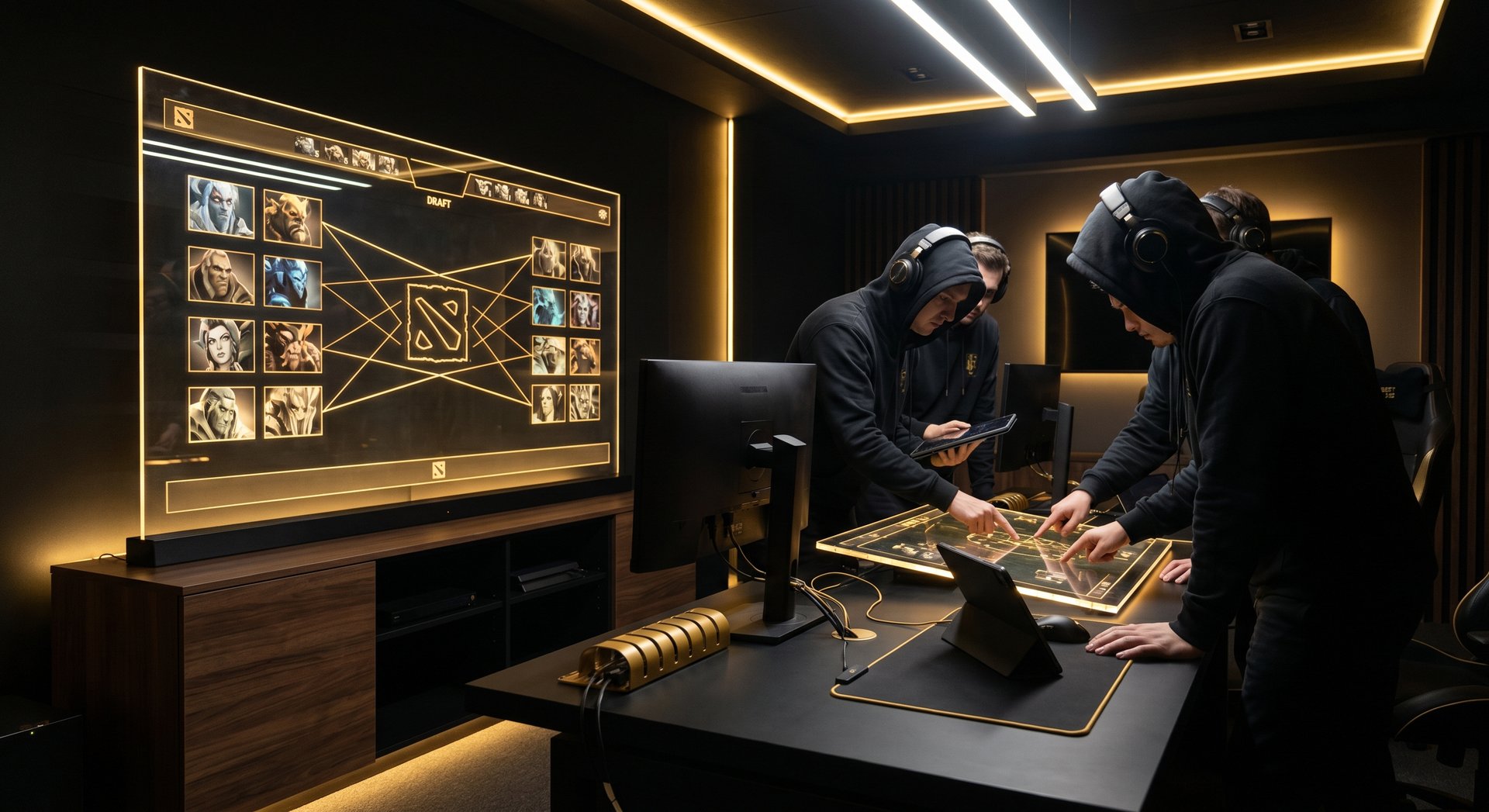
Across all 9 games played on April 23, we got a very clear draft signal. Some heroes were high-priority picks, others were permanent respect bans, and a few looked popular but actually underperformed.
Most picked heroes across Day 1 (9 games)
- Hoodwink: 5 picks
- Rubick: 5 picks
- Pangolier: 5 picks
- Monkey King: 5 picks
- Puck: 4 picks
Most banned heroes across Day 1
- Batrider: 9 bans
- Alchemist: 8 bans
- Slardar: 8 bans
- Beastmaster: 6 bans
- Huskar: 6 bans
- Phoenix: 6 bans
What this means for ranked: if you are first phase and your team has no Batrider answer, ban it. If you are second phase and your opponents flex Alchemist lineups, either remove it or draft direct lane pressure and anti-tower tempo. Teams are still not comfortable giving free scaling cores plus wave-clear control in this patch.
Hero Performance Table: Strong, Trappy, and Overrated
Pick count without win context is fake analysis. Here is the Day 1 hero efficiency read based on heroes with at least three picks.
| Hero | Record | Win Rate | Immortal Read |
|---|---|---|---|
| Puck | 4-0 | 100.0% | Still the best game control mid when execution is clean |
| Queen of Pain | 2-1 | 66.7% | Strong in fast skirmish drafts with lane pressure |
| Windranger | 2-1 | 66.7% | Flexible core value, especially with tempo support pairings |
| Beastmaster | 2-1 | 66.7% | Good if your team actually plays around roar timings |
| Hoodwink | 2-3 | 40.0% | Popular, but many teams overforce early fights with it |
| Rubick | 2-3 | 40.0% | High skill impact, weak if your team lacks initiator |
| Pangolier | 2-3 | 40.0% | Feels strong, but often fails when lane goes neutral instead of winning |
| Monkey King | 1-4 | 20.0% | Very punishable if support rotations are late |
| Silencer | 0-3 | 0.0% | Draft trap unless paired with fast catch and tower control |
The headline is obvious: Puck won every game it appeared in. But the deeper point is that teams used Puck to connect side-lane pressure into objective control, not just to farm KDA stats. That is exactly why Puck keeps looking broken at high level even when pub players think it is only a comfort hero.
Immortal-Level Ranked Lessons From Day 1
Lesson 1: Drafts that can reset and re-engage are still king
Look at who won: teams that had tools to disengage bad openings and re-enter with cooldown advantage. If your draft only has one hard commit and no reset, you lose too much value after one bad fight.
Lesson 2: Economy edges were massive even in “close” games
Players often call a game close if kill score is near-even. Day 1 proved that is wrong. Aurora vs HEROIC game 2 ended with near-even kill count, but Aurora still had huge net worth control. Gold flow, not kill count, predicted winner.
Lesson 3: 7.41b punishes passive supports hard
Support duos that did not contest map angles got choked out. Teams that kept active ward movement and objective prep won the map. If your pos 4 is AFK triangle at minute 12, your carry will get zero playable lane transitions.
Lesson 4: Ban discipline matters more than first-pick ego
Nine Batrider bans and eight Alchemist bans are not random trends. Teams are saying these heroes force too many bad branches unless you build your full draft around handling them. In ranked, this is even more true because coordination is lower.
How to Apply This in Your Next 10 Ranked Games
This is the section most posts skip, and it is why most players read analysis but never gain MMR. Here is a practical ladder plan based on what Day 1 showed.
For Mid players
- Prioritize heroes that can force rune control and instantly rotate after minute 6.
- If Puck is available and you can play it at real level, pick it. Day 1 record was 4-0 for a reason.
- If your lane is equal, do not autopilot farm. Push wave and force side-lane decisions.
For Carry players
- Do not draft greed with no tower threat. Long game does not equal free game on 7.41b.
- Track enemy support smoke timings after first major objective.
- If your team has no map control hero, call for earlier BKB timing and stop waiting for perfect six-slot windows.
For Offlane and Supports
- Draft lane security first, greed second.
- Contest wisdom, stack only when lane is stable, and anchor vision around next objective not random jungle camps.
- If your draft has one key cooldown, play around it with discipline. Do not force 4v5 “tempo” fights.
If you are stuck because your games feel random, this is exactly where structured services help. Team Smurf offers Dota 2 coaching for players who want role-specific corrections, and MMR boost options when you need a faster rank jump while keeping account safety as top priority.
Need a reset after bad behavior score or LP chain Use Low Priority Removal. Need better seasonal placement Check the MMR Calibration Service. More guides are in the Team Smurf blog index.
Day 2 Preview: What These Results Mean for April 24 Matchups
The next playoff slate is brutal and starts immediately:
- SouthAmericaRejects vs HEROIC
- Team Falcons vs Team Spirit
- PARIVISION vs Aurora
- Team Liquid vs BetBoom
High-MMR expectation: Liquid vs BetBoom should be the best macro series of the day if both teams keep Day 1 form. PARIVISION vs Aurora will test whether PARIVISION fixed early-series volatility or just survived one bad matchup. Falcons vs Spirit is pure pressure game because both teams got 2-0ed and now have no margin.
If you want to watch with context, keep two tabs open: the official event page at Liquipedia and the ongoing schedule/results tracker at Hawk Live.
Objective Timing Patterns You Can Steal Today
Most people reviewing PGL Wallachia Day 1 will focus on hero names. That is useful, but incomplete. The repeatable edge was not hero identity alone. The repeatable edge was objective timing discipline after small advantages.
In all three 2-0 series, the winners converted one of these windows more reliably:
- Post-rune lane push into tower chip and ward swap.
- First major teamfight win into triangle control instead of random chase.
- Aegis window into side-lane pressure first, then high ground only after buyback check.
That sounds simple, but this is exactly where high-MMR and low-MMR games split. Lower brackets throw because they treat every kill as a “go high ground” signal. Day 1 winning teams treated kills as map access, not as instant throne calls.
| Situation | Low-MMR Habit | High-MMR Day 1 Pattern | What to Copy |
|---|---|---|---|
| You win a 2-for-0 fight near mid | Overchase into enemy jungle | Immediate ward line upgrade + lane push | Force map squeeze before next objective |
| You get Aegis at minute 23-28 | Five-man high ground too early | Use Aegis to take outer map first | Cut vision and farm access before base |
| Enemy core shows opposite side lane | No call, no reaction | Smoke and pressure objective immediately | Trade position for objective value |
| Your draft has cooldown ultimates | Fight without ult to keep tempo | Play waves and re-engage with cooldowns | Stop donating deaths between windows |
Role-by-Role Checklist Based on Day 1 Meta
If you only want practical MMR gain, use these checklists for your next session. They are built on what winning teams actually did in Wallachia playoffs, not generic coaching slogans.
Carry checklist (Pos 1)
- Before minute 10, decide your first non-negotiable item timing and communicate it in chat.
- When your team wins a fight, push lane first, then farm nearest safe camp triangle route.
- Do not join coinflip fights if your BKB timing is within 600 gold.
- When enemy mid disappears and your support has no defensive ward, back one wave. Respect information gaps.
- In late-game scenarios, always ask “Who has buyback” before committing to high ground.
Mid checklist (Pos 2)
- Secure first power rune cycle with support request if needed. Day 1 games repeatedly snowballed from rune priority.
- After level 6, every shove should threaten side lane rotation, not passive jungle farm.
- If your draft has one strong tempo spell (Dream Coil, Sonic Wave, etc.), call your timing and force objective around it.
- When ahead, stand where enemy carry wants to farm. Deny map before forcing kills.
- When behind, push dead lane with escape path and force enemy to reveal rotations.
Offlane checklist (Pos 3)
- Pick lane-stable heroes if your support is greedy. Do not draft losing lane plus scaling support and pray.
- Minute 8-14 is your map ownership window. Use it to place aggressive vision and force carry relocation.
- Call your first tower target before the fight starts. Post-fight confusion wastes winning windows.
- If your ultimate is your draft identity, never start fights when it is down unless enemy major ultimates are also down.
- Use smoked repositioning after objective, not before. Show, take, disappear.
Soft support checklist (Pos 4)
- Play for lane manipulation and rune denial in the first 6 minutes.
- Carry extra sentry for the first objective zone. Vision denial won multiple Day 1 swing fights.
- Do not mirror your pos 5 all game. Split map info responsibilities.
- On mobile heroes, threaten backline angle every fight instead of frontlining for free.
- If your team cannot start, buy the item that starts. Do not die with greedy components.
Hard support checklist (Pos 5)
- Prioritize lane security for your carry over low-value roam attempts.
- After lane break, your first task is safe entry points for your cores, not random deep wards.
- Track enemy smoke windows with minimap discipline and pre-ping danger areas.
- Always keep one emergency defensive item progression in mind for mid-game fight stability.
- In base defense, play for spell layering and buyback spell value, not hero damage ego.
Most Common Throws We Keep Seeing in Ranked
Day 1 winners avoided these mistakes. Most pub players still repeat them every second game:
- Ignoring death timers. You kill two heroes and still fail to convert because no one checks respawn windows.
- Fighting with split resources. One core has BKB, one core has no BKB, and supports force anyway.
- Over-valuing kill count. You can be up kills and down 12k net worth if waves and towers are ignored.
- No Roshan discipline. Teams flip random pit starts without lane push or vision control.
- No reset culture. Players feel forced to keep fighting after a bad move instead of cutting losses and preparing the next timing.
If these points sound painfully familiar, you are not alone. Most players need either structured coaching reps or a faster rank correction path to break the cycle. Team Smurf can help with both, whether you choose coaching for long-term growth or boosting when time is the blocker.
A One-Week Climb Plan Using Wallachia Day 1 Lessons
Use this 7-day structure if you want direct translation from pro trends to pub MMR. Keep hero pool tight. Review one replay per day. Focus on decision quality more than hero novelty.
| Day | Focus | Target Habit | Review Metric |
|---|---|---|---|
| Day 1 | Laning and runes | Secure first two rune cycles | Did mid rotate with rune timing |
| Day 2 | Objective conversion | Fight win into tower or Roshan setup | How many fight wins became objectives |
| Day 3 | Vision control | Ward for next objective, not current farm | Deaths caused by dark map entries |
| Day 4 | Draft discipline | Ban comfort threats consistently | Did bans remove your worst matchup |
| Day 5 | Cooldown fights | No forced fight without key ult/BKB | Deaths taken during cooldown windows |
| Day 6 | Roshan calls | Push lanes before pit starts | How many pit starts had map prep |
| Day 7 | Replay QC day | Tag 5 decision mistakes and fix one | Repeated mistake count next session |
That is the difference between reading content and improving. If you want guided execution with no guesswork, start with Team Smurf services and get a role-specific plan tied to your exact MMR bracket.
FAQ: PGL Wallachia Season 8 Playoffs Day 1
Stop Guessing the Meta and Start Climbing
If your ranked games feel inconsistent, you are usually missing one thing: structure. Team Smurf gives you proven paths for real MMR progress on current patch logic.



