What Is the Titan Medal? Dota 2’s Top Rank Explained

In This Guide
If you have spent any time watching high-MMR Dota 2 streams or reading about the leaderboard, you have probably come across the word “Titan.” It sounds impressive — and it should. The Titan designation sits at the very pinnacle of the Immortal rank, reserved for a tiny fraction of players who have pushed their MMR far beyond what most competitors will ever see.
This guide explains exactly what the Titan medal is, how it works, what MMR you realistically need to reach it, and why Valve introduced a special matchmaking format for players at that level. Whether you are aiming for Titan yourself or simply trying to understand Dota 2’s ranking system in full, this is the most detailed breakdown available.
What Is the Titan Medal in Dota 2?
The Titan designation in Dota 2 is not a separate rank on the medal screen — it is the informal but widely used name for the highest echelon within the Immortal rank. Immortal itself is the eighth and final rank in Dota 2, reserved for players who cross the roughly 5,620 MMR threshold. But Immortal is a wide bracket that can contain thousands of players across each server region.
Titan refers specifically to the players at the very top of the Immortal regional leaderboard — in practice, the top few thousand players who have pushed deep into the 8,000+ MMR range and hold a leaderboard position. Valve formalised this tier by introducing dedicated matchmaking mechanics for these players in 2023, which we cover in detail below.
The key distinction is this: you can be Immortal and have no numbered leaderboard rank at all (this is sometimes called “unranked Immortal”). Or you can be Immortal with a number next to your medal — for example, Immortal 347 in Europe — meaning you are currently the 347th highest-rated player on that server. The players deep enough into the numbered leaderboard to trigger the special Titan matchmaking queue are what the community, and Valve’s own backend systems, refer to as Titan-level.
The Dota 2 Rank System: Full Breakdown
Before diving deep into Titan, it helps to understand the full rank ladder. Dota 2 uses eight medal tiers, each divided into five stars (sub-divisions). Every star represents roughly 154 MMR in the Herald-through-Ancient range, meaning a full medal tier covers about 770 MMR. Divine compresses that slightly to 200 MMR per star. Immortal has no stars at all — it uses a live leaderboard instead.
| Medal | MMR Range | Stars | % of Players |
|---|---|---|---|
| Herald | 0 — 769 | 1-5 | ~7.3% |
| Guardian | 770 — 1,539 | 1-5 | ~15.7% |
| Crusader | 1,540 — 2,309 | 1-5 | ~22.5% |
| Archon | 2,310 — 3,079 | 1-5 | ~22.8% |
| Legend | 3,080 — 3,849 | 1-5 | ~16.3% |
| Ancient | 3,850 — 4,619 | 1-5 | ~8.9% |
| Divine | 4,620 — 5,619 | 1-5 | ~4.6% |
| Immortal | 5,620+ | Leaderboard | ~1.9% |
The numbers in the table reflect the distribution in 2025-2026 seasons. The most populated rank is Archon, which accounts for nearly a quarter of all ranked players. Herald sits at the low end, and Immortal — the rank that includes Titan — represents under two percent of the active player base.
This ladder makes sense intuitively: reaching the top requires years of dedicated play and, for most players, professional coaching or structured improvement plans. The best Dota 2 boosting services exist precisely because most players want to progress faster than the ladder naturally allows.
Why Immortal Has No Stars
Every rank from Herald to Divine uses stars as a progress bar. Once you reach the fifth star of Divine 5 and cross 5,620 MMR, you enter Immortal. But at that point, you have graduated beyond the star system entirely. Instead of stars, Immortal players receive a number showing their position on the regional leaderboard — for example, Immortal 2,443 in SEA. That number updates in real time as other players’ MMR shifts. You can drop from position 2,000 to position 2,800 overnight simply by other players climbing above you while you sleep.
How the Immortal Leaderboard Works
The Immortal leaderboard is a regional ranking — not a single global list. Valve splits it into four main regions: Europe (which includes CIS), Southeast Asia, Americas, and China. Each region has its own leaderboard, and your position is relative to players on your server cluster.
Leaderboard positions carry cosmetic significance. The distinctions players care most about are roughly:
- Top 25,000: You appear on the leaderboard at all. Many Immortal players are simply “unranked Immortal” because there are not enough leaderboard spots in their region to include them yet, or they have not played enough games to be ranked.
- Top 5,000: You are genuinely elite. This is the threshold that most competitive players consider meaningful. Your leaderboard number is small enough that people notice it.
- Top 100: An extremely exclusive club. In most regions, the players here are active or former professional esports athletes.
- Top 10: The absolute peak of non-professional public matchmaking.
- Position 1: The highest-rated active player in the region. This spot changes hands frequently in competitive regions like Europe and China.
The Titan designation in matchmaking mechanics specifically targets the top segment of this leaderboard — the players for whom standard Immortal matchmaking no longer produces fair, high-quality games.
Where Titan Came From: Patch 7.33 and New Frontiers
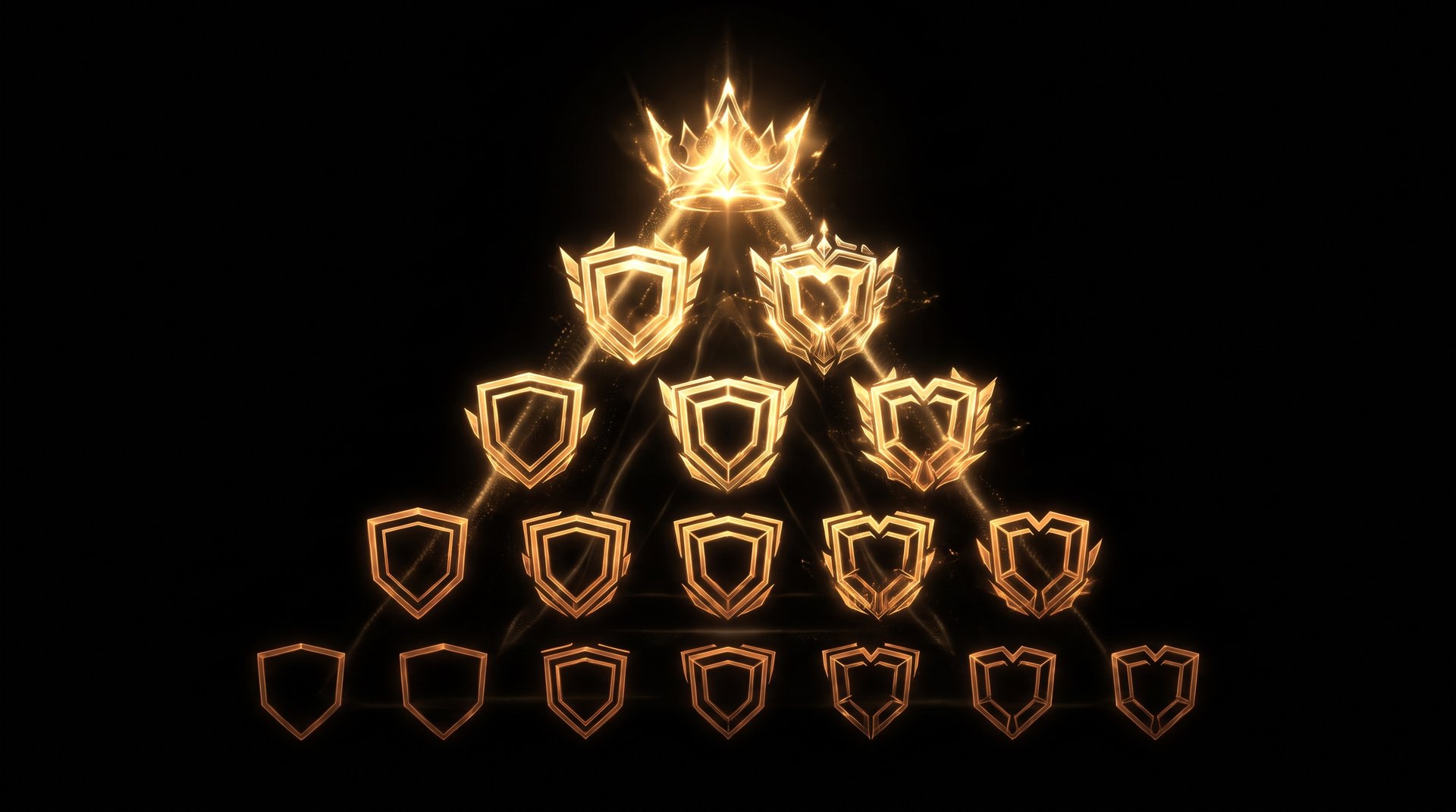
The explicit recognition of a “Titan” tier in Dota 2 matchmaking arrived with the New Frontiers update — patch 7.33 — released in April 2023. This was one of the most substantial changes to Dota 2 in the game’s history, overhauling the map, adding new objectives, and revamping several core mechanics.
Among the matchmaking changes, Valve specifically called out the Titan rank level as requiring a different approach. At the highest MMR ranges, standard matchmaking had a problem: the pool of eligible players was so small that the system sometimes formed unbalanced teams or waited excessively long for matches. The solution Valve introduced was a specialized format rather than a new medal.
Simultaneously, patch 7.33 transitioned Dota 2’s underlying rating system from a traditional ELO model to Glicko-based rating, which added two new parameters:
- Rating Deviation (RD): How confident the system is in your current MMR. A player who has been active for months has a low deviation — the system is sure about their skill. A returning player has a high deviation, meaning MMR can swing more dramatically in each match.
- Volatility: How unpredictable your results are. Beating consistently stronger opponents boosts you faster; losing to weaker ones punishes you harder.
These changes had the most visible impact at the Titan level, where the system needed to distinguish between players who were genuinely the best in their region and players who had inflated MMR through unusual circumstances.
What Changed for Titan Matchmaking Specifically
The headline change for Titan-level matchmaking was the introduction of a captain’s draft format. In standard Immortal matches, ten players are placed into a lobby and the game begins. At Titan level, two captains are selected from the ten players matched together, and those captains draft their teams from the remaining pool rather than being assigned randomly.
This single change addressed a significant source of frustration for elite-level players: the coin-flip nature of randomly assigned teams at the highest MMR ranges. When every player in the lobby is skilled enough to carry a game single-handedly, the composition of your team — who is playing which role and what heroes they are comfortable on — matters far more than it does at lower ranks. Letting captains select their teammates produces more balanced and strategically interesting games.
The Captain’s Draft Format Explained
Here is how the Titan captain’s format works in practice:
- Ten players are matched together as usual, based on similar MMR.
- Two players are designated as team captains. The captain selection mechanism prioritises players with stronger captain track records or simply the two highest-MMR players in the lobby.
- The remaining eight players form a pool.
- Captains take turns selecting from this pool to build their teams of five.
- The draft proceeds similarly to a snake draft: one captain picks, then the other picks two consecutively, then the first picks two, and so on until all eight spots are filled (each captain taking four picks).
This format means Titan-level games are more strategically deliberate from before the hero selection screen even opens. Captains pick based on role needs, player strengths, and — crucially — who they trust not to underperform under pressure.
For players outside the Titan range wondering how to climb toward it, having a structured approach to MMR is essential. Our MMR boosting guide covers the most effective methods for accelerating your ascent through the ranks, whether you choose to do it yourself or use a professional service.
What MMR Do You Need to Reach Titan?
This is the question every serious Dota 2 player wants answered, and it is also the most honest place to acknowledge that Valve does not publish a fixed number. There is no official announcement saying “8,500 MMR makes you Titan.” The Titan threshold is dynamic because it is based on your position on the regional leaderboard, not a fixed MMR number.
That said, the community has tracked leaderboard positions and MMR over multiple seasons, and some patterns are consistent:
| Region | Approx. Titan Threshold (2025-2026) | Top 5,000 MMR Estimate | Notes |
|---|---|---|---|
| Europe (incl. CIS) | ~8,500 — 9,500 MMR | ~7,500 MMR | Most competitive region; highest thresholds |
| China | ~8,500 — 10,000+ MMR | ~7,800 MMR | Pro-heavy server; thresholds fluctuate most |
| Southeast Asia | ~7,500 — 9,000 MMR | ~6,800 MMR | Large player base; accessible entry but deep competition |
| Americas | ~7,000 — 8,500 MMR | ~6,500 MMR | Smaller pool; slightly lower absolute thresholds |
These are approximate ranges derived from community leaderboard tracking, not official Valve data. The exact number shifts from season to season as the top players climb and as the active player base on each server changes. A threshold of 8,500 MMR that gets you into Titan queue in the Americas might not be enough to activate the format on the European server during a period when many professional players are grinding ranked aggressively.
Why the Thresholds Move
MMR inflation is real in Dota 2. Over the years, the average MMR of high-level players has drifted upward as the Glicko system redistributes rating, as seasonal calibrations affect the ladder, and as the best players simply keep playing. The record-holders at the top of the European leaderboard have surpassed 16,000 MMR in recent seasons — a number that would have seemed impossible in the early days of the ranked system.
This means that holding Titan status is a moving target. You do not just need to hit a threshold once; you need to maintain your position relative to every other top player actively competing. Take a week off and the leaderboard may have shifted enough to drop you out of the Titan queue range.
How Rare Is the Titan Designation?
To understand how rare Titan is, start from the full distribution of players across ranks. Immortal itself accounts for roughly 1.9% of the active ranked player base. Within that 1.9%, only a fraction are on the leaderboard at all in most regions.
The leaderboard structure varies by region, but across all servers combined, the total number of listed Immortal players is in the range of 25,000-100,000 at any given time. The Titan tier — broadly defined as the top several thousand on each regional leaderboard — represents a far smaller group.
If you consider only the players who regularly activate the captain’s draft format through their MMR, you are looking at well under 0.05% of the global Dota 2 player base. Among a game that has maintained millions of active monthly players, the absolute number of Titan-level players in any given region rarely exceeds a few hundred at the very top.
This rarity is exactly why Titan players are treated differently by the matchmaking system. When your MMR is high enough that only 200 or 300 other active players on your server are at your level, the standard matching algorithm cannot function normally. Special accommodations — like the captain’s format — become necessary to produce any game at all, let alone a balanced one.
What Titan Players Actually Do Differently
Reaching Titan is not just about playing more. The players at this level have usually spent thousands of hours developing skills that separate them from even very good Immortal players. Here is what distinguishes Titan-level gameplay.
Deep Hero Mastery
Most high-level players have a pool of 5-10 heroes they play at an elite level. Titan players typically master a smaller, tighter hero pool — often 3-5 heroes — so completely that they can extract maximum value from those picks in any draft context. They know the exact item timings, the micro-patterns in fights, the position-by-position decision trees, and the matchup-specific adjustments well enough to execute them without thinking.
Draft-Level Thinking During Gameplay
At Titan level, players are not just executing their own game plan — they are constantly adjusting based on the overall draft equation. This means recognizing when your draft has a power spike window that must be forced, when you are in a late-game draft that needs to stall, and what the enemy carry needs to reach their win condition. All of this processing happens in real time while simultaneously managing mechanical execution.
Resource Management Precision
Last-hitting accuracy approaches 90%+ in lanes at Titan level. Neutral camp stacking is automatic. Vision control is near-perfect: wards are placed to give information at the exact map positions that matter most for the current game state, not just in “good general spots.” Gold efficiency on item purchases is calculated rather than intuitive — Titan players know precisely how many items they need to hit a fight power spike at the ideal moment.
Mental Durability
Arguably the hardest skill at the top end is mental. Titan players have trained themselves to maintain performance consistency across long sessions, through losing streaks, and in games where teammates are underperforming. The tilt that ends climb attempts for mid-rank players has, for most Titan players, been largely worked out over thousands of ranked games.
Communication and Leadership
Since Titan games use a captain’s format, leadership skills matter more than at any other rank. Titan captains need to communicate draft priorities under time pressure, coordinate during the laning phase, and adjust plans when the game is not going to script — all while playing their own hero at the highest level.
Can You Boost Your Way to Titan?
This is a question that deserves an honest answer, because the Titan bracket creates a genuinely unusual situation for boosting services.
For the vast majority of Dota 2 ranks — Herald through high Immortal — professional boosting services can reliably deliver the MMR gain you need. The booster plays on your account, maintains a strong win rate, and moves your MMR to the target you purchased. This works well from Herald all the way through standard Immortal, including leaderboard positions in the 5,000-15,000 range.
For the Titan captain’s draft zone — the top few hundred positions in each region — the situation is different. The pool of players who consistently belong at that level is so small that any booster operating in that range is essentially a known entity in the community. Every game involves players who recognise each other, have matchup history, and know roughly who should be at what MMR. An account being played by someone else at that level becomes conspicuous faster than it would at lower ranks.
What boosting services can realistically do for players targeting Titan:
- Get you into standard Immortal leaderboard positions — anything from Top 25,000 to Top 5,000 is achievable with a quality service.
- Boost your MMR to the threshold where Titan games start appearing — reaching the 8,000 MMR range on most servers is realistic with an elite booster.
- Provide coaching alongside boosting so you can maintain or build on the MMR once the order is complete.
The key insight for players with Titan ambitions: boosting is most valuable as a tool for getting past ranks where you are held back by teammates rather than by your own skill ceiling. Once you are genuinely close to the Titan range, the gap between “boosted to X MMR” and “playing at X MMR” becomes very visible very fast in that small player pool.
TeamSmurf’s Dota 2 MMR boost service is run entirely by players verified at the Immortal level. If you are trying to reach the high-Immortal range efficiently and safely, our team can get you there. For players who want to understand the risks and guidelines around boosting first, our complete guide to whether Dota 2 boosting is safe covers everything Valve has and has not enforced.
The Leaderboard Behind the Medal: Tracking Titan Progress
One of the most useful tools for understanding your position relative to Titan players is Valve’s own public leaderboard, accessible at dota2.com/leaderboards. The leaderboard updates in real time and shows the top players by region with their current MMR displayed publicly.
Several third-party tracking sites have built on this to provide historical leaderboard data, track when specific players entered or left certain position ranges, and calculate the MMR changes needed to move from one position to another. These tools are valuable for setting realistic targets: rather than saying “I want to be Titan,” you can say “I want to reach position 3,000 in SEA, which currently requires approximately X MMR based on the current leaderboard.”
How Valve Displays Titan Status
On your Dota 2 profile, the medal display for Immortal players shows your regional leaderboard number directly alongside the Immortal medal icon. There is no separate medal that says “Titan” — the Titan designation is a community and system shorthand rather than a distinct cosmetic. Your leaderboard number is the visual indicator of Titan status.
However, the matchmaking system itself does track who qualifies for the Titan captain’s format internally. When you queue for ranked and the system places you into a Titan-eligible lobby, the lobby format changes automatically. You do not need to opt in — it activates based on your MMR and position relative to the other nine players in your match.
Seasonal Resets and Titan Status
Dota 2 no longer enforces the hard seasonal MMR resets that were common in older versions of the ranked system. Your MMR and medal carry forward indefinitely. What does reset each year is the optional recalibration — a series of ranked games that can shift your MMR (and medal) up or down around your current rating.
For Titan players, the recalibration season is a period of heightened activity and volatility. The top of the leaderboard compresses and reshuffles as everyone calibrates simultaneously. This is when some of the largest single-session MMR swings happen at the top end, and when leaderboard positions can change dramatically in a short time.
Frequently Asked Questions
Ready to Climb Toward Immortal?
The path to Immortal — and eventually to the Titan leaderboard — starts with consistent MMR gains at your current rank. Whether you are fighting through Archon or pushing from Divine into Immortal, TeamSmurf’s elite boosters can accelerate your climb safely and effectively.
Every booster on our platform is verified Immortal and plays exclusively on EUW, USW, and SEA servers. No bots. No account sharing without your consent. Just fast, clean MMR.
Get Your MMR Boost Book a Coaching Session