

TI 2026 Debutants Guide: 7 First-Timers to Watch

TI 2026 debutants are one of the sharpest edges in this tournament. Every year, a few players reach The International for the first time. Some freeze. Some overcook their drafts. A few completely ignore the pressure and jump a tier in public perception overnight.
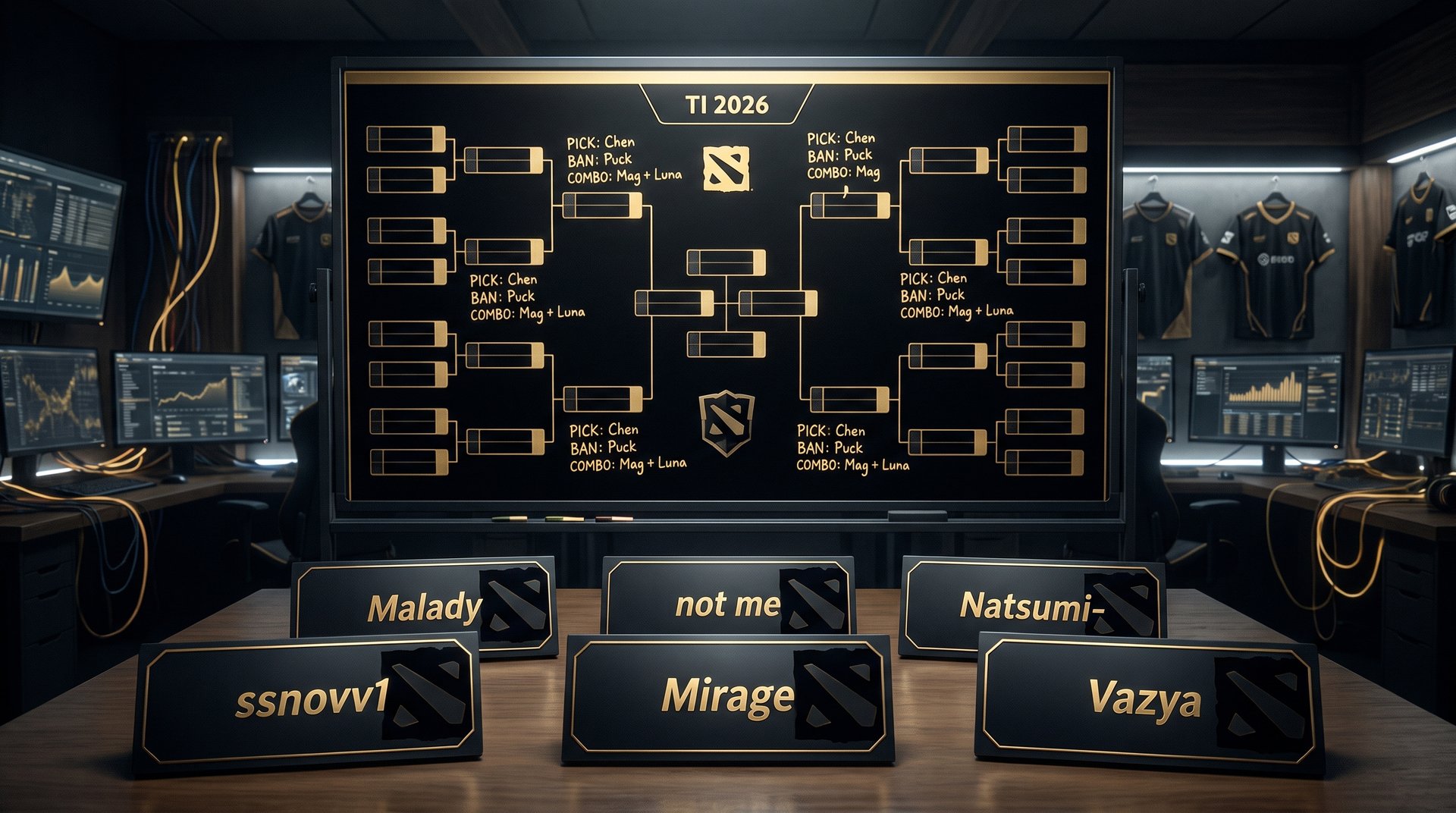
This year there are seven first-timers: Team Yandex support Malady, Team Spirit position four not me, OG carry Natsumi-, Team Resilience mid Echo, plus HULIGANI’s trio of ssnovv1, Mirage`, and Vazya. That list matters because first-TI players distort both real matches and ranked pubs. Their comfort picks get exposed, their lane habits get tested, and the heroes they trust under stage pressure tend to become the most copyable pub templates of the week.
Below is the real TeamSmurf angle: not just who these players are, but which ones are actually worth studying if you want free MMR during TI week, what pressure points they will face when the event opens on August 13 in Shanghai, and which debutants are most likely to outperform their seed.
Table of Contents
Quick Answer
If you only want the high-MMR verdict, here it is: Malady is the safest debutant to trust on a contender, not me is the most likely support breakout, Natsumi- is the most pub-relevant carry study, Echo is the highest-variance dark horse, and HULIGANI’s three first-timers are dangerous mostly because they have almost no expectation pressure.
The easiest mistake casual viewers make is assuming first-TI players always collapse. That is wrong. Debutants usually look best when their jobs are clearly defined. Supports with clean warding and save patterns, mids with two reliable lane winners, and carries with disciplined BKB timings often translate better than flashy players who need chaos to shine.
So if you are betting on breakout value rather than brand names, the best order is Malady, not me, Natsumi-, Echo, ssnovv1, Mirage`, Vazya. If you are farming MMR while everyone else doom-scrolls TI content, the better question is which of these players has a stable hero pool you can steal right now. We will get there.
Why Debutants Matter At TI More Than They Do At Other Events
TI is not just another LAN. The format pressure is different, the draft prep is deeper, and small execution errors get magnified because every team spends longer preparing lane setups, ward routes, and first-Roshan sequences. During the Road to The International Swiss phase from August 13 to August 16, one weak comfort read can snowball into a brutal opening record.
That matters for debutants because first-time TI players usually fall into one of three buckets:
- System player on a favorite: lower emotional burden, clearer in-game job, better chance to look stable immediately.
- Qualifier survivor: arrives hot, but sometimes overestimates what worked regionally.
- Underdog with nothing to lose: less polished, but also less likely to lock up on stage.
Malady is clearly bucket one. Not me and Natsumi- sit somewhere between bucket two and a controlled version of bucket one. Echo and the HULIGANI trio are bucket two and three mixed together. That distinction matters because the best debutants are rarely the ones trying to prove they are stars on day one. They are the ones accepting boring responsibilities and executing them faster than veterans expect.
From a boosting and ranked improvement point of view, TI debutants are gold because they often show cleaner default Dota than established veterans. They simplify. They avoid ego moves. They buy the early utility item instead of chasing highlight clips. That kind of discipline wins more ranked games than people want to admit.
All 7 TI 2026 Debutants In One Table
| Player | Team | Role | How They Reached TI 2026 | Main Storyline |
|---|---|---|---|---|
| Malady | Team Yandex | Support | Arrives with one of the tournament favorites | Qualified before with Gaimin Gladiators, but the TI debut never happened |
| not me | Team Spirit | Position 4 | Qualified through Europe with Spirit | Fresh aggressive support who joined Spirit in May |
| Natsumi- | OG | Carry | Qualified through Southeast Asia | Finally breaks through after five failed TI qualification attempts |
| Echo | Team Resilience | Mid | Won the China qualifier | Late-formed roster, massive dark horse potential on home soil |
| ssnovv1 | HULIGANI | Carry | Europe lower-bracket qualifier run | Very new pro carry with almost zero TI baggage |
| Mirage` | HULIGANI | Mid | Europe lower-bracket qualifier run | Tier 2 grinder finally getting a real main-stage test |
| Vazya | HULIGANI | Offlane | Europe lower-bracket qualifier run | Oldest debutant in the group at 29 |
Malady Is The Most Dangerous Debutant Because He Does Not Need To Be The Star
Arman “Malady” Orazbayev is 22, plays support for Team Yandex, and has the cleanest setup of any TI 2026 debutant. According to GosuGamers’ debutants report, he already qualified for a previous TI while with Gaimin Gladiators, only for that chance to disappear when the organization withdrew before the event. So this is technically his first TI appearance, but not his first TI-level pressure cycle.
That distinction matters. Players who have already gone through the qualifying, media, and prep grind once usually look less shocked by the moment. Malady also comes into Shanghai on a roster being treated as one of the favorites, which means he does not need to create the game. He needs to make the game easier for his cores. That is a dream debut condition for a support.
From the research trail, Malady’s path is specific:
- Started in smaller stacks in 2019
- Played for known Tier 2 names like HellRaisers and NAVI
- Broke through internationally with Gaimin Gladiators in 2025
- Now enters TI 2026 with Team Yandex as a serious title threat
The pub lesson here is simple: stable support Dota scales hardest in high-pressure patches. When everyone is nervous, the five-position or lane support who understands when to body for bounty runes, when to smoke instead of greed-farming one more wave, and when to break a smoke on purpose becomes ten times more valuable. If you want a TI week support archetype to copy, Malady is the best one on the board because his game is likely to be role-pure rather than inflated by highlight-chasing.
My high-MMR read is that Malady should look strongest in games where Yandex gets playmaking mids and sturdy frontlines. In those drafts, his job collapses into vision discipline, lane resource trading, and save priority. That is exactly the kind of Dota that survives stage pressure. If Yandex start 2-0 or 3-0 in Swiss, do not be surprised if Malady ends up being one of the quiet reasons why.
Not Me Might Be The Support Breakout Of The Whole Event
Alexey “not me” Kosminyn is the debutant I would watch most closely if your goal is to spot a support whose stock can double in one event. He only entered the broader scene in 2024 with One Move, spent time around Yellow Submarine, and then joined Team Spirit in May 2026 as their position four.
The important part is not the biography. It is the instant result line after he joined:
- 3rd place at DreamLeague Season 29
- Top 8 at BLAST Slam VII
- Top 8 at the Dota 2 Esports World Cup 2026
- Helped Spirit secure TI through the European qualifier
That is a strong sample in a short window. More importantly, Gosu’s reporting frames him as an aggressive and sacrificial support who enables Spirit’s structure. That usually means fast rotations, willingness to die for lane equilibrium, and cleaner spell-first thinking than gold-first thinking. Again, that translates beautifully to pubs if you are above Ancient and especially if you play in coordinated stacks.
What I like about not me at TI is that Spirit usually does not ask its four-position to cosplay as a greedy fourth core. They want tempo, chaos creation, and lane disruption. On stage, that is easier to trust than a greedy four who needs twenty uninterrupted minutes to look useful.
If Spirit hit an early match where their opening lanes are close, not me could be the debutant who decides the outcome with two or three early map moves rather than any one massive teamfight. Those are the players sharp viewers notice first. If you are trying to steal MMR from TI week, copy the pattern, not the exact hero: leave lane on the correct catapult timing, threaten mid before the enemy support does, and die to start good fights if your cores are in position to finish them.
Natsumi- Is Probably The Most Relevant Carry For Ranked Players To Study
John Anthony “Natsumi-” Vargas is not a complete unknown. Southeast Asia has watched him for years through stops with Talon Esports, Blacklist International, and BOOM Esports. The headline now is that TI 2026 will finally be his first International appearance, after five straight years of falling short in qualification campaigns.
That alone makes him dangerous. Players who grind that long for a first TI usually come in one of two ways: mentally cooked, or incredibly ready to play simple, respectful carry Dota. I think Natsumi- leans into the second path.
There are three reasons I rate him as the best pub-study carry among the debutants:
- His game is chemistry-driven. Even the Gosu piece notes he is not the flashiest carry, which is often a compliment if you care about winning instead of clip farming.
- OG’s all-Filipino pivot already survived real skepticism. They earned early Top 6 results, then endured a rougher mid-season, then still made TI through Southeast Asia.
- He finally solved the qualifier problem. That usually tells you a player has learned when not to force.
When low-MMR players study carries, they obsess over the 35-minute item screen. High-MMR players look at the first twelve minutes. Natsumi- is useful because his likely value at TI will come from how little he leaks in lane, how well he syncs with support pulls and wave resets, and whether he respects off-map kill windows before his first major defensive timing.
If OG make noise in the Swiss stage, Natsumi- will probably not do it by hard-carrying every fight solo. He will do it by hitting his first farm checkpoints without donating death streaks, then taking the correct second and third fight after his first core item plus BKB or status-protection timing. That is exactly the carry discipline most 5K and 6K players fail to copy consistently.
So yes, if you want the TI debutant most likely to improve your own ranked carry play, it is Natsumi-. Watch his camera movement around stacked waves, his tolerance for giving up one camp to preserve TP options, and whether he ever shows on one more lane than he needs to.
Echo Is The Dark Horse Mid Because Home Soil Changes Everything
Ziliang “Echo” Xu is the hardest debutant to price correctly. He is 25, plays mid for Team Resilience, and reaches TI after a very unusual path. He spent years in Tier 2 and Tier 3 lineups, found a bigger opening with LGD Gaming in 2024, moved to Team Tidebound in late 2025, and then helped a last-minute Team Resilience roster win the China qualifier.
That qualifier run matters because Gosu specifically notes Team Resilience beat names like Vici Gaming and Yakult Brothers in dominant fashion. For a team only formed in April, that is a massive signal. Either the regional field underperformed, or Resilience found a version of themselves the bracket could not solve in time.
Echo also gets the most underrated buff in Dota esports: playing TI on home soil. People talk about pressure, and yes, that is real. But home soil also reduces travel discomfort, increases crowd familiarity, and can flatten the emotional spike of the first walkout. For a debuting mid, that matters more than it does for almost any other role.
Mids at TI get targeted in two ways:
- Through direct last-pick or lane-bully pressure
- Through support rotations that test whether the mid panics under limited vision
If Echo handles the first two early-pressure maps well, his confidence can snowball. And because Team Resilience are hard to model due to how recently they formed, he is exactly the kind of player who can steal a series before the tournament’s consensus updates.
For ranked players, Echo is the debutant to watch if you play mid and want to learn how to survive without overcommitting. Newer mids at LAN often simplify their pool, reduce cute rune gambles, and choose safer wave states before six minutes. That makes their Dota more educational than the average pub stomper’s. If Echo comes in with two trusted lane-openers and one fallback comfort pick, that is already a stronger plan than what most pub mids queue with.
HULIGANI’s Three First-Timers Are The True Chaos Variable
HULIGANI, also referred to as L1GA TEAM in the source reporting, bring three debutants: carry Ilya “ssnovv1” Lavrenkin, mid Miras “Mirage`” Mutanov, and offlaner Ivan “Vazya” German. On paper, that should terrify you. In practice, it can also make them dangerous in isolated Swiss best-ofs because no one has deep TI footage proving how they will react.
Their qualifier story is very specific. HULIGANI reached TI through an impressive lower-bracket run in the European qualifier, reportedly taking down NAVI and Virtus.pro on the way. That is not fluke territory. A team can overperform for a day. It usually cannot sprint through that kind of bracket without some genuine structural identity.
Each member of the trio carries a different kind of volatility:
ssnovv1
The youngest-feeling profile in terms of pro mileage. He only began competing professionally in 2025, with a brief stretch on AVULUS. That means his ceiling is hard to measure, but it also means he is less likely to carry years of TI trauma into Shanghai. New carries can either feed their first two elimination fights or play with shocking freedom. There is not much middle ground.
Mirage`
Started around 2019 and mostly lived in the Tier 2 ecosystem. That matters because mids from that background often have one edge over better-known players: they are used to making games work without perfect information or polished support help. If Mirage` avoids the classic stage-meltdown overrotation, he could easily become the best performing HULIGANI debutant.
Vazya
At 29 years old, Vazya is the oldest debutant in the seven-player class. That can be spun two ways. The negative read says his ceiling is known. The better read says he is probably the least likely to be overwhelmed by the symbolism of “first TI.” Offlaners with late-career debuts often survive because they understand what their draft actually needs: aura timing, blink discipline, and clean initiation order.
The key point with HULIGANI is this: their debutants do not need to look polished to be annoying. They need to be emotionally free. Underdogs with three TI first-timers can steal maps by doing two things favorites hate:
- forcing ugly midgame scraps before the opponent’s cleaner scaling comes online
- drafting comfort heroes that would look “too simple” for a favorite to respect properly
That is why I would not blindly fade them in every opening matchup. In a long bracket run, inexperience usually taxes you. In isolated early Swiss games, it can make you unpredictable.
Best Pub Takeaways From The TI 2026 Debutant Class
This is the part most blog posts skip. Everyone lists the players. Very few tell you how to turn that into MMR. Here is the practical conversion.
| If You Play… | Watch | Steal This Habit | Common Pub Mistake To Avoid |
|---|---|---|---|
| Position 5 / support | Malady | Play for vision, lane resources, and smoke timing | Greeding one extra wave instead of protecting tempo |
| Position 4 | not me | Rotate early with purpose, not randomly | Leaving lane without syncing catapult and rune pressure |
| Carry | Natsumi- | Respect off-map kill windows before first BKB timing | Showing on one extra wave because “it looks free” |
| Mid | Echo or Mirage` | Simplify lane plan and protect first six minutes | Forcing heroics before supports reveal positions |
| Offlane | Vazya | Prioritize first reliable initiation item over greed | Buying luxury damage before teamfight structure exists |
If I had to pick only three debutant lessons for ranked players this week, they would be these:
- Discipline wins more than flair in pressure matches. That applies to your pubs too.
- Stable first-item and first-BKB timing matters more than chasing a “perfect” greed line.
- Role clarity is underrated. The debutants most likely to succeed are the ones whose teams ask them to do one job very well.
That is also why TI week is a good time to queue with confidence. Meta conversation gets noisy, but actual winning Dota becomes cleaner. If you want easier games, copy the simplest repeatable habits from players under the biggest pressure.
Opening TI Pressure Map: Which Debutants Start Cleanest?
According to the tournament page, the opening slate includes matchups like Team Falcons vs LGD Gaming, Iron Wing vs Nigma Galaxy, BoomBoys vs OG, TEAM VISION vs Team Resilience, and Team Spirit vs Xtreme Gaming. That matters because not all debuts are created equal.
Here is how I rank the opening difficulty curve for the first-timers we know are directly involved:
| Debutant | Opening Pressure Level | Why |
|---|---|---|
| Natsumi- | Manageable | OG can play through structure and let him settle into farm patterns |
| Echo | High | Mid role plus a hard-to-read new roster means every mistake gets amplified |
| not me | High but healthy | Position four against elite macro teams is constant decision pressure |
| Malady | Lower than it looks | Favorites can protect supports with stronger draft framework |
| ssnovv1 / Mirage` / Vazya | Wild card | Underdog pressure is real, but lower expectation can unlock freer Dota |
The big thing to watch in the first two days is not KDA. It is whether these players look like they understand what the game state is asking from them. A debutant dying first in a good smoke fight is often playing better than the veteran saving his scoreboard. Context matters.
That is why I expect Malady and not me to grade well early even if they do not top any fantasy leaderboard. For carries, Natsumi- is the one who can win people over the fastest if OG give him stable lanes. For mids, Echo is the boom-or-bust story. For the HULIGANI trio, even one upset win would instantly make them one of the most interesting study cases of the group stage.
FAQ
How many TI 2026 debutants are there?
There are seven confirmed first-time players highlighted in the latest TI 2026 debutants coverage: Malady, not me, Natsumi-, Echo, ssnovv1, Mirage`, and Vazya.
Who is the strongest TI 2026 debutant?
Malady has the safest overall case because he debuts with Team Yandex, one of the event favorites. Not me is probably the best breakout candidate if you want someone whose reputation can jump fast during the event.
Which debutant should carry players study?
Natsumi-. He is the most useful carry study for ranked players because his path to value is likely to come from lane discipline, timing respect, and low-ego teamfight entry.
Which debutant is the biggest dark horse?
Echo is the biggest dark horse individually, while HULIGANI are the biggest dark horse team because three first-timers create a very hard-to-model volatility profile.
When does TI 2026 start?
The Road to The International Swiss stage starts on August 13, 2026. The main event in Shanghai’s Oriental Sports Center runs from August 20 to August 23.
Need Cleaner Dota Before TI Pubs Get Sweaty?
TI week always makes ranked weirder. Everyone copies half-understood drafts, griefs lanes with “pro strats,” and forgets fundamentals. If you want the opposite, TeamSmurf coaching and boosting services help you climb with clean execution instead of random trend-chasing.
Whether you want better support map movement, stronger carry decision-making, or a faster route through the bracket before the TI patch crowd settles in, TeamSmurf can help you turn pro-level concepts into actual MMR.
Study the right players. Copy the right habits. Queue while everyone else is distracted.



