Same-Day Dota 2 Boosting: What’s Actually Realistic in 24 Hours?

You need an MMR boost and you need it fast. Maybe there is a friend group waiting on you to hit a specific rank. Maybe a placement season ends in 36 hours. Whatever the reason, you want to know whether same-day Dota 2 boosting is actually possible — or whether the “fast delivery” claims on most sites are marketing fiction.
The honest answer is: it depends on where you are in the rank ladder, which region your account sits in, and how cooperative the matchmaking gods are feeling that day. This guide breaks down exactly what is realistic in a 24-hour window, which variables boost speed the most, what our fastest historical orders looked like, and how to set expectations that will not leave you disappointed when results do not land in six hours.
If you want to skip straight to ordering, check our best Dota 2 boosting services overview or jump directly to the Dota 2 MMR boost product page. But if you are trying to make a decision based on real timelines, read on.
In This Guide
Which Rank Ranges Are Realistic for Same-Day Boosting
Not every bracket behaves the same way. The lower the rank, the faster a skilled booster can chain wins because the skill gap is wider, games are shorter on average, and queue times are usually faster in populated regions. The higher the rank, the narrower the win-rate advantage a booster can sustain, and game length goes up considerably.
Here is a practical breakdown based on what is achievable within a single 24-hour window, assuming the booster plays roughly 8-10 hours of active boosting time (realistic for a dedicated session with breaks):
| Current Rank | Typical Games per Day | Realistic MMR Gain in 24h | Same-Day Full-Rank Possible? |
|---|---|---|---|
| Herald (0-770 MMR) | 10-14 | 250-400 MMR | Yes — 1 medal often achievable |
| Guardian (770-1540 MMR) | 9-13 | 200-350 MMR | Yes — strong chance at 1 medal |
| Crusader (1540-2310 MMR) | 8-12 | 180-300 MMR | Partial — 1 medal if stars align |
| Archon (2310-3080 MMR) | 7-11 | 150-250 MMR | Partial — half to full medal |
| Legend (3080-3850 MMR) | 6-9 | 100-200 MMR | Unlikely for full medal, partial yes |
| Ancient (3850-4620 MMR) | 5-8 | 80-150 MMR | No — expect partial progress |
| Divine (4620-5420 MMR) | 4-7 | 60-120 MMR | No — each game matters a lot |
| Immortal (5420+ MMR) | 3-5 | 30-80 MMR | No — multi-day engagement needed |
The Herald through Archon range is where same-day delivery claims are most honest. Boosters in this range are dealing with opponents who make mechanical mistakes on nearly every cooldown cycle, so a high-skill player can dominate with almost any carry or mid hero. Game times average 28-35 minutes in these brackets, which means a dedicated session can fit in 10 or more games.
Once you reach Legend and above, the math shifts. Game durations climb toward 40-50 minutes, opponents start making fewer decisive errors per minute, and even an 8k MMR booster cannot guarantee a 90% win rate the way they can at Herald. Same-day progress is still real, but framing it as “200 MMR guaranteed before midnight” is not accurate for higher brackets.
If your goal is a specific threshold — say, you need 150 MMR to escape a rank — then same-day is usually achievable up through early Ancient. If you need to jump an entire medal with multiple stars, same-day becomes a stretch goal rather than a firm expectation above Archon.

How Many MMR Points Can a Booster Realistically Gain in 24 Hours
Knowing the raw MMR numbers helps you decide whether a same-day order makes sense for your goal. This table uses win rate estimates based on actual skill-gap analysis, not the optimistic numbers some services advertise to convert sales.
| Booster Skill vs Account Rank | Expected Win Rate | Games Played (8h session) | Estimated MMR Gained |
|---|---|---|---|
| 8k on a 1k account | 85-92% | 12-14 | 300-420 MMR |
| 8k on a 2k account | 80-88% | 11-13 | 260-370 MMR |
| 8k on a 3k account | 72-82% | 10-12 | 200-300 MMR |
| 8k on a 4k account | 65-75% | 8-10 | 150-230 MMR |
| 8k on a 5k account | 55-65% | 6-8 | 80-150 MMR |
These numbers assume a single booster playing solo queue. Duo boosting — where you play alongside the booster — reduces the win-rate ceiling slightly but lets you play on your own account and learn in real time. For a deeper look at how MMR gains are calculated, see our complete MMR boosting guide.
The Four Factors That Control How Fast Your Boost Goes
Speed is not just about how skilled the booster is. Four independent variables create the real ceiling on how quickly an order completes, and most of them are outside anyone’s direct control once the session starts.
1. Queue Time by Region
This is the single biggest hidden tax on same-day delivery. A booster in EU West or US East can queue, load into a game, and have the draft complete in under three minutes. A booster working on an OCE or SEA account during off-peak hours might sit in queue for 8-12 minutes per game — cutting playable games per hour by 30-40% compared to peak-region timings.
If you have an account on a low-population server, same-day delivery windows need to account for this. Read our deeper breakdown of Dota 2 boosting in Australia and OCE for specifics on how queue times affect results there.
2. Booster Availability and Assignment Speed
TeamSmurf routes orders to whichever booster is active, available, and best-matched to the target rank and region at the moment of order. During peak hours (afternoon and evening in the target region), assignment is usually within 15-30 minutes. During off-peak — say, you place an order at 4 AM local time for a US server — assignment might take 2-4 hours while the right booster is sleeping.
If you want the fastest possible start, place your order during the afternoon or early evening in the region your account plays in. That lines up your queue with peak matchmaking and peak booster availability simultaneously.
3. The Rank Bracket and Stomping Potential
Covered in the table above, but worth restating as a standalone factor: a 7,000 MMR gap between booster and account rank produces dramatically faster games than a 2,000 MMR gap. At Herald, a skilled booster can end games in 20-25 minutes with consistent lane dominance. At Legend, that same booster needs to play around a more competitive draft phase and opponents who do not simply fold after a poor laning stage.
4. Hero Pool and Patch Meta
In patches that favor strong laning carries who can take over games individually — like the stomp-friendly meta of early 7.41 — boosters move faster because tempo heroes accelerate game ends. In patches that favor 5-man teamfight compositions or late-game lineups, individual carry dominance is suppressed and game times extend. A booster who plays 12 heroes at a high level is going to have a faster order than one who only plays 3-4, because the draft becomes less of a constraint.
Ask your assigned booster which heroes they plan to prioritize. If they can flex between multiple roles depending on what the draft offers, you will generally see faster resolution.
TeamSmurf’s Fastest Completed Orders — What Made Them Fast
Looking at the fastest single-day order completions in TeamSmurf’s history reveals a consistent pattern. Speed records do not come from extraordinary booster skill alone — they come from a combination of factors all lining up at the same time.
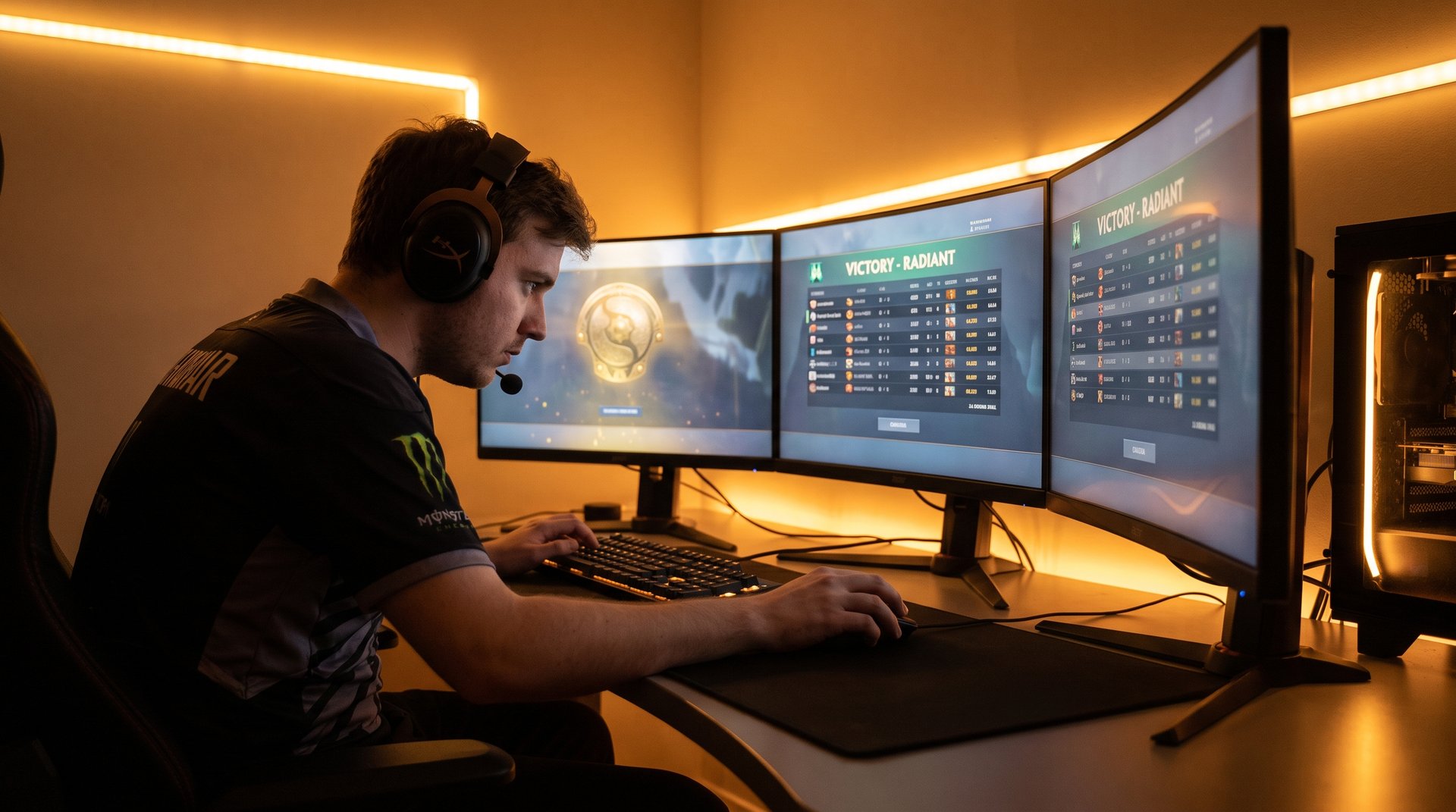
What the Fastest Orders Had in Common
- Herald or Guardian bracket: Every record-speed completion has come from the lowest two rank brackets. The skill differential is simply too large for opponents to contest effectively.
- EU West or US East server: Both have fast queues throughout a 16-hour peak window. More games per hour means more MMR per calendar day.
- Order placed during afternoon hours (local time): Booster assignment and queue sync both happen faster when everyone — booster, matchmaking pool, and opponent base — is online simultaneously.
- No special hero restrictions from the client: When a booster can freely pick the strongest available hero in any given game instead of being locked to a client’s preferred pool, win rates go up significantly.
- Large initial MMR gap (order was for 200-300 MMR from a 1,200 MMR starting point): The shorter the order, the more likely it completes in a single session. Our fastest full-day completion was a 350-MMR order at Guardian 3 that finished in 11 hours with 13 games played and a 12-1 record.
Why Most Orders Are Slower Than the Records
Real-world orders hit variance. A booster gets matched into a smurf on the other side. Queue times spike during a server maintenance window. The account has a bad behavior score that creates longer queues. A game goes to 70 minutes because the enemy team has a defensive lineup. None of this is failure — it is just Dota 2 being Dota 2.
This is why we recommend thinking in terms of a 48-72 hour completion window for most orders rather than a hard 24-hour guarantee. For orders up to 200 MMR in lower brackets, same-day is very likely. For orders of 300 MMR or more, “before tomorrow evening” is a more honest frame than “by midnight tonight.”
How Your Region Changes Same-Day Feasibility
Region is underrated when people research boosting timelines. Here is how major server regions compare for same-day delivery potential:
| Server Region | Peak Queue Time (Lower Brackets) | Peak Hours (UTC) | Same-Day Boost Rating |
|---|---|---|---|
| EU West | 1-3 min | 13:00-22:00 | Excellent |
| US East | 2-4 min | 18:00-03:00 | Excellent |
| US West | 3-6 min | 20:00-05:00 | Good |
| SEA | 4-8 min | 10:00-18:00 | Good during peak, slower off-peak |
| Russia / EEU | 3-7 min | 14:00-23:00 | Good |
| OCE | 8-15 min | 08:00-14:00 UTC | Limited — plan for 48h |
| South America | 5-10 min | 20:00-04:00 | Moderate |
OCE and South America are the two regions where same-day delivery is the hardest to guarantee at any bracket. If your account is on one of these servers, be upfront about it when ordering and discuss the timeline with your assigned booster before committing to a hard deadline.
Managing Expectations the Right Way
The biggest disappointment in boosting does not come from boosters underperforming — it comes from clients setting expectations based on best-case scenarios rather than realistic ones. Here is how to set expectations that actually hold up.
Use MMR Bands, Not Exact Targets
Instead of “I need to hit exactly 3,500 MMR by 8 PM tomorrow,” frame it as “I want to be somewhere in the 3,400-3,600 range within 48 hours.” The booster has the same goal, but you have removed the psychological pressure of an exact timestamp that Dota 2’s inherent variance can easily disrupt.
Understand What “Fastest Possible” Means
Fastest possible does not mean guaranteed same-day. It means the booster will prioritize your order, start as soon as assigned, play their most optimized hero pool, and aim for the highest win rate they can sustain. But 13 games in a day is close to the physical ceiling for competitive Dota 2 given game length and mental fatigue — do not expect 20 games from a single session.
Plan for One Extra Day as Buffer
If you need a rank for a specific event, plan to have the order done one day before the event, not the morning of. This gives the booster time to recover from a variance stretch (3 losses in a row happen even at 80% win rates) without you watching the clock.
Tips to Maximize Your Same-Day Completion Chances
You have some control over the outcome even after placing your order. These are the actions that move the needle on speed without compromising quality.
1. Do Not Log In During the Session
Every time a client logs into the account while a booster is queuing, it can interrupt an in-progress queue or, worse, kick a booster mid-game. Check the profile page instead of logging in directly. Your booster’s progress updates will appear there without any risk to the session.
2. Remove Hero Restrictions Before You Order
If you have preferences about which heroes get played, that is a reasonable request — but know that every restriction narrows the booster’s draft options. The fastest orders have zero hero restrictions. If you care about speed above anything else, let the booster pick freely.
3. Let the Booster Know Your Deadline Upfront
When you place your order, use the notes field to specify that you want the fastest possible completion and mention any time constraints. This flags your order as time-sensitive during the assignment process and your booster can plan their session accordingly rather than splitting time across multiple accounts.
4. Order During Peak Hours for Your Region
Placing an order at 2 AM your local time means your booster starts during off-peak matchmaking. If same-day is the goal, try to place the order no later than early afternoon so the bulk of the session happens during peak queue times.
5. Avoid Low Behavior Score Periods
If your account has a low behavior score from recent reports or abandoned games, this creates a separate matchmaking pool with longer queues and weaker opponents who still consume game time. Check your behavior score in-game before ordering and play a few unranked games to restore it if needed — this directly speeds up boosting sessions.
6. Consider Duo Queue for Active Participation
If you want to be involved in the process and your schedule allows, duo boosting lets you queue alongside the booster as a support or offlaner. This gives you full transparency on pace and lets you push through games as a coordinated pair. Duo queue win rates are slightly lower than solo (because the booster cannot control all 5 positions), but the experience is more collaborative and you learn while it happens.
Want Same-Day Results? Start Now.
TeamSmurf boosters are assigned within 15-30 minutes during peak hours. Tell us your target and deadline in the order notes — we will match you with the booster best positioned to hit it.
Order MMR Boost Book a Coaching Session