The 10 Hardest Heroes in Dota 2 (and Who Should Bother)

Some heroes in Dota 2 will destroy your MMR the moment you lock them in without the right foundations. This guide ranks the 10 mechanically hardest heroes in the game, explains exactly what makes each one difficult, and — most importantly — tells you whether learning them is actually worth your time at your current bracket.
The answer is rarely “yes” for everyone. A Herald player grinding Invoker is almost certainly losing games they would win on a simpler hero. But at the right MMR, with the right preparation, hard heroes pay dividends that easy heroes never can. The goal here is to give you honest, bracket-specific advice: learn it, skip it, or wait.
Table of Contents
- Hero Difficulty Overview Table
- Why Hero Difficulty Matters for MMR
- The 10 Hardest Heroes in Dota 2
- #1 — Invoker
- #2 — Meepo
- #3 — Chen
- #4 — Arc Warden
- #5 — Earth Spirit
- #6 — Lone Druid
- #7 — Tinker
- #8 — Rubick
- #9 — Broodmother
- #10 — Io
- Should You Bother Learning a Hard Hero?
- The Fastest Path to Hard Hero Mastery
Hero Difficulty Overview Table
Use this table for a quick snapshot. Difficulty scores are based on mechanics, game knowledge requirements, and punish rate when played suboptimally. The “MMR floor” column is the minimum bracket where the hero’s ceiling reliably outweighs the floor-raising cost.
| Hero | Difficulty | Main Challenge | MMR Floor to Bother | Verdict |
|---|---|---|---|---|
| Invoker | 10/10 | 14-spell hotkey mastery | 3,000+ | Learn in layers, or skip below Archon |
| Meepo | 10/10 | 5-unit micro + shared death | 4,000+ | Legend+ only; punishing below |
| Chen | 9/10 | Creep micro + jungle timing | 3,500+ | High-risk in solo queue below Legend |
| Arc Warden | 9/10 | Tempest Double micro + item usage | 3,000+ | Solid pick if you have 50+ games on him |
| Earth Spirit | 9/10 | Stone remnant combos + setup | 2,500+ | Archon+ who studied his kit |
| Lone Druid | 8/10 | Bear micro + split attention | 3,000+ | Crusader-Archon ceiling is low; Legend+ shines |
| Tinker | 8/10 | APM demand + Rearm item routing | 2,500+ | Worth it if you hit 200+ APM reliably |
| Rubick | 8/10 | Spell knowledge + steal timing | 2,000+ | Surprisingly accessible; game-knowledge check |
| Broodmother | 7/10 | Map awareness + web scouting | 2,000+ | High solo-queue value when enemies do not know counters |
| Io | 7/10 | Partner sync + relocate timing | 3,500+ (coordinated) | Nearly unplayable solo queue; amazing with a stack |
Why Hero Difficulty Matters for MMR
The standard advice — “play whatever hero you enjoy” — is partially true but incomplete. Hero difficulty creates a double-edged dynamic in ranked play. When you play a hero above your mechanical threshold, you are effectively donating MMR to opponents. Your positioning and decision-making are split between executing basic mechanics and actually playing the game. The result is that your real skill expression gets buried under execution debt.
On the other hand, players who push through the learning curve on complex heroes gain something more durable: skills that transfer. An Invoker player who finally clicks the hero develops hotkey discipline, cooldown tracking, and positional awareness that improves their entire hero pool. A Meepo player who survives their first 100 games has micro skills that make Arc Warden feel trivial by comparison.
The question is not whether hard heroes are worth learning. They are — at the right time. The question is whether the cost of the learning curve (in MMR, mental energy, and game time) fits your current situation. If you are stuck at a bracket and want to climb as efficiently as possible, check out our complete Dota 2 MMR guide to understand whether a hero change is the right lever to pull, or whether fundamentals are the real blocker.
For raw MMR ranges by bracket, refer to the Dota 2 MMR Table 2026 — that post gives you the exact numbers for every medal and star so you know exactly where you stand.
The 10 Hardest Heroes in Dota 2
Rankings are based on three factors weighted equally: execution ceiling (how technically demanding is the hero at peak play), punish rate when played suboptimally (how badly does a mistake hurt you and your team), and game knowledge load (how much do you need to know about the entire game to play the hero effectively).
#1 — Invoker
Difficulty: 10/10. MMR floor to bother: 3,000 (Archon+).
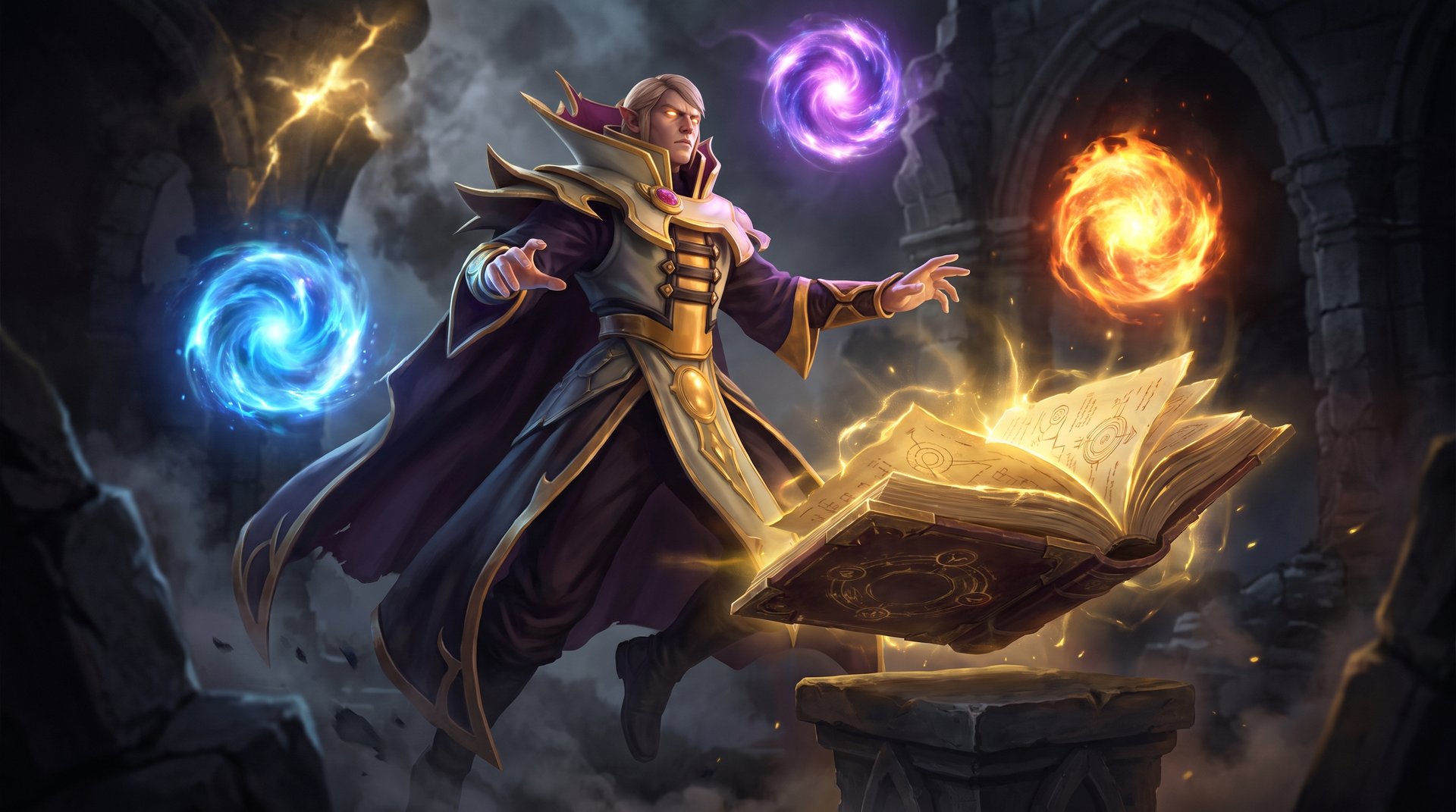
Invoker is not just the hardest hero in Dota 2. He is arguably the hardest hero in any competitive game, period. His kit contains 14 unique spells accessed through combinations of three orbs — Quas, Wex, and Exort. None of those spells are available at the press of a button the way other heroes work. You invoke them by setting the right orb combination, then pressing the invoke key, then casting. In a real teamfight that takes fractions of a second, and if you misclick, you get the wrong spell and possibly die.
What makes Invoker brutal is not just memorizing the combinations. It is executing the right combination while also managing cooldowns (each orb has a small individual cooldown), tracking two spell slots that persist from previous invocations, and playing the map like an intelligent mid-laner simultaneously. At peak play, Invoker mid players are juggling 6+ active elements while maintaining position, vision, and farm efficiency. That is not Dota 2 at normal complexity — that is Dota 2 with extra homework.
Should you bother? Below 3,000 MMR (Crusader and lower), probably not for climbing. The execution floor is too high and the gap between “Invoker who knows the combos” and “Invoker who can execute them in fights” is enormous. Between 3,000 and 5,000 (Archon-Divine), learn him in layers: start with the Sun Strike + Cold Snap core, add EMP and Tornado, then bring in Deafening Blast and Alacrity. Above 5,000, Invoker is legitimately one of the most rewarding heroes in the game — his ceiling is not reachable by most players, and there is always another level to unlock.
#2 — Meepo
Difficulty: 10/10. MMR floor to bother: 4,000 (Legend+).
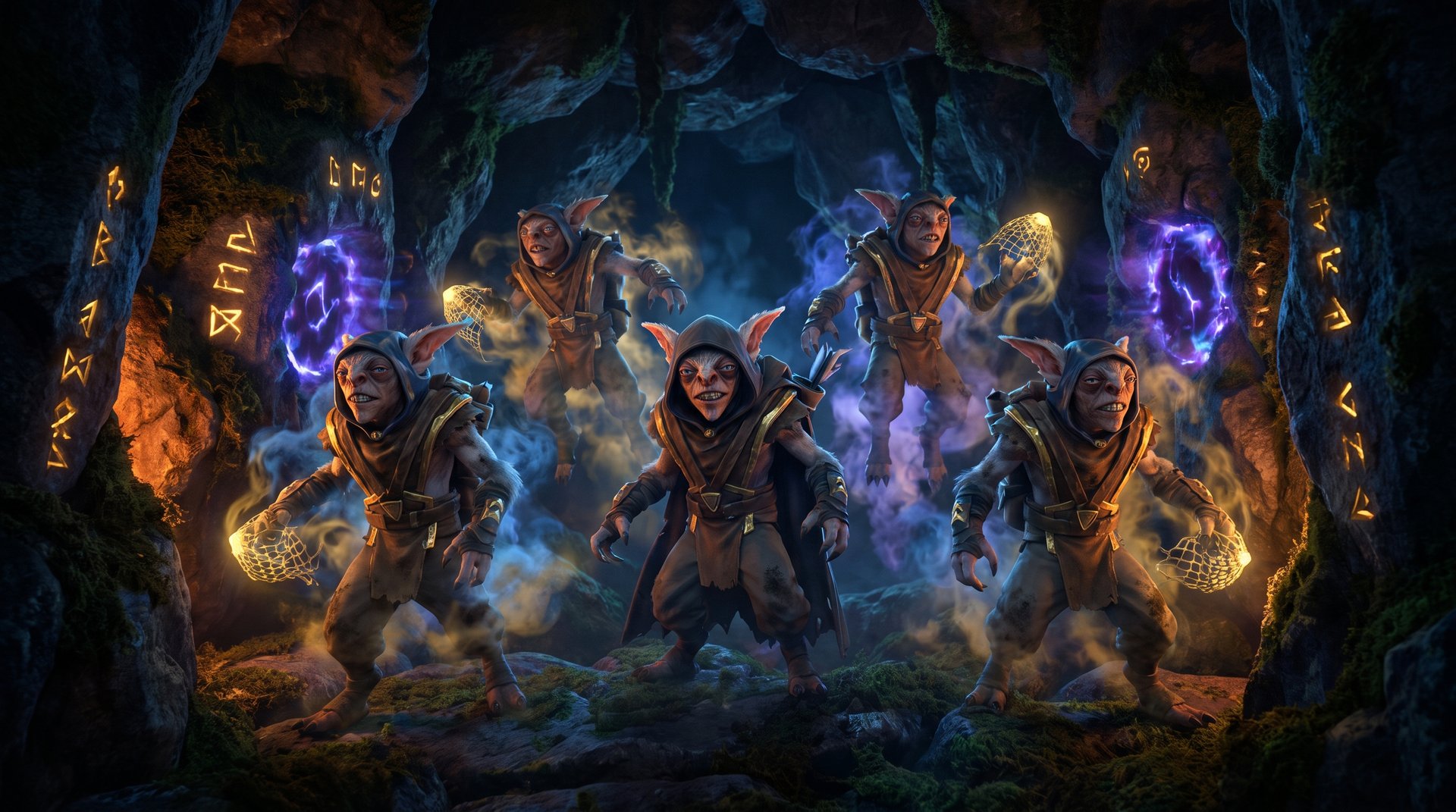
Meepo has one mechanic that makes every other hard hero feel mild by comparison: all of his clones share a single health pool. If any Meepo dies — any one of potentially five identical units — every single Meepo dies instantly. This is not a penalty for bad play. It is a kill condition. Opponents who can land a single targeted disable on any Meepo unit will end the game immediately if you are not prepared.
Managing five Meepo clones while farming multiple jungle camps, poof-chaining them across the map for ganks, and keeping them all alive during fights requires APM (actions per minute) that most players simply do not have. A good Meepo player is genuinely running a real-time strategy mini-game inside a Dota 2 match. His net and poof chains can delete heroes before they can react — but executing those chains requires muscle memory that takes hundreds of games to develop.
The farm potential is obscene when mastered. A skilled Meepo with Aghanim's Scepter plus five clones can be in three places simultaneously, farming jungle and lanes faster than any carry in the game. But that potential only exists at high mastery. In the wrong hands, Meepo is a feeding machine.
Should you bother? Only if you are at Legend or above AND you are prepared to play exclusively Meepo for your first 50+ games on him. The learning curve is brutal and the MMR cost is real. If you want to climb efficiently, this is not the hero. If you want mastery of the deepest mechanical challenge in Dota 2, there is no better candidate.
#3 — Chen
Difficulty: 9/10. MMR floor to bother: 3,500 (Legend).
Chen is the ultimate support for players who want to operate like an army commander. His entire identity revolves around converting neutral creeps with Holy Persuasion and managing them alongside his own hero. At any given moment, a Chen player might be controlling 3-4 converted creeps, each with their own active abilities — creep stuns, slows, stat auras — while also warding, supporting their team, and farming the jungle on a timer.
The difficulty is not just micro. It is map timing. Chen's power peaks when he can convert specific jungle creeps (Satyr Trickster, Centaur Conqueror, Dark Troll Warlord) quickly and put early ganking pressure on the map. If you delay or take the wrong camp, your timing window closes. Unlike Meepo, your creeps do not have a shared death mechanic — but they do expire when you die, and they are individually squishy in fights. Managing their positioning, abilities, and survival is a full-time job.
Chen's Hand of God is also one of the most game-changing ultimates in Dota 2, capable of saving all allied heroes globally. Good timing on that alone has won countless teamfights. But it requires tracking ally health bars from across the map while doing everything else.
Should you bother? Legend and above, yes — especially if you enjoy the jungle/roamer support role. In solo queue below that bracket, Chen is hard to justify because your converted creep advantage requires your team to capitalize on the pressure you create, and that coordination does not exist reliably at lower brackets.
#4 — Arc Warden
Difficulty: 9/10. MMR floor to bother: 3,000 (Archon+).
Arc Warden's Tempest Double is one of the most powerful abilities in Dota 2 when used correctly: a full copy of Arc Warden that uses items independently. The Double can use consumables, active items, Manta Style illusions — everything except Roshan items. That means a skilled Arc Warden is effectively running two item builds simultaneously, doubling his map presence, and potentially doing twice the work in teamfights.
The execution cost is steep. Managing your Double's positioning, timing its active items (Maelstrom procs, Gleipnir roots, Black Hole timing), keeping it alive to maximize its duration, and doing all of this while playing your real hero requires split-attention micro that takes hundreds of games to automate. New Arc Warden players often forget to activate the Double's items at all, effectively throwing away half their power.
His lane is also deceptively tricky. Spark Wraith requires precise placement to be a threat, and Flux's single-target tether is easy to dodge with movement. He is not a lane bully — he is a mid-to-late scaler who needs calm farming conditions. Drafts that pressure him early expose his weak laning phase hard.
Should you bother? Yes, at Archon+ with 50+ games under your belt. Arc Warden has strong matchup-specific value and his Tempest Double can completely outscale most enemies given time. If you have the APM and enjoy carry micro, he rewards investment better than almost any hero in the game.
#5 — Earth Spirit
Difficulty: 9/10. MMR floor to bother: 2,500 (Archon).
Earth Spirit is a roaming initiator who uses Stone Remnants as both positioning tools and combo amplifiers. His kit contains four base spells — Boulder Smash, Rolling Boulder, Geomagnetic Grip, Magnetize — and every single one of them can be modified or extended by a Remnant. A full Earth Spirit combo chains stuns, silences, and Magnetize damage in a single fluid sequence that happens fast enough to delete a carry before they can BKB.
The catch: Remnants are a consumable with a 12-second recharge per charge. You carry a maximum of six charges. Each combo consumes Remnants. If you waste them, your next engagement has no setup power. If you miss a Remnant placement, your combo fails and you are out of position with cooldowns spent. Earth Spirit players who cannot reliably execute the core combo (Rolling Boulder into Remnant into Boulder Smash) are essentially playing a very weak initiator with no reliable lockdown.
The best Earth Spirit players look like they are doing magic. The worst look like a confused dwarf rolling into fights and dying. The gap between those outcomes comes down entirely to Remnant placement and combo execution.
Should you bother? Archon and above who have genuinely studied his mechanics — yes. Earth Spirit is one of the most impactful heroes in the game when clicking. The hero knowledge requirement is high (you need to know what abilities to lock enemies out of, who to target in a five-versus-five) but the Remnant mechanics are learnable with practice. Start with simple Rolling Boulder engages before adding full combos.
#6 — Lone Druid
Difficulty: 8/10. MMR floor to bother: 3,000 (Archon+).
Lone Druid plays two heroes at once. His Spirit Bear is a persistent companion with its own inventory, abilities (Entangle, Return, Savage Roar in Spirit Bear form), and a death penalty — if the Bear dies, it is gone for a lengthy 3-minute cooldown and Lone Druid takes bonus damage. In True Form, Lone Druid merges with the bear and becomes a melee brawler with massive HP and armor.
The micro demand is similar to Meepo but more forgiving. The bear has one inventory to manage (ideal items: Orb of Corrosion, Skull Basher or Desolator, depending on game phase) and you are not managing five units, just two. However, the Entangle ability triggers randomly, requiring you to be in position at all times to capitalize on enemy lockdown. Players who treat the Bear as a passive tanking tool lose most of the hero's value.
Lone Druid is also a lane bully who transitions into a split-pusher. Managing his farming pattern — when to push a lane with the bear, when to send the bear to jungle while you farm another lane, when to group — is a macro skill that takes dozens of games to internalize.
Should you bother? Legend and above for full value; Archon players can learn him but expect a rough first 30 games. His split-push value is genuinely strong in brackets where enemies do not rotate to deal with him consistently.
#7 — Tinker
Difficulty: 8/10. MMR floor to bother: 2,500 (Archon).
Tinker's identity is defined by Rearm: a channeled ability that resets the cooldowns of every item and ability he owns. The fantasy is incredible — a Tinker with Boots of Travel 2, Scythe of Vyse, Dagon 5, and Laser is effectively fighting every 3 seconds with a full ability set while teleporting globally between engagements. The reality requires APM that most players cannot sustain.
Executing Tinker at full efficiency means: Blink in, use Laser (blind), use Scythe, use Dagon, Rearm, reposition, repeat. Then teleporting to a different lane, pushing a tower, Rearming, teleporting back to base, Rearming again. His item management mid-fight requires you to open your inventory, use the right item, Rearm mid-channel (while moving or canceling the channel to dodge), and then re-enter the fight. Every suboptimal second of Rearm channel is wasted tempo.
He is also fragile. No escape outside of Blink means a single stun before he gets his combo off usually means death. High-level play of Tinker involves playing around terrain and Rearm cycles in a way that makes gaps in his vulnerability as small as possible.
Should you bother? If you consistently hit 200+ actions per minute in your games, yes. Tinker is one of the highest upside heroes in the game for mechanical players — the right Tinker punishes poor play relentlessly. If your APM is under 100, find a different carry.
#8 — Rubick
Difficulty: 8/10. MMR floor to bother: 2,000 (Crusader+).
Rubick is the most knowledge-intensive hero in Dota 2 — less about mechanics and more about knowing the game. His ultimate, Spell Steal, copies the last spell an enemy cast and gives Rubick a version of it. The spell interacts with Rubick's intelligence and cast points, not the original caster's. A well-timed steal can give Rubick Ravage (Tidehunter), Black Hole (Enigma), Doom, or Laguna Blade — spells that swing teamfights instantly.
The difficulty is twofold. First, you need to know every ability in Dota 2 — what it does, how to use it, whether it is worth stealing, and what steals are actively harmful (some abilities are bad when stolen by Rubick because of his stat differences or because the interaction breaks). Second, you need to steal at the right moment. Stealing before the enemy uses their big spell means you have a stolen auto-attack or a minor ability. Stealing too late means the teamfight is already over.
Good Rubick players develop a priority list: always try to steal the highest-value spell, but know when to settle for a reliable CC steal over a flashy but situational ultimate. That judgment comes from hundreds of hours of game knowledge.
Should you bother? Crusader and above — surprisingly yes. Rubick is more accessible than most heroes on this list because the fundamental play pattern (steal, use, position well) does not require high APM. The barrier is knowledge, not mechanics. If you know Dota 2 well, Rubick rewards that knowledge better than almost any support in the game. Our guide to the best Dota 2 boosting services can also help if you want to fast-track your bracket while developing your hero pool.
#9 — Broodmother
Difficulty: 7/10. MMR floor to bother: 2,000 (Crusader+).
Broodmother is not mechanically intensive in the same way as the heroes above her. Her kit is relatively simple: Spawn Spiderlings, Spin Web (which gives her unobstructed movement and regen within web radius), Incapacitating Bite (slow + miss chance), and Insatiable Hunger (lifesteal + damage ultimate). The difficulty is conceptual — playing Broodmother well requires exceptional map awareness, timing, and knowing when her niche is viable.
Her spiderlings are a secondary micro task. They need to be positioned to get last hits, used to body-block retreating enemies, and kept alive to maximize damage from Spawn Spiderlings' multiplier. Broodmother players who ignore their spiderlings as a damage source are playing at roughly half efficiency.
The bigger issue is that Broodmother is one of the most counter-dependent heroes in the game. AoE abilities, instant-cast spells, and specific items (Radiance, Veil of Discord) hard-counter her web-based playstyle. At brackets where opponents draft intentionally, Broodmother becomes difficult to justify. At brackets where draft intelligence is low, she can dominate entire games solo.
Should you bother? Yes, at Crusader and above if you have a core hero slot and enjoy a lane-dominant playstyle. Broodmother is one of the best heroes for punishing passive opponents — her lane pressure is some of the strongest in the game when enemies cannot deal with her webs. Avoid her in coordinated stacks or high-draft-IQ environments.
#10 — Io
Difficulty: 7/10. MMR floor to bother: 3,500+ (Legend+ with a stack).
Io is probably the most misunderstood hero on this list in terms of difficulty type. The mechanics are not complex — Tether (link to an ally, share regen), Spirits (five orbiting orbs that deal damage), Overcharge (toggle that buffs attack speed and reduces damage taken for both tethered heroes), and Relocate (teleport both Io and tethered ally anywhere on the map). The difficulty is coordination and positioning.
Io is fundamentally a pair hero. His power scales with the quality of communication between Io and the tethered ally. Relocate requires the ally to agree to the teleport timing, know where they are going, and execute properly on the other end. In solo queue, you have no guarantee that your random carry will cooperate with an Io Relocate setup, will hold Tether for the right duration, or will not instantly panic and move out of range.
In coordinated play, Io is one of the strongest heroes in Dota 2's history. Pro teams have won TIs on the back of Io plus a specific carry pairing (Io-Tiny, Io-Ursa, Io-Slark) because the global presence and sustain are genuinely overpowered when executed correctly. In solo queue without a duo partner, those combos almost never materialize.
Should you bother? Only with a reliable duo at 3,500+ MMR. If you have a coordinated partner who agrees to play the pairing, Io can be a legitimate path to high winrate. Solo queue Io is frustrating for you and often for your team — the power just does not translate without the coordination.
Should You Bother Learning a Hard Hero?
Use this decision framework before committing to a hard hero:
- What is your current MMR? Every hero on this list has an MMR floor where the learning cost stops exceeding the gains. If you are below that floor, the answer is almost always “not yet.”
- How many games are you willing to invest? Hard heroes require 50-100 games before you play them at a level that does not cost MMR. If you are not prepared for that investment, pick an easier carry from the start.
- Do you have a practice environment? The best way to learn hard heroes is in non-ranked play first — practice lobbies, unranked, or coaching. Ranked is the worst environment for learning a hero you do not already know.
- Is your draft environment compatible? Some hard heroes (Io, Chen) require team cooperation that solo queue does not guarantee. Others (Broodmother, Arc Warden) work in specific metas that may or may not be active in the current patch.
If you are stuck at a bracket and want to climb while you learn hard heroes on the side, our Dota 2 MMR boost service lets you maintain your rating in ranked while you put the experimental games in unranked. Many serious players use this combination — they learn in a safe environment, boost to protect progress, and only take the hard hero into ranked once it is polished enough to win games.
You can also read more about the safety and legitimacy of these services at our is Dota 2 boosting safe guide — it covers everything you need to know about account security, VPNs, and how professional services protect your account.
The Fastest Path to Hard Hero Mastery
Based on what we see from players coached by our boosters, the fastest mastery path follows the same structure regardless of which hard hero you are learning:
- Learn one combo or mechanic at a time. Invoker: start with Sun Strike + Cold Snap, nothing else. Meepo: start with farming pattern, ignore complex poof chains. Earth Spirit: start with Rolling Boulder engages only. Do not try to learn the full hero at once.
- Play exclusively in unranked for the first 30 games. Your early games will be bad. Do not let them cost MMR. Unranked is free experimentation.
- Watch replays of your mistakes, not pro replays. Pro replays show you the ceiling but not the path from your floor to your ceiling. Your own replay at minute 15 where you died tells you exactly what went wrong.
- Track your APM and command usage. For mechanical heroes (Invoker, Tinker, Meepo), your APM is a proxy for how much of the hero you are actually using. Most players plateau because they stop pushing their command rate.
- Specialize in one or two matchups first. Pick the two or three lanes where your hero thrives and learn those inside out before expanding. Invoker mid vs Lina is a well-understood matchup. Meepo vs heroes with no AoE is almost always winnable. Start there.
If you want professional coaching on a specific hard hero, our Dota 2 coaching service includes sessions with players who spam these exact heroes at 7,000+ MMR. One session watching an Immortal Invoker or Meepo player explain their thought process is worth more than 30 games of confused experimentation.
Frequently Asked Questions
Stuck Grinding a Hard Hero?
Let our Immortal boosters handle your ranked grind while you learn at your own pace in unranked. No pressure, no MMR loss — just your bracket maintained while you master the heroes that actually excite you.