


Every Dota 2 Hero Release Date: The Newest Heroes in Order (2013–2026)

As of October 2026, Dota 2 has 127 heroes — and the newest one, Largo the Bard Frog, was added on December 16, 2025, with Patch 7.40. Before Largo came Kez (December 2024) and Ringmaster (October 2024), rounding out the three most recent additions to the game.
This is the complete chronological record of every hero release date from 2013 onward: 45 heroes with patch numbers, primary roles, and attributes. Whether you are tracking meta trends, planning a hero pool, or just satisfying your Dota 2 history curiosity, this is the definitive list.
For a breakdown of hero count by attribute and role, see our companion guide: How Many Heroes Does Dota 2 Have?
Table of Contents
- How Many Heroes Have Been Added?
- The 3 Newest Dota 2 Heroes (2024-2025)
- Full Chronological Release Table
- 2013: The Year of Mass Additions
- 2014-2016: Slower Expansion, Higher Impact
- 2017-2020: The Modern Era
- 2021-2026: New Innovations
- What the Release Cadence Tells You
- How New Heroes Affect Your MMR
- Frequently Asked Questions
How Many Heroes Have Been Added to Dota 2?
Dota 2 launched in closed beta in August 2011 with the original roster ported from DotA Allstars. Over the following years, Valve continued porting remaining DotA 1 heroes and eventually began creating entirely new characters for the game. By October 2026, the roster stands at 127 heroes total.
From 2013 onward — the period this article covers — 45 heroes have been added to Dota 2. The pace of additions has changed dramatically over time:
- 2013: 23 heroes added (the mass-porting era as the game exited invite-only beta)
- 2014-2016: 8 heroes added across three years
- 2017-2020: 8 heroes added, including the first 7.x patch era characters
- 2021-2025: 6 heroes added — one per year with occasional doubles
- 2026: No new heroes yet as of October 2026 (current patch: 7.41f)
The important distinction to understand is between ported heroes (DotA Allstars characters brought into Dota 2) and original heroes created specifically for Dota 2. Monkey King (December 2016, Patch 7.00) was the first hero with no DotA 1 counterpart. Since then, every new hero has been an original Dota 2 creation: Pangolier, Dark Willow, Grimstroke, Mars, Void Spirit, Snapfire, Hoodwink, Dawnbreaker, Marci, Primal Beast, Muerta, Ringmaster, Kez, and Largo.
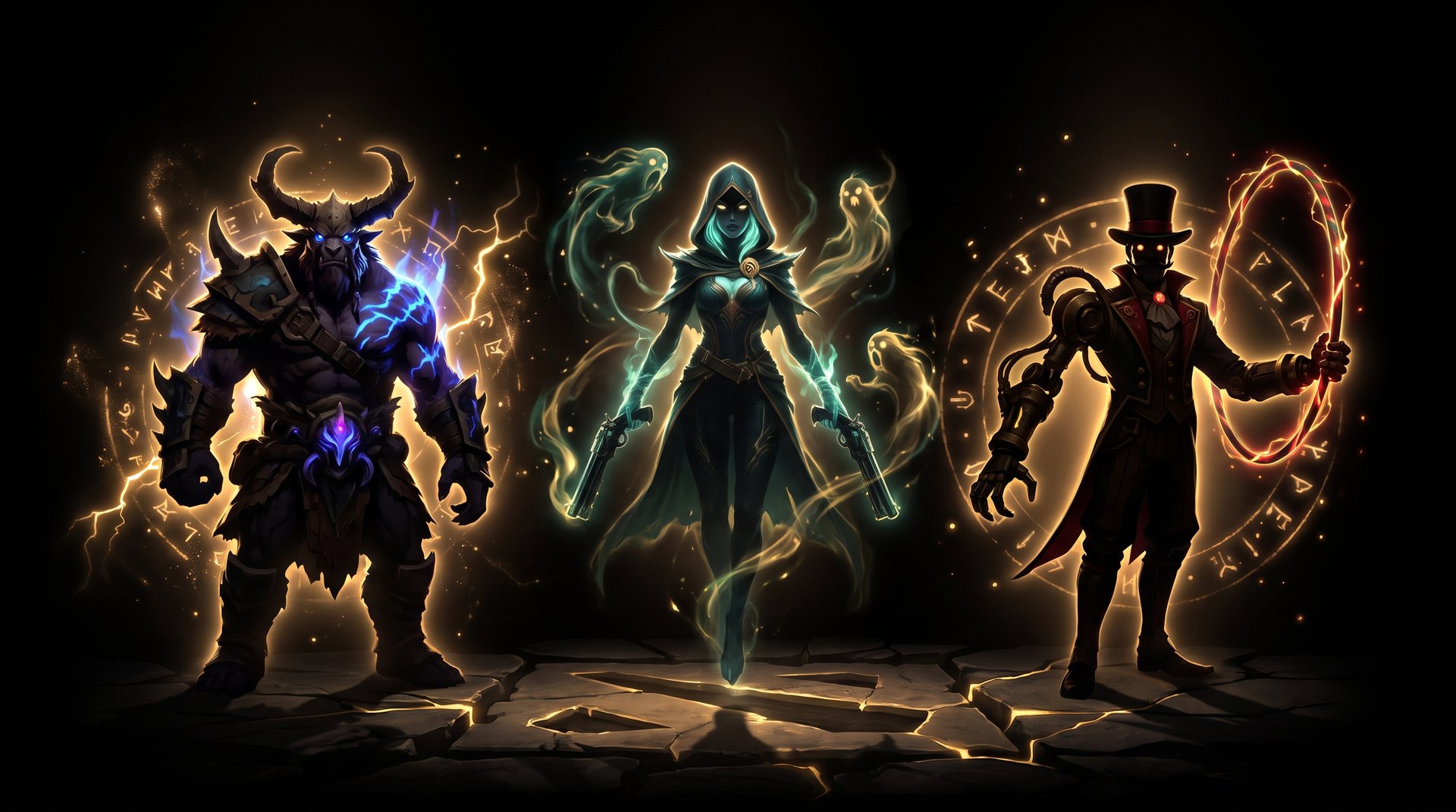
The 3 Newest Dota 2 Heroes (2024-2025)
Largo — December 16, 2025 (Patch 7.40)
Largo is a frog bardmonk — the shamanic head of the bardmonk order — who joined Dota 2 with Patch 7.40 on December 16, 2025. He plays as a Hard Support with a unique musical ability kit: his songs buff allies, speed up retreats, and punish enemies with his prehensile tongue. Largo uses Intelligence as his primary attribute.
He was the last addition before 2025 became the first year without a new Dota 2 hero, arriving in the final weeks of the year alongside a major map and gameplay overhaul. Largo was previously rumored under the codename “Bard Frog” and was teased in datamines months before release. His full name is Largo of Velu’Mar, and his mandolin is both weapon and instrument.
Kez — December 2024 (Patch 7.37)
Kez is a katana-wielding Agility Carry who brings a fast, combo-driven playstyle unlike anything else in the game. Released in December 2024 with Patch 7.37, Kez has quickly become a high-skill-ceiling option for players who want a mechanical carry that rewards practice. His kit revolves around quick follow-ups and ability sequencing, making him a strong pick for dedicated one-trick players who want to outplay opponents with precision rather than raw stats.
Ringmaster — October 2024 (Patch 7.36)
Ringmaster (full name: Cogliostro Kettle, the Ringmaster) arrived in October 2024 with Patch 7.36, ending a long community wait after he was first teased at The International 2023 grand finals opening ceremony. He plays as a Soft Support with crowd-control abilities centered around his circus-themed kit — setting traps, disorienting enemies, and controlling the battlefield. Ringmaster uses Intelligence as his primary attribute. He was notably released without Facets at launch, only receiving them in the subsequent Patch 7.38 several months later.
Full Chronological Hero Release Table (2013-2026)
The table below lists all 45 heroes added to Dota 2 from 2013 to 2026, in chronological order from oldest to newest. Patch numbers are sourced from community records including the Dota 2 Wiki and Liquipedia. For 2013 heroes added during the beta-to-launch transition, patch numbers correspond to the Dota 1 balance patch version active at the time of each hero’s Dota 2 debut.
| # | Hero | Release Date | Patch | Primary Role | Attribute |
|---|---|---|---|---|---|
| 1 | Ogre Magi | January 2013 | 6.74 | Soft Support | Strength |
| 2 | Undying | January 2013 | 6.74 | Offlaner | Strength |
| 3 | Rubick | February 2013 | 6.74 | Soft Support | Intelligence |
| 4 | Disruptor | February 2013 | 6.74 | Hard Support | Intelligence |
| 5 | Nyx Assassin | March 2013 | 6.74 | Soft Support | Agility |
| 6 | Naga Siren | March 2013 | 6.75 | Carry / Support | Agility |
| 7 | Keeper of the Light | April 2013 | 6.75 | Hard Support | Intelligence |
| 8 | Io | April 2013 | 6.75 | Hard Support | Universal |
| 9 | Visage | May 2013 | 6.76 | Versatile | Intelligence |
| 10 | Slark | May 2013 | 6.76 | Carry | Agility |
| 11 | Medusa | June 2013 | 6.77 | Carry | Agility |
| 12 | Troll Warlord | June 2013 | 6.77 | Carry | Agility |
| 13 | Centaur Warrunner | July 2013 | 6.77 | Offlaner | Strength |
| 14 | Magnus | July 2013 | 6.77 | Offlaner | Strength |
| 15 | Timbersaw | August 2013 | 6.78 | Offlaner | Intelligence |
| 16 | Bristleback | August 2013 | 6.78 | Offlaner | Strength |
| 17 | Tusk | September 2013 | 6.78 | Soft Support | Strength |
| 18 | Skywrath Mage | September 2013 | 6.79 | Soft Support | Intelligence |
| 19 | Abaddon | October 2013 | 6.79 | Versatile | Universal |
| 20 | Elder Titan | October 2013 | 6.79 | Offlaner / Support | Strength |
| 21 | Legion Commander | November 2013 | 6.79 | Offlaner | Strength |
| 22 | Ember Spirit | November 2013 | 6.79 | Midlaner | Agility |
| 23 | Earth Spirit | December 2013 | 6.80 | Soft Support | Strength |
| 24 | Terrorblade | February 2014 | 6.80 | Carry | Agility |
| 25 | Phoenix | March 2014 | 6.80 | Offlaner / Support | Strength |
| 26 | Techies | August 2014 | 6.82 | Soft Support | Universal |
| 27 | Oracle | November 2014 | 6.82 | Hard Support | Intelligence |
| 28 | Winter Wyvern | January 2015 | 6.83 | Hard Support | Intelligence |
| 29 | Arc Warden | December 2015 | 6.86 | Carry | Agility |
| 30 | Underlord | August 2016 | 6.88 | Offlaner | Strength |
| 31 | Monkey King | December 2016 | 7.00 | Carry | Agility |
| 32 | Pangolier | October 2017 | 7.07 | Offlaner | Agility |
| 33 | Dark Willow | October 2017 | 7.07 | Soft Support | Universal |
| 34 | Grimstroke | August 2018 | 7.19 | Hard Support | Intelligence |
| 35 | Mars | March 2019 | 7.21 | Offlaner | Strength |
| 36 | Void Spirit | November 2019 | 7.23 | Midlaner | Intelligence |
| 37 | Snapfire | December 2019 | 7.23 | Soft Support | Universal |
| 38 | Hoodwink | December 2020 | 7.28 | Soft Support | Agility |
| 39 | Dawnbreaker | April 2021 | 7.29 | Offlaner / Support | Strength |
| 40 | Marci | October 2021 | 7.30 | Versatile | Universal |
| 41 | Primal Beast | February 2022 | 7.31 | Offlaner | Strength |
| 42 | Muerta | March 2023 | 7.32e | Carry | Intelligence |
| 43 | Ringmaster | October 2024 | 7.36 | Soft Support | Intelligence |
| 44 | Kez | December 2024 | 7.37 | Carry | Agility |
| 45 | Largo | December 16, 2025 | 7.40 | Hard Support | Intelligence |
2013: The Year of Mass Additions (23 Heroes)
No year in Dota 2 history comes close to 2013 for sheer number of hero additions. Twenty-three heroes joined the game between January and December — an average of nearly two per month. This was not a creative explosion so much as a technical catch-up: these were the remaining DotA Allstars heroes being ported over as Dota 2 prepared to exit closed beta and go fully free-to-play in July 2013.
A few standout additions from this era:
- Io (April 2013) — The wisp-like tethering support is still one of the most unique heroes in any MOBA. Io can teleport across the map while tethered to a teammate, enabling global plays that no other hero can replicate.
- Legion Commander (November 2013) — The Duel mechanic created a hero category unlike anything before it: a Strength Offlaner who gains permanent bonus damage by winning 1v1 duels. She remains a tournament staple over a decade later.
- Earth Spirit (December 2013) — One of the most mechanically complex supports in the game. Using stone remnants as anchors, Earth Spirit can chain stuns, silences, and repositions in combinations that take hundreds of hours to master.
- Ember Spirit (November 2013) — Alongside Earth Spirit and Storm Spirit, Ember completed the iconic “Spirit” trio. His Fire Remnant mobility makes him one of the highest-impact midlaners in the game when played at a high level.
The 2013 heroes were all DotA Allstars ports. None of them were original Dota 2 creations. That distinction would not come until December 2016.
2014-2016: Slower Expansion, Higher Impact
2014: Four Heroes, All Memorable
With the 2013 porting rush complete, Valve added just four heroes in 2014 — but each left a lasting mark on the game.
- Terrorblade (February) — A mirror-image Agility Carry who quickly became one of the game’s most feared late-game heroes. His Metamorphosis form and Sunder ability (which swaps HP percentages with a target) make him a unique threat that never truly goes out of style.
- Phoenix (March) — A Strength hero that literally sacrifices itself in an egg, forcing enemies into a timed decision: burst the egg and avoid its re-hatch buff, or retreat and let Phoenix revive at full health. One of the most unusual ultimates in Dota 2.
- Techies (August) — Possibly the most divisive hero in Dota 2 history. Techies arrived after years of community demand and delivered exactly the chaos players feared: an invisible-mine playstyle that dismantles conventional laning and teamfight logic. They remain a polarizing pick that can swing games entirely on mine placement IQ.
- Oracle (November) — A pure Hard Support with a complex RNG-manipulation and reactive healing kit. Oracle is still considered one of the hardest heroes to master at a high level, requiring split-second reads on ally health states and enemy ability timing.
2015: Two Precision Additions
Only two heroes arrived in 2015. Winter Wyvern (January) introduced the unique Winter’s Curse ultimate — a Hard Support ability that freezes one enemy and forces their nearby allies to attack them for 4 seconds. Arc Warden (December) remains one of the most technically demanding Carries in the game, requiring players to micromanage a full Tempest Double clone with its own item set simultaneously.
2016: Monkey King and the 7.00 Landmark
August 2016 brought Underlord, a powerful Strength Offlaner with Firestorm area denial and a team-wide teleport ultimate (Dark Rift) that transports all allied heroes to his position. Then in December 2016, with the landmark Patch 7.00, Valve released the first hero ever created specifically for Dota 2 with no DotA 1 origin: Monkey King.
Monkey King’s arrival was a statement. Valve was no longer just porting a legacy game — they were building their own universe. His kit, with tree-jumping mobility and a disguise ability that lets him impersonate any unit on the map, would have been impossible in DotA Allstars. Patch 7.00 also introduced the Talent Tree system, fundamentally changing how every hero in the game scales. It remains the single biggest patch in Dota 2 history, with the hero release being one part of a sweeping redesign.
2017-2020: The Modern Era
2017: Pangolier and Dark Willow
Both arriving in October 2017 with Patch 7.07, Pangolier and Dark Willow were the second and third original Dota 2 heroes — meaning they had no DotA Allstars counterpart whatsoever.
Pangolier is a swashbuckling Agility Offlaner who rolls across the battlefield using his Rolling Thunder ultimate. His Drunken Haze and Shield Crash combo made him an instant hit, and he has since been a staple in both professional play and pubs.
Dark Willow brought a new kind of support flexibility. Her Terrorize and Bedlam ultimates operate independently, giving her unmatched versatility in teamfights. She can be played safely from range with high burst damage, or aggressively as an initiator. She remains consistently present in professional drafts.
2018: Grimstroke
Grimstroke (August 2018, Patch 7.19) is an Intelligence Hard Support who paints enemies to their doom using dark ink abilities. His Ink Swell and Phantom’s Embrace create unique setup potential, but his ultimate — Soulbind — is what makes him a pro-level pick: it links two enemies so that abilities targeting one also hit the other, enabling devastating burst combos with heroes like Lion, Lina, or Skywrath Mage.
2019: Three New Heroes in One Year
Dota 2 had an unusually productive year in 2019 with three new releases — matching the output of the previous two years combined.
- Mars (March, Patch 7.21) — God of War and son of Zeus. A Strength Offlaner with a gladiatorial Arena of Blood ultimate that forms a circle of spears, trapping enemies inside with his team. Mars created entirely new teamfight geometry and became an immediate staple in professional Dota.
- Void Spirit (November, Patch 7.23) — The fourth Spirit hero, completing the set with Ember Spirit, Storm Spirit, and Earth Spirit. A high-mobility Intelligence Midlaner who phases in and out of combat using void rifts and resonant pulses.
- Snapfire (December, Patch 7.23) — A grandmother on a lizard with a shotgun. Snapfire plays as a Soft Support with artillery mechanics — her Mortimer Kisses ultimate is a flying shotgun barrage — and a secondary ultimate (Gobble Up) that swallows an ally and spits them across the map for surprise initiations or escapes.
2020: Hoodwink
Hoodwink (December 2020, Patch 7.28) is a squirrel archer who specializes in high-burst poke, tree-based mobility, and Bushwhack trap setups. Her Acorn Shot bounce and Sharpshooter ability create a poke-into-burst damage pattern that punishes overextension in pubs. She plays as an Agility Soft Support — one of the few agility-based support heroes in Dota 2 history.
2021-2026: New Innovations
2021: Dawnbreaker and Marci
Dawnbreaker (April 2021, Patch 7.29) is a celestial hammer-wielder who channels power from a cosmic forge. Her global ultimate — Starbreaker — flies her across the map to any allied hero and creates a burst of healing and stun on landing. She functions effectively as both Offlaner and Support depending on the draft. Dawnbreaker uses Strength as her primary attribute.
Marci (October 2021, Patch 7.30) deserves special mention for how she arrived. She was first introduced in the Dota: Dragon’s Blood animated series on Netflix, premiering in March 2021. Her transition from anime supporting character to playable hero was a first for Dota 2 — Valve used the series as a soft reveal over months, then dropped her as a playable hero at TI10. Marci is a melee Universal hero whose Unleash ultimate allows her abilities to stack charges for burst windows of massive damage, with no cooldown at full stacks.
2022: Primal Beast
Primal Beast (February 2022, Patch 7.31) is raw physical force personified — a massive Strength Offlaner who charges, stomps, and slams. His Onslaught dash covers enormous distance and can be interrupted to chain into Pulverize, a ground-slam that stacks up to 9 times and deals escalating damage. Primal Beast represents the “big brawler” archetype taken to its extreme in Dota 2’s modern design language.
2023: Muerta
Muerta (March 2023, Patch 7.32e) is a death-goddess who carries a pair of pistols and reaps the souls of the fallen. She is an Intelligence Carry — a hero type that was historically a novelty in Dota 2 but that Muerta made fully viable in competitive play. Her Pierce the Veil ultimate grants spell immunity while she right-clicks, merging the carry and caster archetypes. Muerta brought long-lasting changes to how drafts approach the carry position in professional matches.
2024-2025: Ringmaster, Kez, and Largo
The three most recent additions continue Valve’s trend of designing heroes around genuinely new mechanics rather than refining familiar formulas. Ringmaster’s crowd-control toolkit draws from no existing template. Kez’s katana-combo carry style is closer to a fighting game character than a traditional Dota hero. Largo’s bardmonk support abilities are the first full “musician” archetype in the game’s history.
Looking at the complete list, the evolution from 2013’s ported DotA 1 heroes to today’s originals is dramatic. The modern heroes are more mechanically complex, more narratively distinct, and built specifically around interactions that would not have been possible on the DotA 1 engine.
What the Release Cadence Tells You About Dota 2’s Future
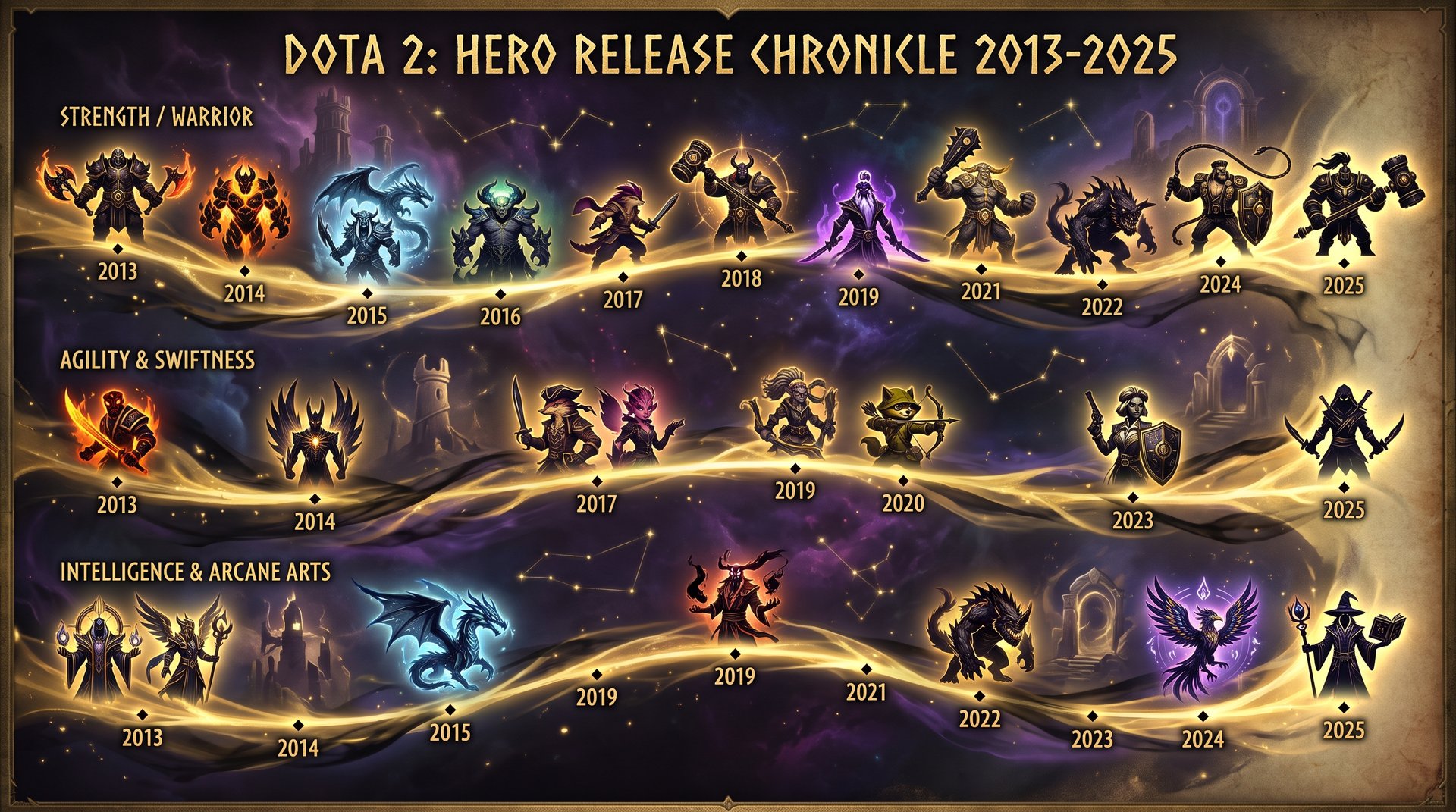
Looking at the release timeline, a clear pattern emerges: Valve dramatically reduced the rate of hero additions after 2013, and has slowed further from 2021 onward. From 2021-2025, the game averaged about 1.2 new heroes per year. From 2013-2020, it averaged about 4.5 per year.
This is not a sign of a declining game. It reflects a strategic shift: each new hero now takes longer to design, animate, voice, and balance to the standard Valve requires. The quality of post-2020 additions (Marci, Primal Beast, Muerta, Kez, Largo) supports this. No hero feels like filler; each one arrives with full narrative context, a unique visual identity, and a mechanical kit that adds something genuinely new to the draft pool.
The historical pattern for new hero announcements:
- New heroes are typically teased or announced at The International each year
- There is usually a 1-3 month gap between announcement and live release
- Major patches (7.x) often include a hero release or a major gameplay overhaul — rarely both
- Valve has never committed to a release schedule, and gaps between heroes can stretch to 18+ months
As of October 2026, Patch 7.42 has not been released. If a new hero arrives, this article will reflect the update immediately. For the latest timing signals, check the Dota 2 Patch 7.42 release date tracker.
How New Hero Releases Affect Your Ranked MMR
New hero releases create short windows of ranked opportunity that smart players exploit. When a hero ships, most players in the matchmaking pool have never played against it in a live game — their ability timings, positioning patterns, and item builds are unfamiliar to opponents. This gives early adopters a real temporary MMR edge.
Three ways new hero releases affect ranked play:
- The launch window: New heroes typically arrive slightly overtuned. Playing them — or countering them with specific heroes — in the first 2-4 patches before Valve makes targeted nerfs is profitable.
- Counter-pick uncertainty: The matchups against new heroes are not yet established in collective knowledge. Opponents will draft suboptimally against an unfamiliar hero, giving you structural advantages you would not get against an established pick.
- Hero pool disruption: New support heroes in particular (Ringmaster, Largo, Hoodwink) displace existing supports from the meta. Players who adapt their pool first leave behind those still defaulting to nerfed heroes.
If you want to skip the uncertainty of a meta transition and reach your target rank with direct help, see TeamSmurf’s breakdown of Dota 2 boosting services and our detailed MMR boosting guide. For players who prefer skill-building, our coaching service helps you master new heroes faster with guidance from active high-MMR players.
Understanding the hero release history also helps you identify which heroes are currently under-explored in the ranked pool. Heroes released within the last 6-12 months typically have less developed counter-knowledge in lower brackets, making them high-value picks for climbing. Check our guide on building an effective hero pool for how to incorporate new releases into a climbing strategy. For questions about account safety when using external services, see is Dota 2 boosting safe.
Frequently Asked Questions
Reach Your Target Rank — Even During a Meta Shift
New hero releases shake up the meta. TeamSmurf’s Dota 2-only specialists know every hero in this list and can help you climb through any patch. Whether you need an MMR boost, calibration help, or 1-on-1 coaching to master Largo or Kez — we have you covered.



