


Dota 2 Event History: Every Seasonal Event Since 2012 (Diretide, Frostivus, Dark Carnival…)

Dota 2 has been running seasonal in-game events since October 2012. From the very first Diretide to the three-act Dark Carnival of 2026, Valve has used seasonal events to bring players back, reward loyal fans, and tell new stories inside the world of the game. This page is the complete historical archive — every event, every era, every return and gap.
If you want to know what is coming up next, see the Dota 2 Event Calendar 2026-27 for confirmed and estimated future dates. This page answers a different question: what events has Dota 2 actually run in the past, and what made each one significant?
The short answer: as of 2026, Valve has shipped roughly 30 distinct named seasonal events across 14 years of Dota 2. Some have been simple cosmetic bundles; others have introduced entirely new game modes. The two constants are Diretide (the Halloween event) and Frostivus (the winter holiday event) — both dating back to 2012, both having gone through long gaps and dramatic returns.
In This Article
- Complete Event History Table (2012-2026)
- Era 1: The Founding Years (2012-2013)
- Era 2: Compendium and New Bloom Years (2013-2017)
- Era 3: Battle Pass and Frostivus Returns (2018-2021)
- Era 4: Diretide Returns and Modern Events (2022-Present)
- TI Compendiums and Battle Passes: The Full Record
- Frequently Asked Questions
Complete Dota 2 Event History Table (2012-2026)
The table below lists every major Valve-developed seasonal event from 2012 through 2026. Weekly Battle Cup seasons and minor cosmetic bundle releases are not included — this covers events with custom gameplay, dedicated lore, or a named in-game event period.
| Year | Event Name | Type | Period | Key Feature |
|---|---|---|---|---|
| 2012 | Diretide 2012 | Halloween | Oct 31 — Nov 21 | First-ever Dota 2 seasonal event; candy-collecting vs Roshan; Greevil Eggs that hatched into custom couriers |
| 2012 | Wraith Night | Winter | Dec 2012 | Wave-based PvE defense mode; replaced Frostivus which was “stolen” by the Greevils (lore joke) |
| 2013 | TI3 Compendium | Annual Pass | Jul 2013 | First-ever interactive compendium; community prize pool contribution introduced to esports |
| 2013 | Diretide 2013 | Halloween | Oct 31 — Dec 3 | Return after the “GIVE DIRETIDE” campaign; same core candy format with new items |
| 2013 | Frostivus 2013 | Winter | Dec 2013 | First complete Frostivus; gift-giving system, custom game modes, winter cosmetics |
| 2014 | New Bloom Festival 2014 | Chinese New Year | Jan — Feb 2014 | Year Beast game mode; Year of the Horse cosmetics; first Chinese New Year event |
| 2014 | TI4 Compendium | Annual Pass | May — Jul 2014 | Prize pool crossed $10M for the first time; Warlock Arcana stretch goal |
| 2015 | New Bloom Festival 2015 | Chinese New Year | Feb 2015 | Year of the Goat; Year Beast with new cosmetics and abilities |
| 2015 | TI5 Compendium | Annual Pass | May — Aug 2015 | $18.43M prize pool; first Arcana tied to a stretch goal milestone |
| 2016 | New Bloom Festival 2016 | Chinese New Year | Feb 2016 | Year of the Monkey; evolving cosmetic and beast format |
| 2016 | TI6 Compendium | Annual Pass | May — Aug 2016 | $20.77M prize pool; Monkey King cinematic teaser; hero challenges introduced |
| 2017 | New Bloom Festival 2017 | Chinese New Year | Jan — Feb 2017 | Year of the Rooster; Monkey King added to the roster during this period |
| 2017 | Dark Moon | Special Event | Feb 2017 | Tower defense-style cooperative event; Luna-themed; well-received standalone custom mode |
| 2017 | TI7 Compendium | Annual Pass | May — Aug 2017 | $24.79M prize pool; final year of “Compendium” branding |
| 2018 | New Bloom Festival 2018 | Chinese New Year | Feb 2018 | Year of the Dog; final New Bloom in the series before it ended |
| 2018 | TI8 Battle Pass | Annual Pass | May — Aug 2018 | First “Battle Pass” branding; Earthshaker Arcana at level 2,000; Cavern Crawl mode |
| 2018 | Frostivus 2018 | Winter | Dec 2018 | First Frostivus in five years; major hero patch alongside; Penguin familiar item |
| 2019 | TI9 Battle Pass | Annual Pass | May — Aug 2019 | $34.33M prize pool; Slark Persona; Underground Rumble event mode included |
| 2020 | TI10 Battle Pass | Annual Pass | Mar — Sep 2020 | Released on schedule; TI10 itself delayed to Oct 2021 due to COVID-19 |
| 2021 | Nemestice | Summer Event | Jun — Aug 2021 | Custom cooperative event mode; included in the Aghanim season Battle Pass |
| 2021 | Aghanim’s Labyrinth 2021 | Summer Event | Jun — Sep 2021 | Roguelike co-op mode; choose abilities per run; defeat Aghanim as final boss; Normal through Magically Deluxe difficulty |
| 2022 | Aghanim’s Labyrinth 2022 | Summer Event | Jun — Sep 2022 | Second edition with new encounters, modifiers, and a harder final tier |
| 2022 | Diretide 2022 | Halloween | Oct — Dec 2022 | Diretide returns after a 9-year absence; fully reworked format; major cosmetic release |
| 2023 | Muerta: Dead Reckoning | Hero Launch Event | Feb — Mar 2023 | Launch event for Muerta; narrative campaign and exclusive launch-window cosmetics |
| 2023 | Diretide 2023 | Halloween | Oct — Nov 2023 | Second year of the modern annual Diretide format |
| 2023 | Frostivus 2023 | Winter | Dec 2023 | Frostivus returns five years after the 2018 edition; cooperative mode + seasonal cosmetics |
| 2024 | Crownfall | Narrative Campaign | Apr — Oct 2024 | Multi-act branching narrative event; replaced the traditional Battle Pass format |
| 2024 | Diretide 2024 | Halloween | Oct — Nov 2024 | Third consecutive annual Diretide since the 2022 return |
| 2025 | Diretide 2025 | Halloween | Oct — Nov 2025 | Fourth consecutive Diretide; established as annual fixture |
| 2025 | Frostivus 2025 | Winter | Dec 2025 — Jan 2026 | Second modern-era Frostivus; confirmed annual winter pattern |
| 2026 | Dark Carnival (Midnight Run) | Summer Event | Jun 22 — Sep 2026 | Three-act narrative event; Ticket system, Candyworks exchange, 5 Automaton Personas; replaced Aghanim’s Labyrinth |
For the full 2026-27 schedule including Diretide 2026 and Frostivus 2026, see the live event calendar which is updated as Valve makes announcements.
Era 1: The Founding Years (2012-2013)
Diretide 2012 — Where It All Started
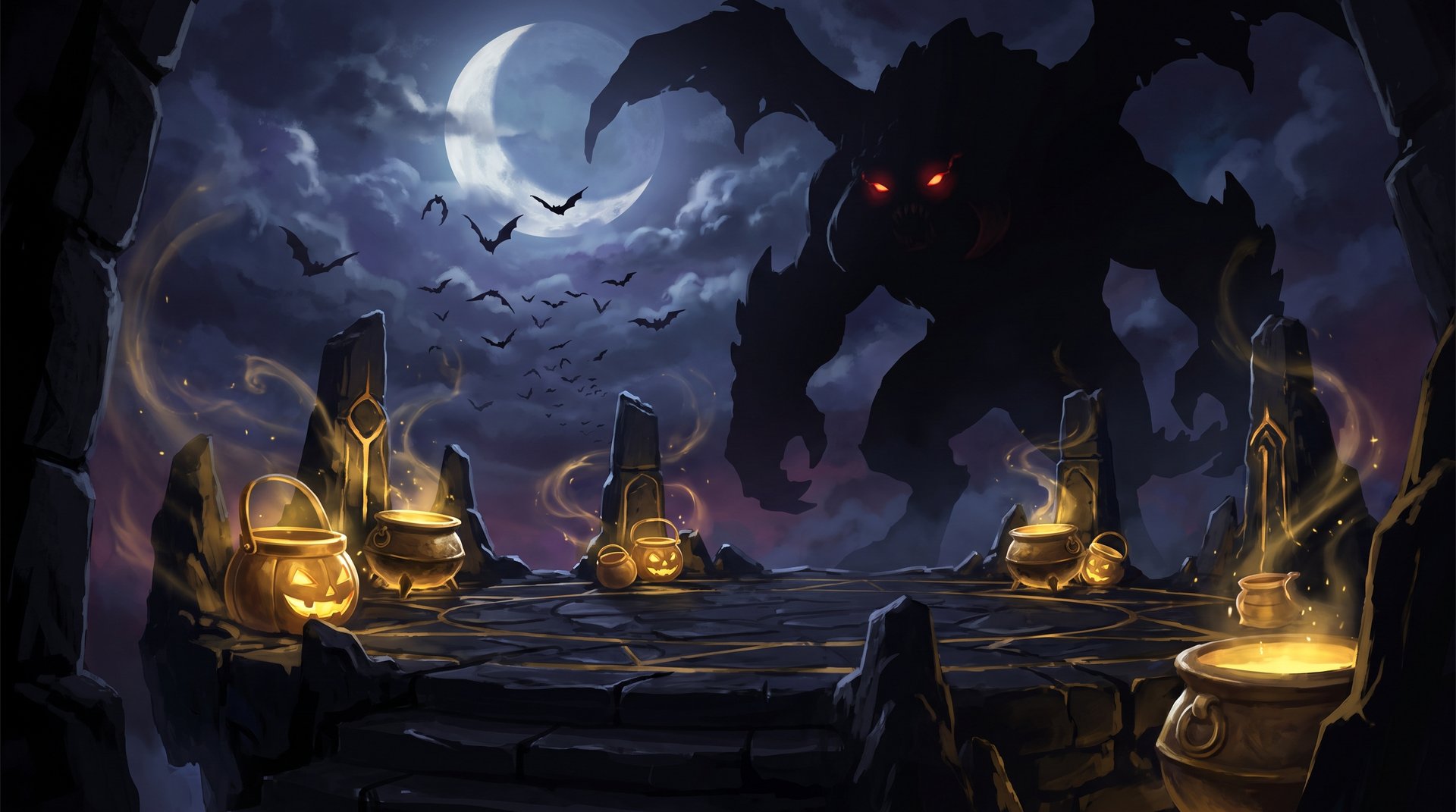
The first Dota 2 seasonal event launched on October 31, 2012, and ran for three weeks. Diretide 2012 introduced a Halloween-themed mode where two teams of five competed to collect candy around the map, then dump it on Roshan before the opposing team could. Roshan would periodically chase whichever team currently held the most candy, creating a chaotic tug-of-war structure perfectly suited to Halloween chaos.
The centerpiece of Diretide 2012 was the Greevil Egg: a special item players could feed with different essences collected during the event. Depending on how the egg was fed, it hatched into a courier with different traits and appearances. It was the first time Valve had used an event to let players craft a personalized item, and the community went deep into the mode specifically to experiment with their courier variant. The event ran through November 21, 2012, and set a template that future events would build on for years.
Wraith Night — When Frostivus Was “Stolen”
December 2012 brought the first winter event, but not in the form players expected. Valve constructed a narrative joke: Frostivus had been “stolen” by the Greevils from the Diretide event. Instead of a traditional holiday celebration, players received Wraith Night — a wave-based cooperative PvE mode where five players stood in a single lane and held off increasingly difficult waves of Wraith Night undead enemies. The mode was short and punchy, and it introduced a cooperative defense format that Dota 2 would revisit repeatedly in later events including Dark Moon and portions of Aghanim’s Labyrinth.
GIVE DIRETIDE — The Campaign That Made Gaming History
In 2013, the Dota 2 community staged one of the most unusual coordinated campaigns in gaming history. When Valve had not announced Diretide ahead of the expected Halloween window, players organized a cross-subreddit campaign — flooding communities including r/soccer, r/worldnews, and dozens of others with the single message “GIVE DIRETIDE.” The campaign attracted mainstream media coverage and put Valve in the unusual position of either ignoring a very public community demand or responding to it directly.
Valve responded. Diretide 2013 was announced and released, running from October 31 to December 3. “GIVE DIRETIDE” became a permanent part of Dota 2 community history and a reference point for discussions about developer-community relationships in live service games. The event itself was largely the same format as 2012, but the story around its release was what most players remembered. When Valve brought Diretide back in 2022, many in the community referenced the original campaign as proof that sustained, visible demand eventually influences Valve’s decisions.
Frostivus 2013 — The First Complete Winter Holiday
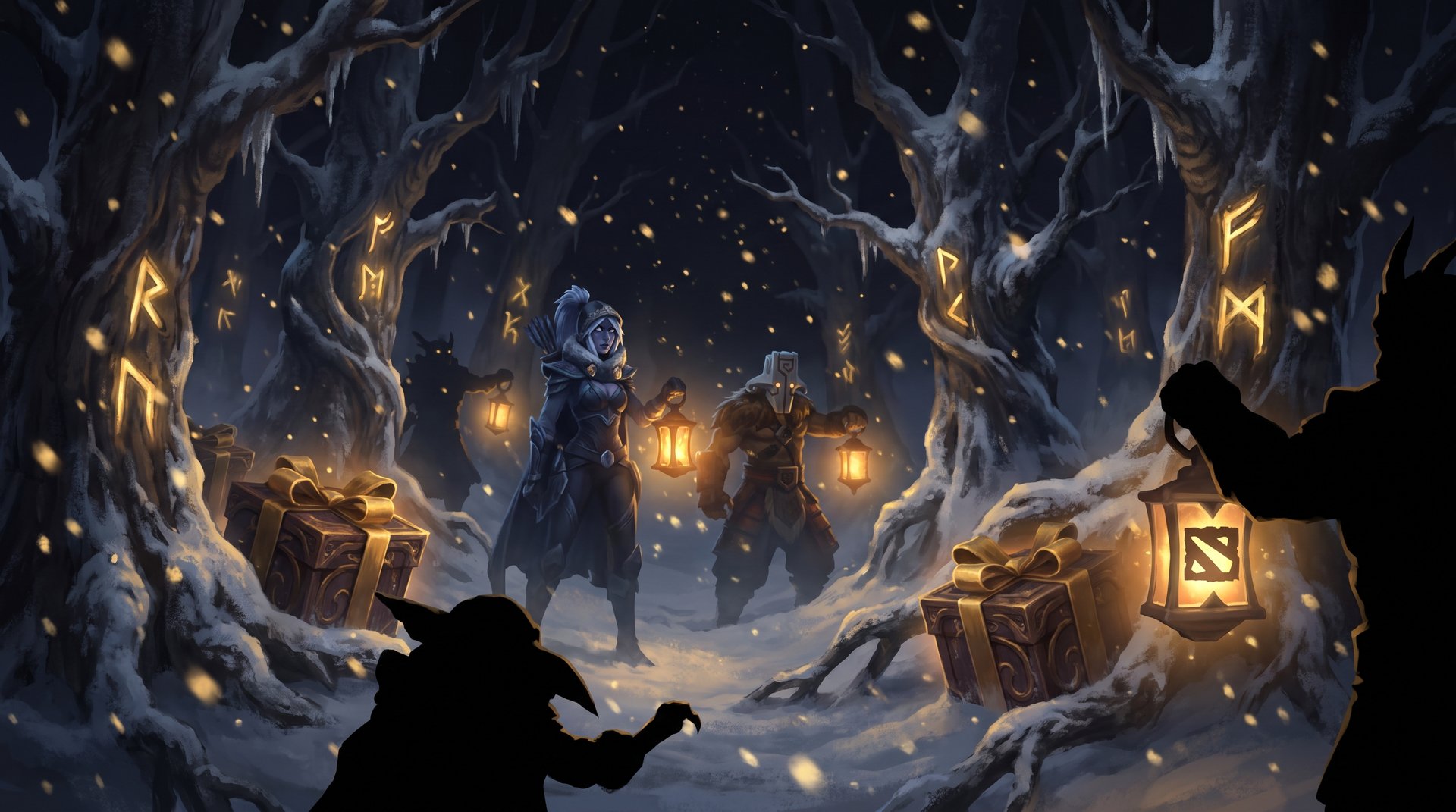
December 2013 brought the first full Frostivus event. Unlike the 2012 disruption that substituted Wraith Night, Frostivus 2013 was the genuine article: a holiday event with multiple custom game modes available throughout the season, a community gift-giving system where players could send cosmetic items to others at no cost, and seasonal themed cosmetics throughout. It established the Frostivus template that later editions would follow: cooperative or low-stakes content, community generosity mechanics, and a winter atmosphere over competitive pressure.
What players did not know in December 2013 was that they would be waiting five years for the next Frostivus. The 2013 edition would be the last for a long time.
Era 2: Compendium and New Bloom Years (2013-2017)
The Interactive Compendium (2013-2017)
Starting at TI3 in 2013, Valve introduced the Interactive Compendium — the first crowdfunded prize pool mechanism in competitive esports. Players purchased the Compendium to contribute directly to TI’s prize pool and received exclusive cosmetics, player card collections, a fantasy Dota league, and prediction challenges in return. The concept was genuinely new for the industry: the community funding the tournament they were watching, with tangible in-game rewards as the incentive. No other esports event had attempted anything like it.
The Compendium ran annually from 2013 to 2017, with each year growing in scope and prize pool. TI4 crossed $10 million for the first time. TI5 introduced Arcana cosmetics as stretch goals locked until the community pool crossed a threshold — a mechanic that drove purchases more aggressively than anything before it. By TI7 in 2017, the prize pool had reached $24.79 million. Valve seeded $1.6 million; every dollar beyond that came from Compendium purchases. No other esports organization had achieved comparable figures from community contributions at that point.
New Bloom Festival (2014-2018)
Starting in early 2014, Valve introduced the New Bloom Festival for Chinese New Year. Each edition ran in January or February and featured a Year Beast — a powerful creature themed to the Chinese zodiac animal for that year — that teams of players could battle together in a custom cooperative mode. The Year Beast changed each year, and the cosmetic items released alongside New Bloom were often among the most elaborate of any seasonal period in the game.
New Bloom was also practically important for keeping the seasonal event concept alive. After Diretide and Frostivus both ended after 2013, New Bloom kept recurring seasonal events as part of the Dota 2 calendar for the next four years. The festival ran in 2014, 2015, 2016, 2017, and 2018. It remains the second-longest-running named seasonal event series in Dota 2 history, behind only the annual TI Compendium and Battle Pass.
The Event Gap Years (2014-2021)
One of the most surprising facts in Dota 2 event history: after both Diretide and Frostivus ended in 2013, neither event returned for years. Diretide did not come back until October 2022 — a nine-year gap. Frostivus returned in 2018 after five years, disappeared again, and did not come back until 2023. During the gap years, the TI Compendium and New Bloom held up the seasonal calendar, but the two events most closely identified with Dota 2’s early seasonal identity were simply absent.
The community’s reaction evolved over this period. There were early threads and discussions asking for Diretide. By 2017 or 2018, most players had accepted that Valve operated on its own schedule. But the nostalgia never fully faded, and when Diretide 2022 was finally announced, the reception was significant precisely because of how long the community had been waiting. Nine years of accumulated nostalgia compressed into one Halloween event.
Dark Moon (2017)
In February 2017, Valve released Dark Moon — a cooperative tower defense event themed around a solar eclipse and Luna as the central hero. Players worked together to defend against enemy waves in a structured progression across multiple difficulty tiers. Dark Moon was polished, had real difficulty scaling, and demonstrated that Valve could build compelling custom event content outside the Diretide and Frostivus frameworks. It remains one of the more fondly remembered one-off events in Dota 2 history, and its cooperative defense structure influenced later events including the design of Aghanim’s Labyrinth.
Era 3: Battle Pass and the Return of Frostivus (2018-2021)
The Battle Pass Rebrand (2018)
For TI8 in 2018, Valve renamed the annual Compendium to the “Battle Pass” — a term that had become standard across the games industry. The core mechanics remained identical: purchase the pass, level it up through gameplay and quests, earn cosmetics while contributing to the prize pool. But the rebrand brought new expectations about content depth. TI8’s Battle Pass delivered: a level-based progression system, a Cavern Crawl traversal mode, and the Earthshaker Arcana at level 2,000 as a high-bar cosmetic target. The prize pool reached $25.53 million.
The Battle Pass era saw prize pools continue to grow through TI9 ($34.33M) and the TI10 pass ($40.02M, released March 2020 before TI10 was delayed to 2021 due to COVID-19). Understanding how your rank compares to others during event periods — when the playerbase is more active and distribution shifts — is part of smart event preparation. Our complete MMR boosting guide breaks down what bracket levels actually look like at different times of year.
Frostivus 2018 — The Winter Event Returns After Five Years
December 2018 brought the biggest seasonal surprise of that year: Frostivus returned. After five years without a winter event under the Frostivus name, Valve shipped Frostivus 2018 alongside a major patch that reworked several heroes. The event had a custom cooperative PvE mode, seasonal themed cosmetics, and a Penguin familiar item that became one of the more memorable cosmetics from that period. The response was overwhelmingly positive — five years of gap had amplified the nostalgia, and the 2018 edition delivered what long-time players remembered and had been waiting for.
Frostivus 2018 confirmed something significant: Valve was willing to revive events that had been on long hiatuses, and was capable of doing so in modernized form. That confirmation became directly relevant when players continued to wait and eventually got Diretide back in 2022.
Aghanim’s Labyrinth (2021-2022) — The Best Event Dota 2 Has Run
The summer of 2021 introduced what many players consider the best custom event content Dota 2 has ever hosted: Aghanim’s Labyrinth. The format was a roguelike cooperative mode where five players ran through procedurally modified encounters, choosing abilities from a pool of heroes at each checkpoint, and attempting to defeat Aghanim as the final boss. Difficulty tiers ranged from Normal through Magically Deluxe, with the hardest tier requiring genuine coordination and understanding of ability interactions.
What made Aghanim’s Labyrinth exceptional was its depth. The modifier system — with dozens of stacking modifiers that could make a run easier, harder, or strange in combination — meant that no two runs felt identical. The custom mode was mechanically richer than most standalone games, and it ran as a free event inside Dota 2. A second edition ran in the summer of 2022 with a larger encounter pool, new hero options, and a harder final tier. If you are looking to make the most of high-activity event periods for rank climbing, our guide on whether Dota 2 boosting is safe covers the risk landscape clearly.
Era 4: Diretide Returns and the Modern Event Era (2022-Present)
Diretide 2022 — Nine Years Later
In October 2022, Valve brought Diretide back. Nine years after the 2013 edition, the Halloween event returned with a design that was clearly rebuilt rather than simply rerun. The 2022 version kept the core concept — Halloween atmosphere, candy mechanics, Roshan involvement — but the execution was significantly more polished than the 2012-2013 originals. A reworked custom mode structure, new cosmetics, and a narrative framing around the event made Diretide 2022 feel like a genuine modern event rather than a nostalgia callback.
The reception was exceptional. Almost a decade of player requests had built up, and the quality of the 2022 return matched the expectations that nostalgia had created. Diretide 2022 also demonstrated that Valve was serious about resuming seasonal events in a systematic way — it was not a one-off return, but the start of what would become a consistent annual pattern.
Diretide as an Annual Fixture (2023-Present)
Following 2022’s success, Diretide ran in 2023, 2024, and 2025 — four consecutive October-November events that established Halloween as a reliable anchor on the Dota 2 calendar for the first time since 2013. The consistency has changed how players plan around the event: whereas previously a Diretide might appear once a decade, it is now an expected autumn fixture.
As of October 2026, Diretide 2026 is expected based on four years of precedent but has not been officially confirmed. The next Dota 2 event after Dark Carnival page has the current outlook with historical pattern analysis.
Muerta: Dead Reckoning (Early 2023)
In early 2023, Valve launched Muerta with a dedicated event called “Dead Reckoning.” Rather than a quiet patch addition, Valve built an event around the hero launch: a narrative campaign with Muerta as the protagonist, exclusive cosmetics locked to the launch window, and community progression milestones that unlocked content for all players. Dead Reckoning showed that hero launches could function as standalone seasonal events — a format that foreshadowed the larger narrative-campaign approach Valve would use with Crownfall in 2024.
Frostivus 2023 and 2025 — Confirming the Pattern
December 2023 brought Frostivus back for the first time since 2018. When Frostivus 2025 followed two years later, the winter holiday event was confirmed as part of the modern recurring calendar. Frostivus 2026 is expected in December 2026 based on the established pattern. For confirmed dates as soon as Valve announces them, see the Frostivus 2026 start date page.
Crownfall 2024 — The Narrative Replacement for the Battle Pass
In 2024, Valve replaced the traditional annual Battle Pass with Crownfall — the most ambitious seasonal content Dota 2 had attempted. Running from April through October 2024, Crownfall was a multi-act narrative campaign structured around a story set in the Dota 2 universe with Dota heroes as protagonists. Players navigated branching story choices to unlock cosmetics and event content, with each act launching separately over several months to extend engagement.
The design philosophy behind Crownfall was fundamentally different from the Battle Pass model. Rather than a monetized prize pool contribution mechanic, Crownfall focused entirely on telling a story with the existing Dota 2 characters and rewarding player engagement with the game itself. Valve had moved to fully funding TI prize pools starting in 2023, which freed up the event format from tournament fundraising. Crownfall was the first full expression of that shift — a seasonal event that existed for the game, not for the prize pool number.
Dark Carnival 2026 — Summer Event for the Modern Era
The Dark Carnival launched June 22, 2026, and became the defining Dota 2 event of that summer. Running across three chapters under the title “Midnight Run,” the event followed Legion Commander and Hoodwink through a carnival-themed adventure. The Ticket mechanic was the engagement engine: players earned Carnival Tickets through wins in any game mode (2 per win in regular modes, 1 per win in Turbo), then spent them at the Candyworks exchange for cosmetics including five Automaton Personas.
Dark Carnival replaced Aghanim’s Labyrinth as Valve’s primary summer event format. It ran concurrently with TI 2026 in Shanghai, providing in-game engagement for the broad player base during the tournament window. All three chapters were complete by late July 2026 and the event ran through late September 2026. Cosmetics earned during Dark Carnival are permanent inventory items. The Candyworks exchange was the final closing element. For a full breakdown of the Dark Carnival schedule and the transition period after it closed, see the Dark Carnival end date and full schedule guide.
TI Compendiums and Battle Passes: The Full Record
Valve has run an annual premium pass tied to The International since 2013. The format evolved considerably — from the Compendium’s community-funded prize pool mechanics through the Battle Pass era through Crownfall’s narrative replacement — but the underlying concept remained consistent: a seasonal purchase with escalating rewards for engaged players. The table below covers every edition.
| Year | Name | Tournament | Prize Pool (est.) | Notable Content |
|---|---|---|---|---|
| 2013 | TI3 Compendium | TI3 (Seattle) | $2.87M | First-ever interactive compendium; community prize pool model introduced to esports |
| 2014 | TI4 Compendium | TI4 (Seattle) | $10.93M | First time TI crossed $10M; Warlock Arcana stretch goal |
| 2015 | TI5 Compendium | TI5 (Seattle) | $18.43M | First Arcana milestone mechanic; player predictions expanded |
| 2016 | TI6 Compendium | TI6 (Seattle) | $20.77M | Monkey King cinematic teaser; highest prize pool at the time |
| 2017 | TI7 Compendium | TI7 (Seattle) | $24.79M | Final “Compendium” edition before the Battle Pass rebrand |
| 2018 | TI8 Battle Pass | TI8 (Vancouver) | $25.53M | First “Battle Pass” branding; Earthshaker Arcana at level 2,000; Cavern Crawl mode added |
| 2019 | TI9 Battle Pass | TI9 (Shanghai) | $34.33M | Slark Persona; Underground Rumble event mode; largest TI pool to that point |
| 2020 | TI10 Battle Pass | TI10 (delayed to 2021) | $40.02M | Released Mar 2020; TI10 delayed to Oct 2021 due to COVID-19; largest esports prize pool at the time |
| 2021 | Nemestice + Aghanim BP | TI10 (2021) | Bundled | Aghanim’s Labyrinth and Nemestice event modes both included as seasonal content |
| 2022 | TI11 Battle Pass | TI11 (Singapore) | ~$18.9M | Prize pool decline from the 2020 peak; Marci and Primal Beast hero previews included |
| 2023 | Post-BP restructure | TI12 (Seattle) | Valve-funded | Valve moved to fully funding TI prize pool; smaller seasonal passes continued separately |
| 2024 | Crownfall (replaced BP) | TI 2024 (Riyadh) | Valve-funded | Multi-act narrative campaign replaced the Battle Pass format entirely; ran April through October 2024 |
| 2026 | Dark Carnival (primary vehicle) | TI 2026 (Shanghai) | Valve-funded | Dark Carnival ran Jun 22 — Sep 2026 as the main engagement vehicle concurrent with TI 2026 |
The shift from community-funded prize pools to Valve-funded TI starting in 2023 was a structural change for the event calendar. Prize pools declined from the $40M peak, but the event format gained flexibility: Crownfall and Dark Carnival are both products of a world where Valve designs seasonal events for the game itself rather than for the prize pool number.
Whether a Battle Pass format returns in some form in future years remains unconfirmed as of October 2026. The event calendar page is updated when announcements are made. Events also create ideal windows for focused rank improvement — higher queues, more active opponents, motivated teams. For players looking to compare Dota 2 boosting services before a major event window opens, the months leading up to Diretide are historically the most efficient period to do that work.
Frequently Asked Questions
Prepare for the Next Event With an Immortal Coach
Seasonal events bring the biggest player count spikes of the Dota 2 year. Queues are faster, the competitive field is wider, and new cosmetics give everyone a reason to actually care about the outcome. If you want to hit your target rank before Diretide 2026 or Frostivus 2026, a session with an Immortal-level coach is the fastest way to identify and fix the patterns holding your MMR back.



