

TI 2026 Meta Heroes: What Dominated The International 15

The International 15 is over. Team Spirit lifted the Aegis for the third time in franchise history on August 27, 2026, and the Dota 2 world is still processing what happened over two weeks of elite play in front of a packed arena.
But if you’re a ranked player trying to climb before Patch 7.42 drops, the real question isn’t who won — it’s what they drafted, why it worked, and how you can abuse those same patterns in your pub games right now.
This breakdown covers every hero archetype that defined TI15, the reasoning behind the bans, and the five heroes you should be grinding this week before the post-TI patch resets the board.
Table of Contents
TI 2026 — The Meta Snapshot
The International 15 was played on Patch 7.41e, the last major balance state before Valve drops the traditional post-TI overhaul. Understanding what Valve did NOT change heading into TI tells you a lot about what the top teams were forced to adapt around.
Patch 7.41 launched in late March 2026 and introduced a significant neutral item rework, including items like Conjurer’s Catalyst, Ironwood Nut, and Harmonizer. These items fundamentally changed how cores scale through the mid-game — heroes that could leverage neutral items to spike power at 20-25 minutes became disproportionately strong. That single design shift shaped every draft decision at TI15.
The meta that emerged had a few defining characteristics:
- Teamfight over pickoff: Teams that won TI15 did so with reliable initiation and multi-hero crowd control. Solo-kill heroes that needed to snowball individually got picked apart in the draft phase.
- Early-to-mid tempo: Greedy lineups that needed 40+ minutes were punished. The top teams played decisive 30-35 minute games, building around heroes with strong 20-minute timing windows.
- Support agency: Position 4 became the most flex-drafted role at TI15. Teams wanted supports who could both set up fights AND survive when their core missed timing.
- Rosh control over tower pressure: With neutrals being so impactful, teams prioritized Roshan and neutral camps over raw tower damage in the early stages.
Carry Meta at TI15
The carry pool at TI15 was more diverse than recent tournaments, but a clear hierarchy emerged by the main event. Heroes that could flex between hard carry and early skirmisher were prioritized in almost every series.
Phantom Assassin — The Consistent Threat
PA continued her streak as one of the safest first-phase picks in the game. Her current 7.41e build — rushing Desolator into Skull Basher — gives teams a hero who can end games at the 28-30 minute mark if her support core creates even one successful smoke gank in the early game.
What made PA dangerous at TI15 wasn’t her kill potential. It was the pressure she applied on the draft. Teams that left her open in phase two were forced to draft a “PA counter” into their carry slot — which usually meant playing a hero that was weaker on the current neutral item spread.
Why PA translates to ranked: At every MMR bracket, PA’s Coup de Grace creates random kill windows that punish passive play. If you’re playing to abuse a hero before 7.42 rebalances the pool, PA is the closest thing to a safe bet in the carry role.
Wraith King — The Unkillable Anchor
WK became the most contested late-game pick at TI15 for one reason: Reincarnation does not care about your teamfight. In a meta where decisive 5v5 fights decided objectives, having a carry who forces the enemy to win a teamfight twice — while also threatening the most powerful Radiance synergy in the current patch — created drafting headaches for every opponent.
The Ironwood Nut neutral item synergizes heavily with WK’s Mortal Strike because it boosts primary attributes and scales his base damage — teams that got Ironwood Nut on WK in the first neutral tier were running away with games before the 25-minute mark. Expect this to be nerfed in 7.42.
Faceless Void — The Teamfight Anchor
Void was the “luxury” carry pick at TI15 — teams would sacrifice lane pressure to draft him when they had a strong teamfight support lineup that could keep him alive through the mid-game. Chronosphere at TI15 was mostly used defensively: catch one key target, kill them, win the fight. The era of 5-man Chronospheres ended when team awareness improved — but catching one Enigma or one Winter Wyvern inside the sphere is still game-winning.
Mid-Lane Meta at TI15
The mid lane was the most contested draft position at TI15. Teams wanted heroes who could dominate their lane opponent AND rotate to control key objectives — not just win lane and farm.
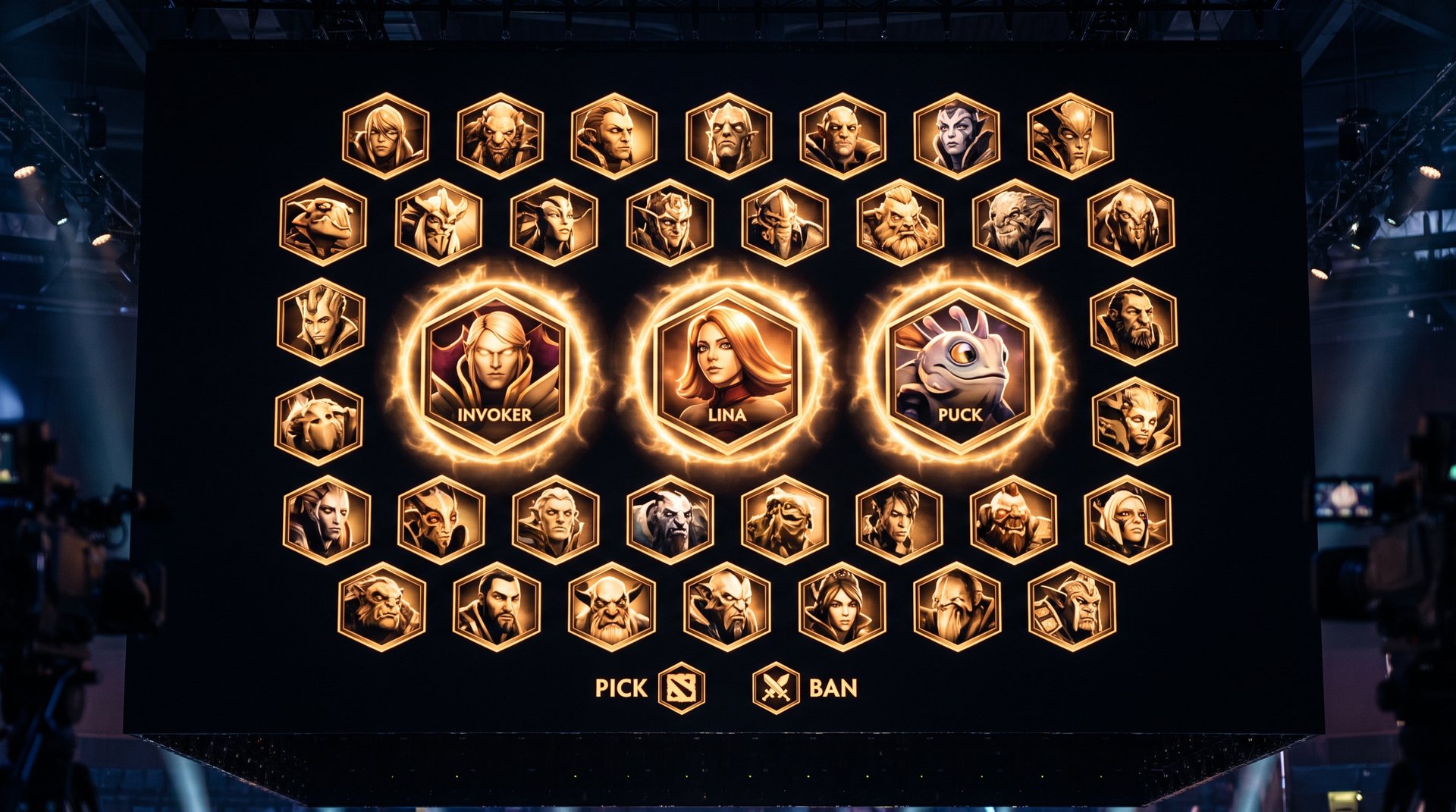
Invoker — Always and Forever
Invoker’s TI15 pick rate speaks to a simple truth: the hero has no bad matchups in the draft phase when piloted at the Immortal level. Chaos Meteor into Cold Snap into Deafening Blast is a combo that kills even tanky cores when executed at full levels. The flexibility of Sun Strike for follow-up ganks meant Invoker was involved in practically every mid-game skirmish, regardless of which rotation the team was running.
The Conjurer’s Catalyst neutral item — which triggers on spell damage to spread bonus damage — synergizes with multi-hit Invoker combos in a way that was not fully intended. This is almost certainly getting patched in 7.42. Get your Invoker games in now.
Lina — High Floor, High Ceiling
Lina was the mid-laner of choice when teams wanted guaranteed kill pressure in the laning stage without committing to an Invoker player. Dragon Slave into Light Strike Array into Laguna Blade with Eul’s remains the most reliable “kill a support in the first smoke” combo in the game. At TI15, teams used Lina as the primary threat in fights — she arrives, deletes one hero, and the fight is effectively 4v5.
The current build that dominated TI15: Eul’s Scepter (level 6) — Bloodstone — Aghanim’s Scepter. The Scepter upgrade on Lina turns Laguna Blade into an area spell, which in a meta where teams cluster for teamfights means she’s hitting 3-4 heroes per kill combo. This is not a casual pick — but if you’re in the 4k-6k bracket, Lina mid with this build is a legitimate fast-track to MMR.
Puck — Draft Flexibility King
Puck’s TI15 value came primarily from its ability to make Phase 1 bans awkward. Teams that drafted Puck early forced opponents to spend bans on Invoker AND Puck OR accept a dual mid threat in multiple heroes. Dream Coil in pro play has essentially no counter when the Puck player is experienced — it dictates where the enemy team stands during the entire fight.
Offlane Meta at TI15
Offlane was the most “solved” position at TI15. The top teams all ran one of three archetypes: a tank initiator, a space creator, or a teamfight follow-up hero. There was almost no room for off-meta picks because the margin for error at the offlane position — where you’re expected to both survive the lane AND set up fights — is the smallest of any role.
Centaur Warrunner — The Undisputed King
Centaur was the most consistent offlaner at TI15. The reason is mechanical: Hoof Stomp + Double Edge creates a reliable stun-into-burst combo that any support can follow up, and Stampede as a team-wide movement ability turns losing fights into escapes and winning fights into rampages. At 7.41e, Centaur’s Retaliate passive (reflecting damage) added a layer of complexity for opponents — attacking him during fights was statistically punishing, which meant enemies had to focus the carry first, giving Centaur more time to deal damage.
Axe — Straightforward Aggression
Axe remains the most beginner-friendly offlaner at any level for good reason: Berserker’s Call forces a fight on your terms. At TI15, Axe was picked specifically into carry lineups where the opposing team had heroes with slow attack speed — Blade Mail timing on Axe punishes fast-attacking carries so hard that several TI15 games were decided in the first 5-10 seconds of a fight because a PA or Drow started hitting an Axed hero under Blade Mail.
If you’re grinding offlane and want the fastest path to consistent MMR gains, Axe is the cleanest choice in the 3k-5k bracket. The execution ceiling is low but the impact ceiling is real.
Tidehunter — Ravage Insurance
Tide was the “insurance” pick at TI15 — drafted when teams needed a guaranteed teamfight reset button. Ravage with Aghanim’s Scepter now hits every unit in a massive radius and refreshes with Refresher. In a meta where fights were decisive 5v5 engagements at key objectives, having two Ravages in a single fight was effectively a “win fight for free” button. Teams that faced Tide had to play around it constantly — which itself was valuable even in games where Ravage didn’t pop.
Support Meta at TI15
Support meta at TI15 can be summarized in one sentence: reactive supports that punish enemy skill shots were prioritized over aggressive killing-oriented supports.
Rubick — The Meta Punisher
Rubick was arguably the most valuable position 4 or 5 pick at the entire tournament. In a meta where teams are running Ravage, Chronosphere, Dream Coil, and Laguna Blade, having a hero who can steal and re-cast those spells is worth an entire additional hero slot. TI15 saw Rubick steal several Ravages and Chronospheres in high-stakes elimination matches — fights that swung entire series.
If you’re not practicing Rubick right now, you’re missing the single highest-skill-ceiling carry in ranked play. A Rubick player who can reliably steal the right spell at the right moment wins games at Archon that Immortal players lose.
Winter Wyvern — Fights Don’t Happen Without Her Permission
Winter’s Curse at the TI level doesn’t just win teamfights — it decides when teamfights happen. Teams with Wyvern dictated the pace of every engagement because the enemy team could not initiate without risking a Curse catching their carry during the damage window. This was especially devastating against WK (curse + Reincarnation timing created some of the most complex decision-making moments of the tournament).
Position 5 Wyvern with Glimmer Cape and Force Staff is the most low-cost high-impact support build in 7.41e. Her laning is hard, but the mid-game impact is disproportionate.
Oracle — The Clutch Factor
Oracle rose significantly in TI15 priority because of one reason: False Promise makes unkillable heroes. In a meta with heavy burst damage from Lina and Invoker, having a support that can counter burst on demand forced opponents to spend resources killing Oracle first — which meant your carry survived long enough to get their first item timing. Teams that respected Oracle’s presence drafted AoE damage instead of single-target burst, which indirectly shaped the entire hero pool.
Dark Willow — Aggressive Position 4
When teams wanted aggression from their support position instead of reactivity, Dark Willow was the pick. Terrorize as a high-range lockdown into Cursed Crown sets up any carry kill. Her Shadow Realm makes her temporarily invulnerable — at TI15, Willow players used this timing to avoid damage during Ravage and Chronosphere, which tilted opponents who had drafted those spells specifically to counter her.
What Got Banned — and Why
Understanding ban priorities at TI is more useful for ranked players than understanding pick priorities. What teams refused to play against tells you what heroes are genuinely broken on the current patch.
| Hero | Role | Primary Ban Reason | Ranked Impact |
|---|---|---|---|
| Spirit Breaker | Pos 4/5 | Nether Strike global pressure, charge interrupts rotations | High — unpunishable at lower MMR |
| Meepo | Mid/Carry | Outscales every hero in the game when ahead, almost unplayable to learn | High — pub stomper in practiced hands |
| Invoker | Mid | No bad matchups, Conjurer’s Catalyst synergy | Very High — top pick rate across all brackets |
| Magnus | Pos 3/4 | Reverse Polarity into any AoE combo ends games instantly | High — Skewer requires practice but RP carries |
| Enigma | Jungle/Pos 3 | Black Hole with Blink Dagger is the best teamfight spell in the game | Medium — situational but game-ending when it hits |
Spirit Breaker was the most frequently banned hero at TI15 and arguably the most impactful ban-phase decision teams faced. Charge of Darkness creates global pressure that disrupts every lane simultaneously — in the early-to-mid tempo meta, teams that ran a Spirit Breaker could dictate every rune contest, every smoke rotation, and every Roshan attempt. The Aghanim’s Scepter upgrade (permanent charge speed buff) was so oppressive that opponents simply removed the hero from the equation rather than trying to play around it.
Hero Tier Summary Table
| Tier | Hero | Role | Strength Window |
|---|---|---|---|
| S | Invoker | Mid | All game, Conjurer’s Catalyst spike at 20 min |
| S | Centaur Warrunner | Offlane | Levels 6-18, Stampede teamfight control |
| S | Rubick | Support | Mid game, spell steal windows during fights |
| S | Winter Wyvern | Support | Late game, fight-pacing with Curse |
| A | Phantom Assassin | Carry | 25-30 min, Deso + Basher timing |
| A | Lina | Mid | All game, Bloodstone spike at 18-20 min |
| A | Wraith King | Carry | Late game, unkillable from 35 min+ |
| A | Oracle | Support | Fight-reactive, burst-heavy meta counters |
| A | Tidehunter | Offlane | Late game Ravage refresh windows |
| B | Faceless Void | Carry | 35+ min, luxury pick with support setup |
| B | Dark Willow | Support | Early-mid aggression, roaming windows |
| B | Puck | Mid | Draft phase value + Dream Coil fights |
| B | Axe | Offlane | Laning phase aggression, Blink timing at 10 min |

Abusing the TI Meta in Ranked
Here’s the honest version of how you convert TI meta knowledge into actual MMR gains.
The TI meta translates to ranked but with a delay. By the time you read this post, the high-MMR players who watch TI are already queuing the best heroes. In 5-7k MMR, the meta is already shifting toward the TI picks. In 2-4k MMR, you have 2-4 more weeks before the peer group figures it out. That’s your window.
The Three-Step Meta Abuse Framework
Step 1: Identify which TI heroes have low mechanical requirements in your bracket. Centaur Warrunner and Wraith King require significantly less micro than Invoker and Meepo. If you’re below 4k MMR, the “simple version” of a meta hero outperforms a sloppy execution of the hard version every time.
Step 2: Learn one combo, learn it cold. The difference between a 3k and a 5k player on Lina isn’t item choices — it’s whether they can land Light Strike Array on a moving target when Eul’s expires. Pick one hero from the tier list, identify their one-combo, and drill it in demo mode for 30 minutes before queuing.
Step 3: Understand what the meta wants from your position. If your team has no initiation, you draft Centaur or Tide. If your team has no single-target burst, you go PA or Lina. The TI meta teaches you the why behind hero selection — that’s more valuable than the specific picks themselves.
If your goal is faster MMR gains than raw grinding provides, working with a specialist service or taking a coaching session with an Immortal player gives you the feedback loop that converts meta knowledge into actual execution. Understanding the TI meta is the easy part — applying it under pressure in your bracket is a different skill.
Top 5 Heroes to Grind Before 7.42 Drops
Patch 7.42 will almost certainly nerf Invoker’s Conjurer’s Catalyst interaction, Centaur’s Retaliate scaling, and some element of Winter Wyvern’s team-fight control. Here are the five heroes to prioritize before the window closes.
- Centaur Warrunner (Offlane): The most impactful hero in the current meta for players below 6k MMR. Hoof Stomp is the easiest reliable stun in the game and Stampede wins extended fights. Every game you play as Centaur before 7.42 is leverage on the current patch state.
- Lina (Mid): Laguna Blade one-shots supports. In bracket play, supports are perpetually squishy and misposition. If you’re a mid player looking for high-impact, low-team-dependency play, Lina is the answer. Master the Eul’s into Laguna Blade timing.
- Winter Wyvern (Pos 5): If you play support, Wyvern is free wins in the hands of any player who understands fight timing. Winter’s Curse on the enemy carry forces the enemy team to fight itself for 4 seconds. That’s not a support ability — that’s a game-closing weapon.
- Phantom Assassin (Carry): The most forgiving of the S/A tier carries. PA snowballs from one kill, has reliable escape, and does not require perfect itemization. Her current 7.41e guide gives you the exact build path to abuse her right now.
- Rubick (Pos 4): High ceiling, but the returns scale linearly with practice. Every 10 games of Rubick makes you materially better at the hero. If you’re investing in a hero for long-term MMR gains, Rubick is the one to master — he stays relevant regardless of what 7.42 changes because his strength is the enemy’s spells, not his own.
If you want to skip the grind entirely while your Dota knowledge catches up, our MMR boost service is staffed by players who ran the TI15 meta in real time. It’s the fastest way to get your account into a bracket where the meta decisions actually matter. And if you want to understand whether boosting is safe, that guide covers everything Valve does (and doesn’t) enforce.
Frequently Asked Questions
Climb Into Your TI Heroes — Now, Not After 7.42
The post-TI window is the best MMR opportunity of the year. The meta is solved, the hero pool is clear, and the window closes the moment 7.42 drops. Don’t wait.
Get MMR Boost Book Coaching Session



