

BLAST Slam VIII Malta LAN: Bracket, Picks and Predictions

The BLAST Slam VIII group stage is over, the last chance qualifier is settled, and the six best teams in the world right now are headed to Malta. From October 8 to 11, BLAST Arena Studios in Attard hosts what may be the most competitive Dota 2 LAN of the 2026–2027 season opener — six teams, $750,000 on the line, and $270,000 going to whoever lifts the trophy.
PARIVISION ran through the group stage and seeding matches without dropping a map. Reigning TI champions Team Spirit are playing without their iconic offlaner Collapse. LGD Gaming and 1W Team survived the last chance gauntlet. This bracket has genuine upsets written all over it.
In this guide we break down how every team qualified, analyze the matchups in depth, look at the current 7.41f meta and how it favors each roster, and give you our picks for every series — including the grand final.
Table of Contents
What Is BLAST Slam VIII?
BLAST Slam VIII is the eighth edition of BLAST’s flagship Dota 2 series and the second Tier 1 event of the 2026–2027 competitive season. It expanded to 16 teams this year — up from 12 in the previous edition — and added a more rigorous online stage before the LAN finale.
The format ran like this:
- Group Stage (Sep 29 — Oct 2): Four GSL groups of four teams, all matches Bo3. Group winners advance to Seeding Matches, second-place teams to the Last Chance stage. Everyone else goes home.
- Seeding Matches (Oct 3): The four group winners played Bo3s. Winners earn a bye directly to the Upper Bracket Semifinals at the LAN. Losers drop to the Upper Bracket Quarterfinals.
- Last Chance (Oct 3): The four second-place teams. Winners earn the remaining two UB Quarterfinal spots at the LAN. Losers are eliminated.
- LAN Playoffs (Oct 8–11): Six teams, double-elimination bracket, Malta. Bo3 throughout, Bo5 grand final.
| Prize Position | Prize Money |
|---|---|
| 1st Place | $270,000 |
| 2nd Place | $150,000 |
| 3rd Place | $90,000 |
| 4th Place | $65,000 |
| 5th–6th Place | $87,500 (split) |
How the Six Teams Qualified
The group stage was dominated by Eastern European rosters, which should surprise no one given where the global Dota 2 power center sits right now. Here is a clean breakdown of how every LAN team got through:
| Team | Route | Group Record | LAN Seed |
|---|---|---|---|
| PARIVISION | Won Group A, won Seeding Match vs. Aurora 2-0 | 2-0 | UB Semi (Seed 1) |
| Team Spirit | Won Group B, won Seeding Match vs. Yandex 2-1 | 2-0 | UB Semi (Seed 2) |
| Team Yandex | Won Group C, lost Seeding Match to Spirit 1-2 | 2-0 | UB Quarterfinal |
| Aurora Gaming | Won Group D, lost Seeding Match to PARIVISION 0-2 | 2-0 | UB Quarterfinal |
| LGD Gaming | Second in Group A, won Last Chance vs. GamerLegion 2-1 | 2-1 | UB Quarterfinal |
| 1W Team | Second in Group B, won Last Chance vs. OG 2-1 | 2-1 | UB Quarterfinal |
PARIVISION and Spirit were the class of the field online — both finished their groups undefeated, and Spirit survived a genuine test from Yandex in the seeding match. LGD and 1W had to work for their spots: LGD came back from losing game one against GamerLegion, while 1W dispatched the newly rebuilt OG roster (featuring Topson in his return to competitive play).
The Full Playoff Bracket
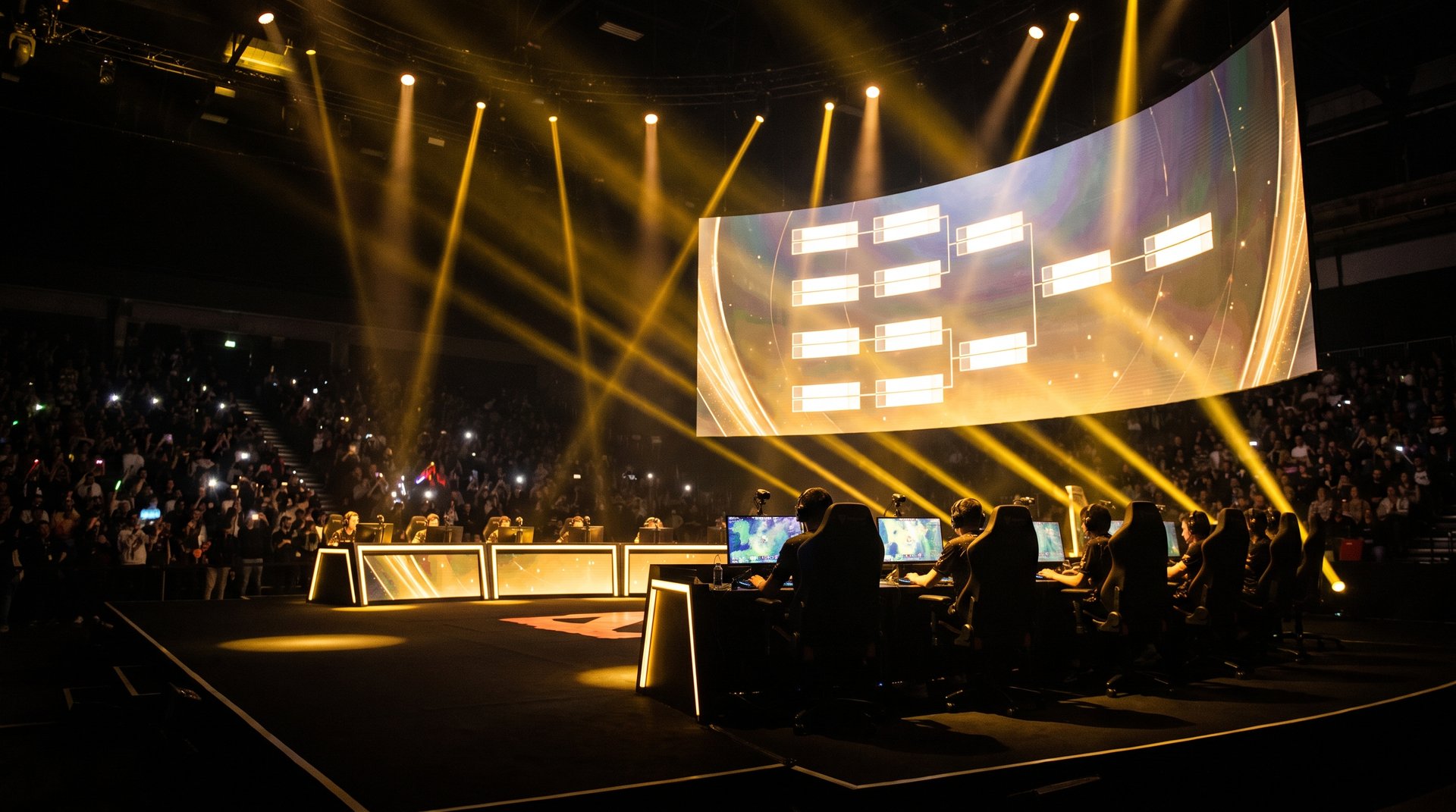
The double-elimination bracket for Malta looks like this:
| Round | Matchup | Date |
|---|---|---|
| UB Quarterfinal 1 | Team Yandex vs. LGD Gaming | Oct 8 |
| UB Quarterfinal 2 | Aurora Gaming vs. 1W Team | Oct 8 |
| UB Semifinal 1 | PARIVISION vs. QF1 winner | Oct 9 |
| UB Semifinal 2 | Team Spirit vs. QF2 winner | Oct 9 |
| Lower Bracket Rounds | QF losers begin LB run | Oct 9–10 |
| Grand Final | UB Final winner vs. LB Final winner | Oct 11 |
The top two seeds (PARIVISION and Spirit) sit in the upper bracket semifinals and can only drop to the lower bracket from that point. Everyone else has to win their way past Yandex or Spirit before even reaching the semis. It is a bracket that rewards consistent online performance — and punishes teams that stumbled even once.
Team-by-Team Profiles
PARIVISION — The Dominant Force
PARIVISION entered BLAST Slam VIII as quiet favorites and have done everything to justify that billing. They finished Group A at 2-0 without dropping a map, then destroyed Aurora Gaming 2-0 in the seeding match to claim the top LAN seed. If you watched those series, the margins were significant — PARIVISION did not look like they were trying particularly hard.
What makes this roster dangerous is their coherence. This is one of only two teams at the LAN (alongside 1W) that has maintained the same roster for three consecutive years. Three years of playing together at the highest level builds a kind of telepathic understanding that newer rosters cannot replicate. Their draft pool is wide, their rotations are precise, and they have no obvious individual weak point to exploit.
Why PARIVISION Win
Perfect 4-0 record online entering the LAN. Same roster for three years — the chemistry is unmatched in this field. Aurora and Yandex, the most likely opponents through the upper bracket, have both already lost to them.
Team Spirit — Champions With Gaps to Fill
Team Spirit are the reigning world champions, having won The International 2026 in Shanghai — their third Aegis of Champions and an unprecedented achievement in Dota 2 history. They are not the same squad that hoisted that trophy, however.
Offlaner Magomed “Collapse” Khalilov and coach Yaroslav “Miposhka” Naidenov are both taking a break from competitive play after TI. Bohdan “Batyuk” Batiuk, from the Spirit academy team, has stepped in at the offlane. Collapse is one of the best offlaners in the world — his absence is not trivial. The initiation patterns, the Magnus and Tidehunter presses, the willingness to sacrifice himself for a pick — that is a specific brand of Dota that Batyuk will need to replicate under LAN pressure.
Spirit still beat Yandex 2-1 in the seeding match, which shows the core skill ceiling is intact. But this is a team in transition, and Malta will be an early read on whether the dynasty continues or sputters in its first post-TI event.
The Collapse Factor
Without Collapse, Spirit lose their most unpredictable element. Collapse created scenarios that opponents could not draft against. Batyuk is a capable player, but the scouting report on him is thin — and BLAST Slam VIII will write it in real time.
Team Yandex — The Online Specialists
Yandex finished Group C undefeated (2-0) and looked sharp doing it. Their loss to Spirit in the seeding match (1-2) was competitive — they took a game off the champions, which no other team managed online. They are an aggressive, fast-paced roster that sets up well in the current meta’s emphasis on early-game objectives.
The knock on Yandex historically is their LAN performance relative to their online results. Online Dota has a specific rhythm — faster setup times, less crowd pressure, more predictable ping — and some rosters thrive there but stall when moved to a stage environment. Whether that trend holds here is one of the tournament’s most interesting questions.
Aurora Gaming — Quietly Dangerous
Aurora won Group D without dropping a map before running into PARIVISION in the seeding match and getting sent down 0-2. That result flattered PARIVISION as much as it reflected badly on Aurora — the matchup was a significant skill gap. But Aurora’s path through the lower bracket is more forgiving than the upper bracket route would have been.
Their series against 1W in the UB Quarterfinals is the most evenly matched matchup on the first day. Aurora has speed and aggression; 1W has three years of institutional knowledge. Whoever wins this likely faces Spirit in the upper bracket semifinal.
LGD Gaming — The Survivor
LGD’s road to Malta was the hardest in the bracket. After finishing second in Group A behind PARIVISION (a 2-0 loss to the group leaders, plus a hard-fought 2-1 win over Xtreme Gaming to finish 2-1), they dropped into the Last Chance stage and had to beat GamerLegion 2-1 — losing game one before rebounding with back-to-back wins.
LGD have been rebuilding since releasing their South American roster post-TI 2026. Their current lineup is a different roster from the LGD that Dota fans followed for years, and their performances this event suggest a team that is finding its footing. They are the most dangerous lower-bracket team in the field because their game-one losses are often analytical — they lose one map, identify the problem, and adjust hard.
1W Team — Same Roster, Same Results
1W Team, like PARIVISION, have kept their roster intact for three years. Also like PARIVISION, they do not have a clean online-to-LAN record — but their stability gives them a consistent baseline that newer rosters cannot match. They went 2-1 in Group B (one loss to Team Spirit, which everybody lost), then beat OG — including the returned Topson — 2-1 in the Last Chance stage.
1W are a methodical team. They do not tend to create chaos; they create advantages and convert them. That style is effective but exploitable by aggressive opponents who can sprint out of the laning stage with a resource lead before 1W’s structural game kicks in.
UB Quarterfinal Predictions
Team Yandex vs. LGD Gaming
This is the more one-sided of the two UB Quarterfinals on paper. Yandex went 2-0 in their group and looked dominant. LGD scraped through with a 2-1 group record and needed a comeback win in the Last Chance stage.
Yandex’s aggressive early game is a good counter to LGD’s methodical style — if Yandex can get 10 minutes ahead before LGD’s structural game kicks in, LGD’s comeback ability is limited in Bo3. LGD’s best path is to draft for stable matchups and survive to the late game, where individual skill and itemization matter more than tempo.
Our pick: Yandex 2-1. Yandex has looked better and had an easier path to this point. LGD takes a game but Yandex’s aggression closes the series.
Aurora Gaming vs. 1W Team
This is the tighter matchup. Aurora and 1W are stylistically opposite — Aurora runs fast, high-kill compositions while 1W prefers structured, siege-oriented play. On LAN, 1W’s experience tends to matter more than it does online. Three years together with the same five players means that 1W does not tilt when a series gets close.
Aurora’s window to win is getting a significant lead in the early-to-mid game and closing before 1W can stabilize. The LAN environment actually helps Aurora here — crowd energy can accelerate aggressive teams — but 1W’s mental fortitude under pressure is battle-tested.
Our pick: 1W 2-1. 1W’s LAN experience and roster stability edges this one. Aurora takes a game through pure aggression but 1W finds the close-out in game three.
UB Semifinal Predictions
PARIVISION vs. Team Yandex (projected)
If our UB Quarterfinal picks hold, PARIVISION faces Yandex in the semis. They have already played — Spirit beat Yandex 2-1 in the seeding match, and while PARIVISION did not face Yandex directly, PARIVISION’s 2-0 seeding match win over Aurora (who beat Yandex’s group D mirror in terms of style) provides some read.
PARIVISION’s three-year roster coherence is at its most dangerous against opponents who rely on fast aggression to dictate the game. PARIVISION understands every aggressive pattern and knows how to counter-rotate. Yandex will need something novel in their draft pool to create a surprise factor.
Our pick: PARIVISION 2-0. They look like a different tier from every other team in this field right now. Yandex does not have the draft depth to surprise them over two games.
Team Spirit vs. 1W Team (projected)
Spirit beat 1W 2-0 in the group stage. That result was online, and LAN changes things. But Spirit’s core — even without Collapse — is individually elite, and 1W’s structural style does not generate the kind of chaos that exposes inexperienced stand-ins.
Batyuk’s main test in this matchup is handling 1W’s split-push and siege patterns, which require precise timing in the offlane to disrupt. If Batyuk misses rotations that Collapse would have been there for, 1W will grind down Spirit’s base structure. Spirit’s best path is to win the mid game decisively before 1W’s late-game architecture becomes a problem.
Our pick: Spirit 2-1. 1W makes this harder than it was online. Spirit has the individual firepower to close it but Batyuk’s inexperience at this level gives 1W a path to take a game.
The 7.41f Meta in Malta
Patch 7.41f has been live since September 15, 2026, giving teams nearly three weeks of scrims and online matches to optimize their drafts. At this level of play, every team knows the patch deeply — but certain patterns have emerged that will shape how Malta plays out.
The current meta rewards:
- Early objective control: Towers, Roshan, and bounty runes are disproportionately valuable in 7.41f. Teams that can snowball from a 10-minute Roshan tend to run away with games.
- Position 4 aggression: The soft support slot has outsized impact right now. Heroes that can trade HP aggressively in the early game while enabling a fast carry are seeing high pick rates at the top level.
- Flexible carry pool: No single carry hero is dominant in 7.41f. The teams with the widest carry hero pools — and the fastest carry players — have the most draft freedom.
- Defensive cores: Spirit heroes with escape mechanisms (Puck, Storm Spirit, Ember Spirit) have seen a slight uptick as teams counter the aggressive support meta with mobility.
PARIVISION’s draft style aligns best with the current meta — their support play is the most cohesive in the field and they historically abuse any patch that rewards position 4 and 5 coordination. Spirit’s meta alignment is partially disrupted by Collapse’s absence; he was one of the best offlane initiators for Roshan-first strategies, and Batyuk will need to match that.
Our Grand Final Pick
Based on the bracket analysis and meta read, the most likely grand final is PARIVISION vs. Team Spirit.
PARIVISION has the strongest case to win the event outright. They are the only team that has looked genuinely dominant at every stage of this tournament. Their 4-0 online record without dropping a map is not a fluke — it reflects a roster that is simply more cohesive than anyone else in this field right now.
Spirit are the second-most likely winner based on raw talent. They are the reigning world champions. Even without Collapse, their mid and carry lanes are individually world-class, and their historical ability to elevate on LAN stages is well documented. If they reach the grand final and it is Bo5, anything can happen.
| Team | Win Probability | Best Case | Worst Case |
|---|---|---|---|
| PARIVISION | Very High | UB run, dominant grand final win | Upset by Yandex in UB Semi |
| Team Spirit | High | LB run builds Batyuk’s confidence, upsets PARIVISION in final | Early LB exit without Collapse’s impact |
| Team Yandex | Medium | LB run after PARIVISION loss, wins from lower bracket | Swept out by PARIVISION in UB Semi |
| Aurora Gaming | Low-Medium | Upsets 1W, forces a Spirit loss in LB | Early LB exit after UB QF loss |
| LGD Gaming | Low-Medium | Deep LB run after Yandex loss, dark horse run | Quick 0-2 exit after UB QF loss |
| 1W Team | Low | Upsets Spirit via structural grinding | Knocked out by Aurora in UB QF |
Our pick for champion: PARIVISION. Three years together, perfect online record, dominant wins against every team they have faced. Unless Spirit’s talent overcomes the Collapse gap in a Bo5, PARIVISION takes their first BLAST Slam title.
The dark horse to watch is LGD. Their ability to lose game one and reset is dangerous for any opponent who assumes the series is over after taking the opener. In a best-of-three world, that resilience can flip results that the paper read does not suggest.
Climb Ranked While Watching the LAN
The same heroes, drafts, and strategies the top six teams use in Malta are the blueprint for climbing ranked in 7.41f. If you have been stuck at the same MMR while following the pro scene, our Immortal-rank boosters can break your bracket ceiling — fast.
Get MMR Boosted Book CoachingFrequently Asked Questions
Want to Win More Ranked Games?
You have just read how the best six teams in the world approach Dota 2 at the highest level. Now apply that edge to your own bracket. Team Smurf’s Immortal-rank players boost MMR, remove Low Priority, and offer one-on-one coaching across all ranks.
Boost MMR Now Remove Low Priority



