Best Position 4 Heroes to Climb MMR in 2026

Position 4 is the most underrated role for solo-queue climbing in Dota 2. While carries wait for farm and hard supports sacrifice experience, the soft support roams freely — creating advantages across the map before 10 minutes are on the clock. Pick the right hero and you single-handedly decide which lanes win.
In patch 7.41e, the best position 4 heroes combine early kill threat with map control tools that scale into mid-game teamfights. This guide ranks every viable pos 4 pick by win rate (sourced from OpenDota community data, August 2026), explains what each hero brings to your team, and gives you the item build to get there fastest.
Already know the role but stuck below your true MMR? Our complete MMR boosting guide explains how Immortal-ranked professionals approach the climb — the same mental framework works whether you’re playing pos 1 or pos 4.
What You’ll Find Here
Pos 4 vs Pos 5: Why the Distinction Matters
Many players conflate position 4 and position 5, lumping both into “support.” That’s a mistake that costs MMR. The two roles have fundamentally different win conditions in 7.41e.
The position 5 hard support lives in the safelane. Their first 10 minutes are spent keeping the carry alive, pulling camps, and absorbing harassment so the pos 1 can farm in peace. They often end games with the lowest net worth on the team, running around with Observer Wards and a Glimmer Cape.
The position 4 soft support plays a completely different game. After the laning phase, or even during it, pos 4 roams the map — showing up in the midlane for a kill, diving the offlane tower, or countering a Rune contest. You’re the one applying pressure while your cores farm, and your gold is free to convert into items that matter. By 15 minutes a good pos 4 has Blink Dagger or a Mekansm while the pos 5 is still buying Dust.
The heroes in our best support heroes guide lean heavily pos 5 — guardians of the safelane. This list is different: it’s about heroes who roam, initiate, and control the map from minute five onward.
What Makes a Good Position 4 Pick in 7.41e
Not every utility hero works at pos 4. In the current patch, the strongest soft supports share three characteristics:
1. Independent Kill Threat
A pos 4 who needs their core to babysit them doesn’t create advantages — they consume them. The best pos 4 heroes in 7.41e can generate kills with minimal setup: a Bounty Hunter with a level-2 Shadow Walk, an Earthshaker with a well-placed Fissure, or a Night Stalker that punishes any out-of-position hero the moment the sky turns dark. If you can’t threaten a kill alone, you’re not playing pos 4, you’re playing pos 5 in the wrong lane.
2. Map Control Tools
Roaming is only useful if you can do it safely. The best pos 4 heroes have built-in map tools: invisibility, stuns that work from range, charges that close distance instantly, or global abilities. In 7.41e’s faster-paced meta — where Outposts provide free bounty and Wisdom Runes reward the team that controls them — map presence from pos 4 translates directly into gold leads for your cores.
3. Low Scaling Cost
A pos 4 who needs a 6-slot inventory to feel relevant is a burden. The best pos 4 heroes in patch 7.41e contribute massively with just one or two items: a Blink Dagger on Earthshaker, Medallion of Courage on Bounty Hunter, a Magic Wand on Clockwerk. The less farm you need to be useful, the more gold your cores can have.
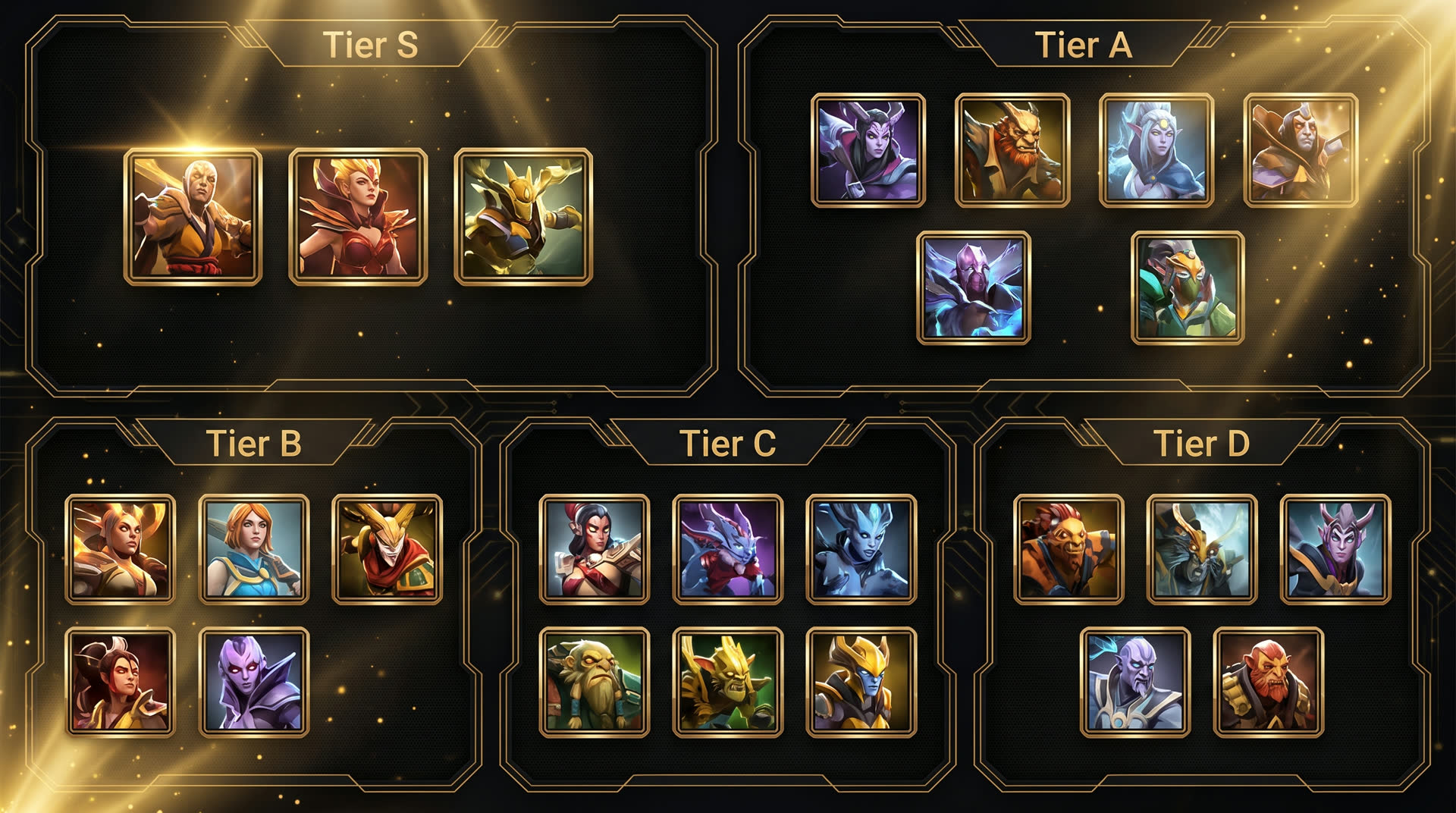
Full Position 4 Hero Rankings — Patch 7.41e
Win rates below are sourced from OpenDota community data (August 2026), reflecting ranked pub matches across all brackets. Note that these are overall pub win rates — position-specific win rates for heroes with high flexibility (like Lion or Skywrath Mage) may differ. Tier placement accounts for pos 4 specific utility beyond raw win rate.
| Hero | Tier | Win Rate (OpenDota Aug 2026) | Pick Volume | Best For |
|---|---|---|---|---|
| Bounty Hunter | S | 53.4% | 289K | Global pressure, snowball draft |
| Vengeful Spirit | S | 53.2% | 412K | Setup, buff/debuff stacking |
| Spirit Breaker | A | 52.2% | 522K | Gap closing, bash chain, global ult |
| Nyx Assassin | A | 51.9% | 207K | INT hero counter, stun-lock |
| Night Stalker | A | 51.7% | 266K | Night roaming, vision denial |
| Earthshaker | A | 50.3% | 498K | AOE teamfight, Echo Slam |
| Skywrath Mage | A | 50.0% | 407K | Lane domination, silence |
| Rubick | B | 49.6% | 695K | Spell steal, high skill ceiling |
| Lion | B | 48.9% | 888K | Reliable hex + finger, beginner-safe |
| Dark Willow | B | 48.5% | 247K | Burst damage, root setup |
| Clockwerk | B | 48.3% | 138K | Isolation, hook punish |
| Tusk | B | 48.0% | 196K | Save + kill combo, Snowball gank |
| Pudge | Situational | 51.7% | 985K | High skill ceiling, punish overextension |
| Hoodwink | Situational | 47.4% | 437K | Poke, shackle setup |
S-Tier Position 4 Heroes
Bounty Hunter — The Global Pressure Engine
Win rate: 53.4% | Pick volume: 289K (OpenDota, August 2026)
Bounty Hunter is the best pos 4 hero for solo-queue climbers in patch 7.41e. No other hero converts a successful early game into a team-wide gold lead as efficiently. When you place Track on enemies, every kill generates bonus gold for your whole team — not just the killer. In a role where your own farm is limited, multiplying your team’s economy is how you stay relevant.
The roaming kit is self-sufficient from minute one. Shadow Walk gives you free rotation to any lane without warding the pathing. Jinada’s slow and True Strike make you a threat to any hero caught out of position. Shuriken Toss adds reliable follow-up damage. And Bounty Hunter is one of the very few heroes in Dota 2 who effectively has a global ability at level 6: Track lets you see any enemy on the map, and your whole team deals bonus damage to tracked targets.
Why He Works
- Track generates 250-450 bonus gold per kill for ALL allies
- Shadow Walk costs no mana — infinite rotations
- Works at every skill bracket, very forgiving to execute
- Medallion + Desolator makes him a threat to any hero
When to Avoid
- Enemy team has scouting (Bloodseeker, Witch Doctor sentries)
- No stun in his kit — needs team setup for reliable kills
- Countered by AoE-heavy comps (Earthshaker, Enigma ult)
Core items (7.41e): Magic Wand — Orb of Corrosion — Phase Boots — Medallion of Courage — Wind Lace (into Solar Crest). Optional: Blink Dagger for initiating Track from distance.
Vengeful Spirit — The Team-Wide Multiplier
Win rate: 53.2% | Pick volume: 412K (OpenDota, August 2026)
Vengeful Spirit is the highest win-rate ranged pos 4 in 7.41e for a simple reason: she makes everyone around her more dangerous. Vengeance Aura gives your entire team bonus physical damage — which means your carry attacks harder, your mid hero’s physical spells hit harder, and your own attacks actually sting. This passive alone is worth 4-6 hero levels of damage output for your team in the early game.
On top of the aura, she brings a reliable stun (Magic Missile), a minus armor debuff (Wave of Terror), and Nether Swap — one of the most versatile abilities in Dota 2. Swap can initiate by flipping an enemy into your team, save an ally by flipping them away from a stunlock, or reposition you for a chase or escape. There are very few situations where Vengeful Spirit has nothing to contribute.
In patch 7.41e her positioning as a “flex” pos 4 or pos 5 makes her a strong draft pick — the enemy never knows which lane she’ll start in. Starting mid or offlane to collect a kill and then rotating to safelane is a legitimate and powerful strategy.
Why She Works
- Vengeance Aura passively buffs your whole team’s damage
- Nether Swap: initiate, save, or escape on a short cooldown
- High pick rate means enemies rarely know your lane
- Works well with almost every carry hero
When to Avoid
- Swap can accidentally save enemies in chaotic teamfights
- Low base strength — paper-thin at low levels
- Better in coordinated play than pure solo queue
Core items (7.41e): Arcane Boots (into Tranquil) — Medallion of Courage — Solar Crest — Magic Wand. Luxury: Aghanim’s Scepter (upgrades Swap to cast from range).
A-Tier Position 4 Heroes
Spirit Breaker — The Charge Tax
Win rate: 52.2% | Pick volume: 522K (OpenDota, August 2026)
Spirit Breaker has the highest pick volume of any dedicated pos 4 roamer in patch 7.41e, and for good reason: his gameplay loop is brutally simple and scales from Guardian to Immortal. Charge of Darkness targets any hero on the map, builds up momentum, and delivers a Greater Bash stun on arrival. No reaction-time skill checks. No precise aiming. Just point at the enemy who is standing in a bad position and press Q.
What keeps Spirit Breaker in A-tier rather than S is his predictability. Good players hear the Charge sound and immediately scatter and juke. But in the majority of pub games — and especially in the Herald-to-Ancient bracket where most players are reading the mini-map poorly — the Charge connects reliably. Combining Charge with Nether Strike (his ulti) instantly disables a single target for 1.5 seconds and deals a massive nuke. Pair that with a teammate’s follow-up and it’s a kill.
Core items (7.41e): Phase Boots — Drum of Endurance — Urn of Shadows (into Spirit Vessel) — Blade Mail. Optional: Black King Bar for sustained teamfighting.
Night Stalker — The Night Shift Nightmare
Win rate: 51.7% | Pick volume: 266K (OpenDota, August 2026)
Night Stalker is the most oppressive roaming pos 4 in 7.41e when you execute the early night rotation correctly. Between minutes 0 and 4, you lane like a standard support. At minute 4 when the first night falls, your movement speed and attack speed double, your Crippling Fear has its full range, and any hero who hasn’t bought a Sentry Ward is playing blind. That 8-minute window — four minutes of night from 4:00 to 8:00 — is where Night Stalker earns his MMR.
The key is planning your first rotation before the game starts. Night Stalker wants to start in the offlane or midlane where he can deny and harass during day, then the moment night hits, jog to any lane that has an enemy hero standing too far forward. Darkness gives his whole team bonus vision on enemies, meaning your supports can spot them without wards while theirs go blind.
In patch 7.41e Night Stalker’s Darkness ultimate (night = 60 seconds, then day for only 20) means the advantage window now lasts longer than ever. Learning the night timing is a genuine MMR unlock at every bracket.
Core items (7.41e): Boots of Speed — Magic Wand — Phase Boots — Urn of Shadows — Black King Bar. Optional: Heaven’s Halberd versus auto-attack carries.
Nyx Assassin — The Intelligence Predator
Win rate: 51.9% | Pick volume: 207K (OpenDota, August 2026)
Nyx Assassin is the specialist’s pos 4 pick. His win rate of 51.9% is excellent, but the pick rate is lower because Nyx is situational — he needs to be drafted against INT-heavy enemy lineups to reach his full potential. When the enemy team has a Lion, Lina, Zeus, or Crystal Maiden, Nyx turns their strongest assets into liabilities. Mana Burn drains massive amounts of mana proportional to the target’s Intelligence stat — meaning the enemy’s most dangerous spell-caster can suddenly do nothing.
Beyond the counter-pick strength, Nyx brings Impale (a ground-targeted stun that hits up to 3 units in a line) and Vendetta — a permanent invisibility ultimate with a critical strike. The Vendetta initiation is devastating: you approach from invisible, apply Impale to stun them, then Mana Burn to drain their response options, then auto-attack with a 300-350% critical. Against fragile supports and intelligence cores, this combo kills outright at level 6.
Core items (7.41e): Arcane Boots — Blink Dagger — Wind Waker (allows cast from range). Vessel if the enemy team has sustain.
Earthshaker — The Echo Slam Threat
Win rate: 50.3% | Pick volume: 498K (OpenDota, August 2026)
Earthshaker is the benchmark pos 4 hero — the one every guide gets compared to. His kit defines what a roaming soft support should do: Fissure blocks pathways and traps enemies, Enchant Totem amplifies his next attack by 200%, Aftershock stuns on every spell, and Echo Slam is arguably the most punishing teamfight ultimate in Dota 2 when enemies are grouped. One Echo Slam into 4 enemies that are clustered together with Illusions or Summons can swing the entire game.
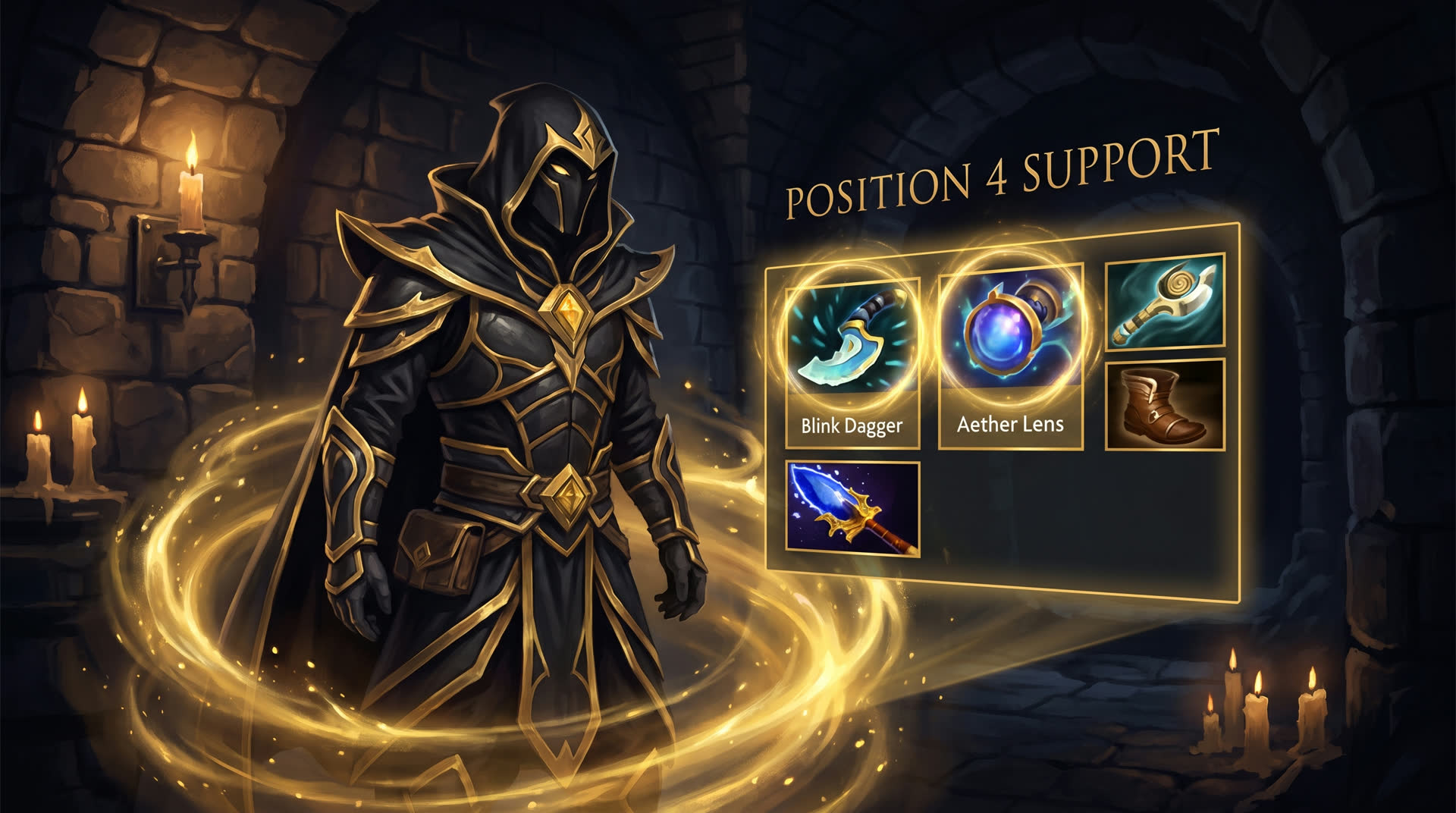
In patch 7.41e, Earthshaker is especially strong because the meta involves more teamfighting than split-push. Teams cluster around Outposts, contest Wisdom Runes together, and group for Roshan at set timing windows. Every one of those scenarios is an Earthshaker dream. The challenge is getting into position — which is why Blink Dagger is his most important item, ahead of anything else.
Earthshaker is the recommended hero if you want to learn pos 4 roaming mechanics. He punishes grouping so clearly that you immediately understand the lesson: create a game state where enemies bunch together, then punish it.
Core items (7.41e): Magic Wand — Boots of Speed — Blink Dagger (priority). After Blink: Aghanim’s Shard (refreshes Echo Slam after a kill), then Aeon Disk or Refresher.
Skywrath Mage — The Lane Tyrant
Win rate: 50.0% | Pick volume: 407K (OpenDota, August 2026)
Skywrath Mage is the best pos 4 for players who prefer to dominate the laning phase rather than roam. His damage output in the early levels is absurd: Arcane Bolt deals damage based on his Intelligence (which is already very high at level 1), Ancient Seal silences and amplifies magic damage taken by 20-50%, and Concussive Shot slows the closest enemy hero without requiring targeting. At level 3, Skywrath with a setup stun from his pos 1 or pos 5 can kill most supports outright.
The laning presence translates into zone control: enemies simply cannot stand too close to their tower when Skywrath is in lane without risking death. This forces bad last-hit patterns and denies resources from the enemy carry — exactly what a pos 4 wants to accomplish in the laning phase.
Post-lane, Skywrath transitions into a “follow up” pos 4 who moves with the pos 2 or pos 3 and amplifies their damage output via Ancient Seal. His silence also makes him excellent against escape heroes and blink-dependent offlaners.
Core items (7.41e): Arcane Boots — Glimmer Cape — Aether Lens (extends Ancient Seal range). Optional: Aghanim’s Scepter for global Mystic Flare.
B-Tier Position 4 Heroes
Rubick — The Spell Steal Gamble
Win rate: 49.6% | Pick volume: 695K (OpenDota, August 2026)
Rubick is the most popular pos 4 (or 5) hero in 7.41e by pick volume, and with good reason: spell stealing an enemy’s ultimate and using it against them is one of the most satisfying mechanics in Dota 2. When Rubick steals an Echo Slam and fires it into a grouped enemy team, or catches a Blackhole and immobilizes four enemies, he single-handedly wins teamfights.
The caveat is that Rubick’s win rate of 49.6% reflects his inconsistency. Against teams with weak ultimates (single-target spells, short-duration abilities), Rubick’s spell steal value collapses. He’s also physically fragile and requires careful positioning to steal spells reliably after they’re cast. Experienced opponents will cast their ultimates away from Rubick, reducing his options.
Rubick is a top choice when the enemy team has telegraphed, powerful AOE ultimates: Enigma Blackhole, Axe Berserker’s Call into a crowd, Crystal Maiden Freezing Field, or Tidehunter Ravage. Draft Rubick in those matchups and he becomes one of the highest impact pos 4 heroes in the game.
Core items (7.41e): Tranquil Boots — Aether Lens (critical — extends steal and Telekinesis range) — Blink Dagger. Optional: Aghanim’s Scepter (grants Arcane Supremacy passive indefinitely).
Lion — The Beginner-Safe Disabler
Win rate: 48.9% | Pick volume: 888K (OpenDota, August 2026)
Lion has the highest absolute pick volume of any hero on this list, and that tells you something about his role in the game: he’s the most accessible pos 4 or 5 support with a reliable spell rotation. Earth Spike (a point-target linear stun), Hex (transforms an enemy into a helpless critter), Mana Drain, and Finger of Death (one of the highest-damage single-target nukes in the game). That’s four spells, all of which are useful, all of which are straightforward to use.
Lion sits in B-tier not because he’s weak — a hex + spike + finger combo kills most heroes outright — but because his win rate of 48.9% is lower than heroes with more modern kits. He’s slower to rotate than dedicated roamers, has no reliable escape, and his skill shot (Earth Spike) is easy to dodge at higher brackets. But in Herald through Archon, where dodging is rare and fights happen in a straight line, Lion is a consistent and rewarding pick.
If you’re transitioning to pos 4 from a different role and want to learn the basics without being punished for mechanical mistakes, start here. See our guide to Dota 2 support heroes for more detail on when to take Lion pos 5 instead.
Core items (7.41e): Arcane Boots — Blink Dagger (into Hexblade) — Aether Lens. Luxury: Aghanim’s Scepter (Chain Hex bounces to nearby enemies).
Dark Willow — Controlled Chaos
Win rate: 48.5% | Pick volume: 247K (OpenDota, August 2026)
Dark Willow brings high-damage burst and a unique kit that rewards players who plan ahead. Bramble Maze places a series of treant roots in an area, rooting enemies who walk through them up to 5 seconds later — you can predict where enemies will move and place Brambles in advance. Shadow Realm charges up a homing projectile that deals burst damage proportional to how long you hold it. Cursed Crown spreads a stun to nearby enemies. And her ultimate Terrorize forces enemies to flee toward their fountain, effectively removing them from a fight.
Dark Willow’s complexity is her main obstacle. She requires map awareness to use Bramble Maze effectively, good timing to maximize Shadow Realm damage, and the maturity to use Terrorize disruptively (not just “when enemies are in range”). At lower brackets she under-performs her potential because players rush the ultimate. At higher brackets she’s a disruptive and dangerous pos 4.
Core items (7.41e): Witch Blade — Null Talisman — Tranquil Boots — Glimmer Cape. Optional: Silver Edge for disabling passives before an initiation.
Clockwerk — The Isolation Machine
Win rate: 48.3% | Pick volume: 138K (OpenDota, August 2026)
Clockwerk is the most mechanically demanding hero on this list and the most rewarding when you master him. Battery Assault deals rapid small-damage pulses in a ring around him. Power Cogs traps enemies inside a ring of electrified cogs, separating them from teammates. Rocket Flare gives global map vision. And Hookshot — his ultimate — propels him across the entire map at high speed, stunning and trapping any hero he hits.
The Hookshot initiation is one of the most powerful single-target setups in Dota 2. You fly to a hero from far range, immediately encase them in Power Cogs, and then your team collapses. The enemy is isolated, their teammates can’t reach them, and they die in 3-4 seconds. The counterplay is jinking (moving unpredictably), which skilled players do well. But a significant portion of pub players can’t dodge a Clockwerk Hookshot reliably, making him excellent in lower-to-mid brackets.
Core items (7.41e): Arcane Boots — Blink Dagger (for additional initiation options) — Force Staff. Optional: Blade Mail (punishes enemies who fight inside your Cogs).
Situational Position 4 Picks
Pudge — The Pub Monster
Win rate: 51.7% | Pick volume: 985K (OpenDota, August 2026)
Pudge is the most-picked hero in Dota 2 pub games. His win rate of 51.7% sounds good, but it obscures a massive skill gap: a Pudge who lands Hooks consistently can decide games single-handedly, while a Pudge who misses creates nothing. If you can hook reliably (meaning 65%+ accuracy in actual games, not just testing), Pudge at pos 4 is legitimate and powerful. If you miss more than half your Hooks, pick something else — your impact is too inconsistent to carry the role.
In 7.41e, Pudge works best as a “bush control” pos 4 who lurks in the trees near the river and hooks out-of-position heroes. The best Pudge players understand that Hook is a crowd-control ability, not a damage tool — you hook them into your team, then your team kills them. Rot is used to secure kills that are running, not as a primary damage source.
Hoodwink — The Poke Support
Win rate: 47.4% | Pick volume: 437K (OpenDota, August 2026)
Hoodwink is one of the best pos 4 options against melee-heavy enemy lineups in patch 7.41e. Her Acorn Shot bounces off trees and slows everything it hits. Bushwhack (her Q) stuns enemies who stand near trees. And she can tree-dash around the map while remaining hard to pin down. In lane, she harasses relentlessly at range while staying mobile.
The 47.4% win rate is slightly below average, reflecting her sharp counter dependency — against teams with no melee heroes and no tree-dependency, she loses much of her value. Pick her when the enemy team has a Bristleback, Slardar, Centaur, or Pudge who all struggle to chase a tree-jumping support.
Core Item Builds for Position 4
Regardless of which pos 4 hero you pick, several items appear on nearly every strong build in 7.41e. Understanding when to buy each one accelerates your climb regardless of your hero pool.
| Item | Cost | Why Pos 4 Buys It | Hero Priority |
|---|---|---|---|
| Blink Dagger | 2250g | Instant initiation from safe range — non-negotiable on melee pos 4s | Earthshaker, Clockwerk, Lion |
| Aether Lens | 2275g | +200 cast range on all spells — turns near-misses into connections | Rubick, Skywrath, Lion |
| Medallion of Courage | 1025g | Minus armor debuff — turns your carry’s hits into early kills | BH, Vengeful Spirit |
| Urn of Shadows | 870g | Cheap sustain plus kill charges that deal 150 magic damage | Spirit Breaker, NS, BH |
| Magic Wand | 450g | Burst of HP and MP from enemy spells — essential on aggressive roamers | Every pos 4 |
| Glimmer Cape | 1850g | Escape or chase with invisibility — also lets you channel abilities unseen | Skywrath, Rubick |
| Force Staff | 2200g | Chase, escape, or reposition your teammate out of danger | Clockwerk, every pos 4 |
| Solar Crest | 2625g | Upgrade from Medallion — heavy minus armor plus evasion debuff | BH, Vengeful Spirit |
Want to shorten your item timeline and get these items faster? Professional boosting services can accelerate your calibration by pairing you with an Immortal-ranked pos 4 player who shows you the exact item timing windows in real games.
5 MMR Climbing Tips for Position 4
1. Plan Your First Rotation Before the Game Starts
The biggest pos 4 mistake at every bracket is improvised roaming. You leave your lane randomly, arrive at mid when the enemy already retreated, waste 90 seconds of game time, and accomplish nothing. Instead: before the courier spawns, decide where your first rotation goes. If the enemy mid hero is Invoker (ranged, safe), your first rotation might be offlane. If it’s Phantom Lancer (melee, easy to kill at level 2), go mid. Decide early so your teammates know to be ready.
2. Buy Detection on Your Hero — Not Just Wards
In 7.41e, the meta rewards Dust of Appearance over Sentry Wards for mobile pos 4 players. Sentries are stationary. Dust reveals every invis hero near you for 12 seconds, which means you can use it reactively when you know there’s a Night Stalker or Bounty Hunter nearby. Carry two Dusts and swap them in from the shop when needed — it costs 90 gold and wins you one fight per game that a stationary Sentry would have lost.
3. Show on the Minimap to Create Pressure
Your physical location creates pressure even without making kills. If the enemy mid hero sees you walking through the river at 5 minutes, they back off. They miss two waves of XP. Your mid hero gets free aggression for 30 seconds. That’s value created with zero kills and zero resources. Walking through contested areas and being visible — then quickly ducking into trees — is a free win condition that low-MMR pos 4 players almost never exploit.
4. Prioritize the Wisdom Rune
In 7.41e, Wisdom Runes spawn at the offlane hard camp every 7 minutes and give 280 XP to the hero who picks them up plus 140 XP to their nearest teammate. As a roaming pos 4, you’re often in the right part of the map to collect these. Two Wisdom Runes is equivalent to roughly three minutes of lane XP — the difference between being level 6 at 13 minutes and level 6 at 10 minutes. Make the Wisdom Rune a habit.
5. Cross-Link Your Item Timing to Your Cores
The best pos 4 players in 7.41e think about what their carry is timing. If your carry gets Aghanim’s Blessing at 18 minutes and wants to push high ground, that’s when you need your Blink Dagger ready to initiate. If your mid hero peaks at the 25-minute Black King Bar spike, that’s when you need Force Staff to peel. Sync your item completion to your team’s power spikes and your impact in teamfights doubles.
If your core heroes aren’t farming efficiently enough to spike on time, that’s a draft or early-game execution issue. Our guide on MMR boosting safety explains how higher-MMR players approach coordinated timing in ranked matches.
How Pos 4 Fits Into the Full Role Picture
Position 4 fills the gap between the farming carries (pos 1 and 2) and the sacrificial hard support (pos 5). Every role has its best-hero list and specific climb path:
- Best carry heroes — your pos 1 pick for the late-game carry role
- Best mid heroes — dominating the 1v1 mid matchup
- Best offlane heroes — surviving and disrupting as pos 3
- Best pos 5 support heroes — the hard support climb with minimal resources
Position 4 is the connective tissue between all of these. When you roam effectively, your carry can farm faster (fewer enemy rotations), your mid can pressure towers earlier (you killed the enemy mid jungler), and your offlaner can 1v2 with confidence (you’ll show up for a gank). The impact is invisible in the kill column but visible in the net-worth graph.
Frequently Asked Questions
Want an Immortal Player to Show You How This Looks in Real Games?
Reading about Bounty Hunter rotations is one thing. Watching an Immortal-ranked pos 4 player execute them in your actual bracket — in real-time, with callouts — is a completely different level of learning. TeamSmurf’s Dota 2 coaching sessions pair you with verified professionals who specialize in your role and your bracket.
Alternatively, if your pos 4 is strong but your team keeps dragging you down, our MMR boost service places a professional in your account to demonstrate what the climb looks like from the inside — then you pick up where they left off with the rating you earned.