Puck Guide Dota 2 (2026): Best Build, Abilities and Tips

Puck is Dota 2’s premier playmaking mid hero — an Intelligence Faerie Dragon who excels at controlling teamfights, escaping every threat thrown at them, and setting up kills that lesser heroes could never dream of. If your team needs someone to lock down five enemies with a single ultimate and punish bad positioning mercilessly, Puck is your hero. This guide is built for patch 7.41f (the current live patch as of October 2026) and covers everything from the opening four minutes of laning to five-hero Dream Coil execution in the final teamfight.
Puck is ideal for players who want high agency, enjoy mechanical challenges, and want a hero that scales strongly with game knowledge rather than just raw mechanics. The hero is significantly weaker when opponents run heavy silence lineups or point-and-click disables — knowing when to pick Puck is half the battle. This guide gives you both the mechanics and the game sense to make those calls correctly.
Table of Contents
Why Puck Dominates the Mid Lane
Puck is an Intelligence hero played almost exclusively in the mid lane, with rare offlane appearances in specific drafts. The hero’s entire identity revolves around one concept: tempo control. Puck decides when fights happen, where they happen, and who gets to participate. No other hero in Dota 2 combines global repositioning (Illusory Orb plus Ethereal Jaunt), a point-blank area silence (Waning Rift), complete invulnerability on demand (Phase Shift), and a mass-displacement ultimate (Dream Coil) in the same package.
What separates Puck from other mid heroes is the constant threat the hero creates even without committing to a fight. A Puck who has Illusory Orb available forces the enemy carry to respect a potential gank from any angle. This psychological pressure translates into lane pressure, rotations, and ultimately map control that snowballs into late-game advantages.
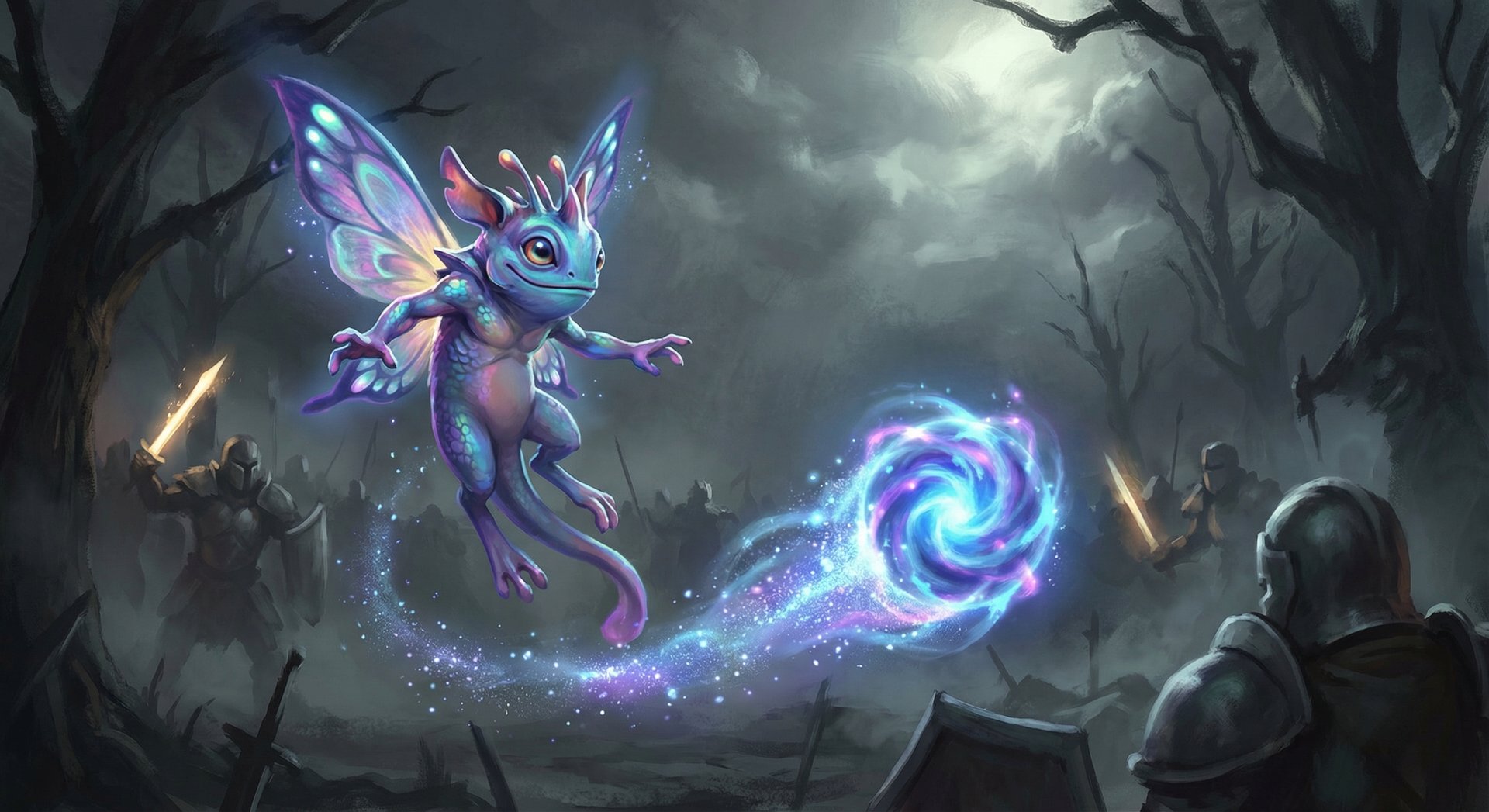
In the 7.41f meta, Puck sits comfortably as a solid mid pick. The hero was not directly nerfed in 7.41f — Puck’s kit remained unchanged. The main impact on Puck from 7.41f is the Octarine Core cost increase from 4900 to 5100 gold, which pushes back Puck’s mid-game power spike by roughly two to three minutes. Smart players adjust their gameplay and delay the big teamfight windows accordingly rather than forcing fights before Octarine comes online.
Puck excels when:
- The enemy has channeled abilities (Black Hole, Ravage, Fiend’s Grip) that Dream Coil disrupts
- The enemy relies on precise positioning (Sniper, Drow Ranger, Zeus)
- Your team wants aggressive rotations before minute 10
- The draft features heroes who synergize with forced positioning (Earthshaker, Magnus, Tidehunter)
Puck struggles when:
- The enemy has strong silences (Silencer, Skywrath Mage, Doom)
- Multiple point-and-click disables prevent Phase Shift from being useful
- The enemy can simply tank through 300 magical damage and trade favorably
- Your team has no follow-up for Dream Coil
Want to skip the learning curve and hit your target rank faster? Check out our best Dota 2 boosting services guide for options that let you climb while you study the meta.
Abilities Deep Dive
Illusory Orb (Q) — Puck’s Signature
Illusory Orb fires a slow-moving projectile in a straight line, traveling 1950 units and dealing 75/150/225/300 magical damage to all units it passes through. At any point during the orb’s flight, activating Ethereal Jaunt teleports Puck to the orb’s exact current location. This dual-function ability is what makes Puck one of the most mobile heroes in the game.
Hidden mechanics most players never use:
- The orb provides 450-radius flying vision along its entire path. Use it to check Roshan, scout high ground before a push, or see through trees before entering the jungle.
- Ethereal Jaunt has zero cast point. You can initiate the jaunt while casting Phase Shift, making the combined movement nearly instant.
- The orb travels for roughly 6.5 seconds at 651 units per second. Launch it in one direction, walk the opposite way, then jaunt back. Enemies who follow your body have no idea where the orb went.
- At level 1, Illusory Orb costs 80 mana — nearly a third of Puck’s mana pool. Manage mana carefully in the opening minutes. Bottle and Clarities are non-negotiable early purchases because of this.
- The orb passes through spell-immune units but still deals damage to non-immune targets it hits along the path.
Waning Rift (W) — The Silent Weapon
Waning Rift silences and damages all enemies within 400 units of Puck. At max level, the silence duration reaches 4 seconds and the damage hits 200 magical. The silence prevents enemies from casting spells, which makes Waning Rift devastating against heroes who rely on one key ability to survive (Anti-Mage’s Blink, Invoker’s Cold Snap, Storm Spirit’s Ball Lightning).
Key Waning Rift interactions:
- The silence does NOT break with the target moving away from Puck — it applies on cast and persists for its full duration regardless of distance.
- With the Level 10 talent (+60 Waning Rift cast range), you can silence enemies who are just outside normal combo range.
- Waning Rift silences through Spell Immunity only when Puck has the Level 25 talent that applies Break. In all other cases, BKB-active enemies are not silenced.
- The ability’s short cooldown (14/12/10/8 seconds) means you can use it twice in extended fights.
Phase Shift (E) — The Invulnerability Tool
Phase Shift makes Puck completely invulnerable and untargetable for up to 3.25 seconds (0.25 seconds at level 1, scaling to 3.25 at level 4). During Phase Shift, Puck cannot act but cannot be hurt, disabled, or targeted. This ability is unique in Dota 2 — no other hero has true invulnerability on a standard ability (not an item or ultimate).
How to use Phase Shift correctly:
- Reaction tool: Activate Phase Shift when you see a high-damage ability incoming (Finger of Death, Ravage, Black Hole). You can dodge virtually any targeted or area spell if your reaction time is fast enough.
- Combo component: Use Phase Shift between Illusory Orb and Ethereal Jaunt to create a seamless gap-close that enemies cannot interrupt.
- Bait tool: Phase Shift into a position where enemies will commit spells, then reappear after they waste their cooldowns.
- Important limitation: Phase Shift does not protect against persistent aura effects, damage-over-time that was already applied, or the effects of Doom (which prevents Phase Shift activation entirely).
Dream Coil (R) — The Teamfight Ultimate
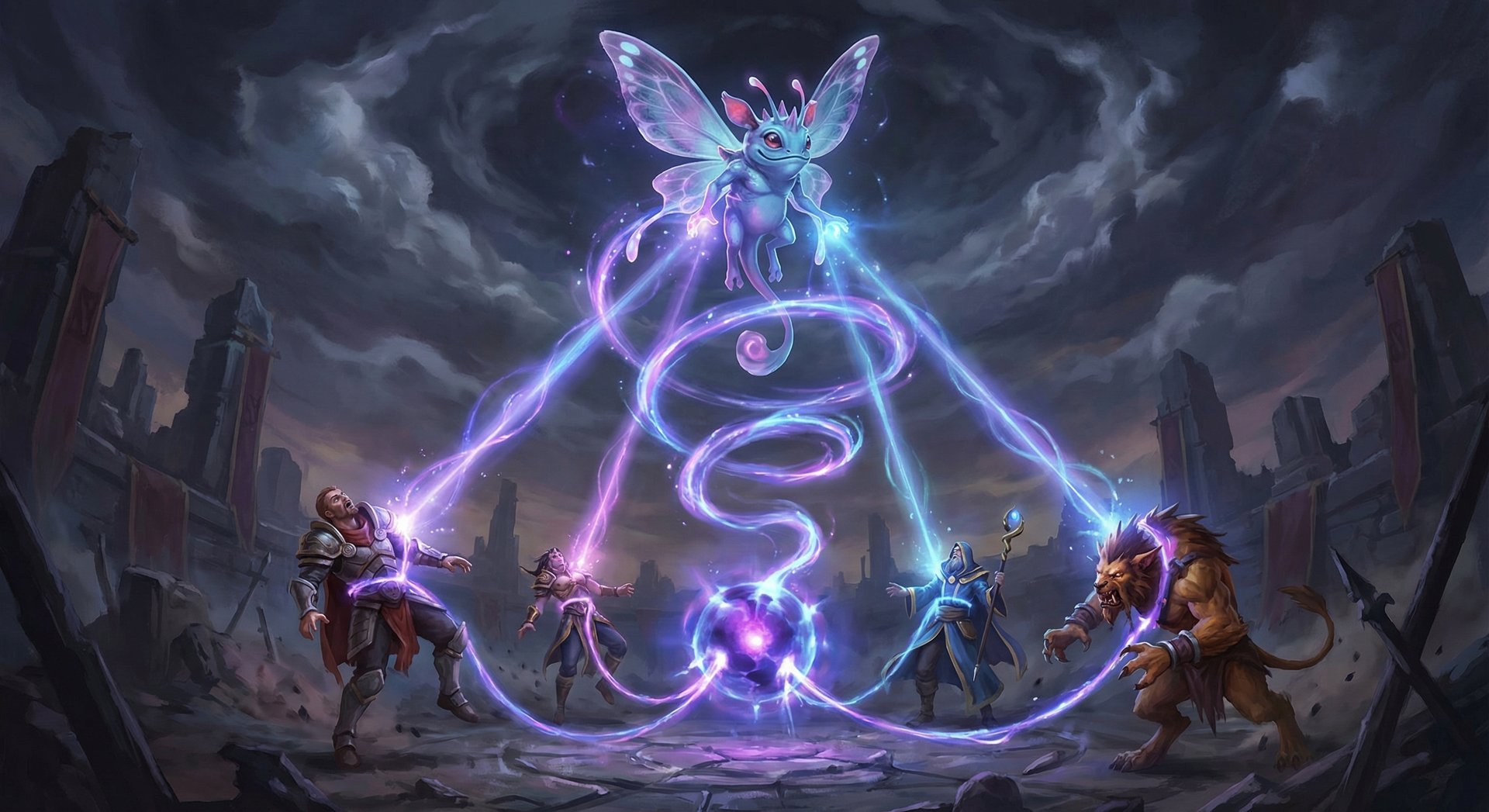
Dream Coil creates a pulsing coil at a target location, stunning enemies in the area for 0.5 seconds on cast, then leashing all affected heroes to the coil’s origin. If a leashed hero moves more than 350 units from the coil origin before the leash expires (6 seconds at max level, extendable with talents), the leash breaks and deals 300/400/500 magical damage plus an additional 2.5-second stun.
The two ways Dream Coil wins fights:
- Passive control: Enemies who respect the coil and stay near it are clustered together, unable to use their full movement to reposition. Your team gets to fight them in a confined space.
- Forced punishment: Enemies who try to flee or BKB-out trigger the break damage and stun, often dealing 500 magical damage to multiple heroes simultaneously.
- BKB interaction (critical): Dream Coil DOES affect BKB-active enemies. The coil applies through Spell Immunity. Only the leash break stun is blocked by BKB — the initial 0.5-second stun and the movement restriction are not.
- Linken’s Sphere interaction: Dream Coil is a single-target ability in terms of targeting, but the area effect is not blocked by Linken’s. If a hero with Linken’s is in the radius, they still get coiled.
Skill Build Order
Puck’s skill build has evolved slightly in the 7.41 meta cycle toward faster Illusory Orb leveling for the damage output in mid lane.
| Level | Skill | Reason |
|---|---|---|
| 1 | Illusory Orb (Q) | Harass, last hit assist, escape option immediately available |
| 2 | Waning Rift (W) | If you have a kill opportunity at level 2, silence enables it |
| 3 | Illusory Orb (Q) | Increased damage — Puck’s primary harass tool |
| 4 | Phase Shift (E) | Survival against ganks; 1 level gives meaningful invulnerability |
| 5 | Illusory Orb (Q) | Max Q ASAP for peak damage and repositioning |
| 6 | Dream Coil (R) | Take ultimate whenever available |
| 7-8 | Illusory Orb (Q) then Waning Rift (W) | Max Q first, then W |
| 9-11 | Waning Rift (W) | Max W second for longer silence duration |
| 12-13 | Phase Shift (E) | Max Phase Shift last — extra seconds matter but rarely decide fights |
Alternative build (kill-heavy lane): If you have a lane kill setup at level 2-3 and want to maximize burst, level Waning Rift at 3 instead of Illusory Orb. The silence at level 2 combined with even level 1 Illusory Orb damage can delete squishy mids early. This is more of a situational call against heroes like Sniper or Queen of Pain who have no instant escape.
Talent Tree (7.41f Standard Picks)
| Level | Recommended Pick | Alternative | Notes |
|---|---|---|---|
| 10 | +2 Illusory Orb Charges | +25 Attack Damage | Double Orb doubles your repositioning and escape options — almost universally correct |
| 15 | +60 Waning Rift Cast Range | +3 Illusory Orb Speed | Cast range lets you silence heroes you cannot physically reach — more impactful in 9 out of 10 games |
| 20 | +4s Dream Coil Duration | Phase Shift max duration +3s | 10-second Dream Coil is devastating in late-game teamfights; longer leash means more forced breaks |
| 25 | Waning Rift Applies Break | Dream Coil Stuns on Initial Contact | Break shuts down key passives (Juggernaut, PA, Lifestealer, Abaddon); pick stun if you need raw AoE lockdown |
Item Builds by Rank (7.41f)
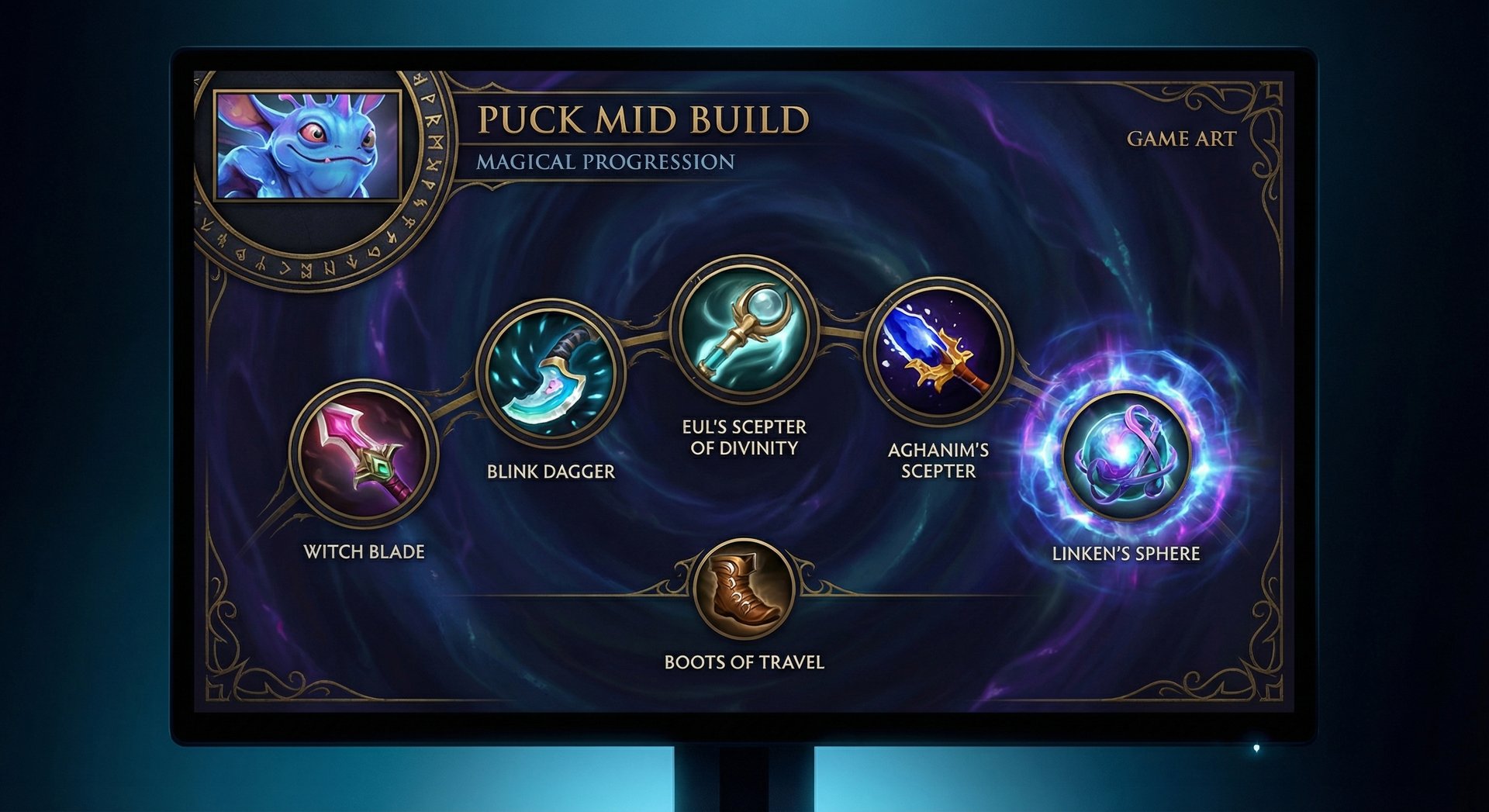
Puck’s item build in 7.41f is shaped significantly by the Octarine Core cost increase to 5100 gold (up from 4900g). This 200g increase may seem small, but it pushes Puck’s core timing back by two to three minutes in an average game. At Divine-Immortal, players adjust by either delaying the Octarine window or rushing it by skipping a mid-game item. At lower brackets, this timing adjustment is less noticed but still matters for power spike windows.
| Bracket | Starting Items | Early Game | Core Items | Late Game |
|---|---|---|---|---|
| Herald – Crusader | Null Talisman, Tango x2, Clarity x2 | Bottle, Phase Boots | Kaya, Blink Dagger, Aghanim’s Scepter | Octarine Core (5100g), Scythe of Vyse |
| Archon – Legend | Null Talisman x2, Tango, Clarity x2 | Bottle, Phase Boots or Treads | Witch Blade, Kaya, Blink Dagger | Octarine Core, Aghanim’s Scepter, Linken’s Sphere |
| Ancient – Divine | Null Talisman x2, Tango, Clarity, Faerie Fire | Bottle, Phase Boots | Witch Blade, Kaya, Blink Dagger, Eul’s Scepter | Octarine Core, Aghanim’s Scepter, Scythe of Vyse |
| Immortal | Null Talisman x2, Tango, Clarity, Faerie Fire | Bottle, Phase Boots | Witch Blade or Eul’s, Blink Dagger, Kaya | Octarine Core, Aghanim’s Scepter, Scythe of Vyse, Ethereal Blade |
Core Items Explained
Witch Blade is one of the strongest early purchases on Puck in 7.41f. The item provides attack speed, intelligence, and a slowing poison on attacks — but more importantly, it gives Puck a reliable way to apply the slow for chasing targets who walk out of Waning Rift range. The 225 bonus damage proc on your next attack synergizes well with Puck’s pattern of jumping in, silencing, and then auto-attacking before blinking away. Budget: 2600 gold.
Blink Dagger transforms Puck from a reactive hero into an initiator. Without Blink, Dream Coil requires you to close distance with Illusory Orb (which alerts enemies). With Blink, you can silently close 1200 units and drop Dream Coil on five grouped heroes with no warning. The timing goal is Blink before minute 20 in most games. At Immortal level, Blink arrives between minutes 14-17 depending on lane dominance.
Eul’s Scepter of Divinity is situationally stronger than Blink in games where you need to cyclone yourself defensively or set up a specific kill pattern. Eul’s gives mana regen that Puck genuinely needs, and the combo of Eul’s into Dream Coil (cyclone a priority target, time the landing, Dream Coil when they land) is devastatingly reliable against single-target threats. Build Eul’s when the enemy has strong single-target lockdown that you need to dodge.
Aghanim’s Scepter upgrades Illusory Orb significantly — the orb now leaves behind a mirror image of Puck that lasts 4 seconds and attacks enemies. This upgrade makes the orb a harassment tool, a scout, and a fake Puck all at once. The illusion procs your attack effects and can body-block enemies. In 7.41f this remains one of Puck’s best mid-game power spikes.
Octarine Core at 5100g (the 7.41f price) is still Puck’s best late-game item for sustained teamfight presence. The cooldown reduction applies to all abilities AND items, meaning Dream Coil, Blink Dagger, and Eul’s all come back faster. A fully built Octarine Puck effectively has Dream Coil available every 70 seconds instead of every 100 seconds. The budget adjustment: if you were previously farming Octarine as your third item, consider going Aghanim’s first and Octarine fourth in 7.41f.
Situational Items
- Linken’s Sphere — Build against single-target disables that counter you (Doom, Hex, Laguna Blade). Linken’s does NOT protect you from Dream Coil applied to yourself by the enemy Puck in mirror matchups.
- Scythe of Vyse — Build when you need hard single-target disable on top of Dream Coil. Hex a priority threat before coiling the group.
- Ethereal Blade — Late-game DPS amplifier that synergizes with Puck’s magical damage kit. The 40% amplification on an enemy that is ethereal combined with Puck’s full ability combo can burst down even high-HP targets.
- Force Staff — Cheap escape option and repositioning tool. Build this if the game is going poorly and you need an emergency escape mechanism before Blink is completed.
Laning Phase Masterclass
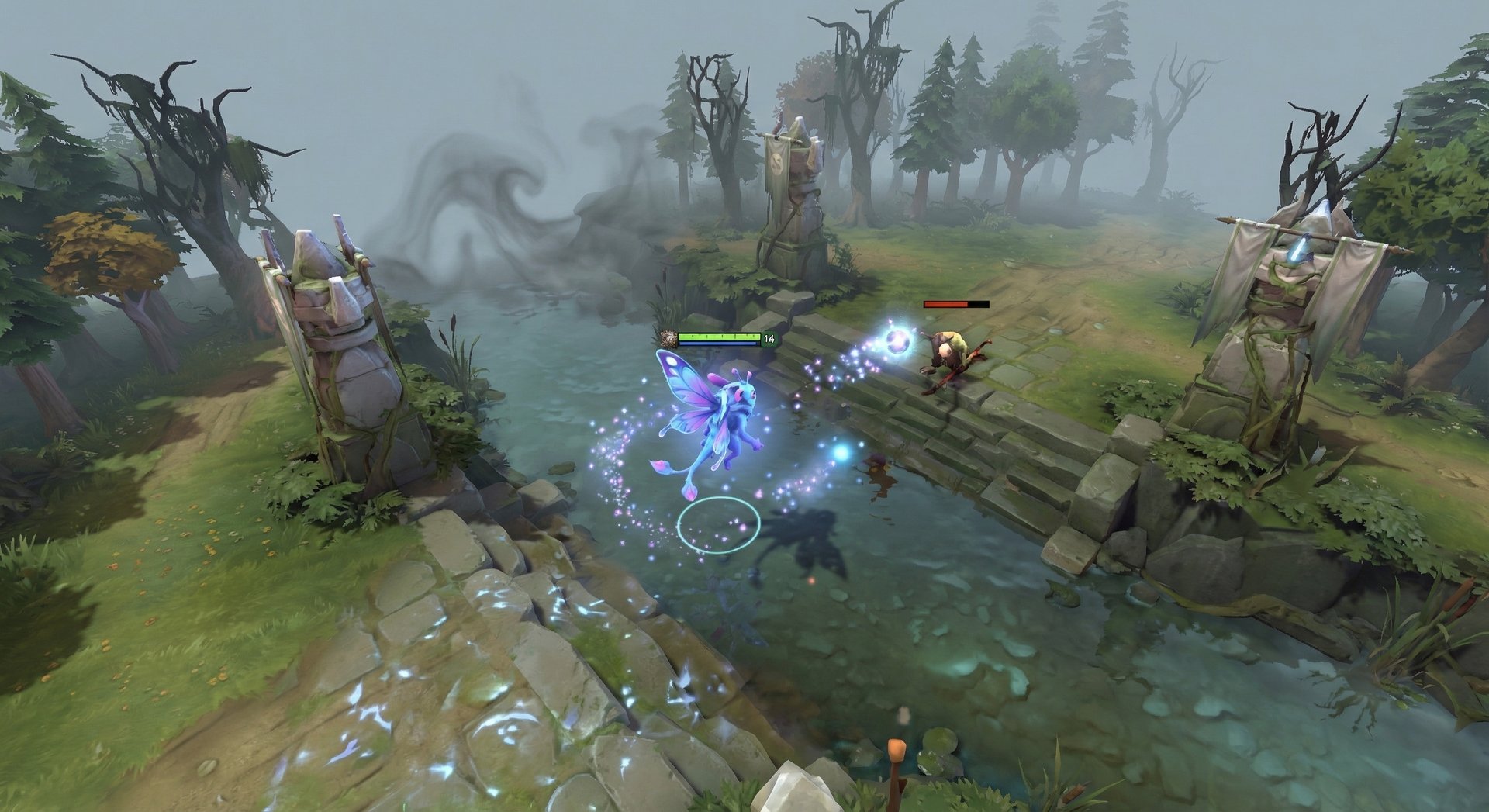
Puck’s laning phase has one primary goal: deny the enemy mid their Bottle rune cycle while building your own gold lead. This is achieved through constant Illusory Orb harassment, aggressive last-hitting with Phase Boost auto-attacks between ability casts, and smart use of Ethereal Jaunt to escape ganks.
Minute-by-Minute Laning Framework
0:00 – 2:00 (Opening): Take mid, grab the first Bounty rune if it is on your side. Use your starting Null Talismans and Clarities to stay in lane. Your priority is last-hitting and denying creeps. Use Illusory Orb once at level 1 only if you have a guaranteed hit on the enemy hero — wasting it on a miss leaves you mana-starved.
2:00 – 6:00 (Harassment phase): Once you hit level 3 with two levels of Illusory Orb, begin actively harassing with the orb on cooldown while the enemy mid goes for last hits. The pattern: wait for them to commit to a creep attack, fire the orb as they are mid-animation, Ethereal Jaunt to close gap or escape depending on their reaction. At level 4 with Phase Shift, you can bait out enemy ganks — stand aggressively until you see the gank coming, then Phase Shift and Jaunt away.
6:00 – 10:00 (Rotation window): Puck at level 6 with Dream Coil is one of the strongest roaming heroes in the game. After securing your Bottle and knowing your Bounty rune timings, look for a rotation to one of the side lanes. Even a failed gank attempt is valuable because it forces enemy wards and caution. Successful kills at this stage snowball into early items that let you dictate mid-game pace.
Internal links for your progression: see our MMR boosting guide for how Puck fits into modern boosting strategies and rank climb plans.
Lane Matchup Notes
Favored matchups (lane) — Sniper, Zeus, Invoker early: All three are vulnerable to Illusory Orb harassment because they are ranged but have no immediate escape. Sniper has no mobility. Zeus has Heavenly Jump but it has a delay. Invoker at levels 1-5 often prioritizes Exort stacks which limits defensive responses.
Hard matchups (lane) — Silencer, Skywrath Mage, Lina: All three can silence you, preventing Illusory Orb and Phase Shift. Silencer’s Global Silence hard counters you in teamfights. Skywrath Mage can solo kill Puck with a silence-stun-burst combo. Against these heroes, play passively, farm safely, and wait until you have Blink to re-engage on your terms.
Mid and Late Game Transitions
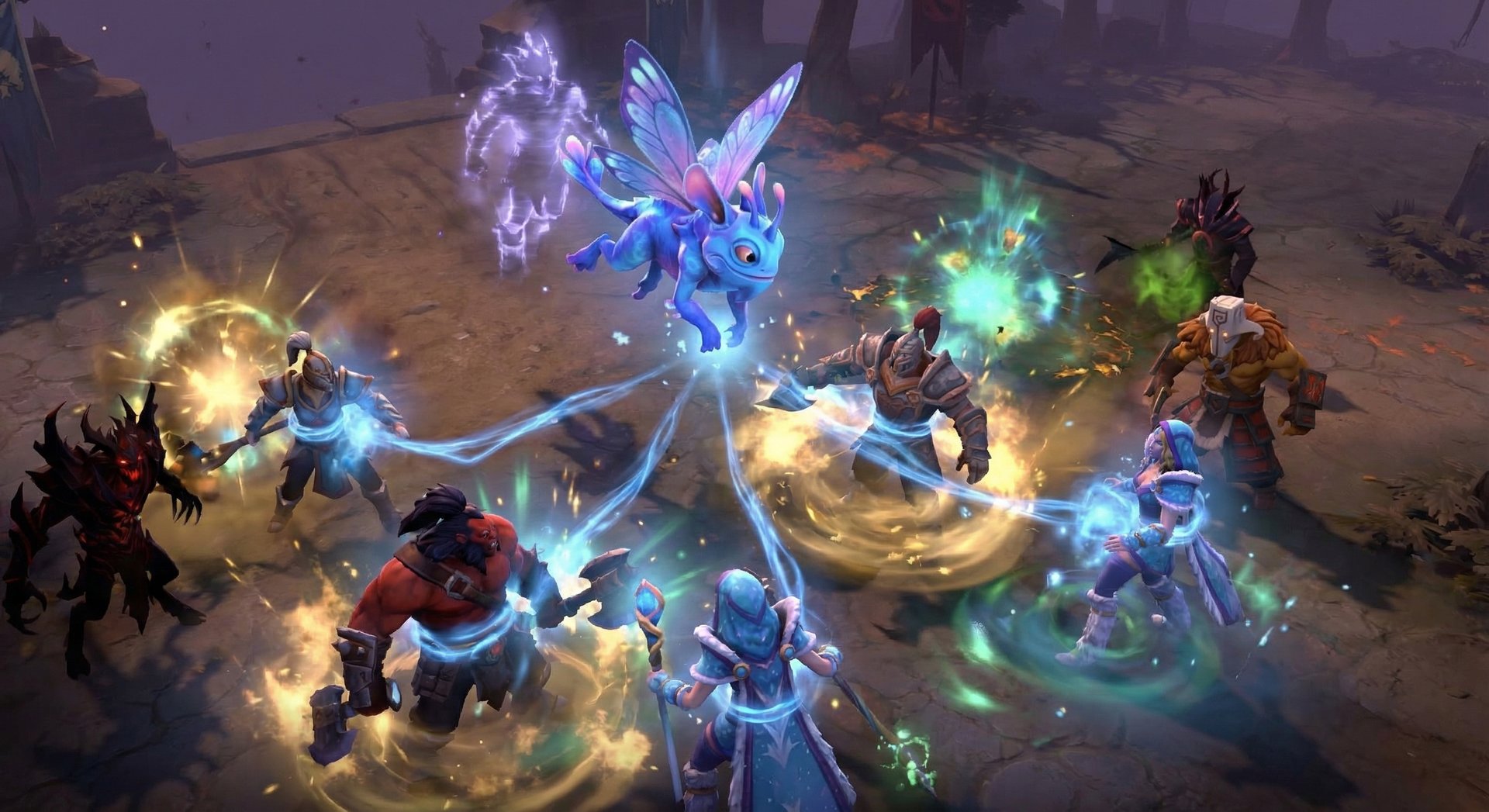
Puck’s mid-game identity in 7.41f is built around the Witch Blade plus Blink Dagger purchase window (roughly minutes 15-22 depending on the game). Once you have Blink, every fight should begin with a Dream Coil on grouped enemies. Your job in mid-game fights is not to deal the most damage — it is to prevent the enemy team from using their escape abilities and to cluster them for your team.
The Dream Coil Positioning Formula
This is the single most important skill to develop on Puck. Dream Coil is only as good as your positioning before you cast it. Follow this checklist before every Dream Coil:
- Identify the grouping: Dream Coil needs at least 2 enemies to be worth casting. Three or more enemies grouped is the ideal scenario.
- Find a Blink angle that lands you 350 units from all targets: If you Blink too close, they can spread out without breaking the leash. Too far and you miss the initial stun entirely.
- Check for silences before committing: If an enemy Silencer has Global Silence up, delay your Blink. A silenced Puck who has wasted Blink cooldown is a dead Puck.
- Use Waning Rift immediately after Dream Coil: The silence prevents enemies from using escape abilities. The 4-second silence at max level means BKB-less heroes cannot respond at all.
When Puck Peaks
Puck’s power spike windows in 7.41f align with specific item purchases. The first significant spike is at Blink Dagger — initiation becomes reliable. The second spike is at Aghanim’s Scepter — Illusory Orb becomes a deceptive threat as well as mobility. The third and biggest spike is at Octarine Core (5100g in 7.41f) — Dream Coil comes back so fast that Puck can appear to have near-permanent control over teamfights.
In the late game (after minute 35), Puck’s primary risk is single-target lockdown from enemies who have built Linken’s Sphere or BKB. Your role at this stage is to use Dream Coil as a zoning tool rather than a pure initiation — force enemies to cluster into positions that your team’s AoE can punish, then drop the coil to ensure they cannot scatter.
Counters and How to Beat Them
Hero Counters — The Five You Need to Know
1. Silencer: The hardest counter to Puck in Dota 2. Global Silence completely disables Phase Shift, Illusory Orb, Waning Rift, and Dream Coil simultaneously. Even a well-executed Dream Coil setup gets undone if Silencer Global Silences mid-cast. Counterplay: build Linken’s Sphere (blocks the targeted Int Steal), play around Silencer’s silence cooldown (it has a 160-second base cooldown at max level), and avoid initiating when Global Silence is likely up.
2. Doom: Doom’s eponymous ultimate prevents Puck from using ANY abilities, including Phase Shift. A Doomed Puck is a dead Puck in almost every scenario. Counterplay: Linken’s Sphere blocks the targeted Doom cast. If you see a Doom on the enemy team, Linken’s should be in your build regardless of other considerations.
3. Bane: Fiend’s Grip channels for up to 5 seconds and prevents movement and abilities. Dream Coil’s leash can actually interrupt Fiend’s Grip (because the leash forces the caster to move), but if Bane catches Puck before Dream Coil, the result is a dead Puck. Counterplay: Phase Shift on reaction to Fiend’s Grip cast animation. The cast animation is readable if you watch for it.
4. Skywrath Mage: Concussive Shot plus Ancient Seal (which silences AND reduces magic resistance) turns Puck into a fragile target with no Phase Shift access. The magical burst that follows destroys Puck’s low health pool. Counterplay: Linken’s Sphere blocks Ancient Seal. Otherwise, respect Skywrath’s kill range and never stand within 1000 units without BKB or Eul’s available.
5. Lion: Hex into Finger of Death deals enormous single-target burst before Puck can Phase Shift. Hex prevents ability use entirely. Counterplay: Linken’s Sphere. Build it against Lion every time. Alternatively, Eul’s yourself when you see the Hex incoming (requires fast reaction).
Heroes Puck Destroys
Puck’s combination of silence, invulnerability, and teamfight control creates specific matchups where Puck has a clear structural advantage:
- Anti-Mage: AM relies on Blink for survivability. Waning Rift silences Blink and Phase Shift means Puck can dodge Mana Void. Dream Coil on a split-pushing AM punishes the positioning AM naturally assumes.
- Tidehunter: Ravage is a 2.52-second channel. Dream Coil forces Tidehunter to choose between staying in place (and letting the Ravage stun pass harmlessly) or breaking the leash and eating 500 damage plus a stun. Either way, Tide loses.
- Enigma: Black Hole channels for 4 seconds. Dream Coil forces Enigma to break the channel by moving or stay in position and have the Black Hole hit Enigma’s own team as they bunch up inside the coil. Illusory Orb can travel into Black Hole range without Puck committing.
- Sniper: Sniper has no mobility. Puck’s Illusory Orb harassment wins the lane. In teamfights, Dream Coil forces Sniper into melee range of the fight rather than maintaining safe distance.
- Storm Spirit: Storm Spirit’s Ball Lightning is useless if Storm stays near the Dream Coil. If Storm breaks the leash, the burst damage plus the 2.5-second stun at max range often kills Storm outright. This matchup heavily favors Puck in the mid lane.
How Pros Play Puck in 7.41f
The professional meta for Puck in 7.41f — developed through TI 2026 and the post-TI patch cycle — shows a clear preference for Blink Dagger before Aghanim’s Scepter in most games. The reasoning: at high levels, Aghanim’s Scepter Illusory Orb illusions are somewhat readable by experienced enemies who know to ignore the image. Blink enables reliable initiation that remains relevant at every rank.
Pro players at 9000+ MMR frequently incorporate a Wind Waker in their Puck build as a fourth or fifth item. Wind Waker provides the ability to self-cast (cyclone yourself to avoid spells) and has synergy with the Octarine Core cooldown reduction that pub players under Divine rank rarely capitalize on.
The key pattern you see pros execute that most pub players miss: using Illusory Orb as a scout during enemy rotations. Before walking into the jungle, fire an orb through the most likely gank path. This costs 80-140 mana but provides vision that saves your life in exchanges. At the pro level, Puck almost never walks into fog without scouting with an orb first.
Post-TI 2026, several pro players also began running Eul’s Scepter as their first major item ahead of Blink. The rationale: Eul’s provides mana, movement speed, and a reliable setup combo (Eul’s on enemy, land when they drop, Dream Coil immediately) that does not require the precise Blink positioning that harder-punishing opponents can deny by spreading out.
Rank-Specific Climbing Guide

Herald to Guardian: Learn the Orb
At this bracket, the most common Puck mistakes are: casting Illusory Orb with no intention of Ethereal Jaunting, not using Phase Shift at all, and buying items in random order without a plan. Your focus at this bracket is mechanical: use Illusory Orb every time it is off cooldown in lane (as harassment, not just escape), use Phase Shift every time you take more than 200 damage in a short period to check whether you could have avoided it, and follow a simple item build (Bottle — Phase Boots — Witch Blade — Blink).
Crusader to Archon: Add the Rotation
At Crusader-Archon, Puck players must begin using Dream Coil for side lane rotations before minute 15. The single biggest MMR gain at this bracket comes from walking to the safelane or offlane at minute 7-9 (once you have Bottle and level 6), casting Dream Coil on a grouped lane, and letting your teammates follow up. You will win at least 40% of these rotation attempts at this bracket simply because enemies have no vision of your approach and no plan for Dream Coil.
Legend to Ancient: The Macro Leap
At Legend-Ancient, mechanics are no longer the limiting factor — it is game sense. Puck players at this range need to understand when NOT to initiate. The classic mistake is Blinking into four enemies because one was slightly out of position, losing Blink cooldown, and getting killed. The correct play is waiting until the enemy clusters naturally (Roshan attempt, high ground defense, smoke rotation) and landing Dream Coil on the maximum number of targets.
Divine to Immortal: Timing Windows and Phase Shift Mastery
At Divine-Immortal, the gap between a good Puck and a great Puck is Phase Shift reaction time. Great Puck players at this bracket Phase Shift not just against incoming spells but against potential spells — they read the enemy’s mouse movement and positioning to predict what is coming 0.3 seconds before it lands. This requires watching four things simultaneously: your own HP, the enemy’s spell cooldown indicators, their positioning relative to you, and your Ethereal Jaunt window.
If you want to fast-track climbing out of Divine or hit Immortal before the next calibration window, our Dota 2 coaching service pairs you with Immortal coaches who specialize in hero-specific micro improvements that YouTube guides cannot replicate.
Tips and Tricks
Advanced Mechanics Most Players Never Learn
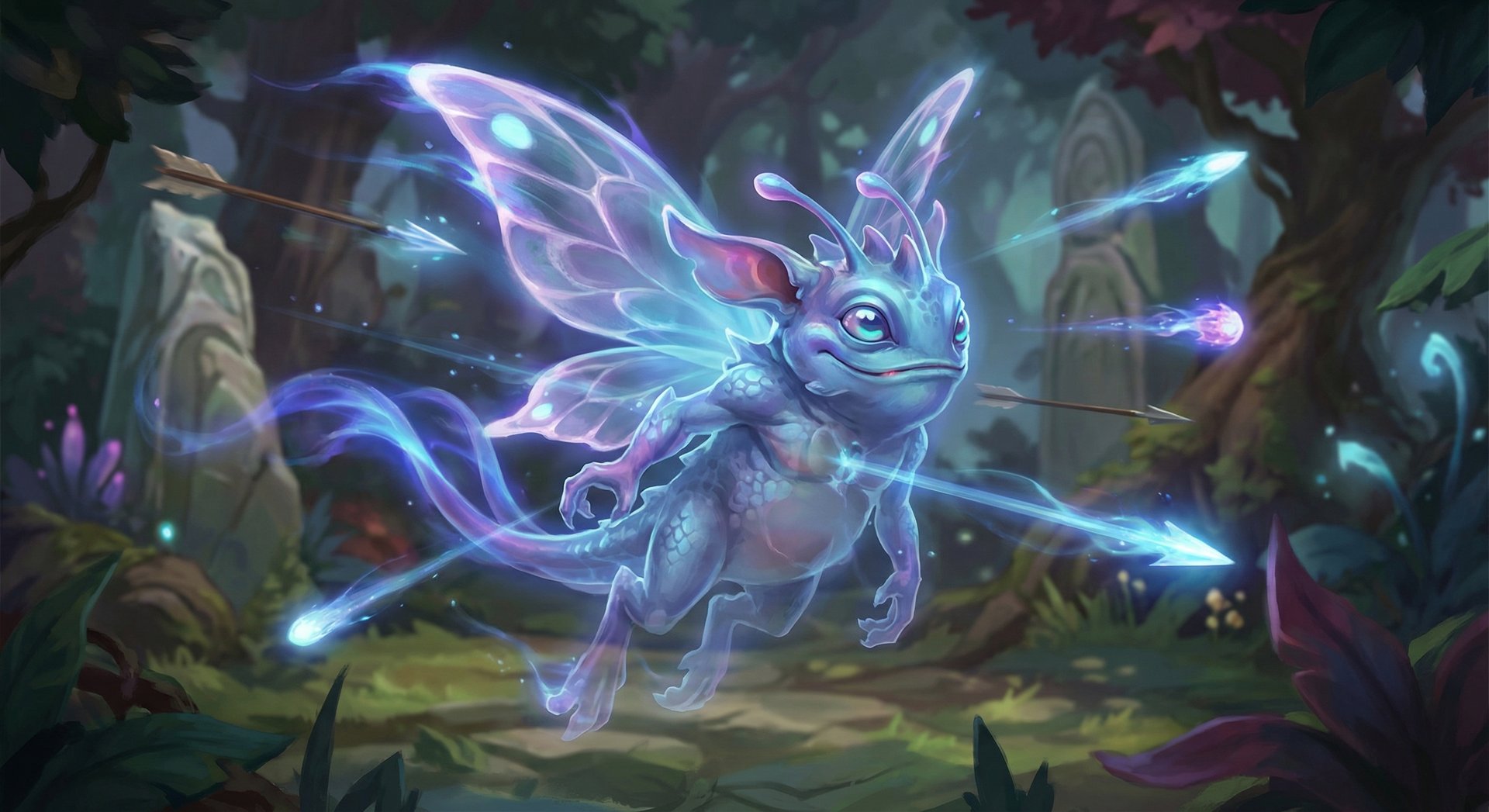
- The Bait Jaunt: Fire Illusory Orb directly away from where you want to go. Walk toward the fight or enemy. At the last second, Jaunt to the orb (which is now behind you and moving further away). You have effectively teleported 1950 units backward while the enemy thought you were committing to an engagement. This is one of the most disorienting escapes in the game.
- Phase Shift into Jaunt: Activate Phase Shift first (invulnerability), then activate Ethereal Jaunt while you are in Phase Shift. Because Jaunt has zero cast point, the teleport executes immediately when Phase Shift ends. You appear at the orb’s location with no cast animation visible to enemies.
- Dream Coil on Roshan: If the enemy team is taking Roshan, Dream Coil lands on Roshan just as well as on heroes. The leash forces heroes who entered the Rosh pit to either stay bunched up (letting your team fight them in the pit) or break the leash and eat the burst damage. This is one of the strongest Rosh-prevention tools in the game.
- Waning Rift cooldown tracking: At max level, Waning Rift has an 8-second cooldown. In extended fights, you can apply the 4-second silence TWICE. Most Puck players forget this and treat Waning Rift as a one-shot ability per engagement.
- Illusory Orb provides vision before you jaunt: If you are unsure whether the enemy is waiting in fog on the other side of a tree line, fire an orb through the trees first. The 450-radius flying vision will reveal any waiting enemies. Only Jaunt if the path is clear.
Common Mistakes to Stop Making
- Casting Dream Coil on a single target — this wastes your most powerful teamfight ability on what is effectively just a hex
- Forgetting that Phase Shift does NOT protect against Doom — if Doom is in the game, build Linken’s Sphere
- Using Illusory Orb reactively instead of proactively — fire the orb before trouble appears, not after
- Building Octarine Core as your first major item in 7.41f — at 5100g this is too slow; get Blink or Eul’s first
- Standing near ally Black Hole or Ravage without a Phase Shift or Eul’s available — friendly fire from your own team’s AoE kills Puck constantly in pubs
Frequently Asked Questions
Yes. Puck was not directly nerfed in 7.41f and remains a strong mid lane pick. The only meaningful 7.41f impact on Puck is the Octarine Core cost increase to 5100g, which slightly delays the hero’s late-game power spike. Puck is particularly strong right now because several of the buffed heroes in 7.41f (Ursa, Anti-Mage) are exactly the type of scaling carries that Puck’s Dream Coil disrupts.
Puck is a mid-lane control hero whose primary job is teamfight initiation and disruption. You are not the highest damage dealer on the team — you are the hero who prevents enemies from escaping, forces enemy heroes into clustered positions for your team’s AoE, and denies key ability uses with Waning Rift and Phase Shift timings. Think of Puck as the team’s fight controller, not the damage carry.
BKB partially counters Puck but does not shut the hero down completely. Dream Coil’s initial application and the movement restriction both work through Spell Immunity — the leash break stun is blocked by BKB, but the forced positioning is not. At max level, the Level 25 talent that applies Break to Waning Rift strips BKB from the passive interaction entirely. BKB delays your impact but does not negate you the way it does against purely magical damage heroes.
Build Linken’s Sphere when the enemy has a hard single-target disable that bypasses Phase Shift — specifically Doom, Lion’s Hex, or Silencer’s Ancient Seal. Linken’s blocks the targeted cast of all three. Against lineups without these threats, Linken’s is not worth the 4900g compared to Octarine Core or Aghanim’s Scepter for teamfight impact.
Puck pairs best with supports that have strong AoE follow-up for Dream Coil — Earthshaker (Echo Slam), Magnus (Reverse Polarity), and Tidehunter (Ravage) are the classics. In the current 7.41f meta, Dawnbreaker is a strong pair because Solar Guardian into Dream Coil forces enemies to choose between staying and eating the stun or breaking the leash for 500 damage. Any support with a channeled AoE ultimate that enemies must move to avoid is a natural Puck partner.
Puck is a high-skill-ceiling hero with a moderate floor. You can play Puck at a functional level in two to three weeks of dedicated play — the Phase Shift reactions and Illusory Orb usage become second nature quickly. Mastery that separates good Puck from great Puck (Dream Coil timing, bait Jaunt execution, Phase Shift prediction) takes months. Puck rewards the time investment significantly more than most mid heroes.
Puck is rarely viable as a support in serious play because the hero’s impact scales heavily with items. A pos 4 Puck with no Blink can disrupt fights with Dream Coil, but the hero is too fragile and too item-dependent to function as a traditional support. Some players run Puck as pos 3 (offlane) in specific drafts where Dream Coil’s disruption value is maximized by the draft, but pos 1 mid is almost always correct.
The most effective Puck counters in 7.41f are Silencer (Global Silence shuts down Phase Shift), Doom (Doom prevents all ability use including Phase Shift), and Bane (Fiend’s Grip if it lands before Phase Shift). Building Linken’s Sphere addresses Doom and Lion. Against Silencer, tracking Global Silence cooldown and playing aggressively when it is down is the key adaptation. See the Counters section above for full counterplay strategies.
Want to Accelerate Your Puck Mastery?
Puck’s ceiling is high — but learning Dream Coil timing, Phase Shift reactions, and 7.41f item paths takes real time. Our Immortal coaches have played thousands of Puck games and can identify exactly what is holding your MMR back in a single session. Alternatively, if you need a rank target hit before the next calibration window, our boosting team works with your schedule.
Get Puck Coaching Boost My MMR