How to Master Huskar in Dota 2: The Ultimate Guide for Every Rank (2026)

Huskar is one of the most polarizing heroes in Dota 2. When he works, he feels absolutely unstoppable — a berserker troll warrior who gets stronger the closer he is to death, turning fights that should be lost into solo rampages. When he does not work, he feeds relentlessly and makes your team play 4v5. There is no in-between with this hero.
In the current 7.40 meta, Huskar sits at roughly a 52% winrate across all brackets according to Dotabuff, with significantly higher winrates in Divine and Immortal where players understand his timing windows. He remains one of the best last-pick mid heroes in the game — a draft weapon that can single-handedly win lanes and snowball games before the enemy team finds their footing.
This guide will take you from understanding Huskar’s basic mechanics to executing the kind of aggressive, calculated plays that 7K+ Immortal players use to dominate pubs. Whether you are a Herald learning the hero for the first time or a Divine player looking to refine your Huskar game, every section is built around practical, rank-specific advice you can use immediately.
Table of Contents
Why Huskar Is Dota’s Most Dangerous Berserker
Huskar occupies a unique design space in Dota 2. He is a strength-based mid hero who functions as an aggressive tempo carry, and his entire kit revolves around one concept: the lower his health, the more dangerous he becomes. This inverse relationship between health and power is what makes Huskar simultaneously terrifying to face and thrilling to play.
His primary role is mid lane, though he occasionally shows up as an offlaner in specific matchups. He excels as a last-pick hero because his effectiveness depends heavily on the enemy draft. Against lineups with limited burst damage, percentage-based damage reduction, or heroes that rely on magical damage, Huskar can feel like an unkillable raid boss who just runs at you with burning spears while healing through everything.
Pros
- Extremely strong laner — wins almost every 1v1 mid matchup
- Snowballs incredibly hard with early kills
- Built-in magic resistance makes him tanky against spell-heavy lineups
- Life Break is one of the best gap-closing abilities in the game
- Forces enemy teams to draft around him when last-picked
- Can solo Roshan earlier than almost any other hero
Cons
- Extremely draft-dependent — hard counters shut him down completely
- Falls off hard in late game against farmed carries
- Pure damage and break effects destroy him
- Requires aggressive playstyle that punishes mistakes severely
- Limited farming speed without kills
- Ancient Apparition’s Ice Blast is basically a death sentence
What makes Huskar special in pubs is his ability to compress game timings. A good Huskar player does not want to play a 40-minute game. He wants to dominate the lane, get Armlet by 8-10 minutes, start taking towers and Roshan, and end the game before the enemy carry comes online. If you like heroes that dictate the pace of the entire match, Huskar is your hero.
His current winrate trends show he performs best in the 25-35 minute window, with a sharp dropoff after 40 minutes. This aligns perfectly with the aggressive, tempo-focused meta of patch 7.40 where early tower pushes and Roshan control win games.
Abilities Deep Dive
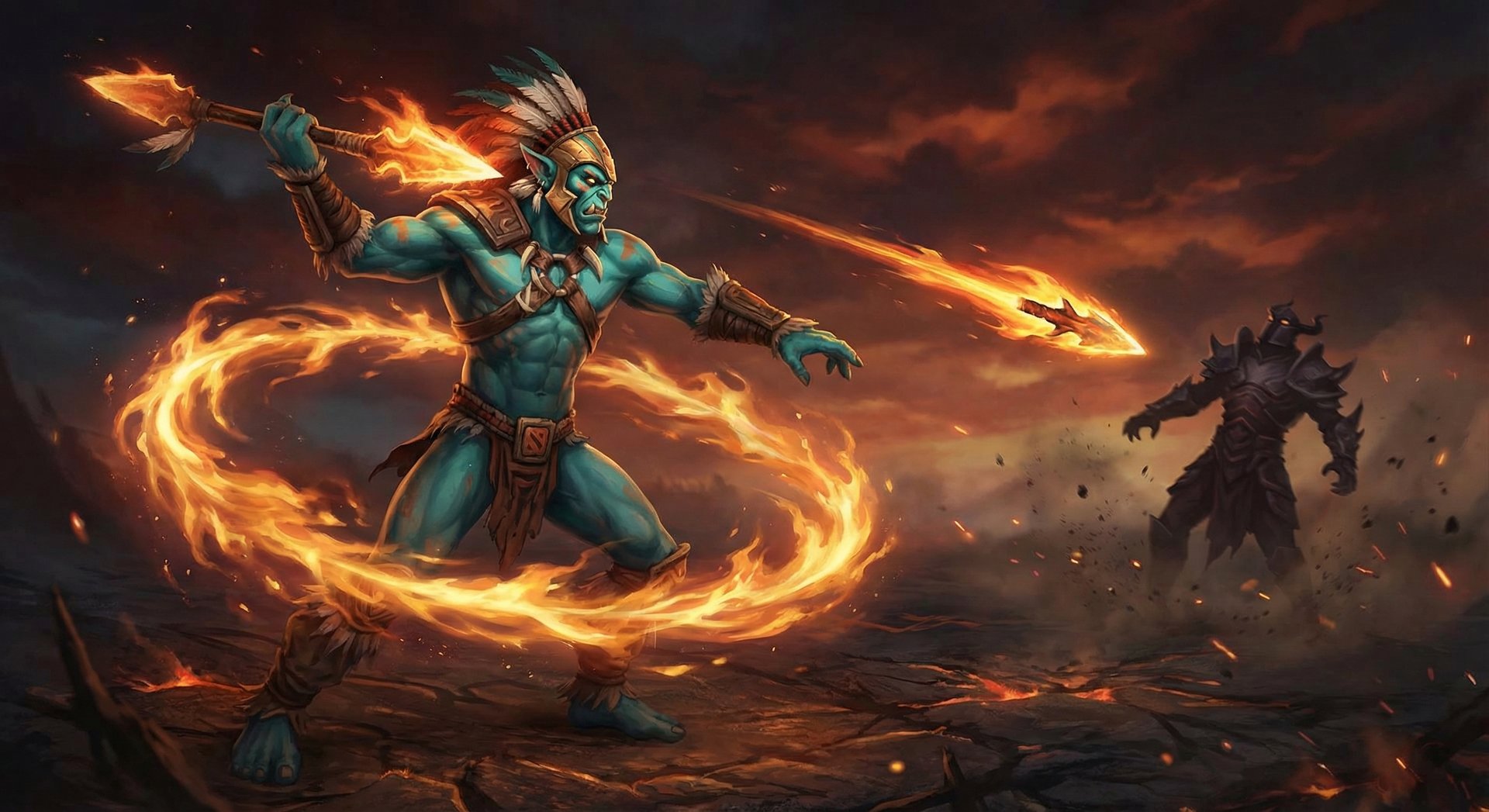
Inner Fire (Q)
Inner Fire releases a blast of sacred energy around Huskar, dealing magical damage to all nearby enemies and pushing them away while disarming them. This ability is often underestimated by newer Huskar players, but it is absolutely critical to his kit.
- Damage: 100/170/240/310 magical damage in a 500 radius
- Disarm Duration: 1.75/2.5/3.25/4 seconds
- Knockback: Pushes enemies 400 units away from Huskar
- Cooldown: 17/14/11/8 seconds
The disarm component is what makes this ability game-changing. A 4-second disarm at max level completely shuts down right-click carries in teamfights. Combined with Heaven’s Halberd (which also disarms), you can keep an enemy carry unable to attack for nearly 8 seconds.
Hidden mechanic: The knockback from Inner Fire interrupts channeling abilities. This means you can cancel Town Portal scrolls, Black Hole, Fiend’s Grip, and other channels just by pressing Q at close range. Many players waste stuns on channeling heroes when Huskar can do it passively while still attacking.
Burning Spear (W)
Huskar’s signature ability. Each attack applies a damage over time (DoT) stack that burns the enemy with sacred flames. The stacks are cumulative and deal magical damage per second. The catch Each attack costs Huskar a percentage of his current HP.
- DPS per stack: 5/10/15/20 magical damage per second
- Stack duration: 8 seconds
- HP cost: 4% of current HP per attack
- Max stacks: Unlimited (stacks refresh duration on reapplication)
The key interaction here is that Burning Spear is a self-cast orb effect, which means it does not draw creep aggro when manually cast (toggling auto-cast will draw aggro). This is critical for laning — you can harass the enemy mid with Burning Spears without taking any creep damage, giving you a massive advantage in trades.
Advanced tip: Because each spear costs a percentage of current HP (not max HP), the actual HP lost per attack decreases as you get lower. At 500 HP, you lose 20 HP per spear. At 200 HP, you lose only 8. This synergizes perfectly with Berserker’s Blood — the lower you go, the less each spear actually costs you relative to the damage you deal.
Berserker’s Blood (E) — Passive
This is the ability that defines Huskar as a hero. Berserker’s Blood provides increasing attack speed and magic resistance as Huskar’s HP percentage drops. The bonuses scale linearly from full HP down to the threshold.
- Max Attack Speed Bonus: 120/180/240/340
- Max Magic Resistance Bonus: 20%/30%/40%/50%
- HP Threshold: Starts scaling below 87% HP, maxes at 10% HP
At level 4 with max stacks active (around 10-15% HP), Huskar has effectively 75% total magic resistance (25% base + 50% from Berserker’s Blood). This means a 300-damage nuke only hits him for about 75 damage. Combined with 340 bonus attack speed, he is attacking nearly twice as fast as most heroes while being nearly immune to magic damage.
Critical interaction: Berserker’s Blood stacks multiplicatively with items that provide magic resistance. A Huskar at low HP with a Hood of Defiance has roughly 85% magic resistance, making magical damage nearly irrelevant. This is why physical damage and pure damage are the real threats to Huskar, not spells.
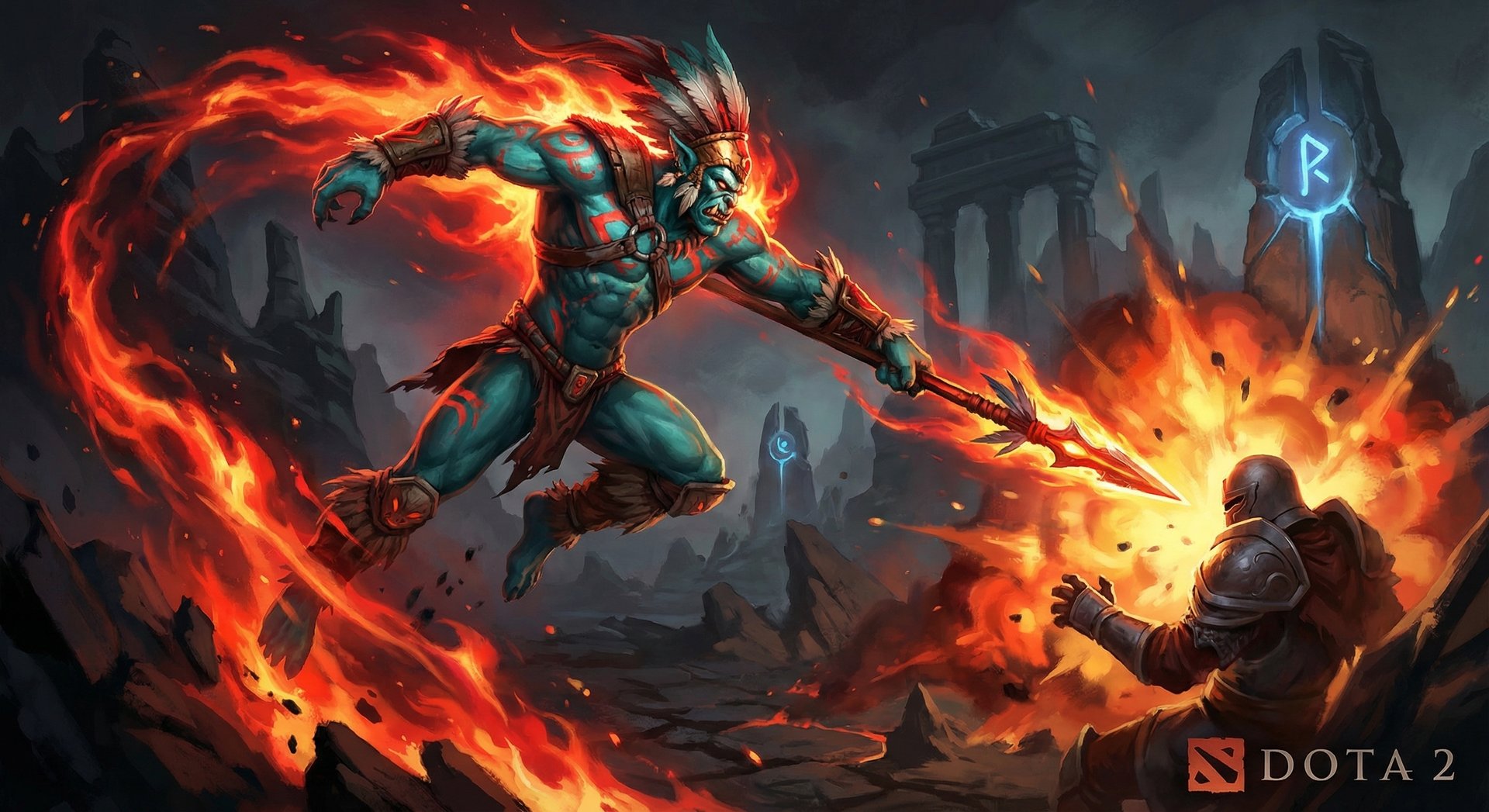
Life Break (R) — Ultimate
Huskar’s ultimate is a suicidal leap that costs him a percentage of his current HP while dealing percentage-based damage to the target and applying a slow. He becomes spell-immune during the leap.
- Self HP Cost: 30% of current HP
- Target Damage: 30%/40%/50% of target’s current HP (magical)
- Slow: 40%/50%/60% for 4/5/6 seconds
- Cooldown: 14/10/6 seconds (with Aghanim’s Shard: 4 seconds)
- Cast Range: 550
Life Break is what makes Huskar one of the scariest initiators in Dota 2. At level 3, it deals 50% of the target’s current HP while providing spell immunity during the leap. The 6-second cooldown at max level means you can Life Break multiple times in a single teamfight.
Aghanim’s Scepter upgrade changes Life Break into a ground-targeted AoE ability that damages and slows all enemies in the area, while also applying Burning Spear stacks. This transforms Huskar from a single-target killer into an AoE teamfight monster.
Aghanim’s Shard reduces Life Break cooldown to 4 seconds and causes it to apply Burning Spear stacks to the target. The Shard is almost always purchased because a 4-second cooldown Life Break lets you chase anyone across the map.
Skill Build Order
The standard Huskar skill build for mid lane is:
| Level | 1 | 2 | 3 | 4 | 5 | 6 | 7 | 8 | 9 | 10 |
|---|---|---|---|---|---|---|---|---|---|---|
| Standard Mid | W | E | W | E | W | R | W | E | E | Q |
| Vs. Heavy Harass | E | W | W | E | W | R | W | E | E | Q |
| Early Kill Pressure | W | E | W | Q | W | R | W | E | E | E |
Max Burning Spear first in almost every game — it is your primary damage source in lane. Berserker’s Blood second gives you the survivability to play aggressively at low HP. Inner Fire is typically taken at level 10 because the early levels have long cooldowns and the mana cost is significant for a hero that does not build much mana. However, if you are against a melee mid or need the disarm early (vs. Ursa, Troll), consider a value point at level 4.
Item Builds by Rank Bracket
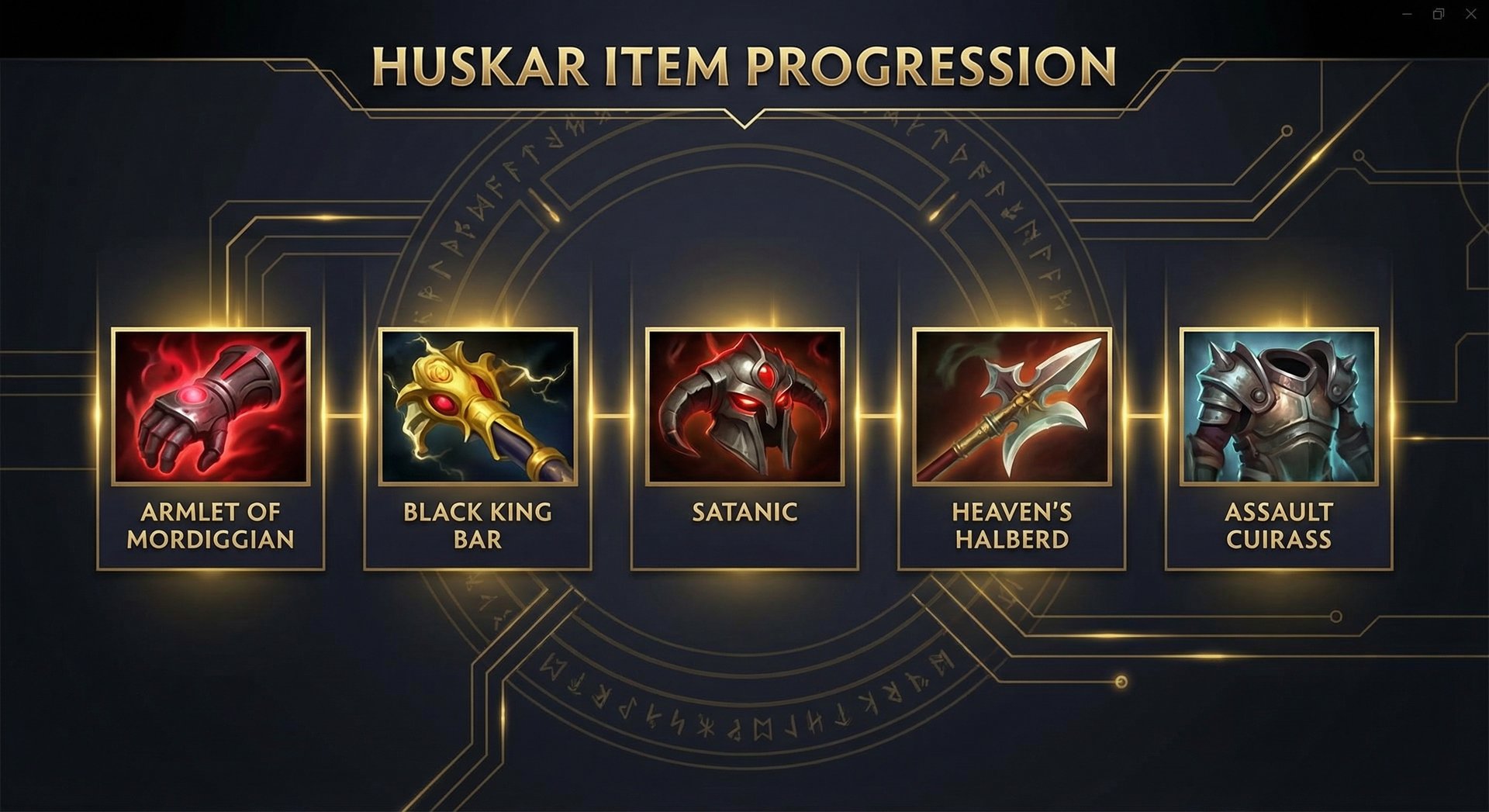
| Rank | Starting | Early Game | Core | Late Game |
|---|---|---|---|---|
| Herald – Crusader | Gauntlets, Tangos, Branch x2, Faerie Fire | Bracer, Boots, Magic Stick | Armlet, Treads, BKB | Satanic, Assault Cuirass, Aghs Scepter |
| Archon – Legend | Gauntlets, Tangos, Branch x2, Faerie Fire | Bracer, Boots, Wand | Armlet, Treads, Halberd or BKB | Satanic, Shard, Assault Cuirass |
| Ancient – Divine | Gauntlets, Tangos, Branch, Faerie Fire x2 | Bracer, Boots, Wand | Armlet, Treads, BKB, Shard | Satanic, Halberd, Nullifier |
| Immortal | Gauntlets, Tangos, Branch, Faerie Fire x2 | Bracer, Phase/Treads, Wand | Armlet, Phase, BKB, Shard | Satanic, Halberd, Nullifier, Aghs |
Why Items Differ by Rank
Armlet of Mordiggian is non-negotiable on Huskar at every rank. It is the single best item in the game for this hero. The HP drain synergizes with Berserker’s Blood (keeping you at lower HP for bonuses), the strength bonus gives you damage and HP, and the toggle mechanic allows insane outplay potential. If you are not building Armlet first on Huskar, you are playing the hero wrong.
At lower ranks, BKB is prioritized over Halberd because players struggle with Armlet toggling and need the safety net of spell immunity. Satanic is also more forgiving — pop it when low and instantly heal back to full. At higher ranks, Halberd becomes more valuable because the evasion helps against physical damage carries and the active disarm stacks with Inner Fire for absurd disable duration. Shard timing is also critical at high MMR — a 4-second Life Break cooldown changes how aggressively you can play fights.
Phase Boots vs. Treads: Immortal players increasingly favor Phase Boots because the movement speed and armor are more valuable than the attack speed from Treads (Berserker’s Blood already gives you plenty of attack speed). Phase also helps you chase after Life Break, which is crucial for securing kills.
Situational Items
- Silver Edge: Against heroes with problematic passives (Bristleback, Spectre, PA). The break disables their passives for 4 seconds.
- Monkey King Bar: If the enemy has evasion (PA, Butterfly builders). Huskar already attacks fast, so MKB procs are frequent.
- Lotus Orb: Against single-target disables. Reflects stuns back while also purging debuffs.
- Heart of Tarrasque: Rarely built, but useful in ultra-late games where you need to survive between fights. The passive regen is wasted during fights though.
- Overwhelming Blink: Surprise initiation tool that stacks with Life Break for burst damage. Situational but devastating when it works.
Laning Phase Masterclass
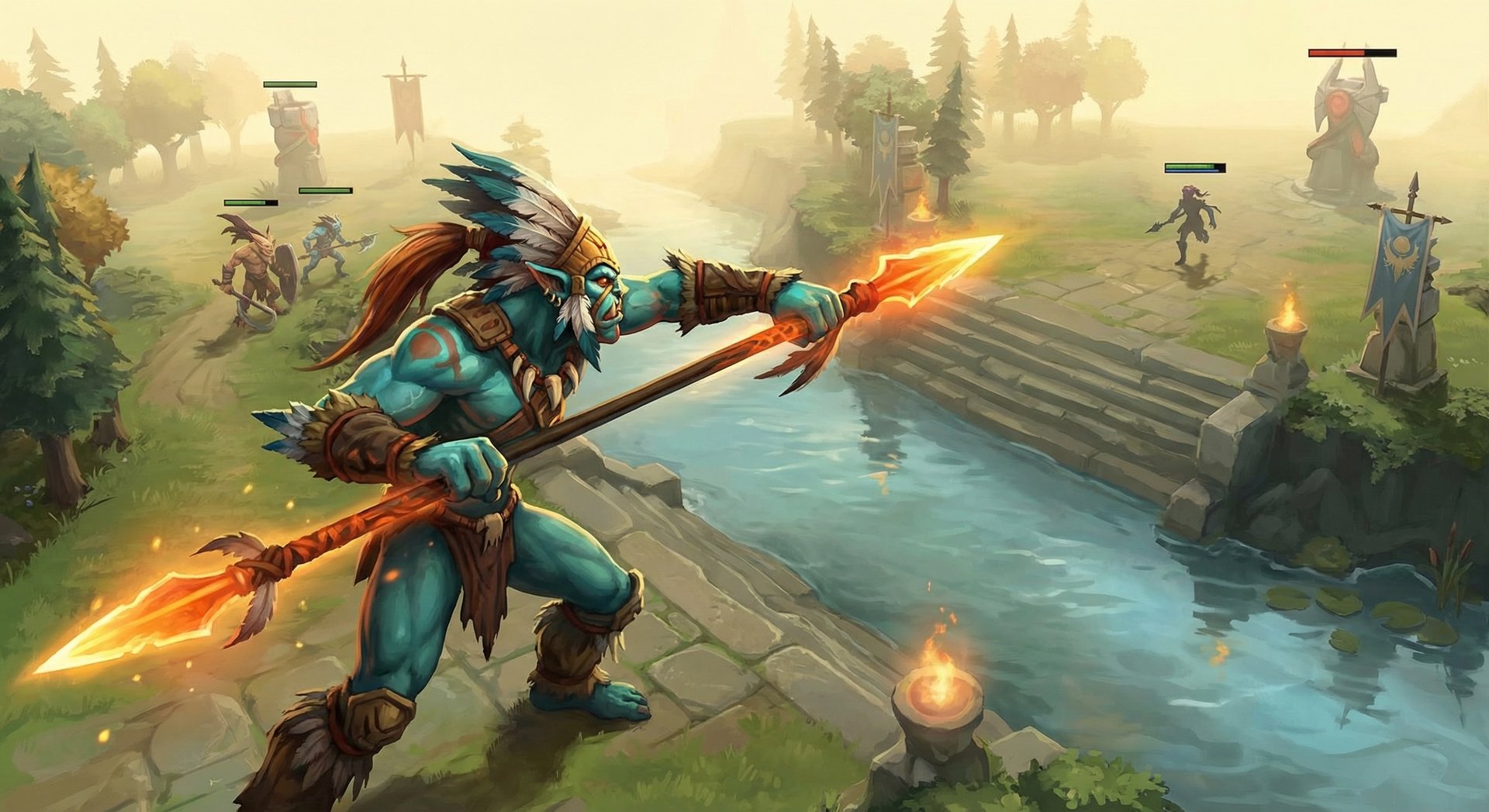
Huskar’s laning phase is where you set the tone for the entire game. He is one of the strongest laners in Dota 2 because of Burning Spear’s ability to harass without drawing creep aggro and Berserker’s Blood making him deceptively tanky against magic-based trades.
Level 1-3: Establishing Dominance
Start by manually casting Burning Spears on the enemy mid every time they go for a last hit. Remember: manual cast does not draw creep aggro. This means you can attack the enemy hero repeatedly while they take creep damage trying to trade back. Most mid heroes cannot sustain through 3-4 stacks of Burning Spear at level 1 without burning through all their regen.
Your goal at level 1-3 is simple: force the enemy to use all their regen or force them to leave the lane. Every successful Burning Spear stack is damage that keeps ticking, and enemies often underestimate how much total damage 5-6 stacks actually do over their full duration.
Positioning tip: Stand slightly to the side of the creep wave, not directly behind your ranged creep. This gives you a clear angle to throw spears at the enemy while maintaining last-hit positioning. High-level Huskar players constantly reposition between attacks to stay at maximum harassment angle.
Level 4-6: Kill Threat Activated
Once you hit level 3-4 with 2 points in Burning Spear and 1-2 in Berserker’s Blood, your kill threat becomes very real. Most mid heroes at 50-60% HP are within kill range of a full commit — walk at them with Burning Spears active, use your HP advantage from Berserker’s Blood to out-trade, and finish with right-clicks as the DoT ticks.
At level 6 with Life Break, almost every mid hero at 70% HP or below is dead if you commit. The combo is: stack 3-4 Burning Spears from range, then Life Break, then continue attacking with Burning Spears. The initial spear stacks plus Life Break’s percentage damage plus continued attacks will kill almost any hero who does not have a save.
Rune Control
Huskar is excellent at securing runes because most enemies are afraid to contest him at low HP (where he is actually strongest). Always push the wave before rune spawns and walk to the rune aggressively. If the enemy contests, they are fighting you at your strongest — at low HP with full Berserker’s Blood stacks and Burning Spears ready.
Water runes are particularly valuable because they restore mana (which Huskar struggles with) and HP (which he can use to reset his Berserker’s Blood stacking). Bottle is still a solid pickup on Huskar for rune management, though many players skip it in favor of faster Armlet timing.
When to Rotate
Huskar should look to rotate after getting his first kill mid or hitting level 7-8 with Armlet components. His rotation power comes from Life Break — a guaranteed gap close with a massive slow. Target the enemy safe lane carry if their support has rotated, or gank the offlane if your carry needs space.
However, do not abandon mid for too long. Huskar needs levels and Armlet timing more than anything. A rotation that does not result in a kill is a failed rotation because you missed mid lane experience. Only rotate when you have high kill certainty.
Mid and Late Game Transitions
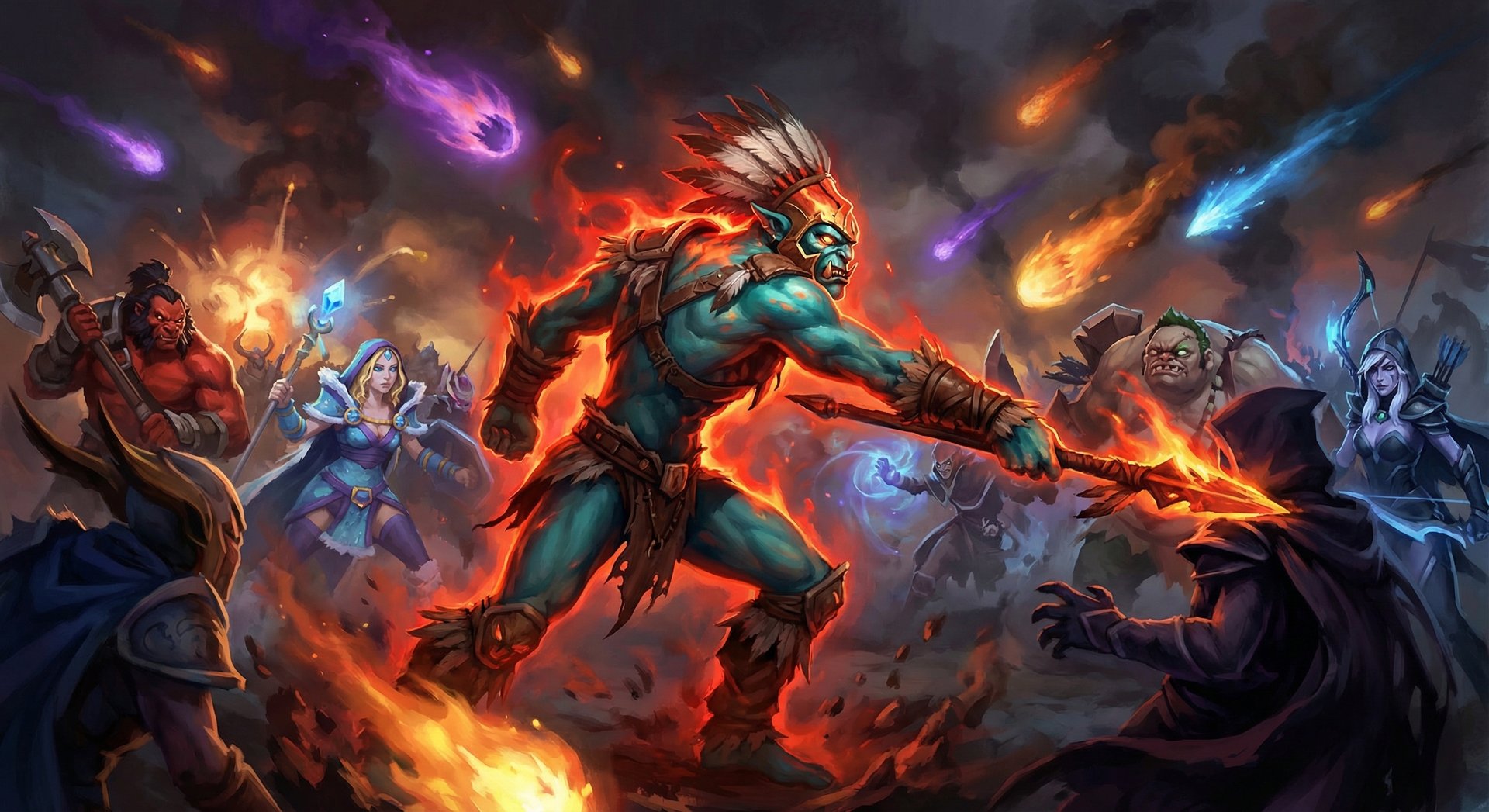
Huskar’s Timing Windows
Understanding when Huskar peaks and falls off is the difference between winning and losing with this hero. Here are the critical timing windows:
- 8-12 minutes (Armlet completion): Your first power spike. With Armlet active, you can fight almost anyone 1v1 and many heroes 1v2. Start forcing fights and taking towers.
- 15-20 minutes (BKB/Halberd): Your absolute peak. Armlet + BKB Huskar is nearly unkillable in fights. This is when you should be taking Roshan, pushing high ground, and forcing the enemy to fight on your terms.
- 25-30 minutes: Still strong but starting to decline. Enemy carries are getting their third and fourth items. You need to end or get a significant lead.
- 35+ minutes: Huskar falls off significantly. Enemy carries with Butterfly, MKB, and multiple defensive items can man-fight you. Your percentage-based damage becomes less relevant as heroes have more HP.
Teamfight Positioning
Huskar is not a frontline initiator despite what lower-rank players think. Yes, Life Break is a gap-close, but you should not be the first one jumping into 5 heroes. The ideal Huskar teamfight looks like this:
- Let your offlaner or initiator start the fight
- Identify the highest-priority target (usually the enemy carry or mid)
- Life Break onto them after 1-2 seconds of fight chaos
- Pop BKB immediately after landing
- Kill your target with Burning Spears and Inner Fire
- Life Break the next target (6-second cooldown at max level)
The common mistake is Life Breaking into the first target you see rather than the right target. If you Life Break onto a tanky offlaner while the enemy carry free-hits you from behind, you have wasted your most important ability.
Roshan Timing
Huskar is one of the fastest Roshan killers in the game thanks to Burning Spear’s unlimited stacking and Berserker’s Blood’s attack speed at low HP. With Armlet, Huskar can solo Roshan as early as 12-14 minutes. The Aegis is game-changing because it gives you a second life during your peak timing — you can dive towers and high ground with significantly reduced risk.
Roshan tip: Toggle Armlet off briefly to drop your HP lower, which activates more Berserker’s Blood attack speed. Then toggle it back on before Roshan’s bash catches you. This speeds up the kill significantly. At higher ranks, Huskar players will deliberately sit at 20-25% HP during Roshan to maximize DPS.
Staying Relevant Late Game
If the game goes late, Huskar needs to transition his role. You are no longer the primary carry — you become a disabler and initiator. Your Inner Fire disarm and Halberd active are more valuable than your right-click damage at this point. Focus on disarming the enemy carry while your own carry deals the damage. Aghanim’s Scepter becomes valuable in ultra-late because the AoE Life Break provides teamfight disruption even when your damage has fallen off.
Counters: Heroes That Destroy Huskar

1. Ancient Apparition
The single hardest counter to Huskar in the entire game. Ice Blast prevents all forms of healing and regeneration, which completely negates Huskar’s survivability. Armlet toggle Disabled. Satanic lifesteal Gone. Inner Vitality from allies Useless. Even worse, Ice Blast’s kill threshold at 10-12% HP means Huskar cannot sit at his “sweet spot” of low HP without instantly dying. If the enemy picks AA, do not pick Huskar. It is that simple.
2. Axe
Axe’s Counter Helix triggers on every attack, and Huskar attacks very fast at low HP. This means Huskar is essentially killing himself by attacking Axe. Berserker’s Call forces Huskar to attack Axe for 3.2 seconds, during which Counter Helix procs multiple times. Culling Blade also ignores Huskar’s magic resistance since it is a kill threshold mechanic. Axe can single-handedly shut down Huskar in teamfights.
3. Necrophos
Reaper’s Scythe deals more damage the lower the target’s HP — exactly where Huskar wants to be. Ghost Shroud also prevents Huskar from attacking Necrophos while amplifying healing and magical damage. The combination of percentage-based damage from Reaper’s Scythe and Huskar playing at low HP makes this matchup extremely unfavorable.
4. Viper
Viper’s Break from Nethertoxin disables Berserker’s Blood entirely. Without Berserker’s Blood, Huskar is just a slow strength hero with mediocre stats who intentionally damages himself. Viper also wins the lane against Huskar because Poison Attack trades evenly with Burning Spear while Corrosive Skin provides magic resistance against the DoT.
5. Timbersaw
Pure damage from Timber Chain, Whirling Death, and Chakram all ignore Huskar’s magic resistance. Whirling Death also reduces Huskar’s primary attribute (strength), which reduces his HP pool. Timbersaw’s Reactive Armor makes him nearly impossible for Huskar to kill in lane, and the pure damage output means Huskar melts regardless of how much magic resistance he has.
How to Play Around Counters
The best way to deal with Huskar’s counters is draft awareness. Never first-phase Huskar. Always last-pick him after confirming the enemy does not have AA, Viper, or multiple sources of Break. If you get counter-picked:
- Against AA: Build BKB early and try to end before AA hits level 12+. Avoid fights when Ice Blast is off cooldown.
- Against Axe: Do not attack Axe during Berserker’s Call. Use Inner Fire to push him away before he calls. Build Silver Edge to break Counter Helix.
- Against Viper: Avoid standing in Nethertoxin puddles. Use Life Break to jump past the puddle and fight Viper directly. Build BKB to purge the Break.
Heroes Huskar Destroys
When the draft is right, Huskar can feel completely unfair. These are the matchups where picking Huskar essentially wins you the game:
1. Invoker
Invoker relies heavily on magical damage (Sunstrike, Meteor, EMP, Cold Snap). Huskar’s magic resistance makes all of these feel like tickling. You can walk through Invoker’s entire combo at low HP and barely lose any health while your Burning Spears melt him. The lane matchup is also heavily Huskar-favored.
2. Zeus
Every single one of Zeus’s abilities deals magical damage. Against a Huskar with max Berserker’s Blood stacks, Zeus’s entire kit deals roughly 25% of its listed damage. Zeus also has zero mobility to escape Life Break. This is one of the most lopsided matchups in Dota 2.
3. Skywrath Mage
Same logic as Zeus — all magical damage, no escape, no physical damage. Skywrath’s Arcane Bolt spam actually helps Huskar by keeping him at low HP for Berserker’s Blood stacks. Mystic Flare at max Berserker’s Blood does almost nothing.
4. Shadow Fiend
SF relies on Razes (magical damage) in lane and has low base HP. Huskar dominates the lane matchup, and once he gets Life Break, SF is dead on every cooldown. SF also farms slowly when behind, so a Huskar who wins the lane snowballs the entire game off this matchup.
5. Tinker
Tinker’s March of the Machines and Laser are both magical damage. Heat-Seeking Missile is magical. Huskar tanks everything while Life Breaking onto Tinker’s position. The only thing Tinker can do is hide in trees and hope Huskar does not find him.
How Pros Play Huskar in the Current Patch
In recent professional games, Huskar has been a niche last-pick specialist rather than a comfort pick. Teams like Team Spirit and Tundra Esports have used Huskar as a draft weapon in specific matchups, typically when the enemy team has committed to a magic-heavy lineup without obvious Huskar counters.
Notable pro Huskar performances include Collapse playing Huskar offlane in several qualifier matches, leveraging the hero’s lane dominance to create space for Team Spirit’s carries. His build focused on early Armlet into Halberd, skipping BKB entirely because the enemy team lacked sufficient lockdown.
Key pro insights:
- Pros almost always build Phase Boots over Treads — the armor and movement speed are more valuable than attack speed bonuses (Berserker’s Blood provides enough attack speed already)
- Shard is purchased at 15 minutes or immediately after Armlet in many pro builds — the 4-second Life Break cooldown is considered core, not luxury
- Aghanim’s Scepter is increasingly popular in pro play for the AoE Life Break, especially against deathball lineups where hitting multiple targets is more important than single-target burst
- Pros position Huskar as a second initiator, never the first to jump in. They wait 1-2 seconds after the fight starts, then Life Break the highest-value target
Pro Huskar strategies on Liquipedia show the hero maintains roughly a 55% winrate in competitive play when last-picked, but drops to below 45% when picked early in the draft and counter-picked accordingly.
Rank-Specific Climbing Guide
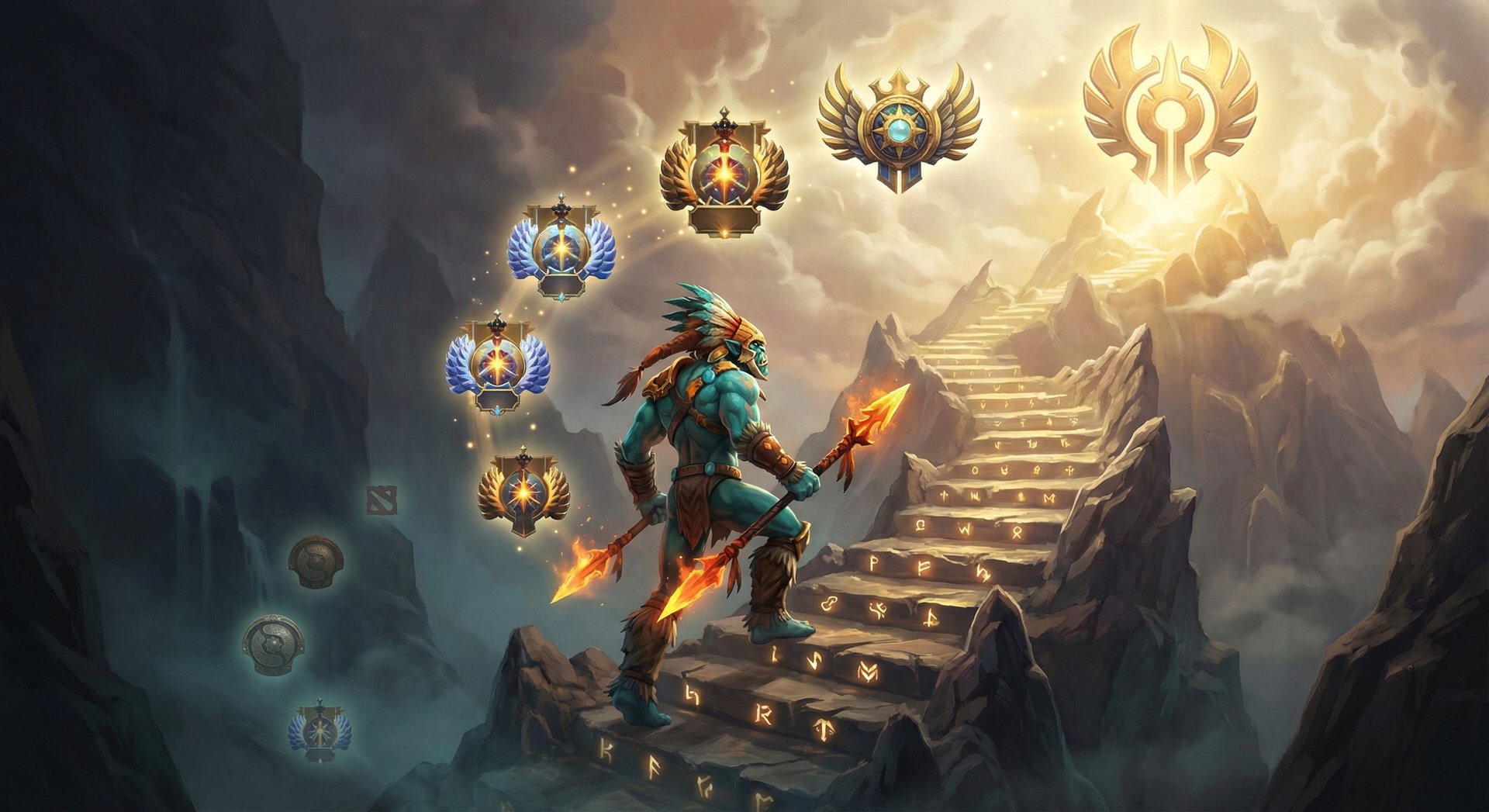
Herald to Guardian: Foundation Basics
At this rank, Huskar wins games almost purely through laning dominance. Most Herald and Guardian players do not know how to deal with Burning Spear harassment, and they will not itemize correctly against you.
Focus on these fundamentals:
- Manual-cast Burning Spears on the enemy every time they go for a last hit. Do not toggle auto-cast.
- Build Armlet every game. Practice toggling it in demo mode before playing ranked.
- Use Life Break aggressively — at this rank, enemies rarely have saves or TPs ready.
- Take towers after every kill. Do not go back to farming jungle. Push.
- Buy BKB second item every game. You will get stunned and die without it.
At this bracket, you can climb purely by winning your lane and running at people with Armlet active. Do not overthink it. Huskar at Herald-Guardian is about mechanical aggression, not game sense.
Crusader to Archon: Adding Game Sense
Players in this bracket start understanding that Huskar has counters, but they still draft poorly against him. Your advantage is timing awareness.
- Learn to identify your power spikes and push advantages at 10-12 minutes (Armlet timing)
- Start doing Roshan after your first teamfight win. Aegis extends your peak by 5-7 minutes.
- Watch the enemy’s items. If their carry builds MKB or Silver Edge, you are being targeted — play safer.
- Start using Inner Fire disarm in teamfights, not just for damage. A well-timed disarm on the enemy carry is worth more than 300 magical damage.
- Ward aggressively with your team. Huskar wants to play in the enemy’s side of the map, not his own.
Legend to Ancient: The Macro Leap
At Legend and Ancient, enemies will actively counter-pick and itemize against you. Your draft timing becomes critical.
- Never pick Huskar before the enemy’s support heroes are revealed. A surprise AA or Oracle completely changes the game.
- Learn Armlet toggle under pressure. In this bracket, enemies will try to burst you during toggle attempts.
- Prioritize coaching-level decision making — when to fight, when to farm, when to push. Huskar players at this rank often throw leads by fighting without BKB or diving highground without Aegis.
- Start building Halberd as a core item. The evasion and disarm active are game-changing against physical damage carries.
- Communicate with your team about timing. Tell them: “We need to push before 30 minutes. After that, I fall off.”
Divine to Immortal: What Separates the Top 1%
At Divine and Immortal, Huskar games are won or lost in the draft and the first 15 minutes. High-MMR Huskar players focus on:
- Draft reading: Knowing exactly which enemy hero combinations Huskar beats and which he cannot. Never picking into potential counter-picks.
- Armlet toggle mastery: Toggling under tower, during DoT damage, during enemy projectiles. This is the mechanical skill ceiling that separates good Huskar players from great ones.
- Fight selection: Only taking fights where you have a clear advantage. Immortal Huskar players skip fights they cannot win and pressure towers or Roshan instead.
- Shard timing: Getting Shard at exactly the right moment (usually minute 15-17) to unlock 4-second Life Break for the mid-game push.
- Late-game pivoting: Transitioning from damage dealer to disabler/utility when the game goes past 35 minutes. Building Halberd, Lotus Orb, or Overwhelming Blink instead of more damage.
If you are struggling to break through to the next rank, Team Smurf’s MMR boosting service can help you bypass the grind while our coaching sessions teach you the decision-making patterns that Immortal players use instinctively.
Tips and Tricks
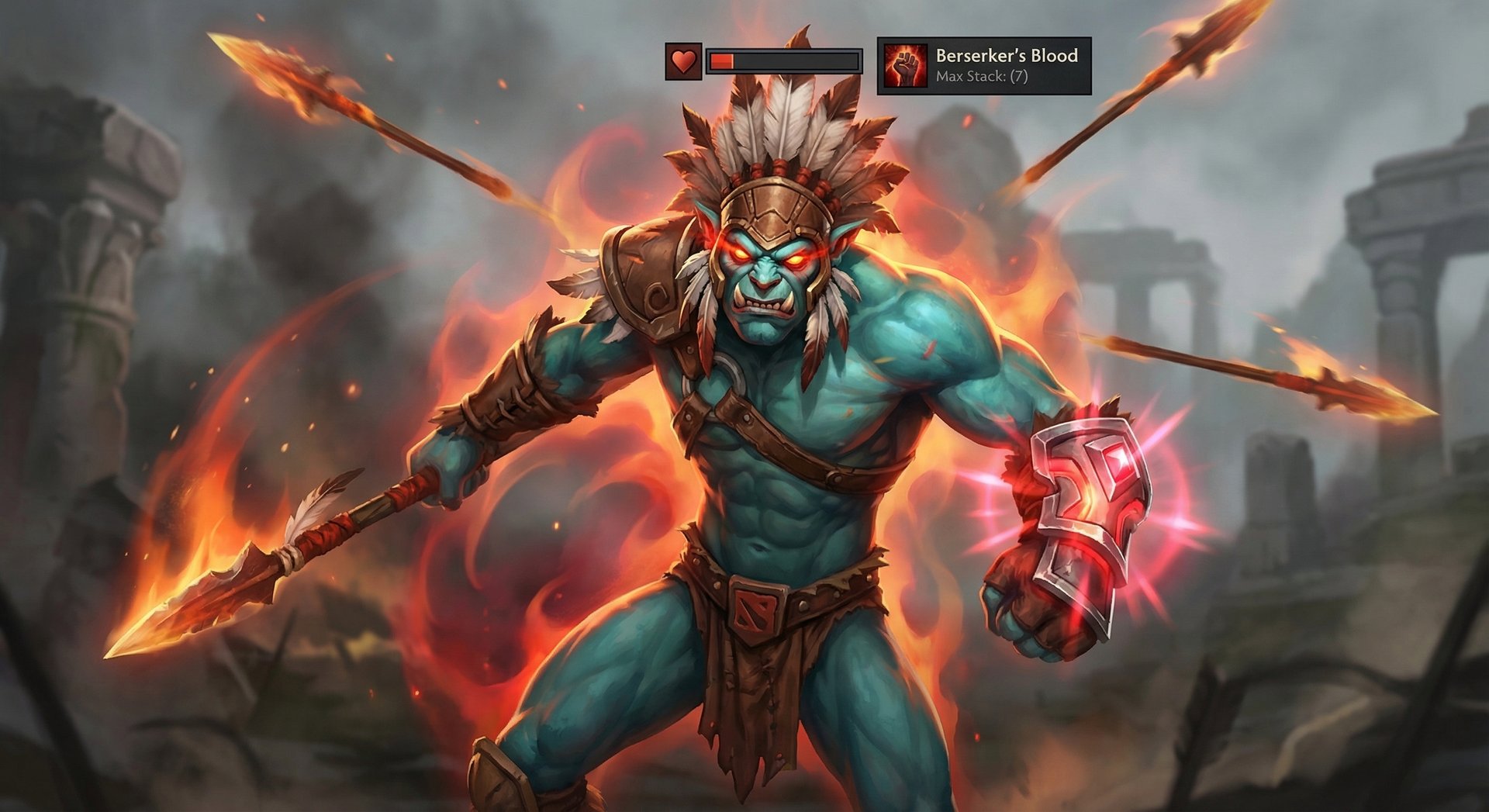
Armlet Toggle Mechanics
The most important mechanical skill on Huskar. Armlet toggling lets you survive situations that should kill you by rapidly turning Armlet off and on to gain the HP burst while dodging lethal damage.
- Basic toggle: Turn Armlet off, then immediately on. You drop to 1 HP briefly then gain ~500 HP instantly. This dodges timed damage like DoTs.
- Under tower: Toggle between tower attacks. Tower has a fixed attack interval — toggle off after a hit, then on before the next one lands.
- Against DoT: You can toggle through Venomancer wards, Viper’s Poison, and other DoT effects if they tick slowly enough. The HP gain beats the tick damage.
- Double toggle: Toggle off, wait 0.1 seconds, toggle on. This gives you the HP burst while resetting the drain timer. Advanced technique used by top players.
Hidden Interactions
- Burning Spear + Satanic: Satanic’s lifesteal works with Burning Spear damage, meaning every burning attack gives you massive lifesteal. At low HP with max Berserker’s Blood attack speed, activating Satanic heals you from 10% to 100% HP in about 2 seconds.
- Life Break + Blademail: If an enemy pops Blademail as you Life Break, the reflected damage is based on the damage you deal to them (percentage-based). This can kill you if the target has high HP. Always check for Blademail before jumping.
- Inner Fire + Blink Dagger: You can Blink into a group of enemies and immediately Inner Fire to disarm and knock back everyone. This is devastating in teamfights and often catches multiple heroes off guard.
- Berserker’s Blood + Regeneration: Regeneration effects are flat numbers, not percentages. This means a 50 HP/sec regen item heals the same regardless of your max HP. At low HP percentages, flat regen effectively heals a larger “percentage” of your remaining HP, making regen items surprisingly effective on Huskar.
Common Mistakes to Avoid
- Auto-casting Burning Spear in lane. This draws creep aggro and ruins your lane. Always manual cast.
- Life Breaking without BKB. Against teams with stuns, jumping in without BKB is suicide. Life Break’s spell immunity is only during the leap, not after.
- Fighting with Armlet off. Some players forget to activate Armlet before fighting. Always check before committing.
- Ignoring Roshan. Huskar is one of the best Rosh heroes. Not taking Rosh after Armlet is wasting your biggest advantage.
- Playing passively. Huskar does not farm well. If you are spending time in the jungle instead of fighting or pushing, you are playing the wrong hero.
- Sitting at full HP. Counterintuitive, but Huskar at full HP is Huskar at his weakest. You want to be at 40-60% HP for optimal Berserker’s Blood value in fights.
Frequently Asked Questions
Yes, but only as a last-pick specialist. Huskar has a very high winrate when picked into favorable matchups (55%+ in Divine/Immortal) but drops significantly when counter-picked. Learn to read drafts and only pick Huskar when the conditions are right. If you want a more versatile climbing hero, check our other hero guides for options like Juggernaut or Phantom Assassin.
Armlet of Mordiggian first (always), followed by Phase Boots or Power Treads, then BKB or Heaven’s Halberd depending on the enemy lineup. Aghanim’s Shard should be purchased around 15-17 minutes for the reduced Life Break cooldown. Late game, Satanic and Assault Cuirass round out the build. See the rank-specific item tables above for detailed breakdowns.
The top counters are Ancient Apparition (prevents all healing), Axe (Counter Helix punishes fast attacks), Viper (Break disables Berserker’s Blood), Necrophos (percentage-based damage at low HP), and any hero with Break or pure damage. Building Silver Edge for Break is also effective on any hero.
Mid is the primary and best role for Huskar. He needs the solo XP and gold from mid lane to hit his Armlet timing. Offlane Huskar can work in specific matchups (against weak safe lane duos) but is generally less effective because he shares XP and has less guaranteed farm. Some pro players like Collapse have shown offlane Huskar can work, but mid remains the standard.
Always last pick (4th or 5th pick). Never first or second phase Huskar. You need to confirm the enemy does not have Ancient Apparition, Viper, or multiple sources of Break and pure damage before committing to the pick. Huskar is a draft-dependent hero — his winrate swings 15-20% based on the matchup.
Go into Demo Mode, buy Armlet, and practice toggling under tower hits. Set up neutral creeps and practice toggling while fighting them. The key is muscle memory — your toggle hotkey should be something comfortable and fast. Most players bind Armlet to a nearby key for instant access. Practice for 10-15 minutes before each ranked session until it becomes automatic.
Yes, Huskar can solo Roshan with just Armlet as early as 12-14 minutes. You should Roshan after winning a teamfight or when you know the enemy team is on the other side of the map. Toggle Armlet to stay at low HP for maximum Berserker’s Blood attack speed, and use Burning Spears for additional DPS. The Aegis is critical for high-ground pushes during your peak timing.
Ready to Dominate with Huskar
Our Immortal-rank coaches specialize in aggressive mid heroes like Huskar. Learn Armlet toggling, draft reading, and timing-based play from players who have mastered the berserker at 7K+ MMR. Or skip the grind entirely with our boosting service.