


How Illusions Work in Dota 2: Damage, Stats, What Carries Over and What Doesn’t

You cast Manta Style, two copies of your hero sprint off in different directions, and the enemy team suddenly has three targets to deal with. A Phantom Lancer dives into a fight and splits into a dozen copies. Chaos Knight channels Phantasm and five clones charge the high ground. Illusions are one of Dota 2’s most mechanically layered systems — and most players, even at high MMR, get the details wrong.
This guide covers every illusion mechanic from the ground up: how much damage illusions deal and take, exactly which stats and buffs carry over from the real hero, how Manta Style works versus other illusion sources, and the hero-specific rules for Naga Siren, Phantom Lancer, and Chaos Knight. If you play against illusion heroes or you play them yourself, these mechanics directly change how you fight. To see which heroes make the best use of all this, check out the best illusion heroes in Dota 2 — this post is the mechanics companion to that list.
Contents
What Are Illusions in Dota 2?
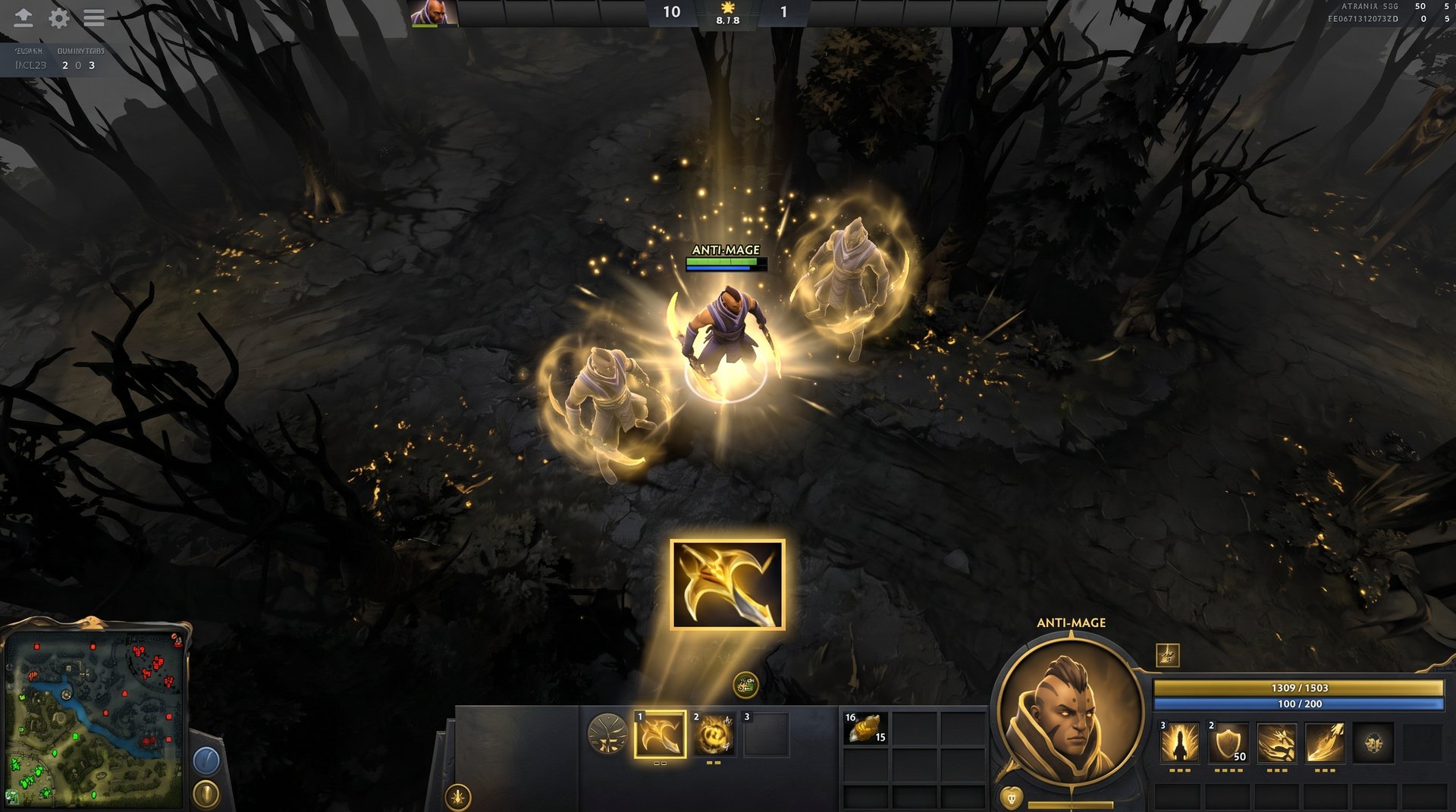
An illusion is a controllable copy of a hero. It looks identical to the original hero, shares the hero’s movement speed, inherits a portion of base stats, and attacks. What it does NOT do is cast spells, use item actives, survive a targeted disable for long, or deal full damage.
Illusions exist in two mechanical contexts. First, as a combat tool — you create them to deal distributed damage, apply on-hit effects (in some cases), and split enemy attention. Second, as a confusion tactic — in a five-vs-five fight where one hero suddenly becomes three identical-looking heroes, the enemy team has to spend targeting time figuring out which one is real.
The three numbers that define every illusion are: outgoing damage percentage (what fraction of the hero’s damage the illusion deals), incoming damage multiplier (how much more damage the illusion takes compared to the real hero), and duration. Everything else — which stats carry over, whether BKB helps, whether lifesteal works — builds on these three foundations.
Illusion Damage and Stats by Source
Every illusion source has its own outgoing damage percentage, incoming damage multiplier, and duration. The table below covers the most common sources in patch 7.41f. “Outgoing” means the percentage of the hero’s attack damage the illusion deals. “Incoming” means the multiplier applied to damage the illusion receives — so 300% means the illusion takes 3x the damage a real hero would take from the same hit.
| Source | Outgoing Dmg | Incoming Multiplier | Duration | Notable Quirks |
|---|---|---|---|---|
| Manta Style (melee hero) | 33% | 350% | 20s | Strong dispel on use; illusions can split-push |
| Manta Style (ranged hero) | 28% | 300% | 14s | Shorter duration, still purges debuffs on cast |
| Phantom Lancer — Juxtapose | 15/20/20/25% | 300% | Until killed | Proc chance; each illusion can also proc Juxtapose |
| Phantom Lancer — Doppelganger | 25% | 300% | 8s | PL vanishes and reappears; illusions pop on expiry |
| Naga Siren — Mirror Image | 40% | 250% | 30s (melee) / 20s (ranged) | 4 illusions; best outgoing % of any illusion ability |
| Chaos Knight — Phantasm | 100% | 100% | 15s | No damage penalty at all; illusions are dispellable |
| Terrorblade — Conjure Image | 25% | 200% | 23s | Single illusion; cheap to cast; great for pushing |
| Dark Seer — Wall of Replica | 70/75/80% | 250% | 30s | Illusions of enemy heroes; strength scales with their stats |
| Sand King — Sandstorm | 0% | — | 4s | Mirror image only; does not attack |
A few things to note from this table. Chaos Knight’s Phantasm stands alone: his illusions deal full damage and take full damage — they are mechanically closer to summons than traditional illusions. Naga Siren’s Mirror Image produces four illusions at 40% each, which means that in terms of total potential output (4 x 40% = 160% of hero damage if all illusions connect every hit), Mirror Image has the highest theoretical DPS multiplication of any illusion ability. Terrorblade’s Conjure Image is the most efficient per-illusion pusher in the game — 23 seconds of a 25% illusion that can clear a creep wave costs only mana.
What Carries Over to Illusions
This is the section most players get wrong. Illusions are NOT item-stat copies of your hero. They inherit a carefully defined set of properties and nothing else. Here is what actually transfers:
Base Stats and Stat Gains
Illusions inherit the hero’s current strength, agility, and intelligence values. This means: all stat gains from leveling up, all stat gains from talents, and all passive bonuses tied to attribute growth. An Agility hero with 250 agility has illusions with 250 agility — they get the full attack speed and armor that comes with it.
This is why farming items like Manta Style or Echo Sabre actually improve your illusions indirectly. Items that boost your primary attribute (Sange, Yasha, Manta itself, Skadi) increase your base stat, which carries over to illusions.
Movement Speed
Illusions move at the hero’s current movement speed, including bonuses from stats and abilities. Items that directly add movement speed (Phase Boots active, Yasha passive) affect your hero’s move speed, and since illusions inherit move speed, they benefit too. This matters for catching fleeing enemies and for illusions that need to chase.
Attack Speed
Illusions inherit the hero’s attack speed from stats and passive effects, but NOT from item actives. The agility gain from equipment like Power Treads carries over because it becomes part of the base stat pool. The attack speed buff from Drums of Endurance or Haste Rune does NOT carry over because it is a temporary buff applied to the real hero.
Hero-Specific Passive Abilities
Some hero passives apply to illusions and some do not. This depends on whether the passive is flagged as “works on illusions” in the game’s data. General rule: passives that are intrinsic to the hero’s nature (like Slardar’s Bash or Lifestealer’s Feast) do NOT work on illusions. However, certain hero passives designed around illusion gameplay do apply — for example, Phantom Lancer’s Juxtapose passive fires from PL illusions, which is the core mechanic that makes PL’s illusion army self-sustaining.
Aghanim’s Scepter Buffs (Hero-Specific)
Aghanim’s Scepter does not automatically carry over to illusions. Some heroes have Aghs upgrades specifically designed to improve their illusions — for example, Naga Siren’s Aghs affects her Mirror Image illusions. But this is a deliberate design choice per hero, not a blanket rule. Check the hero’s Aghs description to see if it mentions illusions.
Armor from Stats
Since illusions inherit agility, and agility provides armor, illusions have the same armor as the hero’s stat-derived armor. They do NOT get armor from items (Iron Branches, Ring of Protection, etc.) unless those items boost agility — in which case the armor increase is from the stat, not the item itself.
What Does NOT Carry Over to Illusions?
The list of things that do NOT carry over is longer, and more impactful to gameplay:
- Item stats directly — a Butterfly does not give illusions evasion; a Daedalus does not give illusions critical strikes. The exception is when the item grants agility/strength/int, which then carries over via the stat system.
- Spell immunity (BKB) — illusions cannot gain spell immunity through BKB. This is covered in detail in the BKB section below.
- Active item abilities — illusions cannot use Blink Dagger, Linken’s Sphere, Lotus Orb, or any active item.
- Item lifesteal — Morbid Mask, Mask of Madness, Satanic, and Helm of the Dominator do not give illusions lifesteal. The hero has lifesteal; the illusions do not.
- Spell amplification — illusions do not cast spells, so spell amp from Kaya or talents is irrelevant to them.
- Item-based critical strikes — Daedalus does not work on illusions. The crit is tied to the item, not the hero.
- Item-based bash — Skull Basher and Abyssal Blade do not give illusions a bash chance.
- Item-based on-hit effects — Chain Lightning from Maelstrom/Mjollnir does not proc from illusion attacks. Neither does the slow from Eye of Skadi.
- Temporary buffs — Haste Rune, Arcane Rune, Smoke of Deceit buff, and any timed buff applied to the hero after the illusion spawns do not benefit the illusion.
- Gold earned from last hits — illusions do not award gold to the controlling player when they kill creeps unless the hero has a specific ability that changes this (like Naga Siren’s illusions awarding reduced gold in some configurations).
Manta Style: The Complete Breakdown
Manta Style deserves its own section because it works differently from illusion abilities in several important ways that affect how you play around it.
Activation Creates a Strong Dispel
When you activate Manta Style, the real hero receives a strong dispel — not the illusions, but you. This removes most debuffs from the hero: silences, roots, slows, and many debuffs that a basic dispel would not remove. This makes Manta Style one of the best defensive tools in the game on heroes that can afford it. For a full breakdown of what strong dispel removes versus basic dispel, see the Dota 2 states and dispel explainer.
Note: the dispel happens on you, not on your illusions. If an illusion gets hit by a root, it stays rooted. The dispel only protects the original hero at the moment of cast.
Damage and Duration by Hero Type
Melee heroes create illusions at 33% outgoing damage, 350% incoming, lasting 20 seconds. Ranged heroes create illusions at 28% outgoing, 300% incoming, lasting 14 seconds. This difference reflects the balance philosophy that ranged heroes are already more mobile and safer, so their Manta illusions are slightly weaker.
The shorter duration on ranged illusions is especially relevant for heroes like Spectre, who is technically ranged but often builds Manta for the dispel. Spectre’s illusions last 20 seconds (she is treated as melee for Manta in some patches — verify current status in-game before building around this).
Manta Illusions Cannot Be Purged by the Activated Hero
A common misconception: “Can I use Manta to dodge a spell by creating illusions?” The answer is no in terms of the original hero — Manta is not a dodge mechanism on its own. The hero stays in place and gains the dispel; the illusions are created at the hero’s position and run off. The illusions themselves can be killed by enemy spells (they have no spell immunity), and they die instantly to any strong dispel applied to them (such as Purge from a Diffusal Blade, or Cyclone from Eul’s Scepter).
Identifying Manta Illusions
On the enemy side, you can identify Manta illusions through observation: they deal noticeably less damage than the real hero, and they do not use abilities. More mechanically, a strong dispel applied to any illusion (Purge, Force Staff-into-high-ground with a cliff, enemy’s Manta, Eul’s on an illusion) kills it instantly. This is the fastest way to clear them in a fight.
Hero-Specific Illusion Rules: Naga Siren, Phantom Lancer, Chaos Knight
These three heroes define the “illusion heroes” category and each has mechanics that set them apart from heroes who just buy Manta Style.
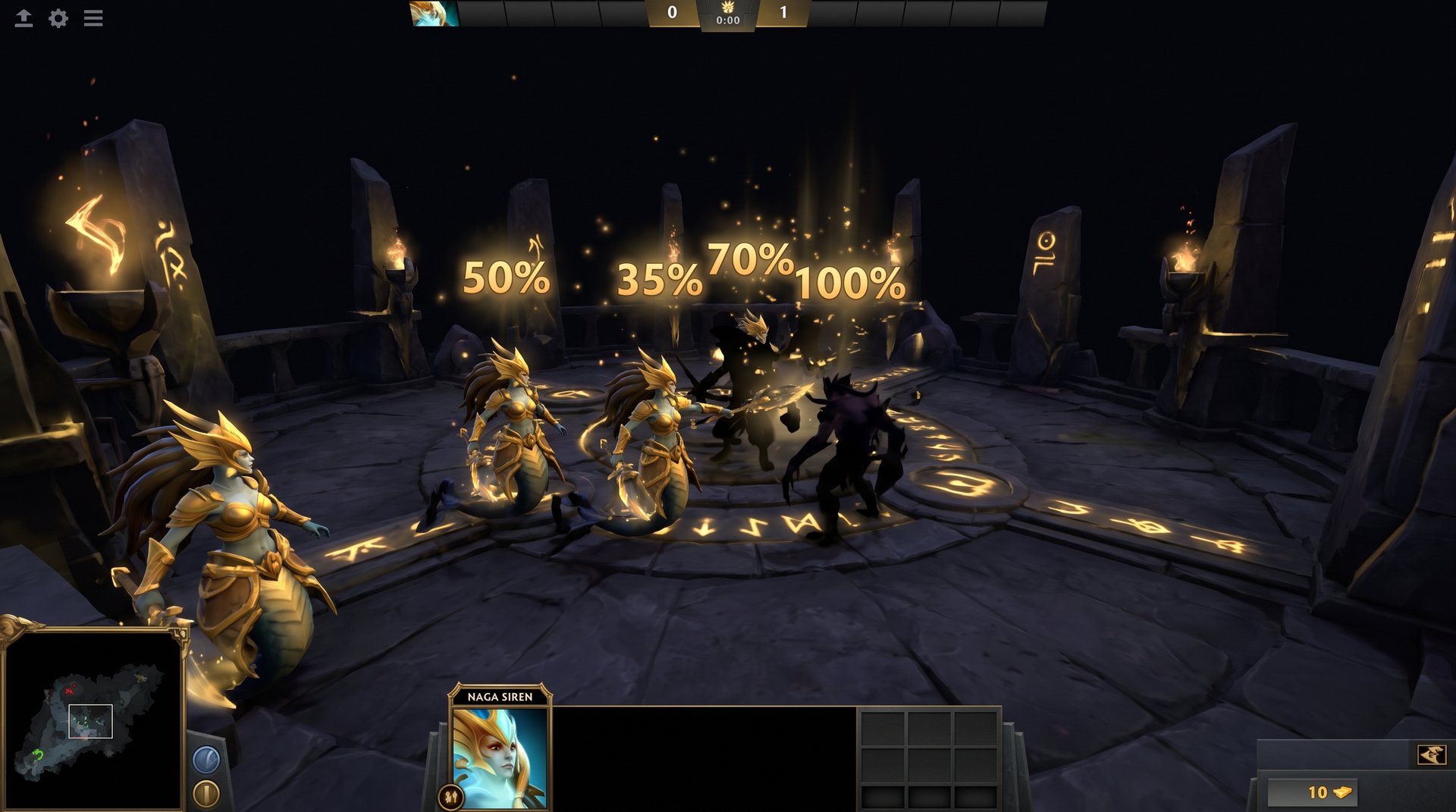
Naga Siren — Mirror Image
Mirror Image creates four illusions at 40% outgoing damage and 250% incoming damage. Duration is 30 seconds for melee Naga and 20 seconds for ranged (Mirror Image scales with attack type since Naga can be either depending on the split between hero form and illusions in very specific configurations, but in practice Naga is melee and gets 30s duration).
What makes Naga’s illusions special is the combination of high count (4), high outgoing percentage (40%), and the lowest incoming multiplier of any illusion ability (250%). Compare to Manta’s 350% incoming on melee — Naga’s illusions are genuinely harder to clear with AoE. With Aghanim’s Scepter, the illusions gain improved stats (verify exact values in current patch — Aghs changes vary).
Naga’s illusions do NOT benefit from item lifesteal, but her illusions DO apply on-hit effects tied to stats. The interaction between Naga’s illusions and BKB is the same as all illusions: they have no spell immunity and die to AoE magic.
Phantom Lancer
PL’s illusion system is the most complex in the game because illusions can create more illusions. Juxtapose (passive) gives each PL illusion a chance to create another illusion when it attacks. This means a PL who starts a fight with Manta + Doppelganger quickly builds up an army.
PL illusions from Juxtapose deal 15/20/20/25% outgoing damage (scaling with Juxtapose level). Illusions from Doppelganger deal 25%. All PL illusions have 300% incoming damage and last until killed (Juxtapose illusions do not have a built-in duration — they persist until an enemy destroys them or they are dispelled).
Key PL fact: each illusion can also proc Juxtapose. This is why PL’s illusion count grows exponentially in a long fight. The practical limit is Dota’s engine cap on concurrent illusions — PL can maintain a very large number before the system prunes them.
To find the strongest carries who benefit from this mechanic, read the guide to the best illusion heroes in Dota 2.
Chaos Knight — Phantasm
Chaos Knight is the outlier. Phantasm creates 3 illusions (at ability level 3) that deal 100% outgoing damage and take 100% incoming damage. There is no damage reduction from the hero’s attack; there is no incoming penalty — these illusions fight like real heroes in terms of attack and defense calculations.
The tradeoff is that CK’s illusions are dispellable, have the same base stats as CK but no item stats, and last 15 seconds. In most fights, 15 seconds is enough to win or lose a teamfight. The illusions are devastating against teams without AoE because each one is genuinely a threat. A typical CK Phantasm fight: activate Phantasm under BKB, the illusions spread, the enemy team scrambles to figure out which is real while taking full damage from all four bodies.
Important: CK’s Phantasm illusions DO have spell immunity for a brief moment at activation (tied to the BKB window if CK activated BKB before Phantasm). Once the BKB ends, the illusions are vulnerable to AoE magic.
BKB and Illusions
Black King Bar grants spell immunity to the hero who activates it. It does NOT transfer to illusions in any form.
When you use BKB and then create illusions (via Manta or an ability), those illusions are vulnerable to spells. An enemy Lina can Laguna Blade your illusions even while your hero is under BKB protection. This is one of the primary ways teams deal with Chaos Knight — identify and AoE the illusions with magical spells during the fight even if CK himself is immune.
The reverse is also true: if an enemy has BKB active and you create illusions through Wall of Replica or another effect, the BKB buff does NOT appear on the illusion. The illusion will not have the BKB gold border. This is actually a gameplay tell: in a team of apparent CK illusions, the one with the BKB border is real.
For players using illusion heroes in ranked games, understanding BKB limits is core to correct item build decisions. Winning ranked games with illusion carries is one area where coaching significantly accelerates improvement — experienced coaches can show exactly how to position illusions to force BKB and then follow up. You can explore that through the TeamSmurf coaching service.
Lifesteal and Illusions
Item-based lifesteal does not work on illusions. This is one of the cleaner rules in Dota 2 and rarely has exceptions.
Morbid Mask, Mask of Madness, Ring of Tarrasque, Satanic, and Helm of the Overlord all give the real hero lifesteal. None of these effects carry to illusions. When a PL illusion attacks an enemy hero, PL does not heal. When a Naga illusion hits a creep, Naga does not heal.
There is an important interaction to know: some hero innate abilities that provide lifesteal do apply to illusions if the ability explicitly states so in the game’s tooltip. Lifestealer’s Feast is a hero ability that gives lifesteal as a percentage of the enemy’s max HP — it does NOT work on Lifestealer’s own illusions (if he creates any through Manta). Spectre’s Dispersion is a damage reflection mechanic, not lifesteal, so the illusion comparison is not applicable there.
The key takeaway: if you are buying lifesteal on an illusion hero expecting your illusions to sustain, you are only sustaining the real hero. This is still valuable (hero sustain matters), but it changes the math when you are considering Manta vs Linken’s as your second item on Spectre.
Building the right items on illusion heroes is also where the MMR boosting guide touches on the carry meta — understanding which items scale illusion output versus which only benefit the hero is a key skill checkpoint for climbing.
How to Identify and Dispel Illusions
Identifying illusions in a fight is a core defensive skill. Here is what works:
Visual and Behavioral Tells
- Damage output: a Juggernaut illusion hitting you for 40 damage when the real one should hit for 200 is an immediate tell. In pub games, this is often obvious once you know what to look for.
- Spell use: real heroes cast spells; illusions never do. If a “Bloodseeker” is chasing you and never uses Rupture, it is probably an illusion.
- Item actives: illusions cannot use Blink Dagger. A hero that uses Blink is real.
- Mana bar: illusions often have a visible but static mana bar (they have mana equal to the hero’s intelligence stat, but they never spend it). Some experienced players look for a hero that never casts despite having mana.
Strong Dispel Kills Illusions Instantly
Applying a strong dispel to an illusion destroys it immediately. Strong dispel sources include Purge (from Diffusal Blade), Eul’s Scepter of Divinity (cyclone), and a number of hero abilities. For the complete list of what constitutes a strong versus basic dispel and what each removes, see the Dota 2 states explained guide.
AoE Damage
Illusions take 2x to 3.5x incoming damage. Any AoE spell that hits the fight will kill illusions much faster than real heroes. An Earthshaker Echo Slam that deals 400 magical damage to each target in a cluster of CK illusions is simultaneously killing those illusions (who take 400 damage at 100% incoming, same as CK) — but Viper’s Nethertoxin dealing magical DoT hits illusions just as hard proportionally. The key is that magical damage does not care about illusions being fake — it is the incoming multiplier that makes AoE disproportionately lethal.
Manta Style on the Enemy Side
If an enemy activates Manta and you apply a purge to one of the resulting copies, it instantly vanishes. This is why Diffusal Blade is often bought against illusion-heavy lineups — it provides both an active purge (instant illusion kill) and a slow that affects real heroes.
Mastering Illusion Micro
Mechanical execution with illusions separates players who use Manta as a stat item from players who weaponize illusions. A few core techniques:
Spreading Illusions
When you create illusions, by default they run in a random direction. Skilled players immediately use Alt+Click on the minimap or use the formation key to position illusions deliberately. Spreading illusions across a wide area makes AoE less effective and forces the enemy to make targeting decisions. Concentrating illusions focuses their damage on a single target.
Using Illusions to Block Enemy Pathing
Illusions have collision. Positioning three Naga illusions in a narrow choke point will physically block enemy movement just as a real hero would. This is an advanced use of Mirror Image that can trap an enemy hero in a bad position during a gank or teamfight.
Illusions and Fog of War
Illusions provide vision. A Manta illusion sent into fog or into the enemy jungle gives your team vision of that area. This is especially useful for checking Roshan without committing the real hero to the pit.
Manta Timing in Fights
Activating Manta for the dispel is often more important than activating it for the illusions. If a Silencer silences you and you have Manta, the dispel removes the silence immediately. This means Manta acts as a silence-breaking item — crucial against lineups heavy on silences and roots. The illusions are a bonus.
Understanding when to activate Manta for the dispel versus holding it to create illusions for maximum uptime in a long fight is a decision that varies by game state. At high MMR, this timing is one of the main skill gaps between good and great illusion carry players. If you are spending a lot of time in the 3,000-5,000 MMR range and want to accelerate your illusion hero skill, exploring the best Dota 2 boosting services for a review of your replay alongside coaching might help you identify exactly where your micro breaks down.
Is Dota 2 Boosting Safe for Learning?
If you are wondering whether playing at a higher MMR accelerates learning — it does, because enemies punish illusion micro mistakes immediately. The question of whether Dota 2 boosting is safe comes down to choosing a service that uses legitimate methods and VPN protection, which TeamSmurf’s service provides.
Climb Faster with Professional Coaching
Illusion hero micro is one of the skills that improves fastest under direct coaching. A TeamSmurf Immortal-bracket coach can watch your live game or replay and identify exactly where your illusion positioning, Manta timing, and split-push decisions are costing you fights and MMR.


