

Team Yandex Wins PGL Wallachia S9: Full Recap

Team Yandex are the PGL Wallachia Season 9 champions. On September 27, 2026, Watson, ATF, and CHIRA_JUNIOR put together one of the most dominant tournament runs in recent memory — dropping only two maps across the entire event before sweeping Natus Vincere 3-0 in the grand finals. The $300,000 prize is just the bonus. The real story is ATF’s flawless debut on the Yandex roster and what their hero pool means for pub queues right now.
Below you get the full breakdown: group stage results, the playoff bracket run, game-by-game grand finals analysis, and a deep look at the hero picks that carried Yandex to their second Wallachia title this year. If you play offlane or carry in ranked, there is information in here that will directly improve your climb.
Table of Contents
PGL Wallachia Season 9: What You Need to Know
PGL Wallachia Season 9 was the first major Dota 2 event of the 2026-2027 competitive season, kicking off just days after Team Spirit’s TI 2026 victory. The tournament carried a $1 million prize pool and ran in a Swiss-format Group Stage feeding into a double-elimination Playoffs bracket.
The field was honest about what this was: a Tier 2 event. Most of the world’s top teams were deep in post-TI roster shuffle mode. Team Spirit were not present as defending TI champions. PariVision, Team Falcons (who have since departed competitive Dota 2), and several other Tier 1 staples also sat this one out. That absence elevated Yandex — fresh off a top-3 finish at TI 2026 and with a new high-profile signing — to heavy favourites before the first map was played.
Still, the talent in attendance was not trivial. LGD Gaming, Natus Vincere, MOUZ, Aurora Gaming, and Xtreme Gaming all competed, giving the bracket genuine depth.
| Place | Team | Prize |
|---|---|---|
| 1st | Team Yandex | $300,000 |
| 2nd | Natus Vincere | $175,000 |
| 3rd | LGD Gaming | est. $80,000 |
| 4th | Aurora Gaming | est. $50,000 |
| 5-6th | Team Nemesis / 1W Team | est. $25,000 each |
Group Stage: Yandex Serve Notice Early
The group stage used a Swiss format, with teams playing until they hit three wins or three losses. Yandex entered as the top seed and performed accordingly.
Their only hiccup was a single game loss to MOUZ in round one — a stumble, not a collapse. They swept the rest: Team Nemesis fell in two games, and NAVI, who Yandex would face again in the finals, lost to them in a two-game series in round three. That early result foreshadowed exactly how the grand finals would go.
NAVI had a respectable group run. They swept Hokori and Aurora Gaming in their first two matches, then lost to Yandex in round three before bouncing back with a 2-1 series win over 1W Team in round four. Their 3-1 record was good for third seed heading into playoffs — competitive, but a tier below Yandex.
Group Stage Summary
| Team | W-L (Series) | Notable Result |
|---|---|---|
| Team Yandex | 3-0 | Lost only 1 map (to MOUZ game 1) |
| LGD Gaming | 3-1 | Beat NAVI in UB quarterfinals later |
| Natus Vincere | 3-1 | Lost to Yandex; swept Hokori, Aurora |
| Aurora Gaming | 2-2 | Made upper bracket semifinals |
| MOUZ | 2-2 | Took a game off Yandex |
| 1W Team | 1-3 | Eliminated in lower bracket early |
| Hokori | 0-3 | Swept by NAVI in group stage |
Playoffs: Yandex Steamroll the Upper Bracket
Yandex’s playoff run was clinical. They started at the top of the upper bracket and never looked back.
Yandex’s Path to the Finals
Upper Bracket Quarterfinals — Yandex 2-0 over 1W Team. A routine sweep. 1W had neither the firepower nor the drafting depth to challenge Yandex in a best-of-three.
Upper Bracket Semifinals — Yandex 2-1 over Aurora Gaming. Aurora got a game, which is worth noting. Yandex dropped game one but came back with a reverse sweep, winning two straight to advance. This was the only time all tournament that Yandex lost consecutive games mattered — and they answered immediately.
Upper Bracket Finals — Yandex 2-0 over LGD Gaming. After beating Aurora in game one loss Aurora would be the last game Yandex dropped in the entire event. LGD, who had looked dangerous earlier in the bracket, could not handle Yandex’s teamfight composition and coordination. Yandex were the first team to qualify for the grand finals.
NAVI’s Lower Bracket Survival Run
NAVI’s path was harder but showed real resilience from the young squad. After dropping to the lower bracket via a 2-1 loss to LGD in the upper bracket quarterfinals, they went on a three-series winning streak: sweeping Team Nemesis, then Aurora, then Xtreme Gaming in consecutive lower bracket matches.
The lower bracket finals against LGD was NAVI’s best performance of the tournament — a grinding three-game series that went to the wire. NAVI exacted revenge on LGD in that decider to secure their spot in the grand finals. They earned the rematch with Yandex the hard way.
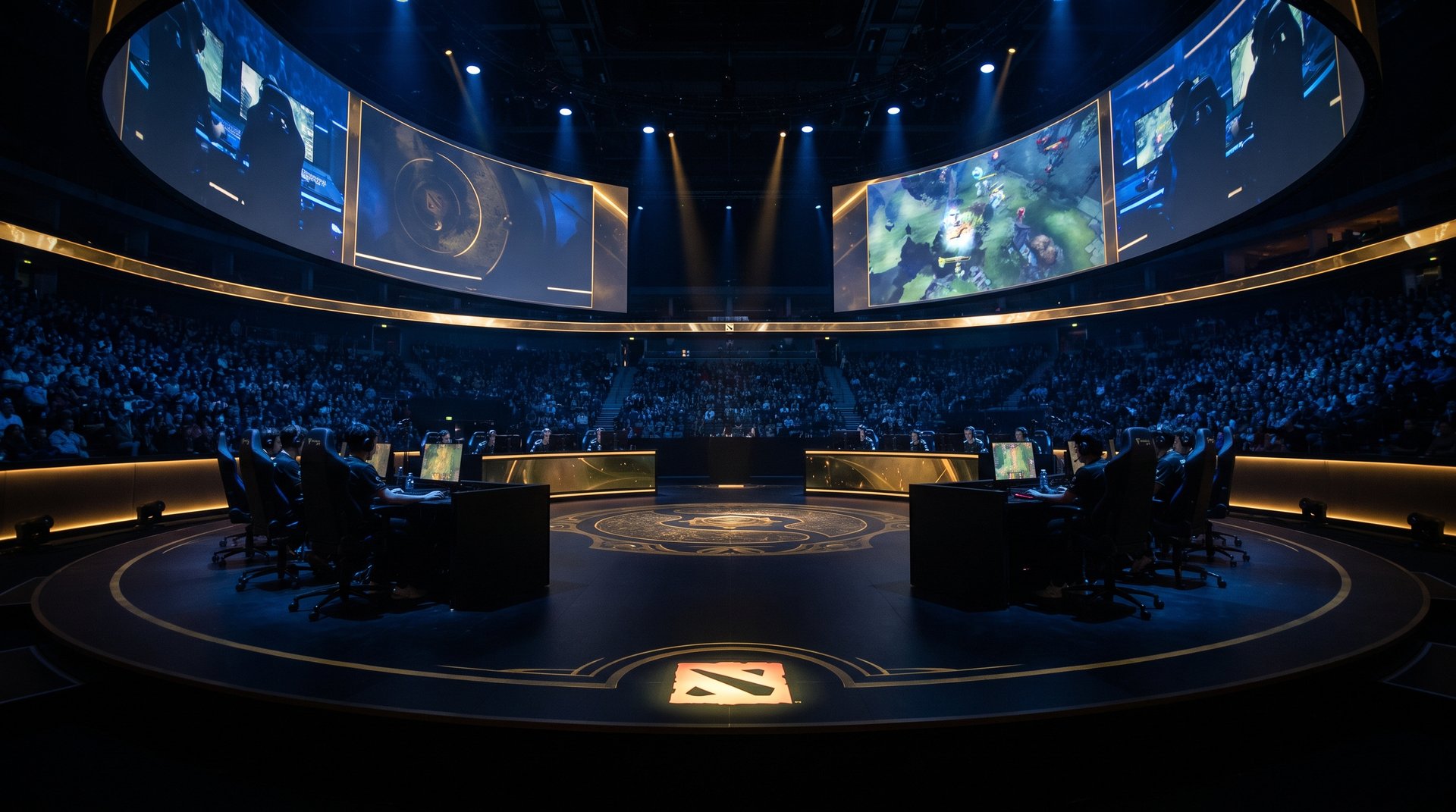
Grand Finals: Yandex vs NAVI — The Full Game Breakdown
The grand finals were scheduled as a best-of-five. Yandex made it a best-of-three in practice, sweeping in dominant fashion across three games with only one real scare in game two.
Game 1: Yandex Stomp NAVI in 25 Minutes
Game one was a statement. Yandex won 27-9 on kills in just 25 minutes — a performance that immediately signaled NAVI were not equipped to stop what Yandex had planned.
Watson led the charge with 10 kills and 4 assists, finishing with a single death. ATF on Razor — his debut pick on the Yandex roster — posted 6 kills and 11 assists with just one death. Razor’s static link mechanic neutralized NAVI’s carry early, draining attack speed and making trades impossible.
The 27-minute mark was a combination of superior draft, better early movement, and NAVI’s inability to answer Yandex’s aggression across multiple lanes.
| Player | Hero | K/A/D | Role |
|---|---|---|---|
| Watson | Unknown | 10/4/1 | Carry |
| ATF | Razor | 6/11/1 | Offlane |
Game 2: NAVI Nearly Even It Up — Then Yandex Come Back
Game two was the one moment NAVI fans had to feel. By the 20-minute mark, NAVI had built a net worth lead of over 10,000 gold — a commanding advantage that in pub Dota would translate to a near-certain win.
Yandex did not panic. They chipped away at NAVI’s lead methodically, forcing fights on favorable ground and leveraging ATF’s Centaur Warrunner for initiation. Centaur’s Double Edge and Stampede provided the teamfight backbone Yandex needed to grind back from deficit. Watson shifted to Io support in this game — an unusual flex for a carry player — and delivered a 12-kill, 13-assist performance on just four deaths.
The comeback took just under 44 minutes. Winning from a 10K gold deficit requires not just mechanics but extreme composure under pressure. This is what separates Yandex from most teams in the world right now.
| Player | Hero | K/A/D | Role |
|---|---|---|---|
| Watson | Io | 12/13/4 | Support flex |
| ATF | Centaur Warrunner | 10/20/1 | Offlane |
Game 3: NAVI Has Nothing Left
After losing game two from a 10K lead, NAVI were visibly deflated. Yandex sensed it and came out with maximum aggression in game three.
The final score was 25-7 on kills in just 27 minutes. ATF switched to Huskar for the third game — a signature aggressive pick that punishes opponents who draft low-magic-damage lineups. CHIRA_JUNIOR on Invoker posted 7 kills and 10 assists on one death, demonstrating why Invoker continues to be among the most dangerous mid picks in professional play. Watson returned to carry on Sven, finishing 8/2/1.
NAVI never found their footing. Once game two slipped away, the mental game was already decided.
| Player | Hero | K/A/D | Role |
|---|---|---|---|
| Watson | Sven | 8/2/1 | Carry |
| CHIRA_JUNIOR | Invoker | 7/10/1 | Mid |
| ATF | Huskar | 5/3/– | Offlane |
ATF: The New Offlane King
Ammar “ATF” Assaf was the defining story of this tournament. After Team Falcons announced their departure from competitive Dota 2 earlier in 2026, ATF was the most coveted free agent in the offlane market. Yandex moved fast, signing him to replace DM in the offlane position before the 2026-27 season began.
PGL Wallachia Season 9 was his official debut. The question was whether the chemistry would be there immediately or whether it would take time to develop. The answer was immediate.
His Hero Pool in This Tournament
ATF ran three distinct offlane heroes across the grand finals, and each one reflected a different strategic layer:
- Razor (Game 1) — Static Link as a hard counter to NAVI’s carry. Perfect early pick to deny farm acceleration while Yandex pushed their game plan. ATF’s Razor was effective precisely because he pressured trades without needing to win them outright — the drain does the work.
- Centaur Warrunner (Game 2) — The comeback engine. Centaur’s kit — Double Edge sustain, Stampede for chain engages, high base HP — is designed for exactly the kind of “we’re behind but we can fight” position Yandex were in. ATF’s 20 assists in this game are not an accident; he was the initiating force on every single meaningful fight.
- Huskar (Game 3) — The execution pick. When a team has already won the mental game, Huskar punishes opponents who either cannot burst him down or who drafted primarily magical damage. NAVI’s composition in game three had no clean answer to early Huskar aggression.
Three games, three different win conditions, all executed cleanly. ATF showed up with a prepared, flexible pool — exactly what Yandex needed from an offlaner who can operate in any draft style.
What ATF Brings to the 2026-27 Meta
Before ATF, Yandex’s offlane position was serviceable with DM. With ATF, the position becomes the threat that forces opponents to draft around it. That fundamentally changes how teams can approach Yandex in a draft — they have to account for Razor, Centaur, Huskar, and likely Doom, Dark Seer, and several others from ATF’s known pool at Falcons.
For BLAST Slam VIII starting this week, every team in the bracket now has to factor ATF’s hero pool into their prep.
Climb Ranked with Immortal-Level Coaching
Understanding pro-level offlane play is the fastest way to improve your own game. Our coaches play at the level ATF operates at — they know the decision trees, the draft reads, and the mechanical thresholds. Get direct feedback on your replays.
Book a Coaching Session Get MMR BoostWatson: The Quiet Carry Who Dominates Stats
Alimzhan “Watson” Islambekov does not always get the headline, but his numbers in this tournament were consistently elite. Over three grand finals games he played three entirely different roles: carry, aggressive support, and late-game teamfight carry again.
The Io game is the most interesting analytically. Watson is Yandex’s primary carry player — he typically operates in the safe lane looking for farm. Shifting to Io support in game two signals two things: Yandex’s draft was flexible enough to run unconventional roles, and Watson is skilled enough that the team trusts him to run a support at the highest level.
His 12-kill game on Io as a support is not a support performance. Io does not naturally accumulate 12 kills in its kit — those kills came from aggressive Relocate plays, setting up kills across the map when Yandex were trying to claw back from a deficit. Watson was essentially functioning as a roaming kill threat rather than a passive tether bot.
Sven in game three was Watson in his natural habitat: late-game teamfight carry, clean God’s Strength execution, minimal deaths. 8/2 in 27 minutes means he was dominant and safe simultaneously — not an easy combination when you are the target of the enemy team’s attention.
Hero Picks From Wallachia S9: What to Play in Pubs
Pro tournaments are the best signal for what will outperform in high-MMR pub games in the weeks following. Wallachia Season 9 validated several picks that should be in your rotation if you are grinding ranked right now on patch 7.41f.
Offlane Picks to Abuse
- Razor — Static Link remains one of the most punishing mechanics in the current patch against right-click carries who want to trade. In pubs below Immortal, most carries do not know how to play around the drain, which makes Razor even stronger. Build Sange and Yasha into Heart — be the one hitting buildings when the carry cannot fight back.
- Centaur Warrunner — The tankiest initiator in the game. Sange and Yasha, Blink, Heart is the standard pub build. Stampede is impossible to play around without coordination, which makes Centaur disproportionately strong outside of organized play. If your team has teamfight carry potential, Centaur funnels everyone into those fights.
- Huskar — High risk, high reward. In ranked games where opponents draft 3-4 magical sources, Huskar is a free win. Check the enemy draft before picking. If you see Storm Spirit, Lina, and Lion — skip it. If you see Phantom Assassin, Wraith King, and Sven — Huskar wins the game at 10 minutes.
Carry and Mid Picks
- Sven — Still one of the cleanest pub carries on 7.41f. Warcry provides enough armor during fights that itemizing defensively is less necessary, freeing up slots for raw damage. Echo Sabre into Mask of Madness into BKB is the standard snowball build. He needs a team that can create space in the early-mid game but almost any offlane/support pairing handles that.
- Invoker — CHIRA_JUNIOR’s consistent Invoker performances remind us that high-skill heroes reward practice. In pubs, if you have more than 200 hours on Invoker, you will outperform most opponents at the same MMR bracket. Exort builds remain dominant in 7.41f. Sun Strike into Ice Wall into Meteor Combo is still the standard teamfight rotation.
Support Picks Worth Noting
- Io — Watson’s game 2 performance was aggressive Io, not passive tether Io. In pubs, Io played as an aggressive Relocate threat is higher ELO per hour than Io played as a babysitter. Take the fight to enemy supports pre-6 with your carry, then Relocate to create kills around the map. The difference in impact is dramatic.
What PGL Wallachia S9 Means for the 2026-27 Season
Wallachia Season 9 was the first data point for the new competitive year and it told us a few important things.
Yandex Are the Early Frontrunners
Team Spirit won TI 2026 and will remain a threat, but Yandex enter the 2026-27 season with more momentum than any other roster. They went top-3 at TI, upgraded their weakest position with ATF, and immediately won the first post-TI tournament. That combination is rare. If Valve announces the next major or a new DPC-equivalent circuit, Yandex is the team to beat until someone proves otherwise.
NAVI’s Ceiling Is Still in Question
Second place at Wallachia S9 is a good result for NAVI, who have been rebuilding around a young roster for the past year. But they still have not won a Tier 2 or higher tournament. Getting to the grand finals and losing 3-0 is progress — it is not a championship. Their ceiling depends on whether they can solve the late-game decision-making issues that allowed Yandex to comeback from a 10K deficit in game two.
BLAST Slam VIII Starts This Week
With Wallachia S9 finished, attention shifts to BLAST Slam VIII, which begins September 29 with Team Spirit vs Team Nemesis and PariVision vs Level Up. This is a higher-profile event with more of the post-TI field present. How Yandex’s ATF-era carries into BLAST will be the next major storyline.
If you want to watch competitive Dota 2 during BLAST Slam VIII, you can spectate live matches directly from the Dota 2 client under the Watch tab. All official broadcasts include in-client spectating with full replay controls.
Frequently Asked Questions
Tired of Losing MMR While Others Figure Out the Meta?
The post-TI patch window is the best time to gain MMR. Pro teams are still settling into new rosters, pub metas are in flux, and a few well-chosen heroes can carry you several hundred MMR before the meta stabilizes. Our Immortal-ranked boosters play these heroes every day.
Boost My MMR Calibration Service


