

How Much Do Dota 2 Boosters Earn in 2026?

If you have ever wondered what it actually pays to rank up other people’s accounts for a living, you are not alone. The question comes up constantly in our community: how much do Dota 2 boosters earn in 2026? The honest answer is that it depends enormously on skill, speed, platform, and region — but the range is wider than most people expect.
At TeamSmurf, we work with a network of vetted Dota 2 professionals. We see first-hand what separates a booster pulling in a few hundred dollars a month from one who clears several thousand. This article breaks down the real numbers, the factors that drive pay, and whether boosting Dota 2 can genuinely support someone financially in 2026.
We use “our boosters report” throughout this piece because that is exactly where the data comes from — our team’s internal records, combined with market research from how competing orders get priced and fulfilled across the industry. No fake Valve statistics, no invented studies. Just the picture we see from inside a Dota 2-only operation that has been running boosts professionally since the Dota 2 MMR ladder was still tied to a single number.
Table of Contents
- The Booster Ecosystem in 2026
- What Determines a Booster’s Pay Rate
- Earnings Breakdown by Skill Level
- Part-Time vs. Full-Time Boosters
- How Boosters at TeamSmurf Get Paid
- Earnings by Region
- The Dark Side of Booster Income
- Can You Actually Make a Living Boosting?
- How to Become a TeamSmurf Booster
- Frequently Asked Questions
The Booster Ecosystem in 2026
The Dota 2 boosting market has matured considerably since its early days. In 2026, the ecosystem consists of three tiers: freelance solo operators, aggregator marketplaces that list multiple boosters, and specialist services like TeamSmurf that only handle a single game. Each tier pays differently and attracts different player types.
Freelancers working through Discord servers or personal Telegram groups keep the full order value, but they spend significant time on marketing, dispute resolution, and trust-building. Marketplaces take a platform cut — typically 20 to 40 percent of each order — in exchange for order flow and payment protection. Specialist services like ours offer stable order volume and a structured payout system in return for exclusivity during active assignments.
The patch cycle matters too. After a major Dota 2 update drops, a wave of players wants to climb before the meta hardens, which spikes order volume. Boosters who are available during those first two to three weeks after patch day can earn meaningfully more than the monthly average. Our boosters report that patch-week volumes can run 40 to 60 percent above a typical week.
Understanding where you sit in this ecosystem — and which tier you are working through — is the single biggest structural factor in your take-home pay, before even considering your MMR.
What Determines a Booster’s Pay Rate
MMR Skill Level
This is the most obvious factor, and the gap between brackets is larger than most aspiring boosters realize. A player capable of boosting accounts through the Herald-to-Archon range (roughly 0 to 2,500 MMR) is common — thousands of Divine and Immortal players could technically do this work. Because supply is high, rates at this tier are compressed. Our boosters report that low-bracket orders typically pay $0.50 to $1.50 per game, depending on order size and platform.
The picture changes dramatically at higher brackets. Orders in the Legend-to-Ancient range (3,000 to 5,000 MMR) require a booster with a stable win rate of at least 65 percent in that bracket, which narrows the candidate pool. Pay per game climbs to $2 to $5. Divine orders (5,000 to 6,500 MMR) further shrink the available booster pool and push rates to $5 to $10 per game. Immortal-level boosting is genuinely rare — a convincing win rate above 6,500 MMR requires top-1000 or better skill — and our boosters report earning $10 to $20 per game at this tier when working directly through TeamSmurf’s structured system.
Speed and Win Rate
Two boosters with identical MMR can earn very differently based on how fast they close orders. A booster who averages 45-minute games and wins 70 percent of matches completes orders roughly twice as fast as someone with similar peak skill who plays 70-minute games at 55 percent. Speed is money in a per-game payment model. A fast booster in the Ancient bracket can complete 6 to 8 games on a Saturday afternoon; a slow one might finish 3.
Win rate also matters because some platforms and services tie completion guarantees to orders. If a booster drops below their quoted win rate on a given order, they may need to play additional games to fulfill the MMR target, effectively working for free on those extra matches. Maintaining a consistent 65 percent or better win rate is the floor for professional boosting.
Hero Pool and Role Flexibility
Boosters with deep hero pools who can play any position earn more because they accept a wider range of accounts. An account that happens to have all carry heroes locked or an unusual role rating does not need special handling — a flexible booster just adapts. One-trick boosters, even highly skilled ones, are limited to orders where their hero or role is viable, which reduces their monthly volume.
Meta knowledge is a related factor. Boosters who track patch notes closely and pivot quickly to whatever the current broken heroes are will outperform those who keep playing comfort picks after patches shift the win-rate landscape. In patch 7.41d, for example, our boosters report that physical-carry-oriented heroes are dominating the 4,000 to 5,500 bracket, and boosters who adapted early are seeing above-average win rates and faster order completions.
Earnings Breakdown by Skill Level
The table below reflects aggregated data from our booster network and market research on how similar orders are priced across the industry. These are realistic ranges for part-time boosters working 10 to 20 hours per week. Full-time operators who stack orders and work peak hours will sit at the upper end or above these ranges.
| Booster Skill Level (Peak MMR) | Est. Monthly Earnings (Part-Time) | Pay Per Game (Approx.) | Typical Order Bracket |
|---|---|---|---|
| High Archon / Legend (3,000-4,000) | $150 — $400 | $0.80 — $2.00 | Herald to Archon |
| Ancient (4,000-5,500) | $400 — $900 | $2.00 — $5.00 | Legend to Ancient |
| Divine (5,500-6,500) | $900 — $2,000 | $5.00 — $10.00 | Ancient to Divine |
| Immortal (6,500+) | $2,000 — $4,500 | $10.00 — $20.00 | Divine to Immortal |
| Top 1,000 Immortal | $3,500+ | $15.00 — $30.00 | Immortal Bracket / Leaderboard |

These figures assume the booster is working through a structured service with consistent order flow, not hunting for clients independently. Independent operators may earn more per order when they do find clients, but the time spent on acquiring orders reduces effective hourly rates significantly.
Part-Time vs. Full-Time Boosters
The majority of Dota 2 boosters treat it as a side income, not a primary job. For most players in the Divine bracket, boosting 10 to 15 hours per week generates $500 to $1,200 per month — a meaningful supplement that does not require treating Dota like a job. These players maintain their own accounts, play ranked games for enjoyment, and take booster work as it comes.
Full-time boosters are a much smaller group. To justify treating boosting as a primary income source, you generally need to be operating at the Immortal level, accepting orders on multiple platforms simultaneously, and running a very tight schedule. Our boosters who work full-time report 6 to 8 hours of active boosting per day, plus time spent on account management, communication with the platform, and maintaining their own skill level. Burnout is a real risk — playing a game competitively for 8 hours a day to earn money is a fundamentally different experience from playing it for enjoyment.
The sweet spot that our most satisfied boosters report is 20 to 30 hours per week at the Divine or low-Immortal level — earning $1,500 to $3,000 per month while retaining enough off-time to keep the game fun. This works particularly well for players who are between other commitments, students with flexible schedules, or people in regions where those dollar amounts represent a strong local wage.
How Boosters at TeamSmurf Get Paid
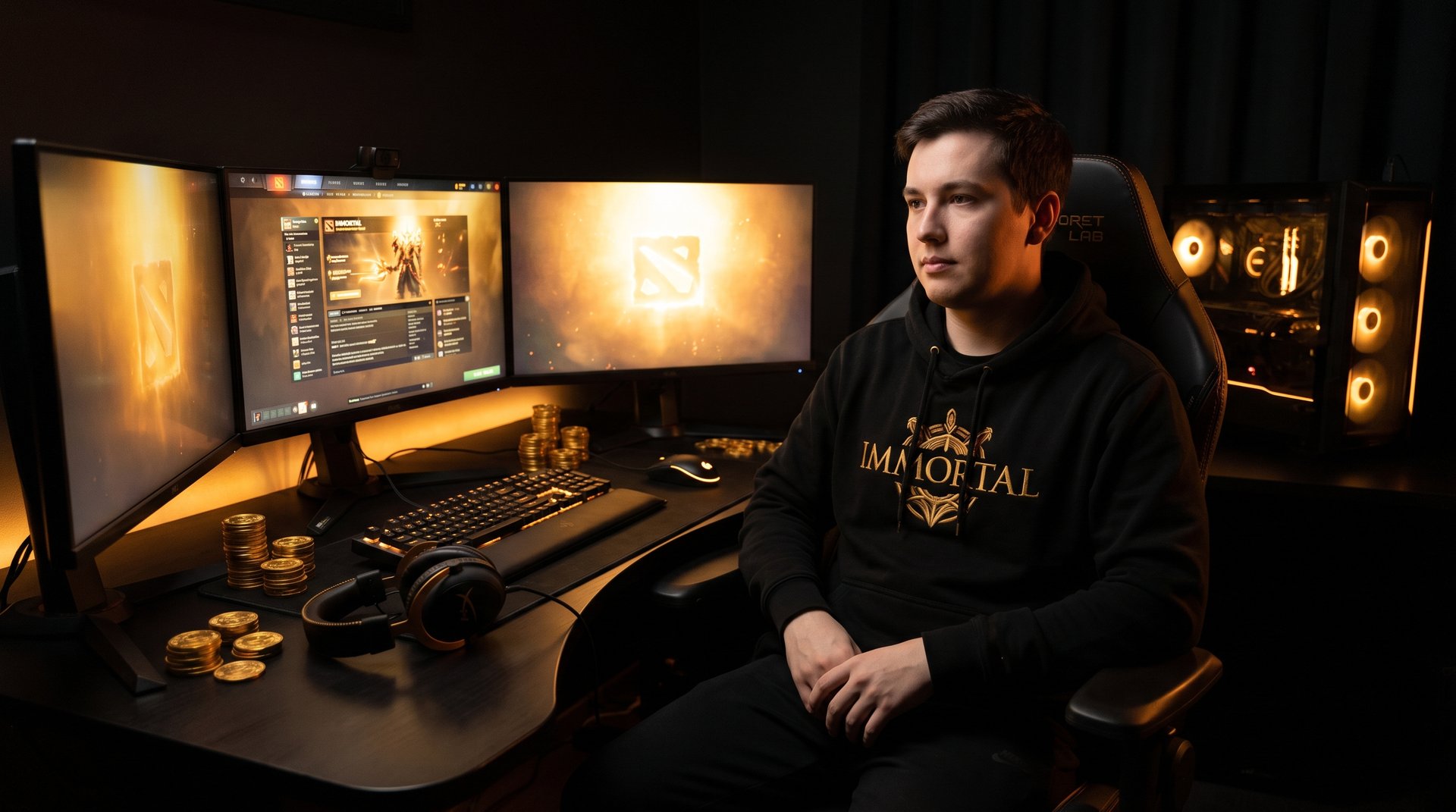
TeamSmurf uses a structured per-order payout model. When a client purchases a Dota 2 MMR boost, the order is matched to a booster who meets the MMR and role requirements. The booster receives a guaranteed payout on completion, regardless of how many games it takes, as long as the order is fulfilled within the quoted timeframe.
This model has one major advantage over a pure per-game system: boosters are not penalized for the occasional unlucky game. If you get stuck in a 10-player feedfest that no amount of skill could have saved, you do not lose pay — you just play the next game. Our boosters consistently report preferring this structure because it removes the anxiety of needing to win every single game in a streak.
Payouts are processed weekly. Boosters working with us are required to maintain a minimum win rate and average completion time, and those who consistently exceed targets gain access to higher-priority order queues, which translates directly to more orders and higher monthly earnings. We pay via standard digital payment methods and do not hold funds unnecessarily.
We also offer a separate track for Dota 2 coaching, which some of our boosters do alongside boosting orders. Coaching pays differently — it is an hourly rate rather than per-order — and it requires communication skills beyond pure game knowledge. Boosters who can articulate their decision-making clearly and teach effectively can earn an additional $20 to $60 per coaching session, which stacks well with booster income during off-peak hours.
Earnings by Region — A Global Perspective
One of the most misunderstood aspects of booster earnings is how dramatically purchasing power varies by region. A TeamSmurf booster in Southeast Asia earning $800 per month from boosting has a very different quality of life than a booster in Western Europe earning the same amount. This is why the market has been able to sustain a global booster pool — the dollar value of orders is determined by what Western customers pay, but boosters in lower-cost regions capture more real purchasing power per dollar earned.
Our booster network spans Eastern Europe, Southeast Asia, South America, and China. Market research suggests that boosters in those regions earning $500 to $1,000 per month from Dota 2 work are often earning above the median local wage in their market. This creates a steady supply of motivated, skilled players who approach boosting professionally and invest in staying sharp on the meta.
Western and higher-cost-of-living boosters do still operate — they are disproportionately concentrated at the very top of the MMR ladder, where the per-game rates are high enough to compete with other income sources. But for the mid-tiers of the booster economy, the market is genuinely global, and regional wage differences are a structural feature of how the industry works.
The Dark Side of Booster Income
No honest article about booster earnings should skip the risks. The income numbers above are real, but they come with strings attached.
Account risk is the biggest. Boosters log into client accounts, which carries the risk of triggering Valve’s behavioral detection systems. Bans can be temporary (game bans on the client account) or potentially affect the booster’s own accounts if Valve’s systems link them. Professional boosters mitigate this through VPNs, consistent login patterns, and avoiding detection-flagged behaviors, but the risk is never zero.
Income is variable, not guaranteed. Order volume spikes around patch releases and drops in summer when the player base thins. A booster counting on a specific monthly income can be thrown off by a slow week. The boosters in our network who earn most consistently are those who treat quiet periods as time to grind their own MMR rather than expecting steady volume year-round.
Skill decay is a real cost. Spending hours playing in lower brackets can quietly erode your feel for high-level play. Boosters who only work low-bracket orders without regularly competing at their actual ceiling report that their own MMR drifts downward over months. Maintaining your own peak performance is a time cost that does not show up in the payout column but is very much a part of the job.
Finally, platform dependency is a risk. If the service you work through changes its payout structure, reduces rates, or shuts down, your income can disappear overnight. Working through a stable, established platform — and building a small reputation independently as a backup — is basic professional risk management for anyone treating boosting as meaningful income.
Can You Actually Make a Living Boosting Dota 2?
The honest answer: yes, but only at the top end, and only with the discipline to treat it as a business rather than a video game habit.
For players at the Immortal level with strong hero pools and the ability to consistently win games in the 6,000 to 7,000 MMR range, full-time boosting income of $2,000 to $4,500 per month is achievable. In many parts of the world, that is a genuinely comfortable full-time income. In higher-cost-of-living countries, it may function better as a primary income for a year or two before transitioning to something else.
The players who make it work long-term share a few traits. They track their own stats obsessively. They adapt to every patch rather than forcing meta-irrelevant picks. They communicate reliably with the platform they work through. And crucially, they diversify — they take coaching orders during lulls, they stay active in the ranked queue on their own account to maintain MMR, and they do not assume that one good month means the income is guaranteed forever.
For players at the Divine bracket who are realistic about their skill ceiling, boosting as a serious side income — $1,000 to $2,000 per month alongside another main activity — is a much more sustainable model. The game does not have to be your entire economic existence for it to meaningfully improve your financial situation. Many of the boosters in our network use it exactly this way.
If you are serious about working in the Dota 2 boosting industry, understanding the earnings picture clearly before you start helps you set realistic expectations and build a plan that actually works.
How to Become a TeamSmurf Booster
TeamSmurf is Dota 2-only. That specialization means we take booster quality seriously — we do not accept applications from players who cannot consistently perform in their claimed bracket. The application process involves a skill verification stage where we review recent match history and, in some cases, observe live games.
To be considered, candidates generally need:
- Ancient or above MMR on their own account, with at least 60 days of recent ranked history
- A win rate of 58 percent or higher over their last 100 ranked games
- A flexible hero pool — at least 3 strong heroes per role, not a single-hero specialist
- Reliable availability — we work with boosters who can commit to consistent windows, not sporadic availability
- Clean account history — we do not work with players who have recent behavior score issues or VAC flags
If you meet those criteria and are interested in becoming part of our team, reach out through our site. We periodically open new booster slots, particularly when volume increases around major patches and seasonal ranked resets. The MMR boosting guide on our site gives you a solid picture of how the service works from the client side, which is useful context before you apply to be a booster.
Boosters who perform well get access to higher-value orders, faster payment processing, and a tiered trust system that unlocks additional perks over time. We invest in our boosters because consistent, high-quality fulfillment is what keeps clients coming back — and a booster who stays with us for six months or more ends up earning significantly more than someone who joins and churns within weeks.
The demand for skilled Dota 2 boosters is steady. Players want to climb. They want to play with and against better opponents. They want to experience the game at a higher level before committing months of grinding. That demand does not go away, which means qualified boosters who approach the work professionally have a durable income opportunity — as long as they treat it as a serious skill, not just a casual way to make money playing video games.
If you have any questions about how the boosting process works safely, that page covers the client-side safety picture in detail. For boosters, the rules are similar: consistent behavior, proper precautions, and working through a platform that takes account security seriously makes the professional side of this work sustainable.
Frequently Asked Questions
Ready to Boost or Be Boosted?
Whether you are a player who wants to climb without the grind, or a high-MMR player looking to join the TeamSmurf network, we have options for both sides of the equation.
Our Dota 2-only focus means every booster we work with is verified and every order is matched to someone who can actually do the job. No bait-and-switch, no outsourcing to whoever happens to be online.
Get Your MMR Boost Book a Coaching Session



