I Bought a Dota 2 Boost — What 100 Real Buyers Said Afterward

Buying a Dota 2 boost is a decision. Living with the result — the rank, the experience, the lingering questions — is something else entirely. We pulled together post-purchase feedback patterns from review platforms, Reddit threads, and client conversations to answer one question: what do players actually say once it is over?
This is not a survey with fabricated precision. These are themes — consistent, recurring things buyers report after the boost order closes. Some of them will reassure you. A few might make you think twice. All of them are worth reading before you place your own order.
The short answer to the most common question: most buyers report the experience was better than they feared and more nuanced than the most optimistic reviews suggested. Reality, predictably, sits somewhere in the middle — and that middle is useful to understand.
What Is In This Article
What Buyers Were Worried About Before Ordering
The concerns that appear most consistently in pre-purchase conversations fall into a short, predictable list. Understanding how those concerns played out afterward is one of the most useful things a prospective buyer can read.
Fear of account bans is, by far, the most cited anxiety before purchasing. Players have heard horror stories — usually secondhand, usually about services that cut corners on VPN matching, login behavior, or credential handling. The reality reported by buyers who went with established dedicated services is that bans in that context are extremely rare. Not zero — no service can guarantee Valve will never flag an account — but buyers consistently note that their accounts arrived intact. The ones who report problems almost always trace the issue back to choosing a bargain provider, a marketplace freelancer, or sharing credentials with multiple services at the same time.
The second big anxiety is MMR falling back. Buyers worry that after the order completes, they will play themselves back down to their old rank within a week. This is a legitimate concern with nuance to it, which is covered in detail later in this piece.
Third is value for money. Buyers often ask retrospectively whether the price was justified. The answer depends heavily on what they expected the boost to deliver — and whether they understood that going in.
| Pre-Purchase Concern | What Buyers Typically Report Afterward | Notes |
|---|---|---|
| Account ban or restriction | Rarely happens with reputable services | Risk rises sharply with cheap marketplaces |
| Booster playing recklessly on account | Usually reports of clean, professional play | Some note unusually conservative laning from their booster |
| MMR falling back after boost | Most hold rank for at least 2-4 weeks | Depends heavily on how large the climb was |
| Order not completing on time | Most reputable services complete near quoted timeline | Peak season orders often run longer |
| Payment security | Generally smooth with major payment processors | Crypto payment edge cases occasionally reported |
| Booster feeding or trolling | Rare at dedicated services, more common via freelancer platforms | Dedicated services stake reputation on clean play |
The pattern is consistent: buyers who chose a service based on real reviews and transparent pricing came away with fewer problems than buyers who optimized purely for the lowest price. Understanding why that gap exists is core to what choosing a safe boosting service means in practice.
What Buyers Said About the Boost Experience Itself
Once an order starts, the buyer experience splits into several dimensions that buyers tend to comment on separately. Each one shapes the overall impression in ways that compound.
Communication During the Order
Buyers consistently rate communication as one of the biggest differentiators between services. The expectation — especially among first-timers — is often that they will be left in the dark, checking a dashboard every few hours hoping for movement. Buyers who had live chat access or regular status updates through the order window report significantly higher satisfaction, even when the order took longer than the estimated timeframe.
Services that went quiet mid-order drew the sharpest complaints. Not necessarily because the boost failed, but because silence is anxiety-inducing when your account credentials are in someone else’s hands. This is something most buyers underestimate before purchasing. By the end, communication is weighted almost as heavily as speed in their overall impression.
Speed and Delivery Time
Delivery times are consistently reported as close to estimates — when buyers chose services with realistic estimates. The problem arises with providers who advertise aggressive timelines to win business and then deliver at a more realistic pace. The gap between “delivered in 24 hours” and “delivered in 72 hours” is not a crisis in objective terms, but it generates disproportionately negative reviews because the expectation was set wrong from the start.
Peak season orders — September calibration windows, post-TI patches, major update periods — tend to run slower because demand is high and booster availability is stretched. Buyers who ordered during these windows consistently mention longer wait times, though the vast majority still report eventual completion.
Gameplay Quality During the Boost
Buyers who checked replays after their boost — and more do this than services probably expect — report a range of observations. Professional boosters at dedicated services tend to play efficiently and conservatively. They are not there to perform; they are there to win safely and without drawing attention. Some buyers, particularly carry players, note that their booster played support or offlane to adapt to draft conditions rather than insisting on a signature hero.
The buyers who express disappointment here usually wanted to see flashy, high-skill play on their account. Professional boosters often take the opposite approach: methodical, boring, effective. Most buyers come to appreciate this after the fact. The goal is clean wins, not highlight clips.
Offline Mode and VPN Usage
Buyers who were aware of offline mode and VPN practices before ordering tend to feel more confident during the order. Knowing that a professional booster is matching your server region and keeping your account invisible to friends reduces the anxiety level considerably. Buyers who did not know about these practices beforehand often discover them afterward and wish they had understood them earlier — the transparency would have reduced their stress during the order window.
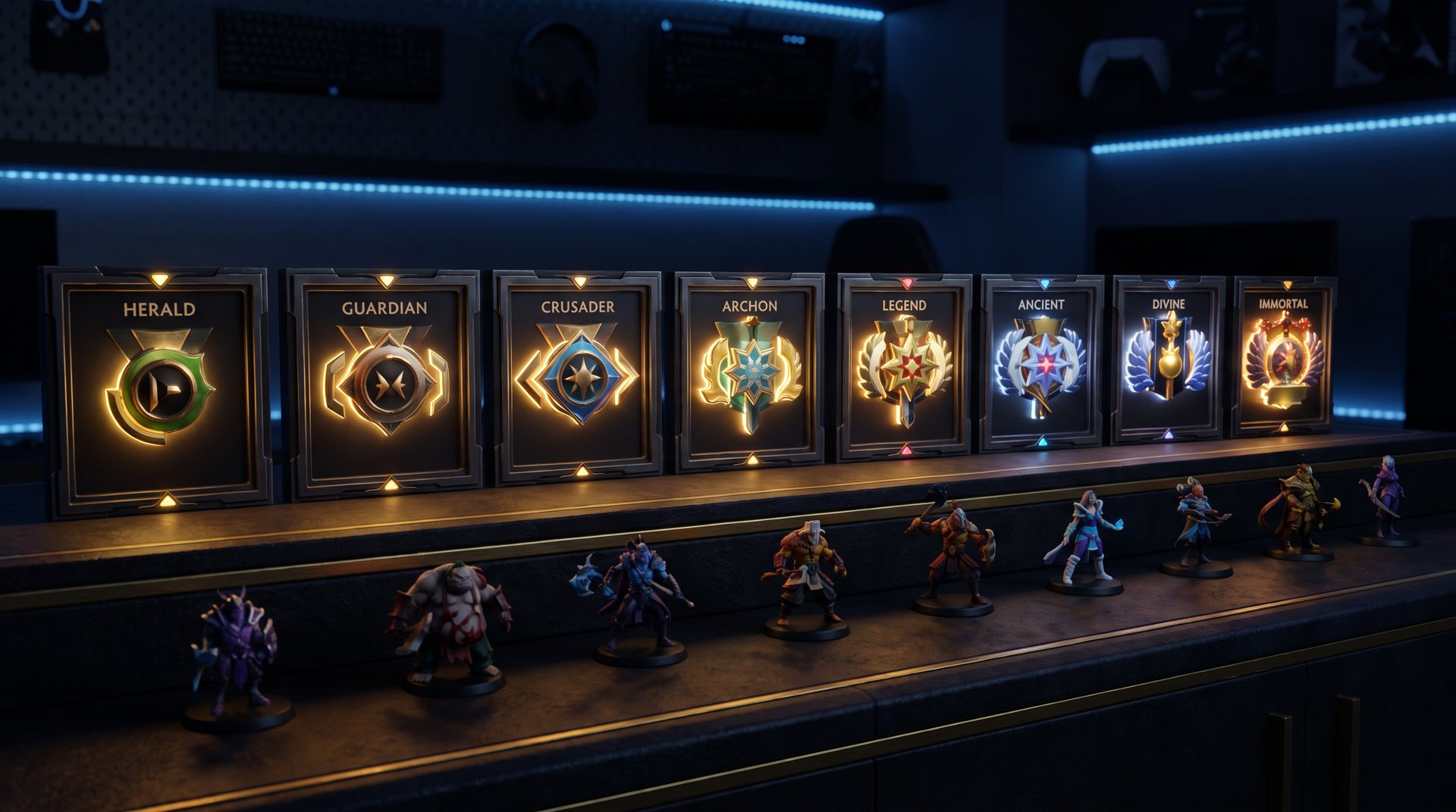
Did the MMR Hold? Reports From 30 Days Later
This is the question that lingers longest after a boost order closes, and the answer is more nuanced than either the optimists or the skeptics tend to suggest.
Buyers who climbed a modest range — one rank tier, roughly 500-700 MMR — and continued playing actively after the boost report holding their new rank more often than not. The logic is straightforward: a small upward shift lands you in a bracket where opponents are somewhat better, but not radically so. If you were borderline for that bracket anyway, you can compete there with consistent effort.
Buyers who jumped two full tiers or more have a harder time. The skill gap at that distance is real and measurable, and feedback from these buyers more commonly mentions MMR declining over several weeks. This is not a failure of the service — the boost delivered what was ordered — but it does reflect a mismatch between the purchase and what the buyer could realistically sustain.
The Coaching Combination
A consistent pattern across buyer feedback is that players who combined a boost with coaching sessions retained rank better than those who bought a straight boost alone. This is intuitive: the boost changes the number; coaching changes what the player can do at that number. Buyers who added even two or three coaching sessions reported feeling noticeably more competent at their new bracket, which translated to better long-term MMR retention.
If long-term rank stability matters more than the short-term number change, the complete MMR boosting guide covers the combination approach in detail. The practical summary: order a smaller boost than you might initially want, and invest some of the savings into targeted coaching. The compound effect on retention is worth it.
The 30-Day Breakdown
Buyers who tracked their MMR a month after an order fall into three broad groups based on reported patterns. The first group held rank and continued climbing slowly. The second group held rank and stabilized at the new floor. The third group declined 100-300 MMR but remained above their original pre-boost starting point.
Full regression to the starting point is reported primarily by buyers who ordered very large boosts and then went mostly inactive for several weeks. The boost cannot substitute for active play, and the MMR system will eventually recalibrate toward what you are actually showing it.
Activity level after the boost matters more than almost any other single variable. Accounts that go dormant for two or three weeks after an order tend to return to ranked and find themselves recalibrating downward, because the momentum the boost created has dissipated and the player is rusty. Buyers who returned to games within 24-48 hours reported consistently better retention.
What the Data-Oriented Buyers Tracked
Some buyers keep detailed records of their MMR by day after an order. The feedback from this subset is particularly useful because it is less subject to memory distortion than general impressions. Their consistent finding: the first two weeks are the most volatile, with MMR fluctuating noticeably as the system re-evaluates performance at the new bracket. After that, things tend to stabilize in one direction or the other — up if the player belongs there, back down if the gap was too large to bridge quickly.
What Surprised Buyers Most
Post-purchase feedback is a rich source of surprises — the things buyers did not expect, in both directions.
Positive Surprises
The account was safer than feared. Buyers who worried intensely about bans frequently note relief that nothing happened. The VPN matching, the offline mode use, and the professional behavior of experienced boosters kept accounts clean. Buyers who had previously used less careful providers understood the difference immediately.
Queue quality improved noticeably. A common observation from buyers who climbed through a particularly toxic bracket — Herald into Archon, or the Archon-to-Ancient stretch — is that the games at the new rank felt meaningfully different. Less random abandonment, slightly more hero pool variety, more objective-aware teammates. For some buyers, the atmosphere improvement was worth as much as the MMR number itself.
Replays were educational. Buyers who watched their booster’s replays often came away with game knowledge they had not expected. Watching an experienced player manage their hero, track the minimap, and make itemization decisions in real time is effectively a free coaching session if you pay attention. Multiple buyers cite this as an unexpected benefit — they learned more from watching one booster’s replay than from hours of conventional gameplay.
The process was faster and smoother than expected. First-time buyers often imagine an elaborate, stressful handoff process. In practice, at established services, the credential exchange is quick and the order tracking is straightforward. Buyers who anticipated significant friction report being surprised by how streamlined it actually is.
Negative Surprises
Waiting was harder than expected. Buyers consistently underestimate how anxious the waiting period feels. Even a 48-hour boost that runs completely smoothly generates stress. Knowing this in advance does not fully prevent it, but knowing that the feeling is universal and temporary helps manage it.
The new bracket felt harder than expected. This is the flip side of the rank retention discussion. Buyers who jumped two tiers sometimes describe the new bracket as actively uncomfortable at first — faster reads, more coordinated play, enemies who punish mistakes they could get away with at lower MMR. This is the correct feeling: they are now playing above their current skill level. That gap closes over time, but the first week or two can be humbling in a way buyers did not fully anticipate.
Some services were not as cheap in practice as advertised. Buyers report that what appeared competitive on the landing page sometimes came with add-on costs — priority queue fees, specific hero requests, high-bracket supplements, express delivery charges — that were not clearly visible upfront. Reading the full pricing breakdown before confirming is something buyers consistently wish they had done more carefully.
Repeat Buyers vs First-Timers
The contrast between first-time buyers and repeat customers is one of the clearest signals in the feedback data.
First-time buyers report more anxiety, more confusion about the process, and more surprises — in both directions. They tend to check every update notification, refresh their profile repeatedly, and overthink the order in ways that amplify every sensation. This is expected and normal. The unfamiliarity is doing most of the work.
Repeat buyers describe a more transactional experience. They know what to expect, they trust their chosen service, and they place orders with roughly the same energy as buying any other digital service. The emotional stakes are lower because the outcome is predictable. Repeat buyers are also more likely to leave precise, specific reviews — commenting on changes in booster speed, communication quality, or pricing compared to previous orders — rather than broad impressions.
What Brings Buyers Back
The most common reasons repeat buyers give for returning to the same service:
- Consistent communication. Buyers who had a smooth first-order communication experience return expecting the same. When they get it, the relationship is reinforced. When they do not — a less communicative booster, a slower update cadence — the change is noticed sharply and influences whether they return for a third order.
- MMR held from the first order. Buyers who retained their rank after the first boost are significantly more likely to purchase again. The product validated itself in the way that matters most.
- Trust built through the first experience. The account security anxiety that loomed before the first order shrinks considerably after a clean experience. Risk that felt significant in theory is recalibrated by actual evidence.
- Calibration season timing. A notable share of repeat buyers return specifically around ranked season resets. They use the boost to enter the new calibration window at a stronger recent-record position, then play out the season from there.
What Drives Buyers Away After One Order
The inverse is equally consistent. Buyers who had a first experience marked by poor communication, MMR that fell back faster than expected, or unexpected costs at checkout are much less likely to order again — from anyone. The first experience shapes the category impression, not just the impression of the specific service. Getting the first order right matters more than most providers probably realize.
The Satisfaction Spectrum
Buyer satisfaction does not cluster around a single point. It distributes across a spectrum, and the factors that drive it in either direction are worth understanding before placing an order.
| Factor | Drives High Satisfaction | Drives Low Satisfaction |
|---|---|---|
| Expectation match | Understood what a boost does and does not guarantee | Expected certainties the service cannot provide |
| Rank gap size | Modest climb (one tier or less) | Large climb (two or more tiers) |
| Communication | Regular updates or live chat during the order | Extended silences during active order window |
| Speed vs. estimate | Delivered near or before quoted timeframe | Aggressive promise, realistic delivery pace |
| Post-boost activity | Returned to ranked games within 24-48 hours | Account dormant for 1-2 weeks after boost |
| Provider type | Dedicated Dota 2-only service | Generic multi-game platform or freelancer marketplace |
| Price transparency | Final cost matched the estimate buyers expected | Add-ons and fees appeared at or after checkout |
Looking across these patterns, the buyers who report the highest overall satisfaction almost always did three things: researched before ordering, set realistic expectations about what a boost actually delivers, and chose a reputable dedicated service with transparent pricing. None of those factors require luck. They all require a few minutes of due diligence before clicking confirm.
What Buyers Wish They Had Known Beforehand
Asked what they would tell a friend before placing a first boost order, buyers return to a handful of consistent themes that cut across service choice, rank range, and buyer type.
Start Smaller Than You Think You Need
The most consistent piece of retrospective advice is to order a smaller boost than initially planned. Buyers who ordered large climbs wish they had ordered less and used the savings for coaching or a second smaller boost later. The compound approach — multiple modest boosts with active play in between — tends to produce better long-term rank outcomes than one large jump, and it costs the same or less in total.
The instinct to “get it all done at once” is understandable, but the buyers who acted on it most aggressively are the ones most likely to find themselves back near their starting MMR within a month.
Read the Full Pricing Page Before Confirming
Add-ons catch first-time buyers by surprise more than almost anything else. Priority queue options, specific role or hero requests, high-bracket supplements, and express delivery fees can meaningfully change the final price from what the landing page estimate suggested. Buyers who read the full pricing breakdown before confirming reported far fewer billing surprises than those who got a quick estimate and went straight to checkout.
Time the Order Strategically
Buyers who used their boost during or immediately before a ranked season calibration window report better starting positions for the new season than buyers who boosted mid-season with no strategic intent. The calibration system weights recent performance; arriving at calibration with fresh wins on a boosted account can anchor calibration MMR noticeably higher. The tradeoff is higher demand and sometimes longer wait times during peak calibration periods.
Plan to Play Right After
This recommendation appears so consistently in buyer feedback that it belongs on every service’s pre-order page. Buyers who let their account sit for a week or more after a boost report worse long-term outcomes than those who returned to games immediately. The muscle memory, the bracket familiarity, the psychological ownership of the new rank — all of these fade with inactivity. Play while it is fresh.
Do Not Overlap Multiple Services
A subset of buyers who experienced account flags trace the issue to having two services active simultaneously, or overlapping an active order with a new provider’s credential access. Even if neither service did anything wrong individually, the pattern of simultaneous logins from multiple regions is the kind of anomaly detection systems notice. Pick one service per order window and stay with them until the order fully closes before giving credentials to anyone else.
Understand What You Are Buying
Buyers who went in understanding that a boost changes the number — not the skill — and who prepared accordingly reported significantly better experiences than buyers who expected the rank change to solve their underlying frustrations with the game. A boost is a tool. It works best when the buyer understands its function, its limits, and what they plan to do with the result once it arrives.
Ready to Order? Here Is What TeamSmurf Offers
TeamSmurf runs Dota 2 exclusively — every booster on the roster is a high-MMR Dota 2 specialist. Live order tracking, offline mode standard on every order, and a completion guarantee. No generic multi-game platform, no marketplace freelancers.
View MMR Boost Pricing Browse Coaching Sessions